
Executive Overview
In the shifting landscape of American political discourse, a subtle yet alarming cultural current has broken the surface of the mainstream conservative movement. Over the past several years, Indian Americans and South Asian immigrants—long championed as the quintessential "model minority" due to high educational attainment, strong family structures, and upper-middle-class economic integration—have increasingly found themselves in the crosshairs of online right-wing hostility.
This phenomenon is not merely an extension of traditional, low-brow racial animus characterized by xenophobic tropes about poverty, lack of education, or illegal border crossings. Rather, it represents a distinct and complex form of bigotry rooted in status envy, economic insecurity, and an intense anti-globalization backlash.
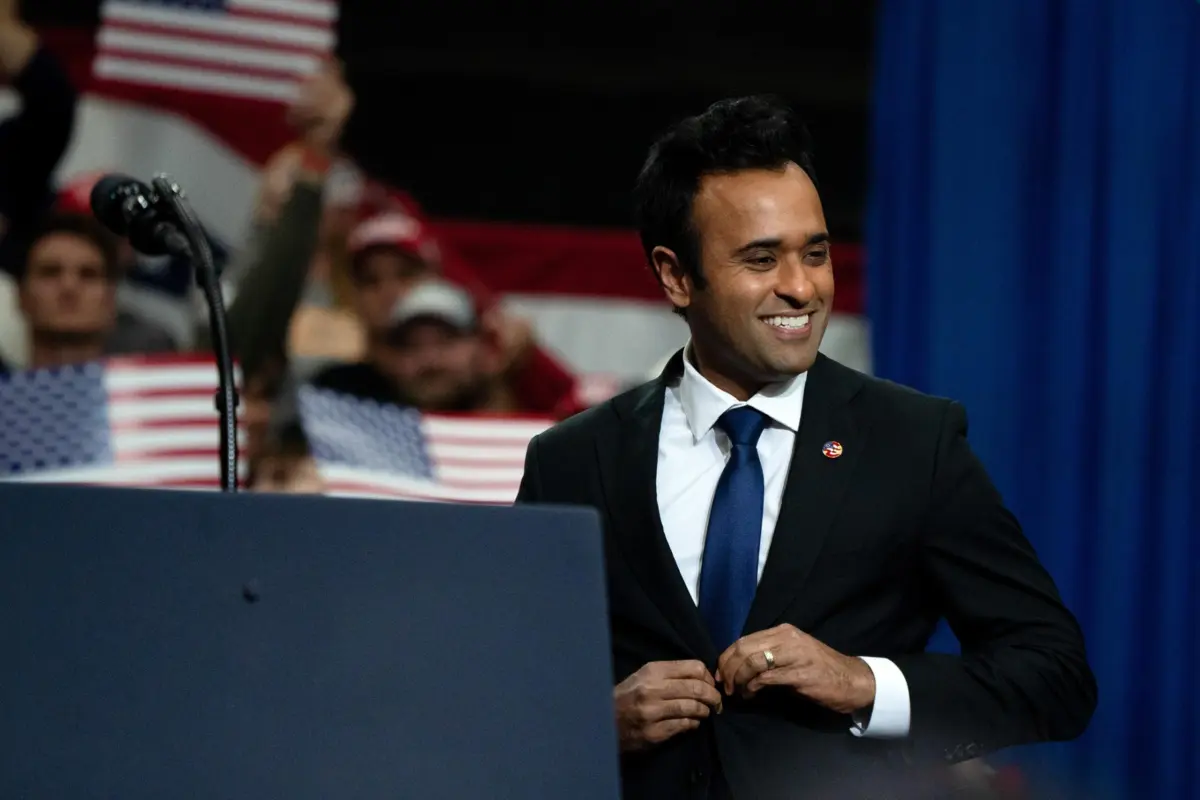
As visible minorities ascend to the highest echelons of corporate America, academia, and politics—culminating in high-profile figures like Republican Ohio gubernatorial candidate Vivek Ramaswamy—a vocal segment of the American right has begun viewing this upward mobility not as an American success story, but as an existential threat to traditional hierarchies.
Read Also
In a recent interview on the Vox podcast Today, Explained, freelance journalist Zaid Jilani sat down with co-host Noel King to dissect this surging trend. Drawing from his recent investigative reporting, Jilani explored why the cultural markers that traditionally align with conservative values have instead become deeply triggering to contemporary right-wing commentators, how the affected community is pragmatically responding, and what historical parallels can be drawn from past waves of American immigration.
Detailed Chronology: From Campaign Trail Stumbles to "The Indian Question"
To understand how anti-Indian sentiment crystallized into a persistent online movement, one must examine a timeline defined by viral political moments, escalating rhetoric, and the co-opting of mainstream cultural debates by right-wing influencers.
Early October: The Ramaswamy Campaign Viral Moment
The modern flashpoint traces back to early October, when Vivek Ramaswamy, running as a Republican candidate for governor of Ohio, attempted a classic campaign-trail maneuver: picking up a young child. The interaction resulted in a clumsy, awkward fumble that was immediately captured on video.
Within hours, the clip went viral across social media platforms, serving as fodder for political opponents and internet sleuths alike. The following day, Ramaswamy attempted to neutralize the digital mockery by posting a warm family photograph of himself holding his own son.
While political missteps are common on the campaign trail, the reaction to Ramaswamy’s initial video quickly escalated beyond typical partisan ribbing. Comment sections across X (formerly Twitter) and other conservative platforms flooded with overt, aggressive racist attacks drawing directly from anti-Indian stereotypes. Critics weaponized the clumsy moment to assert that Ramaswamy could not "act like a normal American family man," signaling a deeper discomfort with his cultural and ethnic background participating in core Americana politics.
The Amplification of Right-Wing Rhetoric
As the digital vitriol normalized, influential right-wing figures began openly intellectualizing this resentment. In podcasts and essays, prominent conservative activists such as Christopher Rufo and Jonathan Keeperman explicitly framed the demographic and professional rise of South Asians under a chilling heading: "The Indian Question."
Rather than focusing on standard policy debates regarding immigration caps or H-1B visa programs, these discussions devolved into bizarre cultural critiques. Commentators argued that traditional paths to success—such as intense academic preparation, spelling bee dominance, and high SAT scores—were somehow "un-American." In a remarkable inversion of traditional conservative messaging that lauds hard work and academic rigor, these influencers contrasted South Asian achievement with romanticized notions of white youth culture, valorizing high school football and heavy social drinking as more authentically "American" markers of youth.
Supporting Context & Metrics: The Mechanics of Status Anxiety
To contextualize why this backlash is occurring now, analysts point to demographic realities and socio-economic positioning. Indian Americans represent a remarkably small micro-minority—constituting roughly 1 to 2 percent of the total United States population. Yet, their presence in high-status industries is disproportionately high.
+-----------------------------------------------------------------+
                 THE DEMOGRAPHIC & PROFESSIONAL GAP
+-----------------------------------+-----------------------------+
| Total US Population Share         | 1% to 2%                    |
+-----------------------------------+-----------------------------+
| Tech Leadership                   | High (e.g., Microsoft,      |
|                                   | Google, Xbox)               |
+-----------------------------------+-----------------------------+
| Primary Targets of Backlash       | Visible Upper-Middle Class  |
|                                   | Professionals & Academics   |
+-----------------------------------+-----------------------------+
The Analogy to Antisemitism
During his conversation on Today, Explained, Zaid Jilani noted that the animus directed toward Indian Americans bears a striking resemblance to historical antisemitism rather than the systemic racism faced by Black or Mexican Americans.
Historically, antisemitism has rarely centered on the trope of the impoverished or criminal outsider. Instead, it has historically weaponized the disproportionate success, educational achievement, and professional integration of Jewish populations as a clandestine threat to the dominant social order.
Similarly, Indian Americans are rarely stereotyped as antisocial criminals or illegal border crossers. Rather, they are viewed through the lens of a status threat. Middle-class Americans striving for elite college admissions, corporate corner offices, and high-paying engineering or medical positions increasingly perceive Indian Americans not just as local competitors, but as representatives of a borderless global meritocracy.
The Anti-Globalization Backlash
This cultural friction sits at the intersection of a much larger, structural political realignment: the right-wing populist backlash against globalization. As supply chains, tech infrastructure, and multinational corporate leadership have globalized, domestic populations experiencing economic stagnation look for tangible symbols of that shift.
For many middle-class Americans watching their children compete in an increasingly hyper-competitive global economy, the visible success of South Asian immigrants serves as a proxy for the pressures of globalization, free trade, and economic disruption. In the minds of these critics, the traditional American Dream—where localized, generational stability guaranteed upward mobility—is perceived as being squeezed by a borderless, highly credentialed meritocracy.
Official Statements & Community Response: Pragmatism Over Outrage
When marginalized communities face a surge in overt bigotry, the expected response is immediate, vocal outrage. However, when Jilani interviewed Indian Americans for his reporting, he encountered a reaction defined not by fury, but by a striking, generational pragmatism.
The Immigrant Mindset
"Nine times out of 10, when you have stories about racism, the victims of racism are outraged—understandably and justifiably outraged," Jilani noted. However, many South Asians expressed a nuanced understanding of broader economic anxieties:
"Hey, look, we have found a lot of success in America. We got the golden ticket to be able to come here, for our kids to study here, to be able to really seek these opportunities, but we understand what’s happening in the economy. We understand there’s a lot of people who are struggling and then they see us rising to the top of all these organizations."
This perspective reflects a classic immigrant survival strategy. First- and second-generation families often recognize the precarity of their social standing. Rather than aggressively confronting or flaunt their economic gains, many community members emphasize keeping their heads down, working hard, and avoiding rhetoric that exacerbates native-born resentments.
Internal Community Critiques of Vivek Ramaswamy
Interestingly, this pragmatic streak extended to how community members viewed Vivek Ramaswamy himself. While Ramaswamy’s sharp rhetoric and willingness to lecture the American public on cultural deficiencies have made him a darling of certain populist circles, many everyday Indian Americans viewed his approach as counterproductive.
Community members expressed concern that Ramaswamy’s habit of contrasting immigrant work ethics with perceived domestic cultural failures was unhelpful. By weaponizing cultural superiority narratives to score political points, critics within the community argued that he inadvertently fueled the very backlash that later targeted him and his family.
Future Outlook: Cultural Assimilation and Historical Parallels
Despite the ugly manifestations of online tribalism, cultural historians and journalists like Jilani maintain a surprisingly hopeful outlook for the long-term integration of South Asian Americans into the American fabric.
The Historical Precedent: The Italian American Journey
To understand where the Indian American community is heading, one need only look back at past immigrant groups that faced similar resistance upon arrival. Christopher Rufo’s own heritage provides an apt historical mirror. Early Italian immigrants to the United States faced severe stereotyping, institutional suspicion, and marginalization. They were often clustered in specific urban enclaves, stereotyped as clannish, and viewed with suspicion by the native-born white majority who felt their economic and cultural dominance threatened.
Over decades, as Italian Americans built generational wealth, achieved geographic mobility, and expanded into diverse fields beyond manual labor or localized trades, the distinct cultural anxiety surrounding them evaporated. Today, Italian Americans are fully woven into the white socio-political mainstream, to the point where their distinct historical struggles are largely an afterthought.
Broadening Cultural Footprints
A similar maturation process is already underway within the South Asian diaspora. While first-generation immigrants naturally gravitated toward high-security, high-yield professional fields like medicine, engineering, and corporate tech—often urged by immigrant parents wary of artistic or political risk—the second and third generations are branching out.
Young Indian Americans are increasingly entering fields that require deep cultural integration: the arts, Hollywood, journalism, and public policy. As they participate in athletics, extracurriculars, and cultural institutions, the monolithic stereotype of the "cloistered, strictly academic math nerd" is giving way to a diverse, well-rounded demographic reality.
Conclusion
The current wave of online conservative animus directed at Indian Americans is a disruptive growing pain—a reactionary symptom of a nation grappling with rapid demographic and economic evolution. Yet, historical precedent suggests that cultural integration is rarely a linear or frictionless path. As South Asian Americans continue to plant permanent roots, diversify their professional footprint, and navigate the complexities of American political life, the reactionary status anxiety of today will likely dissolve into the multi-ethnic tapestry of tomorrow’s American mainstream.




Comments
Facebook App ID not configured. Please add it in the Customizer.