
Executive Overview
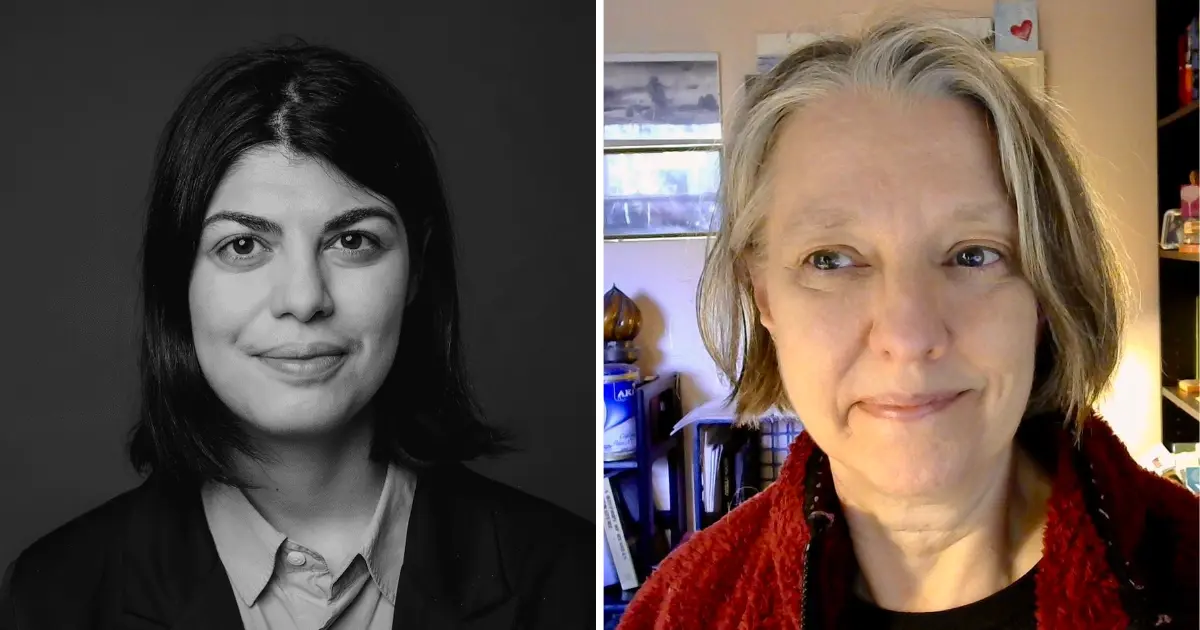
In the contemporary landscape of global literature, few works bridge the harrowing intersections of personal trauma, geopolitical displacement, and linguistic multiplicity quite as powerfully as My Dreadful Body. Written by Azerbaijani-Russian poet, essayist, and scholar Egana Djabbarova, and meticulously translated into English by acclaimed literary translator Lisa Hayden, the book stands as a testament to resilience. Published by New Vessel Press under the editorial guidance of Michael Wise, the novel emerged from a crucible of profound life changes, capturing the complex, visceral realities of navigating identity, systemic marginalization, and chronic illness.
This comprehensive feature explores the genesis of My Dreadful Body, tracing its conceptual roots from Djabbarova’s formative years grappling with xenophobia in Russia to its eventual writing amid the geopolitical and geographical detachment of Taipei, Taiwan. Furthermore, this piece examines the intricate mechanics of its translation into English—a collaborative dance between author and translator that required navigating slippery post-Soviet ethnic slurs, dense poetic registers, and multilingual sonic landscapes. Through detailed interviews and analytical breakdowns, we explore how My Dreadful Body transforms the physical body into an undeniable site of agency, reshaping personal pain into universal literature.
Detailed Chronology: From Concept to English Publication
The life cycle of My Dreadful Body spans decades of internal interrogation, intense writing periods under unusual geopolitical circumstances, and a delicate, cross-continental translation process.
Read Also
1. The Gesticulation of Identity: Formative Years and Conceptual Genesis
The conceptual foundation of My Dreadful Body predates its physical writing by many years. Born into an Azerbaijani family in Yekaterinburg, Russia, Djabbarova spent her teenage years locked in an internal crisis of identity and belonging. Struggling against pervasive racism, xenophobia, and patriarchal expectations within Russian society, she found herself constantly questioning her place in a world that refused to grant her an organic sense of home.
A critical turning point arrived with a severe medical diagnosis. Rather than breaking her spirit, the illness acted as a profound catalyst for an acute sense of embodiment. Djabbarova realized the inseparable link between subjecthood and the physical body. Drawing on the concepts of decolonial thinker Nelson Maldonado-Torres—specifically his theory of the "coloniality of being," which details how the humanity of colonized and marginalized individuals is systematically questioned—Djabbarova made a deliberate artistic choice. She decided to construct her narrative entirely through the lens of the body: making marginalization visible, inescapable, and an undeniable testament to her own agency.
2. Writing in Exile: Taipei (2022–2023)
The actual writing of the manuscript occurred between 2022 and 2023 under intensely unconventional conditions. During this period, Djabbarova was living in Taipei, Taiwan, where she was employed teaching Russian as a foreign language.
This dual distance—both temporal (reflecting on past traumas from a safe remove) and geographical (living in a vastly different cultural ecosystem)—provided the psychological space necessary to synthesize her life experiences. The distance allowed her to look back at her own life as a cohesive narrative, translating raw trauma into a structured work of literary fiction. However, the realities of her existence caught up with her; in 2024, facing intense persecution due to her LGBTQ+ activism and outspoken opposition to the war in Ukraine, Djabbarova was forced to flee Russia entirely. She currently resides and writes in Hamburg, Germany.
3. Acquisition and the Translation Journey
The manuscript’s journey into the English-speaking world began when Michael Wise, publisher and editor at New Vessel Press, discovered the work and brought it to veteran literary translator Lisa Hayden. Having earned her MA in Russian Literature from the University of Pennsylvania and having spent six critical years living in Moscow, Hayden recognized the immediate brilliance of the text.
Upon accepting the commission, Hayden embarked on a deeply immersive translation process alongside Djabbarova. Operating in constant communication across time zones, the author and translator established a relationship built on absolute trust and mutual respect. While Hayden utilized her acute literary intuition to capture the shifting emotional tones of the novel, Djabbarova remained an active collaborator, clarifying ambiguous verbs, cultural references, and layered poetic registers.
Supporting Context & Metrics: The Linguistic and Cultural Architecture
Translating a deeply poetic, multilingual work like My Dreadful Body presents an array of mechanical, cultural, and sociolinguistic hurdles. To understand the magnitude of Hayden and Djabbarova’s achievement, one must examine the specific metrics and challenges that defined their collaborative process.
Navigating the Post-Soviet Lexicon of Discrimination
One of the most delicate intellectual challenges encountered during the translation of My Dreadful Body involved Chapter VII, titled "TONGUE." In this chapter, the protagonist lists the explicit verbal assaults hurled at her: “I’m black, blackie, black-ass, alien, monster, foreigner, foreign-born . . .”
The linguistic friction here is immense. In the original Russian, the text relies on deeply entrenched xenophobic slurs (such as chernaya or chernozhopaya) that are systematically deployed to degrade individuals from the Caucasus and Muslim-majority countries of the former Soviet Union, as well as anyone presenting with darker skin or features. However, translating these terms literally into an American cultural context introduces an immediate historical distortion. In the United States, such language is primarily and historically intertwined with anti-Black racism.
Hayden and Djabbarova had to exercise extreme nuance to convey the precise weight of post-Soviet ethnic discrimination and colorism. They needed to ensure Western readers understood the specific mechanics of the protagonist’s marginalization without inaccurately collapsing those experiences into the distinct framework of American racial politics.
Formal Constraints and Multilingualism
Beyond socio-political terminology, the translation faced severe formal and phonetic constraints:
- Alliteration and String Mechanics: In the Russian passage listing insults, Djabbarova utilized a deliberate string of words beginning with the Russian equivalent of the "ch-" sound. Replicating this phonetic assault in English proved impossible due to structural differences in the languages, forcing the translator to find alternative stylistic devices to convey the relentless nature of the verbal abuse.
- Multilingual Integration: The novel is not monolingual; it strategically incorporates Azerbaijani and Turkish alongside Russian, reflecting the protagonist’s complex cultural heritage.
- Botanical and Culinary Specifics: The text references specific flora—such as Peganum harmala, transliterated as uzerlik—alongside numerous traditional foods. To avoid overburdening the narrative prose with dense explanations, Hayden and Djabbarova strategically integrated a series of carefully curated footnotes, balancing informative clarity with narrative flow.
The Poetics of Prose
A central pillar of Djabbarova’s aesthetic is her deliberate choice to approach prose through the lens of poetry. Every sentence in My Dreadful Body is tightly wound, characterized by high metaphoric weight, emotional intensity, and immense linguistic density. Hayden noted that while her translation work relies heavily on intuition—"hearing" the voices within the text and translating them accordingly—the density of Djabbarova’s writing demanded constant digital dialogue. Through countless email exchanges, Djabbarova unraveled polysemous verbs and layered idioms, ensuring that the poetic compression was never lost in transit.
Official Statements & Collaborative Perspectives
To fully appreciate the synergy behind My Dreadful Body, we turn to the direct reflections of its creators, who view the book not merely as a product of labor, but as a living entity shaped by shared philosophy and artistic metaphors.
Egana Djabbarova on Exile, the Body, and Collaboration
Reflecting on the psychological underpinnings of her work, Djabbarova emphasizes the necessity of physical visibility in the face of systemic erasure:
"Essentially, the position of ethnic minorities, diaspora communities, and tricksters within Russia is very similar—their humanity is denied. This is exactly why I decided to construct the narrative through the body: to make it visible, inescapable, and, at the same time, an undeniable testament to my own agency."
Speaking on her collaboration with Lisa Hayden, Djabbarova expresses profound gratitude for the translator’s ethical approach:
"The process of translating the novel together with Lisa Hayden was an incredible journey. We stayed in constant contact throughout, and Lisa’s approach to the work absolutely amazed me with its profound responsibility, sensitivity, and tenderness. I trusted her one hundred percent, and I still do!"
When asked to describe the book through a metaphor, Djabbarova offers an organic, intricate image:
"It is always difficult to speak about one’s own book objectively or with detachment, but I would suggest the metaphor of a woven carpet or the tangled roots in a garden. In a way, a traditional carpet is a garden in its own right…"
Lisa Hayden on the Transformative Power of Translation
For translator Lisa Hayden, My Dreadful Body evolved from a professional assignment into a life-altering literary encounter. She notes:
"I didn’t realize at the time that My Dreadful Body would become such an important book for me… What she writes feels unexpectedly personal in many ways since I identify so very closely with how she writes about feminism, cultures, and women’s bodies."
Elaborating on the metaphorical resonance of the text, Hayden expands upon Djabbarova’s imagery while introducing her own kinetic mechanical and fluid metaphors:
"I love Egana’s carpet and root metaphors here because they generate such vivid images of weaving, tangling, and blending! Translated texts are blends and tangles, too, of course, because they interlace the words, cultures, views, and perspectives on life that the author and translator bring to them.
For my part, I might add a spring, the kind that’s coiled. Like a spring, Egana’s text is very compact, but it stores lots of power, tremendous energy… Like Egana’s text, that spring is fluid, sparkly, and tremendously fresh, rising out of a deep source."
Future Outlook: The Global Resonance of My Dreadful Body
As My Dreadful Body makes its way into the hands of English-language readers via New Vessel Press, its release signals a crucial moment in contemporary translation and global literature. In an era marked by rising authoritarianism, forced displacements, and intensifying crackdowns on dissenting artists and LGBTQ+ advocates, works like Djabbarova’s serve as vital lifelines of truth and resistance.
The successful English translation proves that linguistic and cultural barriers can be traversed not through dilution, but through rigorous, empathetic collaboration. By preserving the sharp poetic density of the original Russian text while intelligently contextualizing its post-Soviet socio-political realities, Hayden and Djabbarova have crafted a masterpiece that speaks universally to anyone who has ever questioned their right to belong.
Moving forward, My Dreadful Body is poised to spark critical academic and literary discussions surrounding bodily autonomy, decoloniality, and the ethics of translation. As Egana Djabbarova continues her literary and scholarly work from her new home in Hamburg, and as Lisa Hayden cements her legacy as one of the premier translators of contemporary Russian literature, this novel will undoubtedly endure as a luminous, coiled spring of literary energy—unyielding, visible, and radically alive.





Comments
Facebook App ID not configured. Please add it in the Customizer.