
Executive Overview
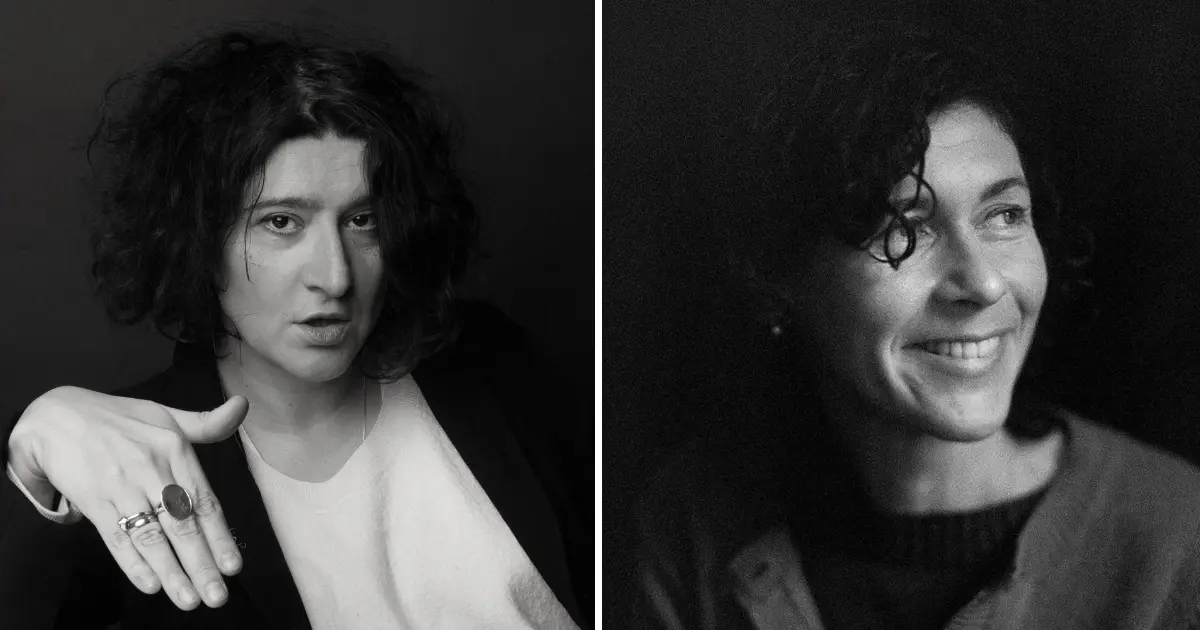
The intersection of literature, geopolitical trauma, and cross-cultural translation is a delicate, high-stakes domain. When a work of profound literary significance crosses linguistic boundaries, the translator acts not merely as a conduit of vocabulary, but as an intellectual co-creator. This dynamic is vividly illustrated in the ongoing collaboration between acclaimed Russian author Maria Stepanova and celebrated British translator and poet Sasha Dugdale.
Stepanova, a towering figure in contemporary European letters, is renowned for her genre-defying works that seamlessly bridge rigorous philosophical essayism, poetic cadence, and narrative fiction. Her landmark novel, In Memory of Memory, captured international acclaim, earning a shortlist nomination for the International Booker Prize and cementing her reputation as an essential voice of our era. Behind the seamless English-language presentation of Stepanova’s texts is Dugdale, whose virtuosic translations preserve the intricate architecture of Stepanova’s prose while finding exact, resonant equivalents in the English language.
In this extensive feature, we explore the genesis of Stepanova’s writing, the formidable linguistic and political challenges encountered during the translation process, the deeply collaborative nature of their artistic partnership, and the haunting visual and metaphorical landscapes—ranging from the surrealist paintings of Leonora Carrington to the archetypal imagery of the Tarot—that animate their work. Through a professional journalistic lens, we examine how these two literary titans navigate the complexities of memory, history, and language in an increasingly fractured world.
Read Also
Detailed Chronology: From a Stranded Journey to the English Page
To understand a literary work, one must trace its origins from the amorphous spark of inspiration to the finalized, published volume. The creation of Stepanova’s latest work follows a trajectory defined not by grand planning, but by serendipity, disruption, and an urgent impulse to capture fleeting human consciousness.
The "Germ" of the Idea: Accidents of Time and Geography
Literary history is replete with famous origin stories. Patricia Highsmith, a master of psychological suspense, famously described the "germ" of her ideas as vivid visual snapshots—such as a solitary young man walking under the blazing Italian sun, which ultimately birthed the iconic Ripley cycle. When asked if her own creative process mirrors this condensed, cinematic ignition, Stepanova offers a humbler, more atmospheric genesis.
Rather than a grand visual tableau, Stepanova’s narrative was born out of infrastructural disruption and temporal suspension: a canceled train and a protracted, lonely afternoon spent wandering through an unfamiliar, unnamed city. Stranded by transit failures, the author found herself suspended in an urban labyrinth, overwhelmed by a sudden, poignant wonder: Could I stay here forever?
This existential pause bypassed conscious deliberation. Stepanova notes that the writing process commenced almost involuntarily, bypassing the analytical mind. It mirrored the immediate, frantic necessity of recording a receding dream before morning cognitive decay erases its details. This urgency—the desperate race against the fading memory of a fleeting state—permeates the texture of the resulting prose, infusing it with a dreamlike yet hyper-aware quality.
The Translation Journey: Entering the Labyrinth
Once the Russian manuscript was complete, it entered the sphere of Sasha Dugdale. Reading the finished work for the first time, Dugdale experienced an immediate, visceral connection, falling in love with the text’s unique hybridity. However, admiration swiftly yielded to the formidable technical challenges of cross-lingual transmission.
Dugdale identifies the primary hurdle as the delicate equilibrium required to sustain Stepanova’s signature style: a fusion of intellectual and philosophical precision—reminiscent of high-level essayism—interwoven with a lively, approximately realist narrative. Maintaining this dual momentum without sacrificing intellectual rigor or narrative drive demanded meticulous craftsmanship. Stepanova, fundamentally a poet, deploys language with a jeweler’s precision. Consequently, Dugdale’s task was a relentless, iterative search for the mot juste in English, ensuring that the prose retained its forward momentum while honoring its dense, philosophical underpinnings.
Supporting Context & Metrics: The Mechanics of Traumatized Language
Translation is rarely a simple one-to-one substitution of dictionary definitions; it is an act of cultural and political negotiation. In contemporary literature, this challenge is acutely magnified when a language itself has been warped by historical cataclysm and ongoing conflict.
Navigating Politically Soiled Vocabulary
One of the most profound methodological insights shared by Dugdale involves the treatment of specific Russian terms that have been "besmirched" or semantically contaminated by recent history and war. In a political climate where official state narratives distort public vocabulary, certain words carry heavy historical baggage, their original neutral meanings corrupted by state propaganda and geopolitical violence.
Faced with this linguistic contamination, a literal translation would fail to capture the contemporary resonance intended by the author. Instead of relying on direct lexical equivalents, Dugdale undertook a sophisticated semantic mapping. She searched for English-language words that bore an equivalent sense of being "soiled" or historically compromised by contemporary global events.
A prime example cited by Dugdale is her selection of the word "collateral." For Dugdale, this term is permanently and irrevocably colored by the ubiquitous military and political euphemism “collateral damage”—a clinical, desensitized phrase used to sanitize civilian casualties in modern warfare. By deploying "collateral" in contexts mirroring Stepanova’s use of corrupted Russian vocabulary, Dugdale successfully transferred the psychological and political weight of the original text into English, ensuring that the translation retained its sharp, critical edge.
Literary Footprint and Critical Reception
The collaborative output of Stepanova and Dugdale occupies a towering space in contemporary translated literature. Reviewing their collective achievements underscores the high stakes of their partnership:
- Maria Stepanova’s Literary Range: Spanning ten poetry collections, three books of essays, and landmark narrative prose, Stepanova’s work has been translated into numerous languages. Her poetry collections Holy Winter 20/21 and War of the Beasts and the Animals earned Poetry Book Society Translation Choices and PEN Translates awards, with the latter shortlisted for the 2021 Warwick Prize for Women in Translation. Her monumental prose work, In Memory of Memory, swept international awards, winning Russia’s prestigious Big Book Award (2018), the Berman Literature Prize, and receiving shortlists for the International Booker Prize, the James Tait Black Prize for Biography, and the Warwick Prize for Women in Translation.
- Sasha Dugdale’s Translatorial Acumen: A celebrated poet and translator in her own right, Dugdale’s translation of In Memory of Memory was shortlisted for the International Booker Prize and won the MLA Lois Roth Award. Beyond her work with Stepanova, Dugdale has translated masterworks by prominent Russian-language women poets, including Elena Shvarts and Marina Tsvetaeva. Furthermore, she has spent decades bridging cultures by translating Russian-language drama for premier theater institutions in the UK and the US, including the Royal Court Theatre, the Royal Shakespeare Company, and the New York Public Theater.
Official Statements & Dialogic Collaboration
The relationship between author and translator is often portrayed in isolation, but in the case of Stepanova and Dugdale, it functions as an extension of a continuous, living dialogue.
The Author-Translator Dynamic
When asked about the extent of Stepanova’s involvement in the English translation process, Dugdale rejects the notion of a transactional, mechanical handoff. Rather, she characterizes the novel as an organic component of an ongoing, years-long conversation between the two creators.
While specific translational crossroads necessitated technical queries—moments where Dugdale sought explicit clarification on a dense philosophical thought or an obscure syntactic construction—these individual interventions were minor compared to the overarching intellectual rapport. This sustained dialogue forms the atmospheric bedrock of Dugdale’s approach, allowing her to intuit Stepanova’s intellectual movements and stylistic nuances even before translating a single sentence.
Metaphor, Vision, and Surrealism
To encapsulate the elusive spirit of the book, both author and translator turn away from traditional literary criticism and toward visual art, surrealism, and archetype.
Dugdale describes the prose through the lens of British-born Mexican surrealist painter Leonora Carrington. The books share a distinct aesthetic: a dreamlike, shimmering color palette coupled with deep intellectual introspection—all underscored by recurring references to the mystical symbolism of the Tarot.
Stepanova embraces this visual metaphor, expanding upon it by identifying with a specific archetypal figure described within her book: the Fool, stepping boldly into the unknown with a faithful dog snapping at his heels. Upon learning that Carrington had painted her own visionary Tarot deck—an artifact shared with her by Dugdale—Stepanova found a profound sense of artistic alignment. This shared iconography of the Fool—representing innocence, vulnerability, and a fearless plunge into unmapped territory—serves as a fitting emblem for both the creative genesis of the novel and the brave, cross-cultural leap of its English translation.
Future Outlook: The Ongoing Resonance of Cross-Cultural Literature
As global divisions deepen and geopolitical tensions continue to threaten cultural bridges, the work of writers like Maria Stepanova and translators like Sasha Dugdale becomes increasingly vital. Their ongoing collaboration demonstrates that literature is not a static monument, but a dynamic, evolving conversation that transcends national borders.
The challenges highlighted in their partnership—translating the intellectual weight of essays into narrative fiction, grappling with politically compromised vocabulary, and preserving the shimmering, dreamlike cadences of poetic prose—point toward a sophisticated future for international publishing. As readers in the English-speaking world continue to embrace works that defy rigid genre categorization, the Stepanova-Dugdale partnership stands as a gold standard of literary translation.
Looking ahead, their shared commitment to intellectual rigor, historical consciousness, and imaginative freedom ensures that their future projects will continue to challenge, enlighten, and expand the horizons of contemporary world literature. In an era often defined by linguistic degradation and political cynicism, their meticulous stewardship of language offers a luminous reminder of art’s enduring capacity to remember, interrogate, and heal.





Comments
Facebook App ID not configured. Please add it in the Customizer.