
Executive Overview
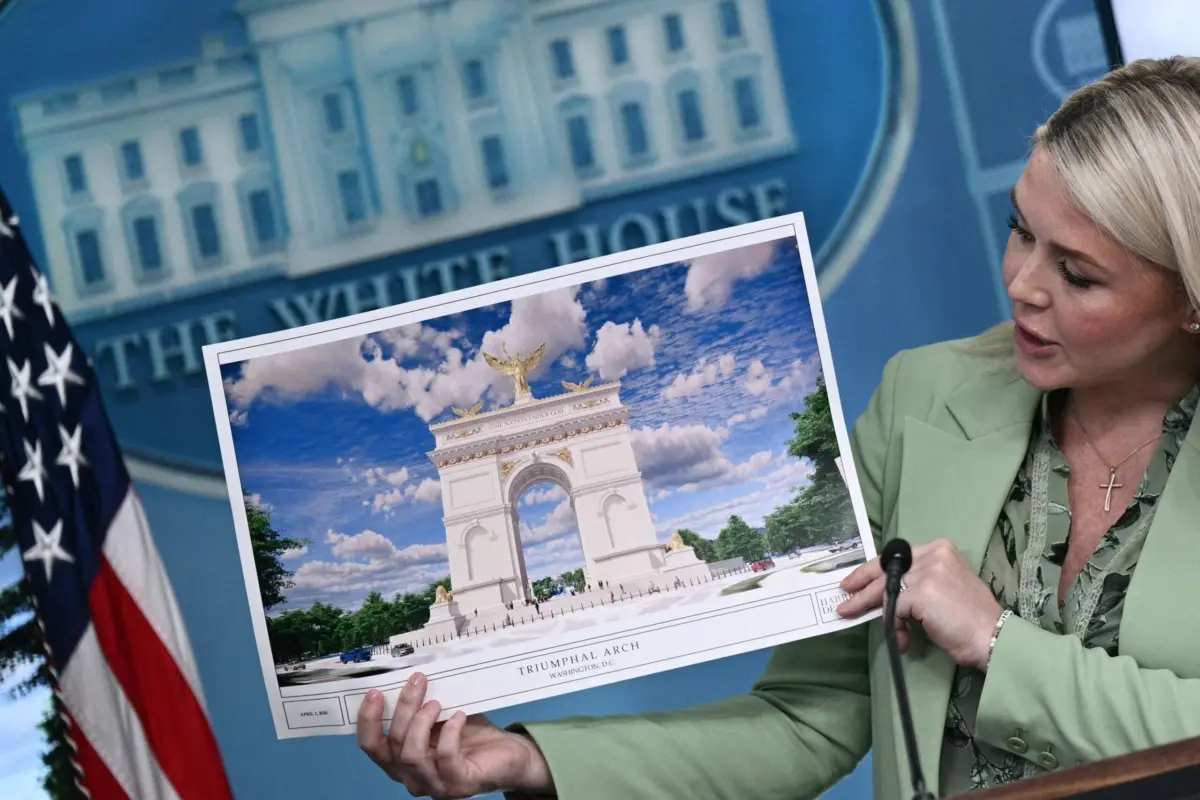
President Donald Trump’s controversial proposal to construct a monumental, 250-foot-tall triumphal arch near the National Mall has undergone a dramatic reimagining. Initially pitched earlier this year as a classic neoclassical architectural tribute, the project has abruptly pivoted into what the administration is now designating a "Military Complex/Triumphal Arch."
According to statements released via social media by the president, the structure will incorporate active defense mechanisms, including dedicated drone port facilities, sniper platforms on both the roof and plaza tiers, and secure storage for extensive stockpiles of tactical sniper ammunition. This sharp evolution reflects a broader pattern within the administration’s infrastructure initiatives: leveraging national security mandates to bypass bureaucratic bottlenecks, bypass congressional oversight, and circumvent local planning objections.
The updated design has intensified an already fierce debate regarding executive overreach, the militarization of public monuments, and the preservation of historic urban spaces in the nation’s capital. While the White House frames the modifications as a vital defensive upgrade requested by the United States military, critics and preservationists view the pivot as a tactical maneuver designed to shield the project from environmental reviews and historical preservation laws.
Read Also
As the debate moves from architectural circles into legal and legislative arenas, the triumphal arch stands as a striking case study of how modern political friction in Washington increasingly manifests in the physical landscape of the city itself.
Detailed Chronology: From Concept to Combat-Ready Infrastructure
January to August: The Genesis of the Monument
The concept of a new triumphal arch first entered the public sphere in January, when reports detailed President Trump’s push to erect a towering 250-foot monument in the vicinity of the National Mall, Arlington National Cemetery, and the Potomac riverfront. Drawing inspiration from historical European monuments like the Arc de Triomphe in Paris, the project was initially presented as a grand civic tribute to American exceptionalism and military history.
However, unlike typical federal infrastructure projects, the arch faced immediate friction. Progress was notably slow, hampered by a combination of funding questions, municipal planning board concerns, and vocal opposition from federal heritage agencies.
September: The National Park Service Pushback
The conflict escalated significantly in mid-September. Internal assessments and public determinations released by the National Park Service (NPS) struck a severe blow to the administration’s timeline. The NPS concluded that the massive scale and placement of the 250-foot structure would cause irreversible visual and physical harm to nearby historic sites of national significance. Specifically, experts warned that the arch would disrupt the carefully managed sightlines and solemn dignity of the Lincoln Memorial and Arlington National Cemetery.
Rather than scaling back the dimensions or relocating the footprint to satisfy preservationists, the administration chose to alter the fundamental purpose of the structure.
The Sunday Morning Policy Shift
On a Sunday morning in late September, President Trump took to social media to announce a radical redesign of the monument. In his post, the president wrote that, "at the strong request of the United States Military, and for National Security purposes," he had agreed to convert the standalone monument into a "top grade Military Complex/Triumphal Arch."
The updated specifications stunned urban planners and defense analysts alike. The president detailed that the redesigned structure would no longer function solely as an architectural landmark, but would incorporate operational defense infrastructure. This included the integration of a drone port and active sniper perches strategically positioned across the roof and surrounding plaza areas, backed by substantial on-site tactical ammunition storage.
Supporting Context & Metrics: Precedents and Parallels
To understand the sudden inclusion of military designations in a public monument project, one must examine recent administrative history. The "Military Complex/Triumphal Arch" bears a striking and deliberate resemblance to another high-profile infrastructure battle from earlier in the year: the transformation of the White House ballroom project.
The "Ballroom/Military Complex" Precedent
When the administration initially sought to construct a large-scale ballroom on executive grounds, it ran into a wall of lower court rulings. Federal judges repeatedly ruled against the project, noting that it lacked the explicit authorization and funding required from Congress.
Thwarted by the judiciary, the administration recalibrated its legal strategy by officially designating the project a "Military Complex"—a classification bolstered by the fact that the ballroom’s foundation sits atop a pre-existing secure presidential bunker. This designation shifted the legal battleground, culminating in a pivotal Supreme Court ruling last month that ultimately allowed the project to move forward despite the lack of direct congressional sign-off.
The "National Security" Cudgel
Legal scholars and political analysts have identified a consistent strategic playbook: whenever an administration project faces zoning laws, historical preservation hurdles, or judicial blockades, "national security" is invoked as a legal and rhetorical shield.
This strategy extends beyond physical architecture into media and public relations. Just a day after announcing the militarized arch, the administration faced severe backlash over a newly enacted press ban restricting specific news organizations from White House access. Amid the ensuing public relations storm, the president publicly defended the press restrictions by labeling the independent media a "threat to our National Security."
Official Statements and Institutional Reactions
The announcement of a drone-capable, sniper-ready monument has elicited starkly polarized responses from federal agencies, defense experts, and historical preservationists.
The White House Perspective
Administration officials maintain that the modifications are entirely responsive to current threat assessments and Department of Defense recommendations. In follow-up statements, spokespersons emphasized that modern urban architecture in high-value capital zones must account for multi-domain security challenges, integrating aerial defense and surveillance capabilities into new construction where feasible.
Preservationist and Historic Agency Pushback
Conversely, organizations dedicated to protecting the capital’s historic integrity have expressed profound alarm. Representatives from the National Parks Conservation Association and allied architectural bodies argue that retrofitting a triumphal arch with sniper platforms and drone hangars fundamentally degrades the cultural and symbolic mission of the National Mall.
Furthermore, legal experts question the veracity of the "military request" rationale. To date, the Department of Defense has not published formal independent documentation substantiating that military leadership requested or operationally required an armed tactical garrison housed within a monumental arch near civilian tourist hubs.
Future Outlook: Legal Battles, Zoning Hurdles, and Urban Realities
As autumn settles over Washington, D.C., the Triumphal Arch project sits at a precarious crossroads. Several critical questions will dictate whether the monument ever breaks ground:
- The Congressional Authority Question: With Congress having granted neither explicit authorization nor funding for a combined military base and monument, legislative leaders from both parties are expected to demand formal briefings on the project’s funding streams and legal justification.
- The Environmental and Historical Review Process: Despite adverse findings from the National Park Service regarding historic harm, the executive branch may attempt to invoke emergency or national security exemptions to bypass standard environmental impact statements and historic preservation reviews.
- The Precedent of Dual-Use Infrastructure: The integration of tactical combat capabilities into civic architecture establishes a radical precedent for American urban design. If constructed, the arch will serve as a physical manifestation of a security-first philosophy applied to public spaces—a monument that attempts to merge public pageantry with fortified defense.
Whether the "Military Complex/Triumphal Arch" ultimately rises along the Potomac or becomes another casualty of Washington’s endless cycle of legal and architectural gridlock, its evolution underscores the shifting priorities of modern federal development. For now, Washingtonians and visitors alike are left watching a conceptual blueprint that blurs the line between a monument to victory and a fortified redoubt in the heart of the capital.





Comments
Facebook App ID not configured. Please add it in the Customizer.