
Executive Overview
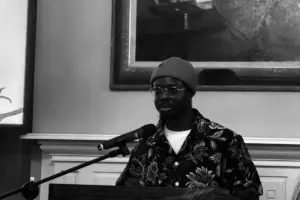
As the literary world shifts its collective gaze toward the pinnacle of contemporary fiction, the ripple effects are being felt deeply across other creative disciplines. Luke Kennard—an award-winning poet, seasoned academic, and newly minted Booker Prize nominee for his darkly humorous novel Black Bag—is finding himself at the center of a cultural conversation. Yet, even as he navigates the whirlwind surrounding his fiction shortlist, Kennard remains firmly anchored in the verse community. He currently serves as a judge for the prestigious 2026 National Poetry Competition (NPC).
With the entry window for the 2026 competition rapidly approaching its final countdown—closing precisely at midnight on Saturday, October 31—budding and established poets alike are looking to Kennard for guidance. What draws a writer of his caliber to poetry versus prose? How does his rigorous literary background inform his evaluation of anonymous submissions? And, most importantly, what specific qualities will make him stop, linger, and ultimately elevate a poem to the winner’s circle?
In this exclusive deep-dive, we explore Kennard’s dual life as a master of both poetry and prose. We examine the permeable boundaries between verse and the novel, review his aesthetic philosophy on language and risk, and provide essential, up-to-the-minute logistical details for anyone looking to submit their work to one of the most celebrated poetry accolades in the English-speaking world before the midnight deadline.
Read Also
Detailed Chronology & Background: The Rise of Luke Kennard
To understand what Luke Kennard brings to the judging panel of the 2026 National Poetry Competition, one must first trace the trajectory of a literary career that has consistently defied rigid genre boundaries.
Academic Roots and Early Acclaim
Based in the West Midlands, Kennard has long balanced creative output with scholarly rigor. Working as a professor of literature and creative writing at the University of Birmingham, he has spent decades dissecting the mechanics of verse and narrative. However, his transition from academic theorist to practitioner of high acclaim occurred early.
A watershed moment in his career arrived in 2014 when the Poetry Book Society named him one of its "Next Generation Poets"—a highly coveted, once-per-decade list designed to highlight the most vital contemporary voices shaping British poetry. Rather than resting on this early accolade, Kennard expanded his repertoire. His sixth poetry collection, Notes on the Sonnets, pushed formal and thematic boundaries, culminating in a well-deserved Forward Prize victory in 2021.
The Fiction Leap and the Booker Shortlist
While Kennard’s poetry has long commanded respect, his literary footprint expanded exponentially with the release of his novel, Black Bag. Characterized by critics as a hilarious, razor-sharp piece of contemporary fiction, Black Bag captured the attention of the literary establishment, ultimately securing a coveted spot on the 2026 Booker Prize shortlist.
This dual success—juggling the intense scrutiny of the Booker Prize cycle alongside the democratic, grass-roots judging sessions of the National Poetry Competition—presents a fascinating study in creative endurance. For Kennard, writing is not a compartmentalized exercise, but a continuous stream of compulsive energy that demands multiple outlets.
Supporting Context & Metrics: The Intersection of Poetry and Prose
When a writer moves fluidly between distinct literary forms, questions inevitably arise about how these practices cross-pollinate. We asked Kennard to unpack the mechanics of his dual-threat creative life, exploring how writing novels has altered his relationship with poetry, and vice versa.
Permeability Between Craft and Form
"This was the first novel I’ve written where I felt like I could channel some of the energy I have when I’m writing poetry: first-person, ill-tempered, self-sabotaging… and then trying to play a tune on the weird instrument I’ve cobbled together," Kennard reflects.
For Kennard, the formal differences between a multi-chapter novel and a compact lyric poem do not mean the creative impulses are entirely separate. His poetry has always leaned toward narrative frameworks, structural play, and distinctive character voices. Consequently, both forms share a fundamental core: a relentless pursuit of emotional precision, no matter how idiosyncratic or uncomfortable the resulting text might be.

The Pleasures and Perils of Prose vs. Verse
Writing a novel requires a sustained narrative arc, pacing control, and ironclad consistency over tens of thousands of words. For a restless writer, this poses unique operational hazards.
"I get bored easily, so staying consistent in a novel and remembering you can’t just go haring down every tangent (every hare-hole?) is challenging for me. But I have this excess energy and I go completely spare if I’m not writing. Eventually you find a way of using your compulsions."
This restlessness finds its ideal counterweight in poetry. Kennard praises the agility of the poetic form, noting: "I like that a poem can just pick you up and set you down somewhere else. And I like the way poems can deal with something subtle like ‘ambivalence’ and make it really sing." To illustrate this subtle power, he points to Carl Phillips’s poem "Holy Places," a piece he recently taught in his university classes.
This love for nuance, formal surprise, and tonal shifting directly informs what he looks for when evaluating incoming NPC submissions.
Official Statements & Judging Philosophy: What Luke Kennard Wants
For poets preparing their final submissions ahead of the October 31 deadline, understanding the mindset of the adjudicator is paramount. The National Poetry Competition is renowned for its strict anonymity, ensuring that brand recognition, previous publications, and institutional affiliations play zero role in the judging process. It is, as Kennard describes it, "literally just you and the poems and a dozen cups of tea per session."
Criteria for Success
When asked what will make him pause, linger, and champion an entry through the various rounds of elimination, Kennard points away from rigid formal constraints and toward vitality and risk:
- A Clear Love of Language: "Really just a clear love of language and phrasing. Some striking imagery."
- Broad, Catholic Tastes: Kennard emphasizes that his literary preferences are expansive and contradictory. He does not favor a single school of poetry, welcoming formal verse, free verse, experimental pieces, and narrative experiments alike.
- Stakes for the Writer: Above all, Kennard looks for an ineffable quality of urgency—the unmistakable sensation that "something’s at stake for the writer (and therefore the reader) in whatever way that manifests."
Reflection on Competition History
Looking at the lineage of the competition, Kennard expresses immense admiration for the standard of work produced over the past decade. He highlights past winning poems—such as Eric Yip’s "Fricatives" and Fiona Larkin’s "Absence Has a Grammar"—as stellar benchmarks of what the NPC consistently unearths. These pieces demonstrate the precise blend of linguistic bravery, emotional depth, and structural control that he hopes to encounter in the 2026 submissions.
Future Outlook: The 2026 National Poetry Competition Deadline
As the literary calendar marches toward the autumn equinox, the urgency surrounding the 2026 National Poetry Competition reaches its peak. With a judging panel featuring luminaries like Luke Kennard, the prestige and competitive standard of this year’s installment are higher than ever.
Essential Information for Entrants
- Closing Date: Saturday, October 31
- Deadline Time: Midnight (GMT)
- Submission Format: Fully anonymized entry process via the official web portal.
- Resources & Support: Poets seeking inspiration, formatting guidelines, and developmental tips can access dedicated resources via the Poetry Society NPC Resources page.
- Inquiries: For any procedural questions not addressed in the comprehensive NPC FAQs, entrants can reach out directly to the organizers.
As Luke Kennard balances his historic Booker Prize nomination with the quiet, contemplative labor of reading anonymous poetry submissions, his message to the literary community is clear: write with urgency, embrace your creative compulsions, and let the language lead the way.
There are only days remaining before the portal closes at midnight on October 31. For aspiring poets wishing to have their work evaluated by one of the sharpest, most versatile literary minds working in Britain today, now is the time to finalize those manuscripts, brew that first cup of tea, and submit.

Comments
Facebook App ID not configured. Please add it in the Customizer.