
Executive Overview
In the contemporary literary landscape, the concept of "the flow state" remains the ultimate gold standard. It is frequently romanticized as a mystical plateau where conscious thought dissolves into pure output, characters breathe independently, and hours vanish into the ether. Yet, for the vast majority of working authors operating outside the ivory tower of total seclusion, this uninterrupted creative utopia is an increasingly rare luxury.
Recent discussions across the writing community highlight a pervasive professional tension: the collision between the deep-focus requirements of long-form storytelling and the fragmented reality of the modern work-from-home lifestyle. From domestic obligations and family logistics to digital tethers and household maintenance, the contemporary writer’s workspace is porous.
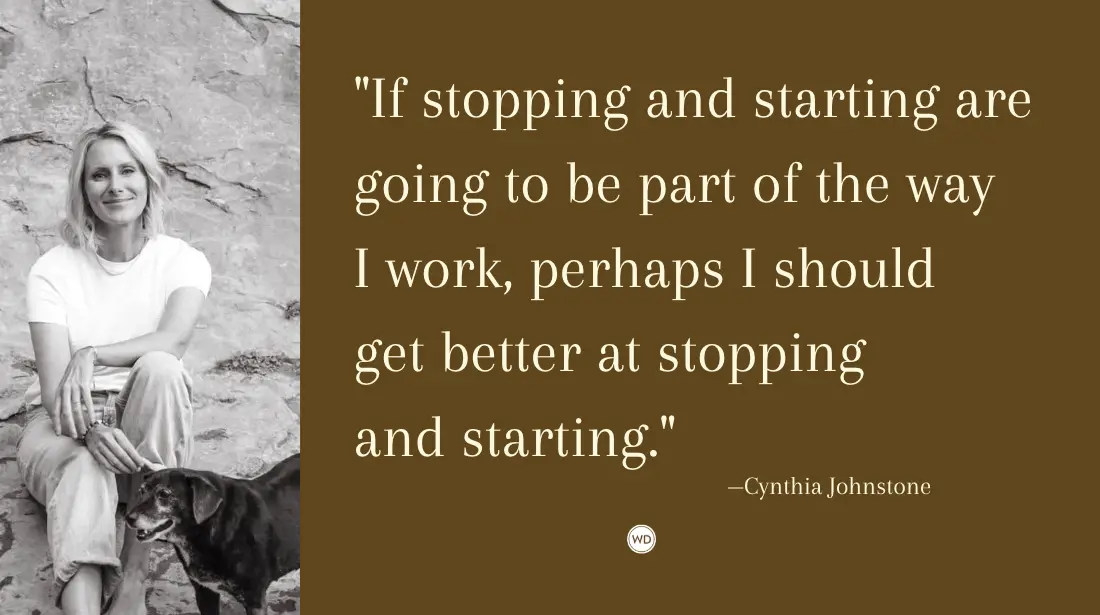
For years, conventional productivity advice insisted that authors must fortify their environments—erecting metaphorical moats, enforcing strict boundary rules, and demanding absolute silence. However, a pragmatic counter-movement is emerging. Rather than waging an exhausting, ultimately futile war against the inevitable interruptions of daily life, a growing cohort of professionals is redefining the craft itself. By embracing micro-sessions, non-linear drafting, and systematic "breadcrumbs" for seamless re-entry, these writers are proving that a fragmented schedule does not preclude literary excellence. The ultimate metric of success is no longer the purity of the unbroken writing block, but the resilience of the writer’s return.
Read Also
Detailed Chronology: The Evolution of the "Deep Work" Myth Versus Reality
The obsession with uninterrupted creative time has historical roots deeply embedded in the romantic ideal of the solitary genius.
- The Mid-20th Century Ideal: The post-war literary culture heavily promoted the image of the isolated cabin, the locked study, and the uninterrupted morning routine. Writers like Ernest Hemingway and Virginia Woolf symbolized a standard of rigorous, protected solitude that became synonymous with serious artistic production.
- The Late 20th Century Office Shift: As creative writing migrated into academic institutions and freelance writing merged with domestic spaces, the boundary between "work time" and "life time" began to blur. Yet, the psychological weight of the uninterrupted block persisted as the sole validator of authentic work.
- The 21st-Century Remote Revolution: The widespread adoption of remote work, accelerated globally over the past decade, thrust writers squarely into multi-role environments. The modern home office is rarely a sanctuary; it is a command center managing family needs, professional emails, and domestic maintenance simultaneously.
- The Present Paradigm Shift: Writers are systematically dismantling the myth that 15 to 30 minutes of writing time is worthless. A cultural pivot is underway, replacing the pursuit of unattainable multi-hour flow states with tactical methodologies designed for erratic schedules.
Supporting Context & Metrics: The Cost of Disruption and the Power of Micro-Schedules
Cognitive science and creative productivity data reveal fascinating insights into how the human brain handles task-switching, particularly within artistic disciplines.
The Cognitive Toll of Context Switching
Psychological studies consistently demonstrate that recovering from a significant interruption requires an average of 15 to 23 minutes to regain deep focus. For a writer working within a constrained 45-minute window, a single phone call or domestic query can effectively cannibalize the entire session if approached with traditional methodologies.
The Mathematics of Micro-Writing
To understand the viability of fragmented schedules, one must look at aggregate word-count metrics over time:
- The 300-Word Daily Average: A writer who captures just 300 words during a morning micro-session and another 300 words during an evening pocket of time accumulates 600 words a day.
- The Annual Yield: At 600 words per day, an author produces 4,200 words a week. Over 50 weeks, this totals 210,000 words—the equivalent of two robust novels or one sprawling epic fantasy, generated entirely in the margins of a busy life.
Comparative Productivity Models
| Productivity Approach | Primary Advantage | Primary Vulnerability | Best Suited For |
|---|---|---|---|
| The Unbroken Block (3+ Hours) | Deep immersion, complex structural problem-solving. | Highly vulnerable to domestic friction and burnout. | Full-time authors with dedicated studio spaces. |
| The Fragmented Model (Micro-Sessions) | High adaptability, consistent daily momentum. | Requires strict discipline with re-entry cues. | Working parents, professionals with side-hustles, multi-taskers. |
| The Non-Linear Approach | Eliminates writer’s block by writing inspired scenes early. | Demands rigorous structural revision during later editing passes. | Plot-driven authors and fast-draft enthusiasts. |
Official Insights & Practical Methodologies
To bridge the gap between creative ambition and domestic reality, successful authors are adopting innovative structural habits. These frameworks are designed to minimize friction upon returning to the page.
1. The Art of the "Breadcrumb"
The single most destructive element of an interruption is not the pause itself, but the amnesia that follows. Walking away from a vivid scene and returning to a blank cursor often triggers a frustrating cognitive reset.
Modern professionals combat this by leaving explicit structural breadcrumbs before abandoning the desk. Rather than relying on memory, writers drop intentional roadmaps:
- Declarative Directives: Writing explicit instructions such as, "NEXT: Character A reveals the secret, but character B must pretend ignorance."
- Keyword Anchors: When rushed by an urgent demand, leaving a cluster of raw terms—such as "letter, suspicion, hesitation, no confrontation"—acts as an instantaneous cognitive trigger upon return, bypassing the need to reread the preceding twelve pages.
2. Abandoning Chronological Tyranny
A major bottleneck for interruptible writers is the psychological demand to resume writing at the precise geographical coordinate where they left off.
By treating the manuscript as a collection of modular scenes rather than a strictly linear assembly line, writers can leverage whatever emotional or imaginative energy is available in a given moment. If a 20-minute window yields dialogue three chapters ahead, capturing it immediately prevents creative stagnation. The architectural bridges between disparate scenes can be constructed later during the structural editing phase.
3. Tailoring Tasks to Available Time Windows
Treating all time blocks as equal is a primary trap for the blocked writer. A 20-minute pocket cannot accommodate the complex surgical overhaul of a collapsing second act, but it is more than adequate for:
- Drafting crisp, fast-paced dialogue exchanges.
- Polishing an existing paragraph or adjusting sensory descriptions.
- Executing targeted historical or technical research.
- Capturing fleeting structural notes for future chapters.
Future Outlook: The Resilient Author in the Modern Era
As the boundaries separating professional life, domestic responsibility, and creative pursuits continue to dissolve, the definition of a "real writer" is undergoing a necessary and overdue democratization.
The future belongs not to those who can engineer a hermetically sealed vacuum of absolute silence, but to those who master the art of tactical re-entry. By accepting that interruptions are an immutable feature of a vibrant, engaged human life rather than a personal failing, authors can liberate themselves from the tyranny of the ideal writing schedule.
Ultimately, the reading public does not evaluate a finished manuscript based on whether its words were forged during a miraculous three-hour trance or cobbled together in twenty-minute increments between household emergencies. The page bears only the final imprint of the story. For the modern, interruptible writer, the ultimate victory lies in trusting the process, leaving clear coordinates for the return journey, and recognizing that every scattered fragment still adds up to a finished book.
Featured Reading
For readers and writers looking to explore contemporary fiction that balances narrative momentum with complex human landscapes, check out Cynthia Johnstone’s Nomad available on major platforms here.
(Note: Publishers utilize affiliate links to support ongoing literary journalism and platform maintenance.)



Comments
Facebook App ID not configured. Please add it in the Customizer.