
Executive Overview
The contemporary art ecosystem is undergoing a profound structural evolution, marked by high-stakes institutional realignments, urgent infrastructure crises, and a decentralized geographic redistribution of creative capital.
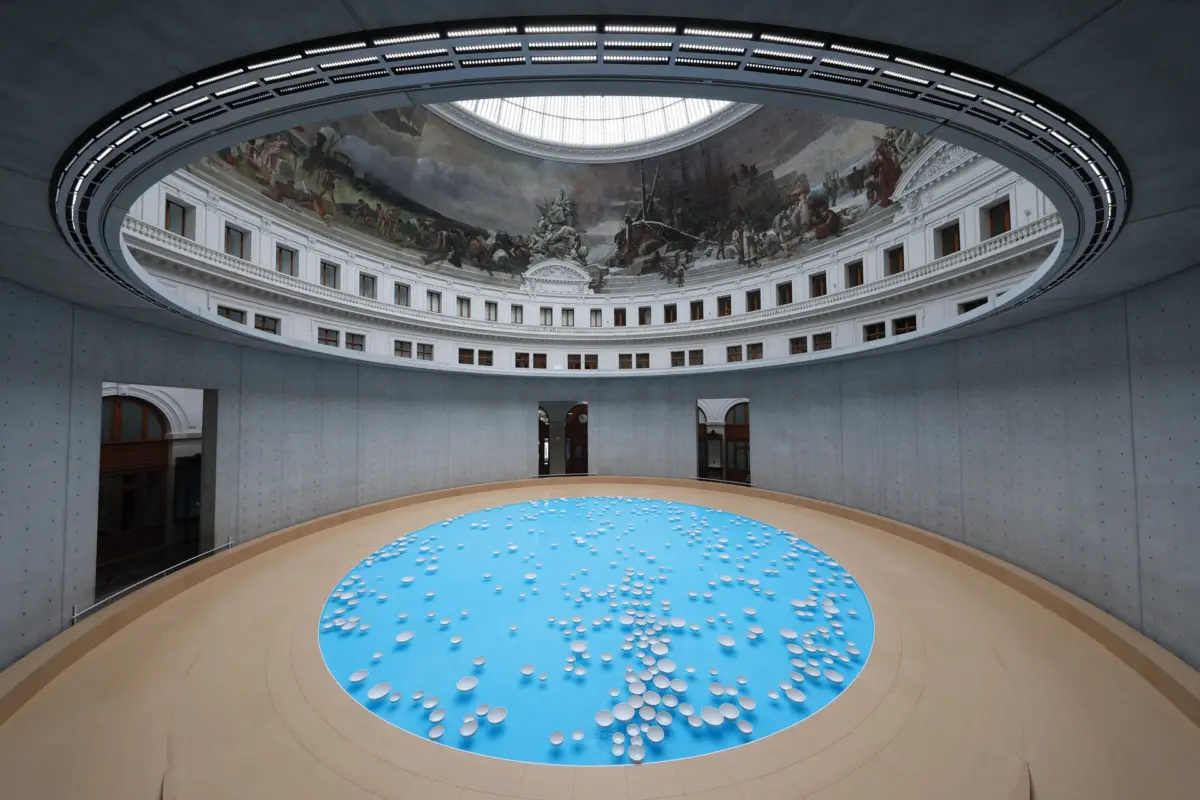
At the apex of the commercial and museum landscape, billionaire collector and Kering founder François Pinault is permanently anchoring a portion of his staggering 10,000-work holdings within Venice’s historic Palazzo Grassi, signaling a move away from transient blockbusters toward enduring, thematic curation. Concurrently, public and institutional preservation efforts are facing severe operational bottlenecks. In Paris, the Louvre’s security apparatus is undergoing a forced modernization under former police commissioner Olivier Goupil to combat systemic vulnerabilities, while across the Atlantic, an engineering post-mortem reveals that the Lincoln Memorial Reflecting Pool’s liner has failed in at least 85 locations due to accelerated and compromised construction practices.
Beyond institutional strongholds, the broader material and political conditions for working artists are deteriorating. Turkish legislative crackdowns have criminalized the public depiction of LGBTQI+ iconography, driving local creative communities underground, while supply-chain failures—specifically the discontinuation of Hydrocal sculpting plaster by its primary domestic manufacturer—have thrown sculptors into an acute production crisis. Yet, even as traditional centers and material pipelines fracture, new geographic frontiers are emerging. A burgeoning renaissance across America’s red-voting "flyover" states, spearheaded by institutional investments in Texas and surging market engagement in Houston and Atlanta, underscores a tectonic shift in where contemporary patronage and artistic talent choose to plant their roots.
Read Also
Detailed Chronology
The Pinault Permanent Installation at Palazzo Grassi
- Context: For decades, François Pinault’s dual Venetian museum spaces—Palazzo Grassi and Punta della Dogana—have relied on dynamic, rotating temporary exhibitions to showcase segments of his massive, ten-thousand-plus-piece collection.
- The Shift: In an extensive interview with French daily Le Monde, Pinault announced a definitive pivot: a permanent, 106-work installation within the Palazzo Grassi.
- Curatorial Philosophy: Eschewing chronological rigidity, the permanent display is designed to juxtapose works across generations and mediums, forcing a continuous dialogue on enduring human inquiries. Pinault characterizes his collecting habits as profoundly subjective, driven by instinct, passion, and visceral reactions to the socio-political violence of the contemporary era.
The Louvre’s Security Overhaul
- The Imperative: Following years of heightened global security concerns and internal logistical pressures, the Musée du Louvre in Paris is actively overhauling its risk management framework.
- Implementation: Under the leadership of Olivier Goupil, a former police commissioner tapped to direct the institution’s security, the Louvre is accelerating the integration of advanced surveillance tech. This includes the deployment of high-resolution closed-circuit monitoring, sophisticated micro-detectors embedded directly into high-value canvases and sculptures, and modernized physical checkpoints at public thresholds.
- Current Status: Goupil has publicly acknowledged the immense pressure facing the institution, noting that while every modernization vector remains critical and time-sensitive, structural implementations are steadily advancing.
The Lincoln Memorial Reflecting Pool Infrastructure Failure
- August Inspections: Commissioned engineering and structural reports released in late summer laid bare the catastrophic degradation of the Lincoln Memorial Reflecting Pool in Washington, D.C.
- The Findings: Inspectors discovered that the pool’s water-retaining liner has ruptured in a minimum of 85 distinct places.
- Root Cause Analysis: The reports explicitly point the blame at a severely compromised, rushed historical renovation project that incorporated improper, substandard construction materials. Notably, the report cleared external factors, confirming zero structural damage attributable to vandalism.
Turkish Censorship and LGBTQI+ Artistic Suppression
- Legislative Shifts: Recent regulatory frameworks enacted in Turkey have introduced sweeping prohibitions against the public exhibition, distribution, or creation of art containing LGBTQI+ symbols, notably including the rainbow motif.
- Impact: Turkish artists and cultural practitioners have reported an atmosphere of systemic silencing and self-censorship. The laws have effectively criminalized queer-coded aesthetic expression, forcing independent galleries and artists to navigate severe legal liabilities or abandon politically sensitive projects altogether.
The USG Corporation Hydrocal Crisis
- Material Disruption: The North American sculptural community faces a severe supply chain bottleneck following an announcement by the USG Corporation regarding the discontinuation of Hydrocal, an industry-standard gypsum cement utilized widely for high-strength casting and sculpting.
- Locational Impact: The termination of production at the primary manufacturing facility in Blaine County, Oklahoma, has sent shockwaves through university art departments, professional studios, and commercial fabricators, leaving sculptors scrambling for viable, cost-effective alternatives.
The Rediscovery of Canaletto
- Discovery: A previously undocumented pen-and-ink drawing by master Venetian vedutista Canaletto, authenticated as dating between 1746 and 1755, has emerged from a private collection.
- Subject Matter: The delicate sheet depicts an overgrown, decaying classical arcade in ruins.
- Market Trajectory: The rare work is slated for public auction at Mallams in the United Kingdom on October 21, carrying an aggressive high pre-sale estimate of $79,000.
Bosque de Chapultepec Museum Complex Stalls
- Project Halt: Plans spearheaded by the Mexican military to construct a sprawling, high-profile military museum complex within Mexico City’s heavily utilized and historically protected Bosque de Chapultepec park have been officially suspended. The reversal marks a temporary victory for conservationists and urban planners concerned about commercial and military encroachment on the city’s primary green lung.
Supporting Context & Metrics
The contemporary art market’s physical and geopolitical geography is undergoing a calculated recalibration. While primary centers like Paris, Venice, and London grapple with institutional preservation, physical security, and material scarcity, secondary and tertiary markets within the United States are capturing unprecedented inflows of creative and financial capital.
- Venice Collection Metrics: François Pinault’s holdings exceed 10,000 works, making it one of the most comprehensive private repositories of postwar and contemporary art globally. The initial permanent installation at Palazzo Grassi will draw from a tightly curated selection of 106 works, emphasizing cross-generational dialogues.
- Reflecting Pool Failure Rate: The Lincoln Memorial Reflecting Pool infrastructure audit confirmed liner degradation across 85 distinct zones, a failure rate directly correlated to compromised municipal contractor oversight and improper material specifications during past capital improvement cycles.
- Canaletto Market Valuation: The newly surfaced 18th-century pen-and-ink ruin study heading to Mallams is projected to achieve up to $79,000, highlighting the continued insatiable demand for authenticated works on paper by historically anchored masters.
- The "Flyover" Cultural Shift: Writing in the Financial Times, market analyst Melanie Gerlis highlights the rapid cultural maturation of "red" states. Key developments include:
- The launch of the Ostillo Art Foundation in Austin, Texas—a free-access contemporary nonprofit backed by collector René Campos.
- The commercial expansion of Houston’s art scene, anchored by figures like Untitled Art: Houston director Michael Slenske and the migration of blue-chip artists such as Rick Lowe, Mark Flood, and JooYoung Choi.
- Inclusive, community-forward market development in Atlanta, championed by producers like Kelly Freeman of Art Market Productions, who notes a distinct absence of traditional elitist gatekeeping in favor of accessible public engagement.
Official Statements
François Pinault, Founder of Kering and Owner of Christie’s:
"My collection is eminently subjective and very often built on instinct, passion, or even anger in the face of the violence of the present… A permanent display makes it possible to set works from different periods and generations side by side and to show how certain questions endure. It is in no way a matter of freezing the collection or offering a definitive reading of it."Olivier Goupil, Head of Security, Musée du Louvre:
"Everything is urgent, but everything is moving forward." (Discussing the rapid, multi-tiered deployment of digital art-monitoring sensors, updated structural access controls, and enhanced physical security protocols across the Paris facility).Michael Slenske, Director, Untitled Art: Houston:
(Commenting on Houston’s explosive philanthropic growth and the influx of major artistic talent): "A rising tide of cultural ambition."Kelly Freeman, Art Market Productions (re: Atlanta Arts Ecosystem):
"If you want to be part of the community, there are so many people excited to talk to you. It’s not exclusionary, it’s ‘come on in and learn.’"
Future Outlook
As the art world looks toward the final quarter of 2024 and beyond, the fault lines between institutional rigidity and decentralized adaptation will likely define the sector’s trajectory.
- The Evolution of Private Museums: Pinault’s pivot toward permanent installations at Palazzo Grassi may set a precedent for other mega-collectors managing vast private foundations. Rather than relying on the ceaseless churn of blockbuster temporary exhibitions, institutions may increasingly opt for deep, research-driven permanent displays that offer stable, long-term narratives for visitors.
- Infrastructure Vulnerabilities: The structural crises facing public monuments—exemplified by the Lincoln Memorial Reflecting Pool failures and the Louvre’s continuous security upgrades—will force municipal and national governments to reallocate substantial capital toward deferred maintenance and technological hardening. Public-private partnerships in heritage preservation will become increasingly mandatory.
- Geographic Decentralization: The traditional hegemony of New York, Los Angeles, and London is steadily being challenged by regional art hubs. The institutional and commercial momentum building across Texas (Austin and Houston) and the American Southeast (Atlanta) signals that future market resilience will rely heavily on localized patronage, philanthropic ambition, and lower barriers to entry for collectors and the public alike.
- Material and Legislative Headwinds: The suppression of creative expression in nations like Turkey and the sudden material shortages facing sculptors (such as the loss of Hydrocal) serve as stark reminders of the vulnerabilities inherent to artistic production. Moving forward, artists and institutions must build robust contingency networks—both legally and logistically—to safeguard free expression and sustain physical craftsmanship in an increasingly volatile global climate.

Comments
Facebook App ID not configured. Please add it in the Customizer.