
Executive Overview
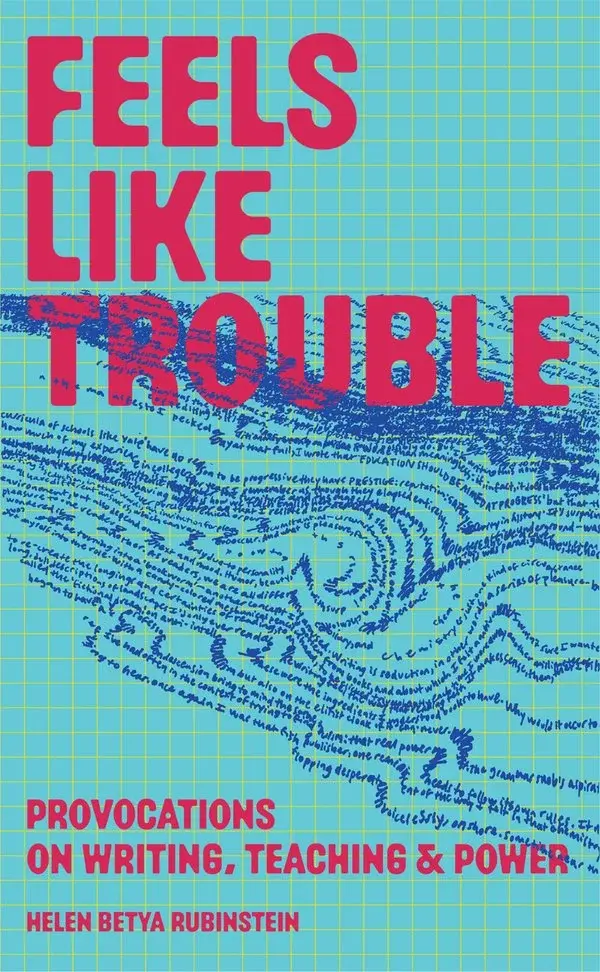
In her book Feels Like Trouble, author and educator Helen Betya Rubinstein provides a critical examination of elite higher education and the subtle, often coercive mechanics of academic authority. Grounded in her experiences as a first-year student at Yale University during the autumn of 2001, Rubinstein’s memoir excerpt, titled “Obedience to Authority: On Being Broken,” interrogates a pervasive pedagogical philosophy: the idea that an educator must "break" a student’s voice and spirit in order to rebuild them according to institutional standards.
Rubinstein’s narrative moves beyond personal memoir to offer an investigation into institutional power dynamics, mental health in higher education, and the systemic suppression of creative agency. By juxtaposing her upbringing in Louisiana—characterized by unconventional, progressive teaching styles—with the rigid, authoritarian structures of an Ivy League English department, Rubinstein exposes how prestige institutions often prioritize institutional self-preservation and conformity over genuine intellectual discovery. Her account challenges traditional definitions of academic rigor, questioning whether the emotional and psychological toll inflicted on students is an unintended side effect or a structural feature of elite education.
Detailed Chronology
[Fall 2001: Arrival at Yale] ──> [Sept 11, 2001: Disruption & Political Essay] ──> [Oct-Nov 2001: Office Hours & Escalation] ──> [Dec 2001: Psychological Crisis] ──> [Jan 2002: Liberation & Cognitive Recovery]Fall 2001: The Transition to Elite Academia
In September 2001, Rubinstein arrived at Yale University after graduating from a prestigious high school in Louisiana. Surrounded by high achievers, admissions-committee-vetted leaders, and former high school competition winners, she entered her first college course: Writing the Modern Essay. Held in a wood-paneled room with carved walls and diamond-paned windows, the atmosphere reflected the historic authority of the institution. The instructor, an unsmiling professor with a distinct focus on journalistic precision and standard narrative structure, set a demanding tone from the outset.
Read Also
September 11, 2001: National Trauma and Early Pedagogical Friction
On the morning of September 11, 2001, during the third meeting of the class, news arrived that planes had struck the World Trade Center. The professor offered to facilitate a discussion regarding the events, but confronted with a stunned and silent classroom, dismissed the meeting early.
For the first major writing assignment, students were asked to explore a moment when politics directly intersected with their lives. Rubinstein submitted an essay detailing her childhood experience during the 1991 Louisiana gubernatorial campaign of former Ku Klux Klan leader David Duke. She recounted standing on a playground during third-grade recess, watching an airplane spell "D-U-K-E" in skywriting while children chanted "NO DUKES!"—a childhood memory echoing anti-nuclear slogans.
While the professor initially praised the submission, reading the playground scene aloud to the class, this approval proved short-lived. It marked the only assignment for which Rubinstein received unqualified praise.
October–November 2001: The Escalation of Pedagogical Resistance
As the semester progressed, sharp differences emerged between Rubinstein’s fluid, stylistic approach to creative prose and the professor’s strict journalistic requirements. Rubinstein began attending office hours in the professor’s basement office—a large room adorned with an oversized map of Louisiana and illuminated by a standing lamp.
During these confrontations:
- The professor heavily criticized Rubinstein’s second essay, providing a page-long critique stating: "A writer needs backbone, not capricious word choice and declarations," and insisting that writing must capture "that cycle of human mistakes and errors of which we are all a part."
- Rubinstein challenged the professor’s teaching methods directly through written feedback and email correspondence, arguing against rigid structural constraints.
- In response to Rubinstein weeping during an office visit, the professor offered a box of tissues and articulated her core teaching philosophy: "I’m breaking you to build you," framing the methodology as an institutional tradition passed down from her own university mentors.
Concurrently, Rubinstein sought counsel from her family and former educators:
- Her Father’s Perspective: A Soviet-educated engineering professor, her father encouraged tactical compliance. In an October email, he advised her to "be a big girl and stop crying" and to submit to the instructor’s requirements: "The best writing for this class is the style she wants."
- Her High School Advisor ("EM"): Rubinstein maintained contact with her former mentor, expressing deep concern that the course was rendering her "too self-consciously analytical to write well ever again."
December 2001: Psychological Breakdown and Institutional Disillusionment
By late autumn, Rubinstein experienced severe academic and emotional distress. In a series of personal notes and emails, she documented her sense of psychological confinement:
- December 6, 2001: In an email to herself titled "yo," Rubinstein wrote: "i am trying to write, and i can’t. all i want is to be able to write… i want to run away to a place of value. that does not devalue."
- She authored an personal manifesto critiquing elite education, arguing that institutions like Yale "have no reason to be progressive. they have PRESTIGE: reputation: SAFETY: security in history," and concluding that the ultimate effect of the "break to build" methodology was that "our intuition creativity natural anything is suffocated caged squashed killed LOST."
January 2002: Intellectual and Emotional Recovery
Following the conclusion of the semester, two significant changes occurred: Rubinstein completed the course, and two weeks later, she discontinued hormonal birth control. In January 2002, while printing an assignment in a basement computer lab, she experienced a sudden lifting of her depressive state and a resurgence of independent creative thought. Reclaiming her agency, she participated in community outreach programs in New Haven, teaching local eighth-grade students to write flexibly and expressively, explicitly countering the rigid practices she had experienced during her first semester.
Supporting Context & Metrics
The Mechanics of Academic Conformity: A Comparative Analysis
To understand the conflict between Rubinstein and her professor, it is useful to examine the competing educational philosophies present in her account:
| Pedagogical Metric | The "Break to Build" Institutional Model | The Progressive Discovery Model |
|---|---|---|
| Primary Objective | Standardized mastery, institutional alignment, adherence to genre conventions | Self-expression, intuitive discovery, creative risk-taking |
| Instructor’s Role | Gatekeeper, arbiter of correctness, authoritative corrective force | Facilitator, mentor, collaborative audience |
| Student’s Role | Passive recipient ("banking model"), executor of specified rules | Active explorer, primary authority on personal narrative |
| View on Style | Subordinated to efficiency, clarity, immediate delivery of facts | Central to identity, dynamic, allowed to be "capricious" and playful |
| Evaluation Method | Corrective critique, structural reduction, enforced revision | Affirmative feedback, open experimentation, iterative dialogue |
Theoretical Frameworks: Freire and Dewey
Rubinstein’s experience illustrates the tension between two foundational theoretical models in modern education:
    Pedagogical Orientations
    ├── Banking Model (Freire)
    │   ├── Teacher as sole authority
    │   ├── Students as passive receptacles
    │   └── Enforced conformity & standardization
    └── Experiential Model (Dewey)
        ├── Learning through active experimentation ("doing")
        ├── Student agency and discovery
└── Creative risk-taking- The Banking Concept of Education (Paulo Freire): Rubinstein explicitly connects her professor’s approach to Paulo Freire’s critique in Pedagogy of the Oppressed. Under the "banking" model, knowledge is treated as a gift bestowed by those who consider themselves knowledgeable upon those whom they consider to know nothing. The professor’s insistence that "this is how we teach English here" demands that the student abandon individual intuition and accept pre-packaged criteria for effective communication.
- Experiential Learning and Progressive Education (John Dewey): In contrast, Rubinstein’s secondary education was shaped by the motto "We learn to do by doing." Her childhood education embraced trial, error, and stylistic play—such as writing essays inspired by the medieval Japanese monk Kenko’s Essays in Idleness or scripting nonsense plays for school-wide performances.
Cultural and Generational Perspectives on Educational Authority
The internal conflict Rubinstein faced was further complicated by differing generational and cultural views on institutional authority:

- The Soviet Academic Tradition: Her father’s perspective was shaped by his education in the Soviet Union and his experience as an engineering professor. In math education, he favored conceptual discovery over memorized formulas. However, when dealing with institutional power structures, his strategy was pragmatic survival: temporary submission to authority to secure structural advancement.
- The High-Achieving Student Dynamic: As Rubinstein notes, students accepted into elite institutions are often conditioned "teacher pleasers." When confronted with harsh institutional judgment, these students may internalize professional critiques as existential failures, leaving them particularly vulnerable to the psychological pressure of "break to build" methodologies.
Official Statements & Documented Perspectives
The narrative records several distinct positions on academic discipline, authority, and student agency:
The Institutional & Faculty Perspective
While the professor’s views are represented through Rubinstein’s recollections, her documented statements articulate a specific educational philosophy:
"I’m breaking you to build you… This is how we teach English here."
"A writer needs backbone, not capricious word choice and declarations… [Writing must reflect] that cycle of human mistakes and errors of which we are all a part."
The Parental & Pragmatic Perspective
In correspondence preserved from October 2001, Rubinstein’s parents advocated for compliance over ideological resistance:
Father’s Advice (October 2001):
"Accept the fact that she is your teacher and you must adopt the writing requirement she imposes. It does not mean you have to agree or lose your personal style. Just hold back for a while… Be a big girl and stop crying. The best writing for this class is the style she wants."Mother’s Advice (Fall 2001):
"Write to enjoy yourself in your free time. Write for the course in a way that shows you are trying to learn what she’s trying to teach you… No, don’t tell her you’re being rewarded for less effort. It’s probably not true if writing the way she likes is a struggle for you."
The Student Response & Resistance
Extracts from Rubinstein’s personal journals, manifestos, and emails from late 2001 demonstrate her resistance to institutional standardization:
Student Manifesto (Autumn 2001):
"EDUCATION SHOULD BE AIMED AT PROGRESS… [but institutions like Yale] have no reason to be progressive. they have PRESTIGE: reputation: SAFETY: security in history… these institutions not only MAINTAIN SUCCESS, they also DEFINE SUCCESS… college will BREAK TO BUILD… until our intuition creativity natural anything is suffocated caged squashed killed LOST."Email to High School Advisor (Winter 2001):
"And after teaching this summer, and gaining a stubborn philosophy on education, i am strongly against that idea, all for the significance of discovery in learning."
Future Outlook
Rubinstein’s reflection on her time at Yale offers valuable insights for contemporary higher education, particularly as universities re-evaluate teaching practices, student mental health policies, and the balance between traditional standards and creative freedom.
Reconsidering Pedagogical Models in Higher Education
- Shift Away from Punitive Pedagogy: Modern educational psychology increasingly rejects the premise that emotional stress or intellectual erasure is necessary for advanced learning. Institutions are gradually moving toward trauma-informed and supportive teaching methods that prioritize constructive feedback over institutional dominance.
- Redefining Rigor: Rubinstein’s experience highlights the need to separate true academic rigor—which encourages deep critical thinking, original thought, and complex analysis—from mere procedural compliance and style enforcement.
The Evolution of the Educator
Rubinstein’s ultimate response to her experience was not withdrawal, but a commitment to alternative teaching methods. As a professor herself, she offers an alternative approach to writing instruction:
- Emphasizing Student Agency: Encouraging learners to act as experts in their own stories, favoring creative experimentation over imposed formulas.
- Demystifying Institutional Power: Unpacking how academic standards are formed, allowing students to engage critically with power structures rather than suffering under them.
By documenting her experience in Feels Like Trouble, Rubinstein contributes to an ongoing conversation regarding the purpose of higher education. Her work serves as both a critique of elite academic traditions and a defense of artistic independence, reminding institutions that true intellectual growth comes from empowering students, not breaking them.





Comments
Facebook App ID not configured. Please add it in the Customizer.