
Executive Overview
In a major software development for budget-conscious e-reading enthusiasts, PocketBook has officially released its Firmware 6.11+ update, bringing native OverDrive Libby integration to the PocketBook Verse and PocketBook Verse Lite e-readers. This long-awaited update bridges the gap between affordable hardware and expansive digital public library ecosystems, allowing users to browse, borrow, manage, and read e-books and digital magazines directly on their devices without needing a companion computer or cumbersome side-loading workarounds.
Alongside the Libby integration, the Firmware 6.11 update delivers a completely overhauled Task Manager, designed to streamline multitasking, system navigation, and quick settings access on E Ink displays. While the lack of Bluetooth hardware on the Verse and Verse Lite means users cannot stream audiobooks directly from the new app, the inclusion of native e-book and magazine borrowing transforms these entry-level 6-inch e-readers into powerful, self-contained library portals. This comprehensive review examines the technical dimensions of the update, user experience modifications, and the broader strategic impact of the PocketBook-Libby partnership on the global e-reader market.
Detailed Chronology & Software Architecture
The Evolution of PocketBook Software Integration
For years, digital library access on dedicated e-readers outside of the Amazon Kindle and Kobo ecosystems presented a patchwork of challenges. While Android-based e-readers could freely download the Libby application from the Google Play Store, Linux-based devices—such as those manufactured by PocketBook—historically relied on Adobe Digital Editions (ADE), browser-based borrowing, or regional OPDS catalog configurations.
Read Also
The rollout of Firmware 6.11 changes this dynamic completely by baking the Libby experience directly into the operating system architecture.
- Phase One (Pre-6.11): Library patrons using PocketBook devices were forced to discover books on a smartphone or computer, download ACSM files, authorize their devices via Adobe ID, and transfer files via USB.
- Phase Two (Firmware 6.11+): The introduction of the native PocketBook x Libby application eliminates the intermediary desktop step. Users can authenticate directly via library card credentials, search regional networks, and download content instantly via Wi-Fi.
Step-by-Step System Functionality
Upon updating to Firmware 6.11, users are greeted by a streamlined initialization process within the application menu:
- Library Discovery: Users can locate their local library branch using an intuitive search tool filtered by name, postal code, city, and country.
- Authentication: Signing in requires a valid library card number and PIN, securely stored within the app’s multi-card management shelf.
- Browsing and Previewing: The interface allows readers to preview sample chapters, inspect book metadata, and check real-time availability.
- Loan Lifecycle Management: Users can place holds, manage active loans, renew titles, and return materials early directly from the e-reader interface.
- Offline Reading vs. Online Streaming: Once an e-book or digital magazine is checked out, it downloads directly to the device’s local storage, allowing for seamless offline reading via the native PocketBook reader engine. However, due to the absence of Bluetooth hardware in both the Verse and Verse Lite models, audiobook titles remain accessible only via online streaming features (though effectively restricted by hardware limitations).
Supporting Context & Metrics: Hardware Limitations and UI Overhauls
The PocketBook Verse & Verse Lite Hardware Profile
To fully appreciate the impact of the Firmware 6.11 update, it is crucial to examine the hardware specifications of the devices receiving it:

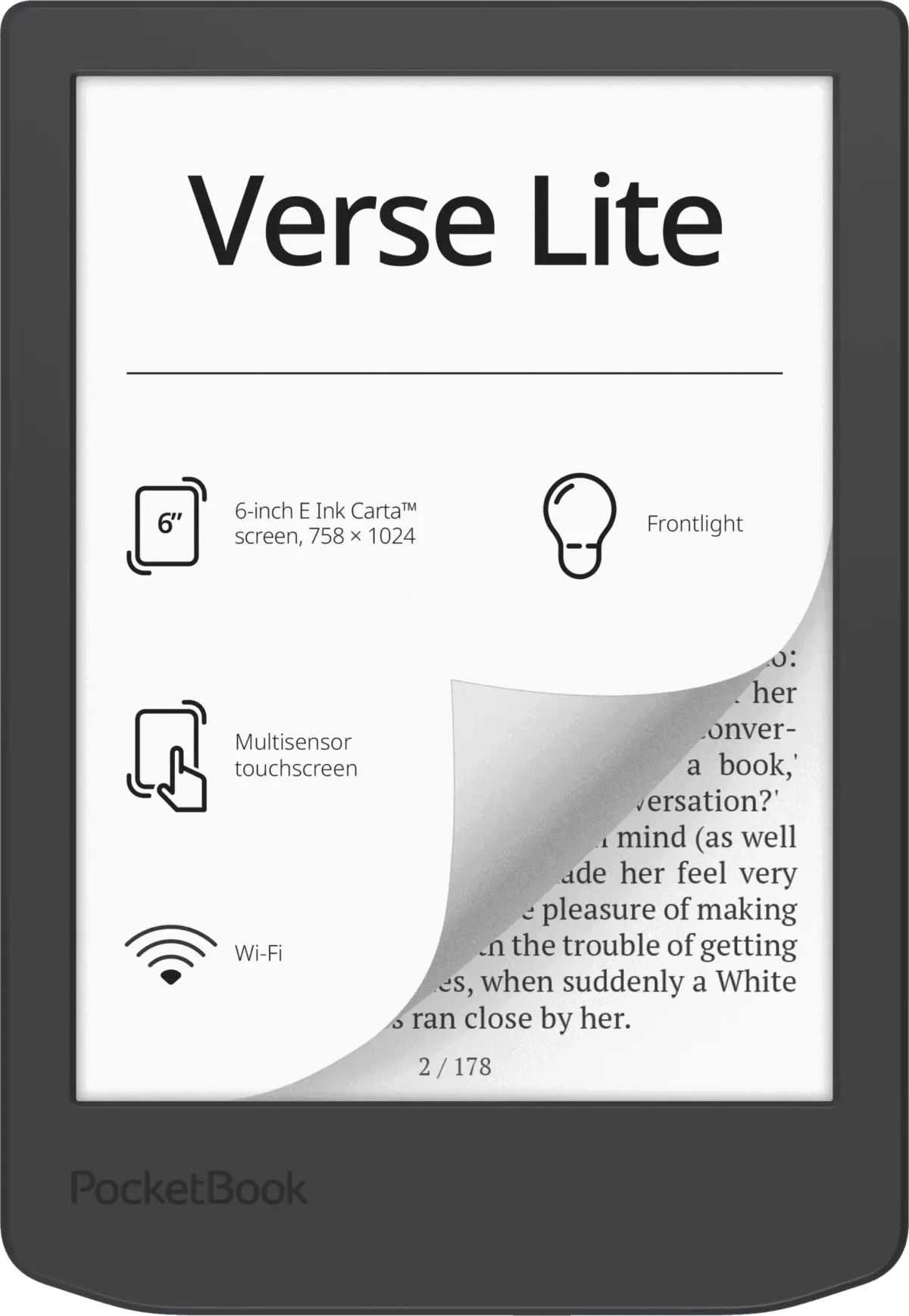
- Display Technology: Both the PocketBook Verse and Verse Lite feature a crisp 6-inch E Ink Carta display equipped with a built-in front light for comfortable reading in low-light environments.
- Navigation: Featuring responsive multitouch screens alongside physical page-turn buttons, these devices support gestures such as the intuitive corner page curl.
- Connectivity Restrictions: A key differentiator between entry-level models and flagship devices is connectivity. Neither the standard Verse nor the Verse Lite includes Bluetooth chips or audio jacks. Consequently, while the Libby app supports both text and audio formats within its broader ecosystem, PocketBook users on these specific models are restricted solely to text-based e-books and graphic-rich digital magazines.
- Processing and Storage: Optimized to run lightweight Linux distributions, these e-readers maximize battery life, offering weeks of reading on a single charge—a hardware efficiency that the new firmware preserves despite adding complex network synchronization features.
The Redesigned Task Manager
Beyond the headline-grabbing Libby integration, Firmware 6.11 introduces a complete structural overhaul of the system Task Manager. Navigating multiple open documents and system functions on E Ink screens has traditionally posed UI challenges due to screen refresh lag and ghosting. PocketBook’s new Task Manager addresses these hurdles through several key architectural improvements:
- Card-Based Visual Layout: Open applications now appear as distinct visual cards overlaid on the active screen content, moving away from simple text lists.
- Integrated Quick Settings: The Task Manager interface doubles as a control center, embedding immediate shortcuts for Flight Mode, Device Lock, Screenshot capture, and Power Off.
- Customizable View Modes: Users can freely toggle between thumbnail previews and minimalist icon views. The operating system intelligently remembers the user’s preference across reboots.
- Smart Sorting and Dismissal: Active apps are automatically sorted by recent usage chronology. Users can instantly terminate background processes or dismiss the Task Manager entirely with a simple upward swipe or an off-card tap.
Official Statements and Industry Perspective
Industry analysts view the collaboration between PocketBook and OverDrive as a crucial strategic counterweight to the closed-garden ecosystems dominated by Amazon Kindle and Kobo. By integrating Libby natively into affordable hardware like the Verse Lite, PocketBook is aggressively targeting budget-conscious readers who prioritize open-standard formats (such as EPUB and PDF) alongside free public library access.
While PocketBook representatives have emphasized the company’s commitment to expanding digital inclusion through software updates for existing hardware generations, experts note that streamlining library access on Linux-based e-readers represents a major engineering triumph. Historically, maintaining secure API connections to OverDrive’s infrastructure on constrained embedded systems required heavy resource allocation. The success of Firmware 6.11 suggests that PocketBook is successfully future-proofing its entry-level portfolio against competitors offering integrated cloud library services.
Future Outlook: What Firmware 6.11 Signals for the E-Reader Market
The release of Firmware 6.11 for the PocketBook Verse and Verse Lite sets a new baseline consumer expectation for entry-level e-readers. No longer is native library integration reserved exclusively for premium flagship devices priced north of $150. As consumers increasingly turn to public libraries to combat inflation and rising media costs, hardware manufacturers that fail to provide frictionless, device-native borrowing apps risk losing market share to agile competitors.
Looking ahead, industry watchers anticipate several downstream developments:
- Broader Firmware Rollouts: PocketBook is expected to port the Firmware 6.11 Libby integration to other legacy and current-generation devices within its catalog, particularly those equipped with Bluetooth (such as the PocketBook Era or Touch HD series), enabling full access to both e-books and audiobooks.
- UI Refinements on E Ink: As E Ink display refresh rates improve and ghosting reduction algorithms become more sophisticated, complex interfaces like the new card-based Task Manager will likely become even more fluid, narrowing the operational gap between LCD tablets and electronic paper readers.
- Heightened Competition in the Budget Segment: With Amazon continuing to dominate the subsidized, ad-supported e-reader space and Kobo strengthening its integration with OverDrive, PocketBook’s enhanced open-ecosystem approach provides a compelling alternative for library-heavy readers worldwide.
Ultimately, Firmware 6.11 transforms the PocketBook Verse and Verse Lite from simple document readers into fully connected digital library terminals, proving that substantial software enhancements can breathe new life into accessible, pocket-friendly hardware.



Comments
Facebook App ID not configured. Please add it in the Customizer.