
Executive Overview
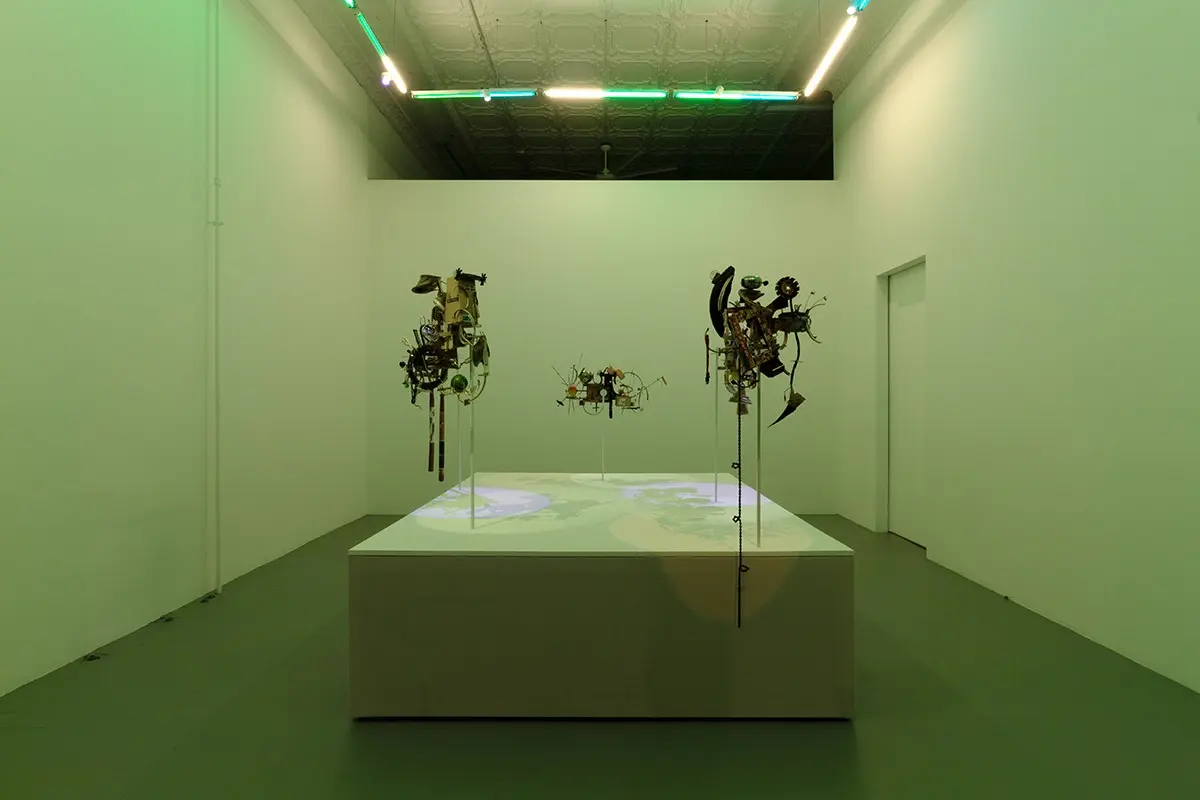
In the fast-paced, highly financialized ecosystem of the contemporary global art market, the closure of a small, artist-run gallery is often chalked up to the harsh realities of rising overheads, shifting collector whims, or sheer economic exhaustion. Yet, the impending shuttering of Prairie, a beloved Chicago-based alternative art space that has spent nearly a decade championing the fringes of the contemporary avant-garde, defies this standard narrative.
Founded in 2017 by artists and curators Tim Mann and Jack Schneider, Prairie established itself as an indispensable laboratory for emerging talent—a place where raw, uncompromising, and commercially unconventional work could breathe without the suffocating pressures of the primary market. On Friday, the gallery announced via Instagram that its forthcoming group exhibition, pointedly titled “Retrospective,” would mark its final chapter.
Unlike the many storefronts that have fallen victim to post-pandemic economic realities, Prairie’s closure is not a story of bankruptcy or failure. Rather, it represents a deliberate, carefully planned conclusion to a nine-year experiment in artistic freedom. Co-founders Mann and Schneider have decided to close their doors on their own terms, leaving behind an outsized legacy that includes launching the careers of artists who have gone on to conquer the Whitney Biennial and MoMA PS1’s Greater New York quinquennial.
Read Also
This retrospective look at Prairie’s trajectory explores the gallery’s origins, its distinct philosophy of "commercial irrelevance," its role as a cultivator of institutional breakthroughs, and the future trajectories of its visionary founders as they pivot away from the physical gallery model.
Detailed Chronology: From Studio Walls to a Chicago Institution
To understand the impact of Prairie, one must look back to its modest genesis in 2017. Launched within the shared studio space of Tim Mann and Jack Schneider, the initiative was conceived as an antidote to the hyper-commercialized gallery models dominating coastal art hubs like New York and Los Angeles.
The Founding Vision (2017)
Naming the space after the pre-colonial and pre-industrial ecosystem that once defined the geography of the Chicago region, the founders signaled an intent to root their program in notions of native resilience, untamed growth, and ecological autonomy. From day one, Prairie was designed to operate outside the traditional capitalist feedback loop of the art world.
In a city known for its rich, gritty history of artist-run spaces—ranging from legendary alternative venues like New Capital to the boundary-pushing ethos of Queer Thoughts—Prairie stepped naturally into this lineage. The relatively low cost of commercial and industrial rent in Chicago during the mid-2010s afforded the founders a degree of operational breathing room, allowing them to take aesthetic risks that would have been financially disastrous in Manhattan or London.
The Breakthrough Years (2017–2021)
From its inception, Prairie possessed an uncanny knack for identifying raw, unpolished talent before the wider institutional apparatus took notice.
In 2017, the gallery hosted the very first solo exhibition of Isabelle Frances McGuire. McGuire, whose beguiling, eerie sculptures of witches and folkloric figures later captivated critics and audiences alike at the 2026 Whitney Biennial, cut her teeth within Prairie’s modest white walls. This early platform provided her with the institutional validation needed to experiment freely without commercial interference.
Just two years later, in 2019, the gallery presented the second-ever one-person exhibition of Andrés Magaña. Magaña would go on to become a standout fixture of the 2026 edition of MoMA PS1’s prestigious Greater New York quinquennial, further cementing Prairie’s reputation as an uncommonly accurate radar for generational talent.
Throughout this period, the gallery maintained a rigorous, non-stop exhibition schedule, showcasing a diverse roster of boundary-pushing practitioners, including:
- Kira Scerbin
- Craig Jun Li
- Max Guy
- Katz Tepper
- ASMA
- ektor garcia
- Amina Ross
The Final Bow: "Retrospective" (2026)
After planning their exit strategy for over a year, Mann and Schneider announced in early 2026 that the gallery’s journey was coming to an intentional close. Rather than fading out quietly or scrambling for emergency capital, the duo framed the closure as a celebration. The upcoming group show, aptly titled “Retrospective,” will serve as a final physical manifestation of Prairie’s ethos, bringing together the community, artists, and patrons who sustained the space over its remarkable nine-year run.
Supporting Context & Metrics: The Economics of "Commercial Irrelevance"
In an era where blue-chip galleries aggressively swallow up market share and art fairs dictate the aesthetic values of a generation, Prairie’s financial model stands out as a radical anomaly.
The Anti-Market Philosophy
When asked about the financial pressures that typically force alternative spaces to shutter, Jack Schneider was refreshingly candid.
"We were never a market-oriented space," Schneider remarked. "I think an artist friend of ours, Mira Dayal, recently used the phrase ‘commercially irreverent’ to describe her practice, and I think that pretty perfectly describes our program and approach. We never expected to turn a profit, and we never did. We only ever, through occasional sales, fundraising, and occasional grants, raised just enough money to run the program itself."
This zero-sum financial strategy ensured that the gallery’s programming was never compromised by the tastes of collectors or the demands of secondary market speculation. If an installation was ephemeral, conceptually impenetrable, or chemically unstable, Prairie welcomed it. The gallery functioned as a pure conduit for artistic expression, prioritizing critical discourse and material experimentation over sales sheets and VIP previews.
The Chicago Advantage
Prairie’s survival for nearly a decade is also a testament to the unique cultural and economic landscape of Chicago. While soaring real estate prices in New York and London have systematically eradicated the kind of scrappy, storefront experimentation that defined the 1990s and 2000s, Chicago’s real estate market—though shifting—historically provided a safety net for artist-led initiatives.
By leveraging low overhead costs, sweat equity, and community-based fundraising, Mann and Schneider managed to sustain a world-class contemporary art program on a shoestring budget. Their success underscores a vital truth about the art ecosystem: the most influential cultural incubators are frequently those least encumbered by the pursuit of capital.
Official Statements and Reflections
The announcement of Prairie’s closure sent ripples through the Midwestern art scene and beyond, prompting an outpouring of gratitude from artists, curators, and critics who witnessed the space’s impact firsthand.
In their official Instagram statement, the gallery kept things characteristically understated, writing simply: "This will be our last show." Beneath the post, comments flooded in from alumni and supporters lamenting the loss of a vital Chicago institution while celebrating its extraordinary run.
Tim Mann reflected on the original impetus behind the gallery, emphasizing the deep ties Prairie maintained with Chicago’s historic alternative arts community. Drawing inspiration from spaces like New Capital and Queer Thoughts—the latter of which famously relocated to New York before closing its doors—Mann noted that Prairie was built to honor a specific tradition of artistic self-determination.
"We wanted to create a space that honored the edgy, alternative spaces we looked up to when we were starting out," Mann explained. "The goal was never to build an empire, but to build a home for work that simply had nowhere else to go."
Describing the decision to close after a year of careful deliberation, Mann added that the impending closure feels less like a tragedy and more like "a nice celebratory moment to close on."
Future Outlook: Beyond the Physical Gallery
As the physical doors of Prairie close following the run of "Retrospective," the creative partnership between Tim Mann and Jack Schneider is far from finished.
Rather than viewing the gallery’s closure as an end to their curatorial journey, the co-founders are setting their sights on new horizons. Both men have made it clear that their commitment to championing unconventional artists remains undiminished. However, they are eager to shed the administrative and physical burdens of running a permanent brick-and-mortar storefront.
New Curatorial Frontiers
According to Schneider, the duo plans to continue collaborating on independent curatorial projects.
"We want to do curatorial work, just outside the guise of an artist-run space," Schneider noted.
By stepping away from the routine overhead of maintaining a physical venue, Mann and Schneider will gain the structural flexibility to curate pop-up exhibitions, institutional collaborations, and international projects unburdened by weekly gallery hours or lease renewals. This pivot reflects a broader trend among contemporary curators who are increasingly opting for nomadic, project-based models that allow for greater agility and institutional critique.
The Enduring Legacy of Prairie
Prairie leaves behind shoes that will be difficult to fill in the Chicago art ecosystem. By refusing to bow to the pressures of the commercial art market, Mann and Schneider proved that integrity, rigorous programming, and unyielding support for artists can yield a cultural footprint far larger than any sales ledger could measure.
As artists like Isabelle Frances McGuire and Andrés Magaña continue to shape the national and international conversation, the DNA of Prairie will live on through the generations of creators it nurtured. While the physical space on the Chicago prairie may be fading into memory, the seeds it planted across the contemporary art landscape have taken deep, permanent root.

Comments
Facebook App ID not configured. Please add it in the Customizer.