
Executive Overview
The digital reading landscape continues to evolve, bridging the gap between physical libraries and modern hardware. In a significant software upgrade, PocketBook has rolled out its Firmware 6.11+ update, introducing native OverDrive Libby integration to two of its most popular compact e-readers: the PocketBook Verse and the PocketBook Verse Lite.
For years, accessing library e-books on compact e-reading hardware often involved cumbersome workarounds, auxiliary computer transfers, or clunky browser-based log-ins. This update cuts through the friction. Users of the Verse and Verse Lite can now browse, borrow, manage holds, and read digital books and magazines directly from their devices via a built-in application.
Alongside the integration of Libby, the 6.11 firmware delivers a comprehensive overhaul of the system’s Task Manager, offering a smoother, more modern user interface that enhances everyday navigation. While the hardware limitations of the Verse series—specifically the absence of Bluetooth connectivity—mean that audiobook streaming remains unsupported, the inclusion of native e-book and magazine borrowing transforms these budget-friendly devices into powerhouse companions for public library patrons.
Read Also
Detailed Chronology & Feature Breakdown
The rollout of firmware 6.11 marks a milestone in PocketBook’s software development cycle, focusing heavily on user-centric features, streamlined interfaces, and deeper ecosystem integrations. Below is a detailed breakdown of the new capabilities introduced in this update.
The Integration of PocketBook x Libby
The headline feature of the 6.11+ update is the native integration of the Libby app by OverDrive. Previously, accessing library catalogs on certain e-readers required third-party apps, sideloading, or syncing via Adobe Digital Editions on a personal computer. PocketBook has streamlined this entire workflow.
- Discovery and Setup: Users can find their local library within the app using multiple parameters, including library name, postal/ZIP code, or city, backed by a convenient country filter. Once the library is located, readers can sign in seamlessly using their valid library card credentials.
- Catalog Browsing and Borrowing: The integrated app allows users to preview titles, place holds, manage active loans, and return materials early without ever leaving the device interface.
- Reading Experience: Once an e-book or digital magazine is borrowed, it downloads directly into the device’s native reading application for offline reading.
- Multi-Library Support: For avid readers who maintain memberships across multiple municipal or county library systems, the app includes a dedicated menu that allows users to switch effortlessly between different libraries and multiple library cards.
Note on Hardware Constraints: Because neither the PocketBook Verse nor the Verse Lite features built-in Bluetooth hardware, audiobook functionality within Libby is limited. While users can borrow and read text-based materials seamlessly, audiobook streaming remains off the table for these specific models.
The Redesigned Task Manager
In addition to the Libby integration, PocketBook has completely reimagined the system’s Task Manager, giving the user interface a more modern, responsive feel.
- Card-Based UI: Open applications now appear as distinct cards overlaid on top of whatever content is currently on the screen, mimicking the multitasking interfaces found on modern smartphones and tablets.
- Quick System Shortcuts: The revamped Task Manager does more than just switch between apps. It now includes quick-access shortcuts for essential system controls, including Flight Mode, Device Lock, Screen Capture (Screenshots), and Power Off.
- Customizable Views: Users can toggle between thumbnail views and icon views depending on their preference, with the system remembering the chosen setting.
- Gestures and Sorting: Applications are intelligently sorted by recent usage, making it easy to jump back to a dictionary or settings menu. Apps can be dismissed individually from the manager, while exiting the interface is as simple as tapping outside the card or executing a quick swipe-up gesture.
Supporting Context & Metrics: The PocketBook Verse Series
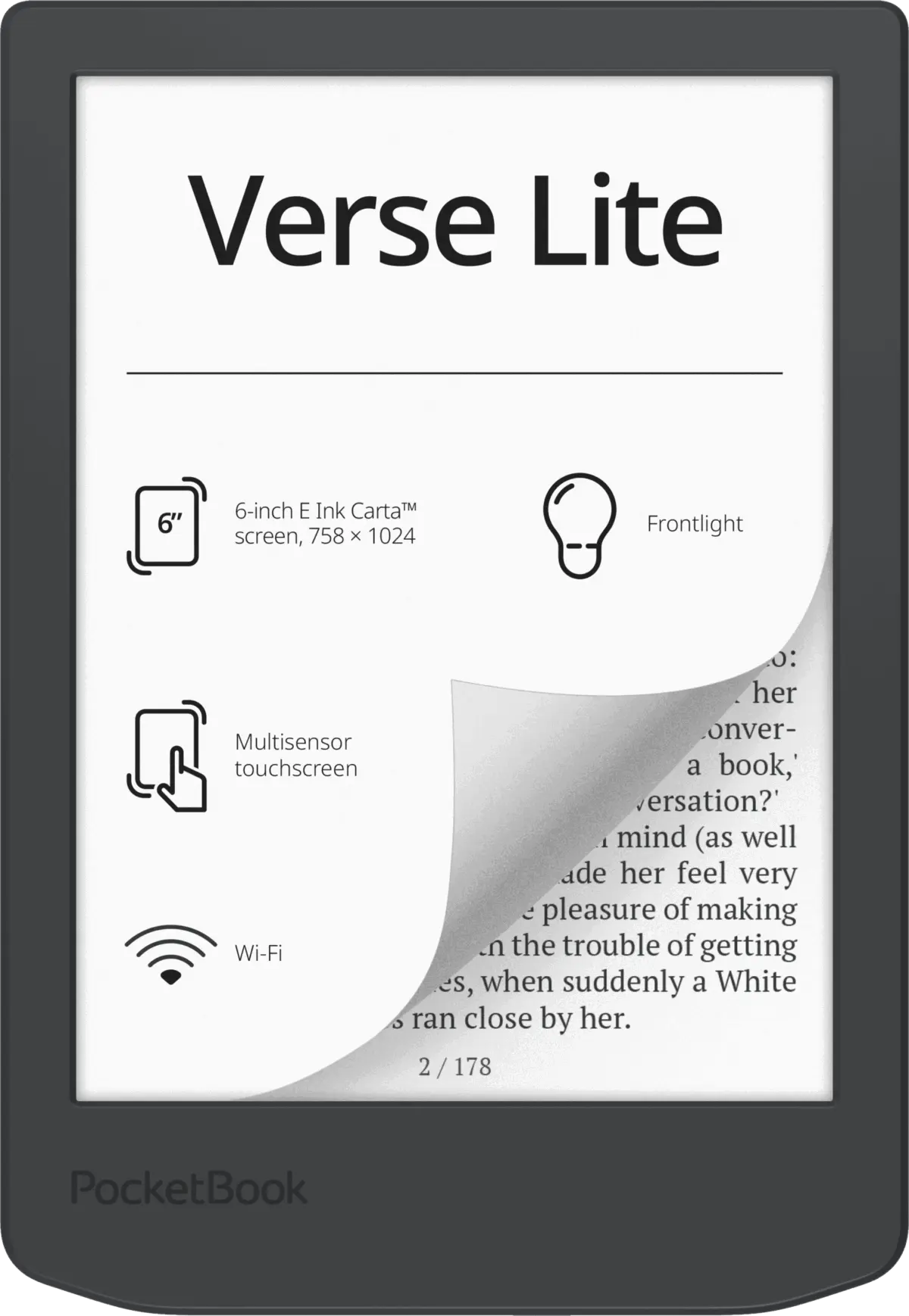
To understand the weight of this software update, it is crucial to examine the hardware it runs on. The PocketBook Verse and PocketBook Verse Lite occupy a vital space in the modern e-reader market: the premium-feeling, highly portable budget category.
| Feature / Specification | PocketBook Verse | PocketBook Verse Lite |
|---|---|---|
| Display | 6-inch E Ink Carta | 6-inch E Ink Carta |
| Front Light | Yes (with SMARTlight color temperature adjustment) | Yes (standard front light) |
| Touchscreen | Capacitive Multitouch | Capacitive Multitouch (supports corner page curls) |
| Connectivity | Wi-Fi | Wi-Fi (No Bluetooth) |
| Primary Use Case | Dedicated e-reading & library borrowing | Entry-level e-reading & library borrowing |
The inclusion of firmware 6.11 significantly elevates the value proposition of both devices. The Verse series features a crisp 6-inch E Ink Carta display, which offers high contrast that mimics traditional paper, making it gentle on the eyes during extended reading sessions. By adding native Libby support, PocketBook has effectively turned a standard budget e-reader into an infinite library portal.

Public libraries have seen an exponential surge in digital checkouts over the past decade. According to data from OverDrive, annual digital book borrowings across public libraries worldwide continue to shatter previous records, with millions of users relying on apps like Libby. By baking this ecosystem directly into the operating system of devices like the Verse and Verse Lite, PocketBook is capitalizing on the growing consumer demand for reading hardware that minimizes friction and maximizes access to free or low-cost reading material.
Official Insights & Industry Impact
While hardware specifications often dominate tech headlines—pixel densities, processor speeds, and color filter arrays—industry analysts frequently point out that software ecosystem integration is the true deciding factor for long-term consumer satisfaction in the e-reader market.
For years, the market has been largely polarized. On one side are closed ecosystems like Amazon’s Kindle, which offers a seamless connection to the Kindle Store and integrated library borrowing (primarily limited to US markets via Libby-to-Kindle integrations), and Kobo, which boasts native OverDrive integration built right into its devices globally. On the other side are open Android-based e-readers that allow users to download any app from the Google Play Store, but often suffer from poorer battery life and heavier operating systems.
PocketBook’s approach with the Verse and Verse Lite treads a sophisticated middle path. By providing a proprietary, highly optimized Linux-based operating system, the company ensures exceptional battery life, lightning-fast page turns, and stability. However, the historic downside of such closed systems was the difficulty in accessing third-party library networks without a computer.
By partnering closely with OverDrive to bake Libby directly into firmware 6.11, PocketBook is closing the feature gap with market giants like Kobo. Industry observers note that this move makes PocketBook e-readers drastically more attractive to international markets—particularly across Europe, where public libraries widely utilize the OverDrive infrastructure, but Kindle integration has traditionally been restricted or unavailable compared to the United States.
Future Outlook
The release of firmware 6.11 for the PocketBook Verse and Verse Lite signals a clear trajectory for the brand: democratizing access to digital literature without sacrificing hardware simplicity or battery longevity.
As libraries continue to pivot toward digital-first models, e-reader manufacturers must adapt. Consumers no longer want to manage files via USB cables or navigate clunky web browsers on black-and-white E Ink screens. They expect seamless, one-touch access to their library accounts straight out of the box.
Looking ahead, users can anticipate that this native Libby integration will likely roll out to other devices in PocketBook’s broader ecosystem running compatible firmware versions. Furthermore, as PocketBook refines its user interface—evidenced by the fluid, card-based Task Manager redesign in this update—the overall user experience is becoming increasingly polished and competitive.
For current owners of the PocketBook Verse or Verse Lite, checking for the 6.11+ system update is an absolute must. It transforms a compact, reliable reading device into an active gateway to millions of books and magazines, reinforcing the idea that portable reading has never been more accessible, affordable, or connected.


Comments
Facebook App ID not configured. Please add it in the Customizer.