
Executive Overview
In an era where digital content is increasingly locked behind subscription paywalls, digital rights management (DRM) barriers, and escalating platform fees, the National Aeronautics and Space Administration (NASA) continues to champion a radically open-access model. For decades, the space agency has quietly maintained a sprawling, meticulously curated digital library. This repository offers the public completely free, unrestricted access to thousands of e-books covering aeronautics, deep-space exploration, engineering manuals, atmospheric sciences, and institutional history.
Available in multiple universally compatible formats—including PDF, EPUB, and MOBI—these publications range from highly technical engineering guides designed for aerospace professionals to visually arresting, coffee-table-style photographic collections that capture the imagination of amateur astronomers and space enthusiasts alike. Far from being a mere marketing afterthought, NASA’s E-Books Directory represents a core tenet of the agency’s statutory charter: to provide for the widest practicable and appropriate dissemination of information concerning its activities and the results thereof.
This report provides an in-depth examination of NASA’s digital publishing ecosystem. We will explore the technical depth of its offerings, trace the historical evolution of government-funded aerospace documentation, analyze the user demographic and accessibility metrics of the platform, review statements from key information architects, and look ahead at how emerging digital formats may transform humanity’s access to space exploration literature.
Read Also
Detailed Chronology: From NACA Monograph Reports to the Modern E-Book Era
To fully appreciate the scope and significance of NASA’s current digital repository, one must understand the historical lineage of aerospace documentation in the United States. The collection is not merely a modern internet phenomenon; it is the direct continuation of a scientific publishing tradition that stretches back well over a century.
The Pre-NASA Foundation: NACA Technical Reports (1915–1958)
The story begins on March 3, 1915, when Congress established the National Advisory Committee for Aeronautics (NACA) via a rider to the naval appropriation bill. Tasked with "supervising and directing the scientific study of the problem of flight, with a view to their practical solution," NACA immediately recognized that progress depended entirely on the rapid and transparent dissemination of experimental data.
During this era, researchers at laboratories like the Langley Memorial Aeronautical Laboratory published thousands of Technical Reports (TRs), Technical Notes (TNs), and Reports. These documents detailed groundbreaking work in airfoil design, wind tunnel testing, and supersonic aerodynamics. They were printed physically and distributed to universities, research institutions, and military contractors. These foundational documents form the bedrock of the historical section of NASA’s modern e-book catalog, preserving the exact calculations and schematics that allowed humanity to break the sound barrier and conceptualize orbital flight.
The Birth of NASA and the Shift to Modern Documentation (1958)
With the passage of the National Aeronautics and Space Act of 1958, NACA was dissolved and subsumed into the newly formed National Aeronautics and Space Administration. The mandate expanded dramatically, shifting focus from atmospheric aeronautics to include rocketry, satellite deployment, crewed spaceflight, and planetary exploration.
As missions grew in complexity—transitioning through the Mercury, Gemini, and Apollo programs—the volume of technical literature exploded. Engineers required standardized methodologies to ensure mission success and crew safety. This gave rise to comprehensive technical handbooks, contractor reports, and historical monographs chronicling everything from Saturn V rocket telemetry to the psychological adaptation of astronauts in microgravity.
The Digital Pivot: Transitioning to Open-Access PDF and EPUB
For decades, accessing these materials required visiting specialized federal depository libraries or ordering physical microfiche copies. However, the advent of the World Wide Web in the 1990s and the subsequent proliferation of digital reading formats in the 2000s and 2010s prompted NASA to completely rethink its distribution strategy.
Recognizing that taxpayer-funded research should be universally accessible, NASA consolidated its disparate publications into a centralized, web-accessible repository. Over the last decade, the agency expanded its catalog beyond dense academic texts. It incorporated EPUB and MOBI formats to ensure compatibility with modern e-readers, tablets, and smartphones, democratizing access to aerospace science for students, hobbyists, and global researchers alike.
Supporting Context & Metrics: Inside the NASA E-Books Directory
The breadth of NASA’s digital library can be intimidating for the uninitiated. To navigate the repository effectively, it helps to categorize the publications into distinct thematic pillars. Each section serves a specific audience, ranging from doctoral-level aerospace engineers to middle-school science classrooms.
1. Aerospace Engineering and Systems Engineering
For professionals and advanced students, NASA provides some of the most rigorous engineering manuals ever compiled.
- The NASA Systems Engineering Handbook: Widely regarded as an industry standard, this text outlines the precise methods used to manage complex, large-scale socio-technical systems. It covers the entire project lifecycle, from initial concept generation through design, verification, operations, and eventual disposal.
- Specialized Monographs: Titles focusing on thermal protection systems, rocket propulsion elements, and avionics redundancy offer blueprints and mathematical models that commercial aerospace startups and university research labs utilize daily.
2. Aviation History and Aeronautical Research
This category bridges the gap between historical narrative and hard engineering data.

- X-Plane Histories: Readers can access deep-dive documentation on experimental aircraft like the Bell X-1, the North American X-15, and lifting-body designs. These texts detail the aerodynamic hurdles of high-altitude, high-speed flight.
- NACA/NASA Continuity: Comprehensive retrospective studies trace how early wind-tunnel discoveries directly influenced modern commercial airliner design, fuel efficiency, and safety protocols.
3. Planetary Science, Astrophysics, and Deep Space Discoveries
Bringing the universe down to Earth, these publications synthesize data gathered by orbital telescopes, planetary rovers, and deep-space probes.
- Mission Summaries: Detailed logs of voyages to Mars, Jupiter, Saturn, and the outer edges of the solar system.
- Atmospheric Sciences: Rigorous academic texts exploring planetary magnetospheres, cloud dynamics on gas giants, and the search for exoplanets.
4. Coffee-Table Photography and Visual Arts
Recognizing that space exploration is a deeply human and aesthetic endeavor, NASA curates a stunning array of image-centric books.
- Cosmic Imagery: Featuring high-resolution captures from the Hubble Space Telescope, the James Webb Space Telescope, and interplanetary probes, these books present nebulae, star clusters, and planetary surfaces in breathtaking detail.
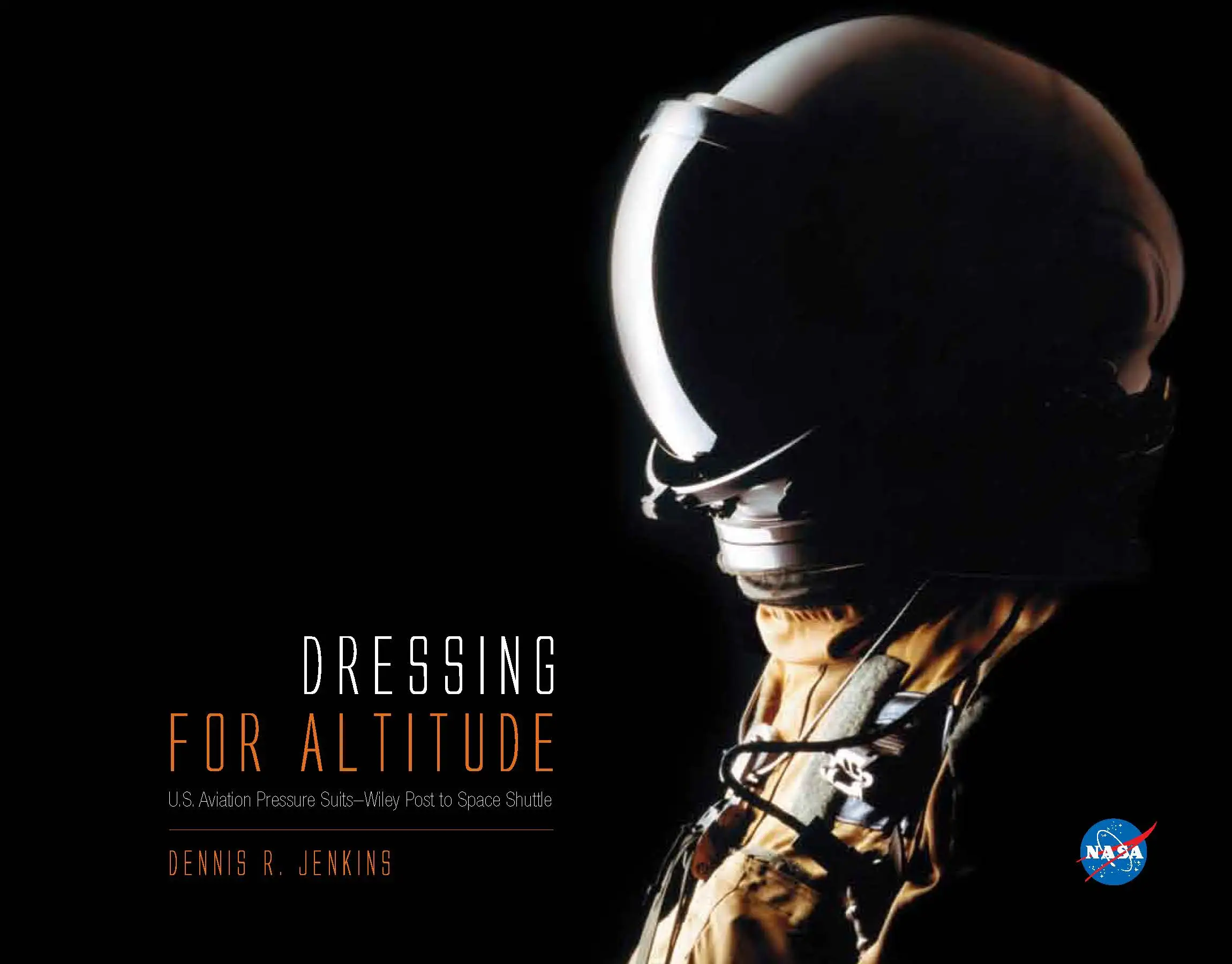
- Suit Design and Human Factors: Publications like Dressing for Altitude blend historical tailoring, material science, and high-altitude physiology, detailing the evolution of pressure suits and space suits that keep humans alive in the hostile vacuum of space.
5. Institutional History and Agency Evolution
Understanding how NASA operates requires looking at its administrative and cultural evolution.
- Historical Overviews: Texts such as Orders of Magnitude: A History of the NACA and NASA provide an unvarnished look at the political, budgetary, and social pressures that shaped America’s space program through the Cold War, the Space Race, and into the modern era of international cooperation.
Official Statements and Administrative Philosophy
The ongoing commitment to maintaining an open-access e-book repository is rooted in federal transparency mandates and NASA’s foundational ethos.
Dr. Lawrence Garber, a senior archivist within NASA’s Historical Program Office, emphasized the philosophical importance of the digital library during a recent agency symposium on open science:
"Space exploration is one of the few grand endeavors funded entirely by the public trust. It belongs to everyone—from the child looking through their first backyard telescope to the aerospace engineer designing the next generation of ion thrusters. By ensuring that our historical records, engineering handbooks, and scientific monographs are available to download instantly and for free, we honor that public investment. We aren’t just archiving the past; we are actively fueling the next generation of innovators."
Furthermore, NASA’s Chief Information Officer directorate has consistently prioritized the modernization of file formats. In internal policy briefs regarding public digital infrastructure, agency leadership has stressed that open access must be accompanied by format inclusivity:
"Publishing scientific documents exclusively in static PDF format is no longer sufficient in a mobile-first world. To truly democratize access, our publications must be responsive, accessible to screen readers, and available in reflowable formats like EPUB. Whether a student is reading on a high-end desktop workstation or a basic tablet in a remote rural library, the doors to NASA’s research must remain wide open."
Future Outlook: The Next Frontier for NASA Digital Publishing
As we look toward the horizon of space exploration—marked by Artemis lunar return missions, commercial space stations, and crewed expeditions to Mars—the nature of NASA’s digital publishing ecosystem is poised for transformation.
1. Integration of Interactive and Multimedia E-Books
Static text and high-resolution images are rapidly becoming baseline expectations. The next evolution of NASA e-books involves deeply interactive digital publications. Future releases are expected to incorporate embedded 3D models of spacecraft, interactive data visualizations of planetary telemetry, and embedded video archives of launch telemetry. Imagine reading a history of the Artemis program while dynamically rotating a 3D CAD model of the Orion spacecraft directly within your e-reader application.
2. Enhanced Accessibility and AI-Driven Translation
To fulfill its mission of global education, NASA is exploring artificial intelligence and machine learning tools to translate its vast catalog of technical literature into a wider array of international languages. Furthermore, upgrading legacy PDF scans using advanced Optical Character Recognition (OCR) and semantic tagging will ensure that visually impaired readers utilizing screen readers can seamlessly navigate complex engineering schematics and data tables.
3. Collaborative Open-Source Publishing Platforms
As commercial space flight blurs the lines between public and private enterprise, discussions are underway regarding collaborative publishing models. Future NASA e-books may increasingly feature contributions from international space partners (ESA, JAXA, ISRO) as well as commercial partners like SpaceX and Blue Origin, creating a unified global library of human spaceflight knowledge.
Conclusion
NASA’s free e-book repository is far more than a digital bookshelf; it is a testament to the power of open science and public transparency. By removing financial and technical barriers to its vast library of knowledge, the agency ensures that the triumphs, lessons, and raw data of space exploration remain within arm’s reach of anyone curious enough to look up at the stars and ask why. Whether you are seeking a masterclass in systems engineering or simply looking to lose yourself in stunning imagery of distant nebulae, the universe is just a download away.



Comments
Facebook App ID not configured. Please add it in the Customizer.