
Executive Overview
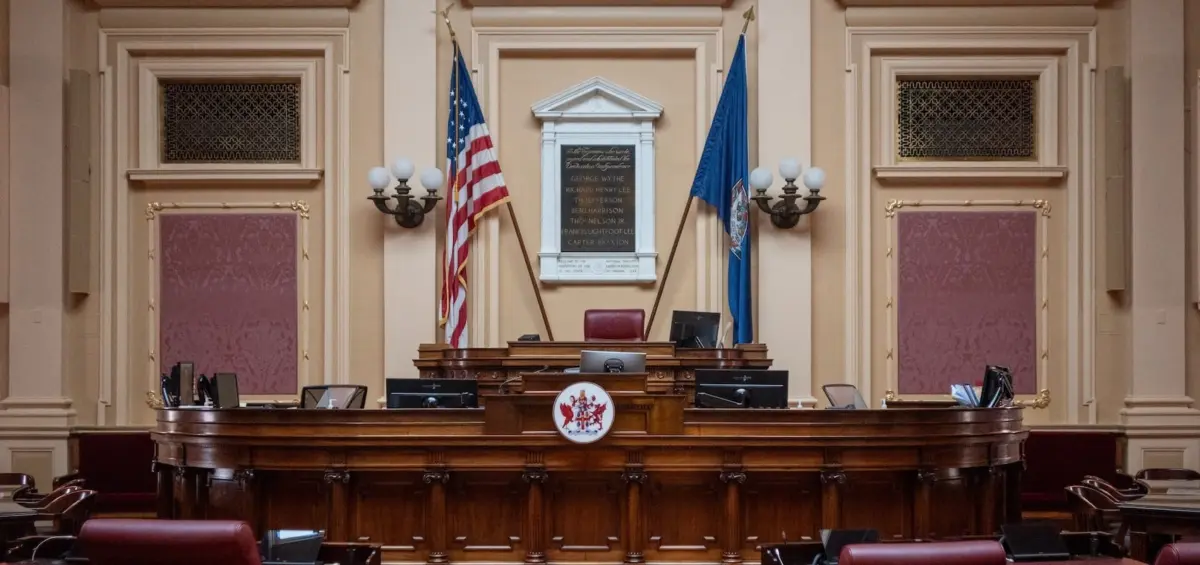
As the Commonwealth of Virginia approaches a critical election cycle, a high-stakes ideological and moral battle is unfolding over two proposed constitutional amendments destined for the November ballot. These legislative initiatives—Proposed Amendment No. 1, which seeks to enshrine expansive abortion access, and Proposed Amendment No. 2, which aims to dismantle the traditional definition of marriage—have catalyzed an unprecedented mobilization of religious institutions, most notably the Catholic Church.
Spearheaded by leaders such as Bishop Michael Burbidge of the Diocese of Arlington, the "Catholics Vote No" campaign has emerged as a formidable counterweight to secular progressive initiatives. The campaign frames the upcoming referendum not merely as a political contest between rival factions, but as a defining moral imperative concerning the foundational structures of human life, family, and society.
Predictably, the Church’s robust intervention has re-ignited a perennial and contentious debate regarding the separation of church and state. Critics frequently charge religious leaders with inappropriately injecting partisan politics into the pulpit. However, this friction reveals a deeper philosophical clash. Far from representing an encroachment by religious authorities upon the legitimate autonomy of civil governance, Catholic leadership contends that the state is actively intruding upon moral territory by attempting to redefine the foundational institutions of human existence.
Read Also
This report provides an in-depth examination of the legislative mechanics behind the November ballot initiatives, analyzes the theological and philosophical justifications for the Church’s public advocacy, evaluates the broader implications for the Virginia commonwealth, and outlines the prospective trajectory of faith-based political engagement in contemporary American civic life.
Detailed Chronology and Legislative Analysis of the Virginia Ballot Initiatives
The pathway to the November referendum is the culmination of years of shifting legislative majorities and concerted advocacy by progressive legal and social organizations within the Commonwealth of Virginia. To understand the gravity of the impending vote, it is necessary to examine the precise language, legal mechanisms, and anticipated ramifications of both proposed constitutional amendments.
Proposed Amendment No. 1: The Expansion of Abortion Access
Proposed Amendment No. 1 is framed by its proponents as a modest, necessary measure designed to codify the protections previously afforded by Roe v. Wade, ostensibly safeguarding reproductive rights in the wake of the United States Supreme Court’s 2022 decision in Dobbs v. Jackson Women’s Health Organization. However, legal scholars and pro-life advocates who have meticulously examined the draft text argue that the amendment goes significantly further than simply restoring pre-Dobbs federal standards.
- Elastic Language and Expanded Scope: The amendment utilizes broad and intentionally ambiguous terminology. By embedding an unrestricted right to "reproductive freedom" directly into the Virginia Constitution, the measure creates a sweeping legal shield that extends well beyond standard medical procedures.
- Abortion Up to Birth: Critics point out that the elastic phrasing of the amendment creates judicial conditions wherein restrictions on late-term abortions could be successfully challenged as unconstitutional infringements on personal autonomy, effectively permitting procedures up to the point of birth under broad health exceptions.
- Erosion of Parental Rights: The structural mechanics of the proposed text strip away traditional statutory safeguards, including parental notification and consent laws for minors seeking medical procedures. By prioritizing individual autonomy across all age groups, the amendment diminishes the legal authority and protective role of parents.
- Elimination of Industry Accountability: Furthermore, legal analysts note that the constitutional elevation of the abortion industry removes standard legislative oversight, dampening the state’s ability to enforce rigorous health, safety, and licensure standards on clinics operating within the commonwealth.
Proposed Amendment No. 2: The Redefinition of Marriage
Proposed Amendment No. 2 is similarly packaged in the benign language of modern civil rights, officially promoted as a measure to remove the dormant "ban" on same-sex marriage from the Virginia Constitution. This framing, however, misrepresents the actual constitutional landscape of the state.
- The Myth of the "Ban": Legal reality dictates that there is no active, enforceable ban on same-sex marriage within Virginia’s foundational charter, as those state-level provisions were superseded by the 2015 U.S. Supreme Court ruling in Obergefell v. Hodges.
- Eviscerating Definitions: Rather than simply updating obsolete text, the proposed amendment removes the substantive definition of marriage itself. By scrubbing the traditional understanding of marriage as the union of one man and one woman from the state constitution, the amendment leaves the institution entirely undefined.
- Deconstruction of Foundational Norms: Church leaders and social conservatives argue that this move is the logical endgame of a decades-long cultural project: the systematic deconstruction of marriage as a distinct, pre-political social institution. By reducing marriage to an amorphous legal contract devoid of objective ontological meaning, the amendment fundamentally alters how the state conceptualizes the basic building block of society.
Supporting Context & Metrics: The Societal Stakes in the Commonwealth
The debate over the November ballot measures occurs against a backdrop of deep demographic, cultural, and political polarization within Virginia. As a historically purple state that has experienced significant urban and suburban population shifts over the past two decades, Virginia serves as an essential bellwether for national trends regarding secularization, family formation, and bioethics.
Demographic and Cultural Shifts in Virginia
- Urban-Rural Divide: The political geography of Virginia is sharply divided between the densely populated Northern Virginia suburbs (part of the Washington, D.C. metropolitan area), the Richmond metro region, the Hampton Roads coastal area, and the more traditional, rural swaths of Southwest and Southside Virginia.
- Civic Fragmentation: Modern sociological data indicates a steady decline in civic participation, church attendance, and membership in traditional fraternal organizations across the commonwealth. This trend aligns with what cultural critics describe as the rise of "atomized individualism"—a social framework where citizens increasingly view themselves as autonomous economic and social agents rather than members of interconnected communities.
- The Legislative Balance: Because amending the Virginia Constitution requires passage by two successive separately elected sessions of the General Assembly followed by a majority vote of the electorate, these amendments represent the culmination of sustained partisan maneuvering. Proponents of the measures have heavily outspent traditionalist groups in early media markets, framing the referendum around themes of personal freedom and privacy.
The Economic and Social Footprint of the Church
The Catholic Church in Virginia—encompassing the Diocese of Arlington in the north and the Diocese of Richmond covering the rest of the state—represents a substantial social infrastructure. Beyond strictly spiritual matters, the Catholic community operates:
- Dozens of primary and secondary schools educating thousands of Virginia youth.
- Extensive healthcare and charitable networks, including Catholic Charities, which provide food security, refugee resettlement, disaster relief, and healthcare services to marginalized populations irrespective of religious affiliation.
- A vibrant network of parishes that serve as primary social anchors in communities across the commonwealth.
When Church leadership speaks into the public square, it does so not merely as an ideological lobby, but as an institution deeply invested in the material, moral, and social welfare of the commonwealth’s citizens.
Official Statements and Theological Justifications
The aggressive mobilization led by Bishop Michael Burbidge and echoed by clergy throughout Virginia has drawn intense public scrutiny. The charge that "religion and politics should not mix" is a familiar refrain hurled by critics whenever religious institutions take stances on contentious legislative matters. However, Catholic leadership has met these criticisms with robust theological and philosophical defenses.
The Primacy of Moral Imperatives
Because the upcoming ballot measures are presented as direct public referenda rather than choices between competing political parties or specific secular candidates, Church leaders argue that they transcend standard partisan politics. In Catholic moral theology, matters involving the fundamental protection of innocent human life (abortion) and the integrity of the natural family (marriage) are non-negotiable moral truths. Consequently, voting "No" on these amendments is framed not as a political preference, but as a grave moral obligation.
Inverting the Narrative: Caesar Claiming the Things of God
Addressing the frequent accusation that the Church is improperly interfering in the legitimate autonomy of the state, defenders of the campaign invert the premise entirely:
"What’s at issue isn’t the Church interfering in the legitimate autonomy of the state, but the state intruding on the Church’s territory. It’s Caesar claiming authority over the things of God. That’s when God’s ministers must speak out."
This perspective draws upon deep historical and theological traditions asserting that civil governments do not possess absolute moral authority. When the state attempts to redefine fundamental anthropological realities—such as the sanctity of human life and the definition of marriage—it steps outside its proper sphere of competence, necessitating a prophetic witness from religious authorities.
The Responsibility to Teach the Common Good
Church leaders emphasize that the right to advocate in the public square is inextricably linked to the solemn responsibility to do so. If religious faith is systematically purged from public discourse and confined strictly to the interior spaces of church buildings, it is effectively neutralized as a force for the common good.
Furthermore, Catholic doctrine maintains that foundational social institutions—specifically the union of mother and child, and the union of man and woman—historically and ontologically precede the state. These institutions are not arbitrary constructs granted by legislative fiat; they are the natural foundations upon which any stable society must rest. Therefore, the state possesses a positive duty not merely to tolerate these institutions, but to actively defend and promote them for the sake of the common good.
Future Outlook: The Intersection of Faith, Law, and Culture in Virginia
As the November election approaches, the outcome of the Virginia ballot initiatives will have far-reaching consequences that extend well beyond the borders of the commonwealth.
Immediate Electoral and Legal Ramifications
- A National Bellwether: Because Virginia is one of the few states holding high-profile constitutional referenda on these specific social issues in the current political cycle, national political organizations, advocacy groups, and religious bodies are closely monitoring the ground game. A defeat of the amendments would represent a significant psychological and strategic victory for traditionalist and pro-life coalitions, while passage would accelerate the secularization of state-level constitutional jurisprudence.
- Post-Election Litigation: Regardless of the referendum’s outcome, legal experts anticipate immediate court challenges. Should the amendments pass, civil rights attorneys and pro-life groups are expected to test the sweeping language of Amendment No. 1 against federal statutory frameworks and parental rights doctrines. Conversely, should the amendments fail, legislative battles regarding reproductive healthcare regulations and family law will undoubtedly persist in the General Assembly.
The Long-Term Role of Religious Witness in Public Life
Beyond the immediate legal battles, the fierce debate over Virginia’s constitutional amendments signals a permanent shift in how religious communities must navigate an increasingly secularized public square.
The modern attention economy—driven by digital uproar, hyper-polarization, and the relentless pressure of immediate crises—tends to reduce complex moral questions to superficial soundbites. In this environment, institutional religion offers a vital corrective: a fixed point of reference rooted in enduring truths, literary excellence, and historical continuity.
The willingness of Virginia’s Catholic leadership to face political backlash and accusations of "mixing religion and politics" demonstrates a renewed commitment to public theology. By insisting that the common good requires more than the unfettered maximization of individual autonomy, the Church provides a necessary counter-narrative to the prevailing cultural winds.
Whether Virginia voters choose to ratify or reject Proposed Amendments 1 and 2 in November, the debate has already achieved one undeniable reality: it has forced the commonwealth to confront fundamental questions about the nature of freedom, the limits of state power, and the enduring necessity of moral truth in civil society. The echoes of this battle will reverberate through the legislative halls of Richmond and across the broader American landscape for generations to come.



Comments
Facebook App ID not configured. Please add it in the Customizer.