
Executive Overview
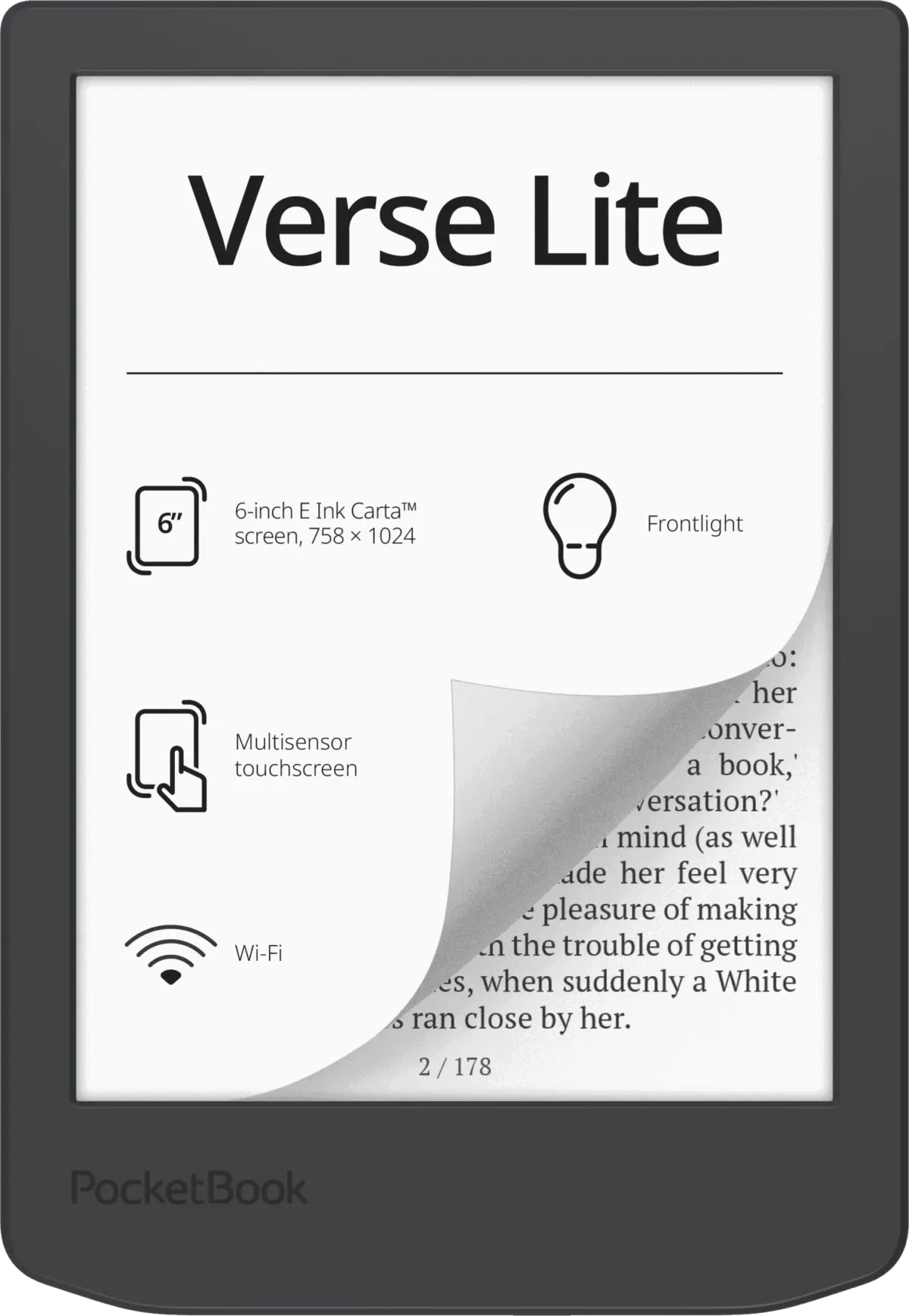
In a significant software development for budget-conscious digital readers, PocketBook has officially released its Firmware 6.11+ update, bringing native OverDrive Libby integration to the popular PocketBook Verse and PocketBook Verse Lite e-readers. This long-awaited update bridges the gap between affordable hardware and seamless public library access, allowing users to browse, borrow, place holds on, and read digital e-books and magazines directly from their devices without ever needing to tether them to a desktop computer.
While the exclusion of Bluetooth hardware on the Verse Lite means audiobook streaming remains unsupported on that specific model, the inclusion of an integrated, streamlined library application fundamentally alters the user experience of these entry-level devices. Alongside the Libby integration, Firmware 6.11 introduces a comprehensive redesign of the device’s Task Manager, optimizing multitasking, shortcut accessibility, and system navigation.
This report provides a granular examination of the new firmware update, analyzing its technical implementation, functional capabilities, interface changes, and the broader implications for the e-reader market.
Read Also
Detailed Chronology & Technical Implementation
The rollout of Firmware 6.11 represents months of iterative software optimization by PocketBook’s engineering teams, aimed at standardizing advanced features across their hardware ecosystem. Historically, accessing library books on e-readers outside of the Kindle or Kobo ecosystems often required cumbersome workarounds, such as using Adobe Digital Editions (ADE) on a PC to transfer EPUB files manually via a USB cable.
With the deployment of Firmware 6.11+, PocketBook has eliminated these friction points for Verse and Verse Lite owners:
The Integration of PocketBook x Libby
The core of the update is the deep, native integration of the Libby application framework. Rather than relying on a rudimentary web browser wrapper, the software introduces a dedicated application layer optimized for E Ink displays:
- Account Setup & Geolocation: Users can locate their local public library by entering their institution’s name, postal code, or city, aided by a country filter.
- Authentication: Library card credentials can be securely saved within the app, supporting multiple cards and library networks for avid readers who hold memberships across different regions.
- Catalog Exploration & Management: Readers can browse featured titles, search the library catalog, read sample previews, and manage active loans, renewals, and holds directly from the e-reader interface.
- Offline Reading vs. Online Streaming: Once checked out, e-books and digital magazines download automatically and can be read completely offline using PocketBook’s native reading software. However, because the Verse and Verse Lite lack Bluetooth capabilities, audiobook functionalities are restricted to online streaming modes (where supported by network availability) and are not ideal for portable listening.
The Redesigned Task Manager
In tandem with the Libby integration, Firmware 6.11 completely reimagines how users navigate background processes and system shortcuts. The overhauled Task Manager introduces several structural and visual improvements:
- Card-Based UI: Open applications now display as visual cards overlaid on the current screen state, aligning with modern mobile operating system design languages while respecting the refresh limitations of E Ink screens.
- System Shortcuts: Quick-access toggles have been integrated directly into the Task Manager overlay, providing immediate access to Flight mode, device locking, screenshot capture, and power-off functions.
- Customizable Views: Users can seamlessly toggle between thumbnail and icon views. The operating system remembers the user’s preference, ensuring UI consistency.
- Smart Sorting and Dismissal: Applications are sorted dynamically by recent usage. Users can close individual background tasks directly from the menu or dismiss the Task Manager entirely with a simple tap outside the interface or an intuitive upward swipe gesture.
Supporting Context & Metrics: The Budget E-Reader Landscape
To fully understand the significance of the PocketBook Verse and Verse Lite updates, it is essential to contextualize their position within the broader global e-reader market.

The Rise of Entry-Level Dedicated E-Readers
Over the past three years, consumer demand has bifurcated. While color E Ink devices and large-format digital notebooks (7.8 inches to 13.3 inches) dominate the premium segment, the entry-level 6-inch monochrome market remains the primary entry point for millions of readers globally. Devices like the PocketBook Verse series are engineered to hit aggressive price points—typically under $150 USD—while offering high-resolution E Ink Carta displays (traditionally 212 PPI to 300 PPI depending on the exact variant), physical page-turn buttons, and built-in adjustable front lighting.
| Feature / Metric | PocketBook Verse | PocketBook Verse Lite |
|---|---|---|
| Display Technology | 6-inch E Ink Carta | 6-inch E Ink Carta |
| Front Light | Yes (with SMARTlight color temperature) | Yes (standard front light) |
| Physical Turn Buttons | Yes | Yes |
| Touchscreen | Multitouch capacitive | Multitouch capacitive |
| Connectivity | Wi-Fi, Bluetooth (Audiobook support) | Wi-Fi only (No Bluetooth) |
| Library Integration | Native Libby App (FW 6.11+) | Native Libby App (FW 6.11+) |
The Library Economy and Digital Lending
Public library lending via OverDrive and Libby has experienced exponential growth, accelerated by digital adoption trends. For budget-conscious consumers, access to free public library catalogs is frequently cited as the single most important deciding factor when purchasing an e-reader.
Historically, Kobo devices held a distinct advantage due to their deeply integrated OverDrive functionality, while Kindle devices maintained a monopoly on US-based library integration via direct Amazon/OverDrive syncing. PocketBook’s aggressive push to bring native Libby support to its entire lineup—ranging from high-end color devices down to entry-level models like the Verse Lite—levels the playing field. It signals a strategic shift toward software parity, ensuring that consumers who purchase economical hardware are no longer penalized with an inferior, computer-dependent software ecosystem.
Official Statements & Industry Reception
While hardware manufacturers often deploy minor point updates with sparse patch notes, the release of Firmware 6.11 has attracted significant attention from tech reviewers, digital reading communities, and industry analysts alike.
Industry experts have praised PocketBook for supporting legacy and entry-level hardware with substantial software upgrades rather than forcing consumers to purchase new devices to access modern digital services. Michael Kozlowski, Editor-in-Chief at Good e-Reader, highlighted the practical impact of the update during recent hardware breakdowns, noting that the inclusion of native Libby support transforms the Verse Lite from a basic local-file reader into a fully connected portal for public library patrons.
Furthermore, user forums and digital publishing communities have responded enthusiastically to the Task Manager overhaul. Early adopters testing Firmware 6.11 have reported a noticeable improvement in overall interface fluidity. The transition to card-based multitasking addresses long-standing complaints regarding sluggish app-switching on mid-tier E Ink processors, proving that software optimization can successfully extract better performance from existing hardware architectures.
Future Outlook: What Firmware 6.11 Signals for PocketBook
The successful deployment of Firmware 6.11 across the PocketBook Verse and Verse Lite points toward several clear trends for the future of the company and the e-reader industry at large:
- Ecosystem Standardization: PocketBook is clearly moving toward a unified software architecture. By ensuring that budget devices run the same core applications (such as Libby and the redesigned Task Manager) as flagship models, the brand reduces fragmentation in its software support lifecycle.
- The Battle for Library Readers: As digital lending platforms like Libby become the primary vector for book discovery and consumption, hardware manufacturers can no longer afford to treat library integration as an afterthought. Expect competitors to closely monitor PocketBook’s implementation and respond with further software refinements of their own.
- The Longevity of Monochrome Hardware: Despite the massive industry hype surrounding color E Ink technologies (such as Kaleido 3 and Gallery 3), black-and-white displays remain superior in contrast, sharpness, and battery efficiency for pure text reading. Updates like Firmware 6.11 demonstrate that manufacturers remain committed to extending the functional lifespan of monochrome devices through robust software updates.
Conclusion
PocketBook’s Firmware 6.11 update is a masterclass in adding tangible value to existing hardware. By delivering native Libby integration and a vastly improved multitasking interface to the Verse and Verse Lite, PocketBook has reinforced its reputation as a user-centric alternative to closed ecosystems like Amazon Kindle. For library patrons looking for a reliable, portable, and affordable reading companion, the Verse series has just become significantly more difficult to overlook.


Comments
Facebook App ID not configured. Please add it in the Customizer.