
Executive Overview
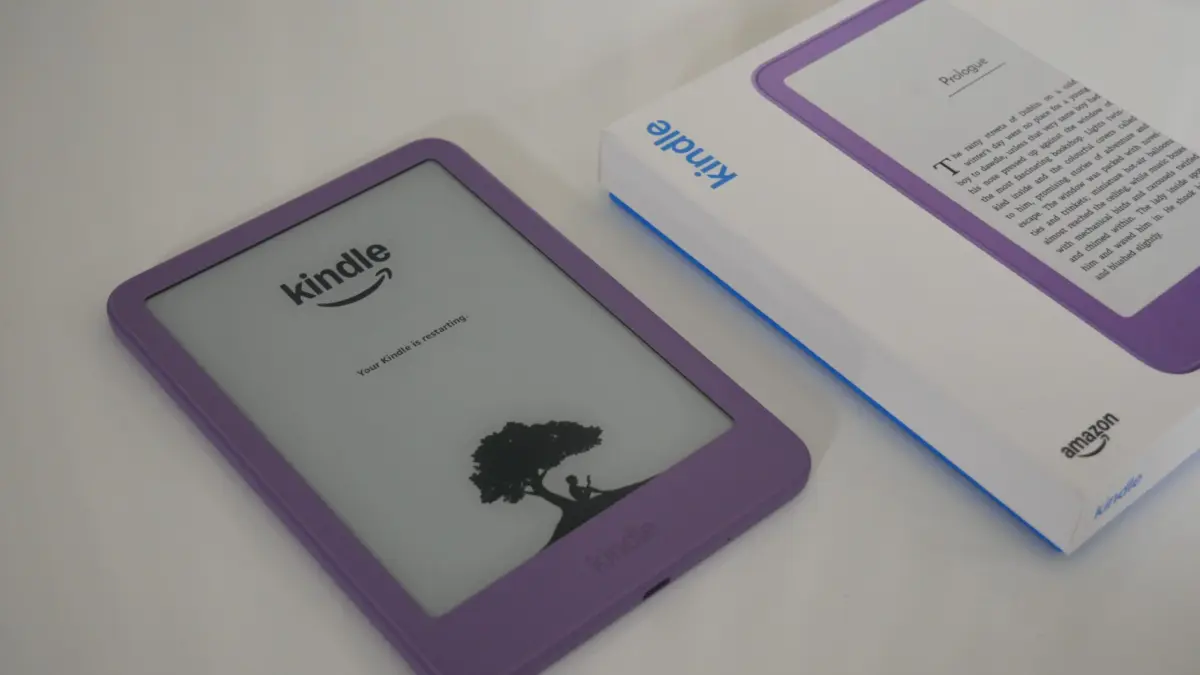
Amazon continues to redefine the portable digital reading landscape with the official rollout of its 13th-generation entry-level e-reader. Highlighted by the introduction of the striking, food-inspired "Ube" colorway, this latest 6-inch Kindle seeks to balance eco-conscious hardware manufacturing with notable performance enhancements. Priced at $149.99 and available in both Ube and Graphite, the 2026 base model brings modern flagship features—such as a flush-screen, bezel-less design and a high-resolution 300 PPI display—down to the entry-level tier.
Beyond its visual appeal, Amazon’s engineering team has prioritized speed, sustainability, and portability. The device features a 30% increase in book-opening velocity, improved page-turn responsiveness, and an outer shell constructed from recycled materials, including a 100% recycled cobalt battery. Equipped with 16GB of storage, Bluetooth audio capabilities, and a battery life that stretches up to six weeks, the 2026 Kindle targets both dedicated e-book purists and audiobook consumers. This comprehensive review examines the technical specifications, design philosophy, ecological impact, and real-world ergonomics of Amazon’s newest pocket-friendly reading companion.
Detailed Chronology of the 13th-Generation Kindle Launch
The evolution of Amazon’s entry-level Kindle line has been defined by a gradual migration of premium specifications into lower price brackets. Historically, features like 300 PPI glare-free screens and adjustable front-lights were reserved for the Paperwhite or Oasis tiers. However, the release of the 13th-generation lineup in 2026 marks a decisive shift in Amazon’s product strategy.
Read Also
The Shift Toward Playful Design
For years, Amazon relied heavily on conservative, utilitarian industrial design, routinely offering its devices in stark, monochromatic tones like black, white, or dark grey. The turning point arrived with the reception of earlier "Matcha"-colored models, which proved that consumers were hungry for personality and color in their tech accessories. Building on this momentum, Amazon’s industrial design team looked to global culinary trends for inspiration, ultimately selecting "Ube"—a rich, soft purple derived from the vibrant Filipino purple yam—as the flagship color for the 2026 entry-level device.
Unboxing and Initial Impressions
Upon unboxing the Ube Kindle, users are greeted by a minimalist white retail package accented with subtle purple highlights that mirror the device’s hue. The e-reader itself immediately communicates a sense of lightness. Measuring just 15.28 × 10.8 × 0.685 cm and tipping the scales at a mere 140 grams, the device is engineered for maximum portability.
Early hands-on evaluations emphasize the effectiveness of the matte finish. Unlike glossy plastics that readily collect fingerprint smudges, the textured polymer housing of the Ube model resists oils and provides a secure, tactile grip during prolonged reading sessions. The transition to a modern, flush-screen, bezel-less architecture eliminates the traditional plastic ridge surrounding older screens, creating a sleek, contemporary aesthetic that mirrors modern smartphone displays while eliminating a common dust trap.
Supporting Context & Metrics: Technical Specifications and Performance
Underneath its playful exterior, the 2026 Kindle is powered by upgraded internal hardware designed to eliminate latency and streamline the digital library experience.
Display and Visual Clarity
The device features a sharp 1072 × 1448 resolution panel yielding 300 PPI (pixels per inch), ensuring that text renders with crisp, laser-like precision akin to physical print. This high pixel density completely eliminates jagged edges on fine typography.
Illumination is handled by an advanced front-lit LED array equipped with a granular, slider-controlled brightness system. Whether reading in direct sunlight or a pitch-black room, the front light distributes evenly across the matte display surface, minimizing glare and eye strain. Furthermore, the inclusion of a system-wide Dark Mode allows users to invert the interface—rendering stark white text against a deep black background—catering to nighttime readers who prefer reduced ambient light emission.
Processing Speed and Software Response
Performance bottlenecks have historically plagued budget e-readers, but Amazon has made significant strides in the 13th-generation hardware architecture. Real-world testing indicates a 30% faster book-opening speed compared to its predecessor. Page turns feel instantaneous, largely driven by optimized firmware and a more capable system-on-chip (SoC) pairing.

Audio Integration and Storage Capacity
With a generous 16GB of onboard storage, the device accommodates thousands of traditional e-books alongside heavier audiobook files. The integration of Bluetooth 5.0 enables users to pair wireless headphones or earbuds directly to the Kindle. Content acquisition is streamlined via Wi-Fi 5 connectivity, allowing readers to browse the Kindle Store, download cloud-based titles, or import their personal Audible libraries on the fly.
Battery Chemistry and Longevity
Powering the system is a compact 1040 mAh battery. Despite its small footprint, efficient power management allows the device to achieve an impressive six-week battery life under moderate usage conditions (defined as roughly 30 minutes of reading per day with wireless connections disabled and screen brightness set to medium).
Ecological Impact and Sustainability Metrics
In an era where consumer electronics face increasing scrutiny regarding electronic waste, Amazon has integrated significant environmental benchmarks into the manufacturing process of the 2026 Kindle lineup.
- Recycled Plastics: The primary structural housing is manufactured using a high percentage of post-consumer recycled (PCR) plastics, diverting municipal waste away from landfills and repurposing it into durable hardware.
- Recycled Cobalt: Most notably, the internal battery utilizes 100% recycled cobalt, addressing one of the most ethically fraught and environmentally damaging supply chains in modern technology manufacturing.
- Packaging Efficiency: True to Amazon’s Climate Pledge commitments, the retail box is constructed from 99% wood-fiber materials sourced from responsibly managed forests or recycled sources, minimizing single-use plastics in the unboxing experience.
These sustainability measures allow eco-conscious consumers to upgrade their reading ecosystems without contributing disproportionately to global e-waste metrics.
Ergonomics, Portability, and Real-World Usage
Amazon markets the 13th-generation Kindle as explicitly "pocket-friendly," designing the chassis dimensions to slide easily into a jacket pocket or the back pocket of standard trousers. However, real-world utility varies depending on apparel design.
Practical Portability Realities
While male-cut trousers often accommodate the 15.28 × 10.8 cm footprint in rear pockets, users utilizing smaller apparel pockets—frequently encountered in women’s fashion—may find the fit insecure or prone to dropping. Consequently, field testers recommend utilizing small cross-body bags, clutches, or messenger bags for secure transit. During daily commutes, doctor’s office appointments, or travel layovers, the device’s featherlight 140g construction ensures that hand fatigue is virtually non-existent, even when reading one-handed for extended periods.
Ecosystem Integration
The Ube Kindle does not exist in a vacuum; it is part of a broader simultaneous hardware refresh that includes the newly updated Kindle Paperwhite and the color-screen Kindle Colorsoft. For users embedded deeply in the Amazon ecosystem, the seamless synchronization of reading progress, bookmarks, and annotations via Whispersync ensures that transitioning from a smartphone app to the dedicated Kindle hardware is frictionless.
Future Outlook
The launch of the 2026 entry-level Kindle in Ube signals a broader strategic pivot for Amazon’s hardware division. By pairing aggressive pricing ($149.99) with emotional, lifestyle-driven design choices, Amazon is transforming a utilitarian reading tool into a fashionable lifestyle accessory.
Looking forward, industry analysts expect the success of food-inspired colorways like Matcha and Ube to influence upcoming iterations of the Paperwhite and Scribe lines. As competitors in the e-reader space—such as Kobo and Boox—push boundaries with color E Ink and note-taking functionality, Amazon’s masterstroke with the 13th-generation Kindle proves that incremental hardware refinements, combined with bold aesthetic choices and robust sustainability metrics, remain a winning formula for capturing mainstream consumer mindshare.

Comments
Facebook App ID not configured. Please add it in the Customizer.