
Executive Overview
London’s Southwark Crown Court became the center of global media attention as the high-profile criminal trial of British comedian and media personality Russell Brand officially commenced. Brand, 51, stands accused of multiple serious sexual offences involving six different complainants. The allegations, spanning a decade from 1999 to 2009, present a picture of an ambitious entertainer who allegedly leveraged his rising fame, charm, and industry status to exploit vulnerable women.
Opening the prosecution’s case before a jury of eight men and four women, prosecutor Riel Karmy-Jones KC did not mince words. She characterized Brand as a "sexual predator" who operated with a "ruthless, calculated, and manipulative" modus operandi. According to the Crown, Brand’s desire for sexual contact during the height of his career was "indiscriminate and voracious," driven by an entitled mindset that viewed boundaries as mere inconveniences to be bypassed through charm, intimidation, or outright force.
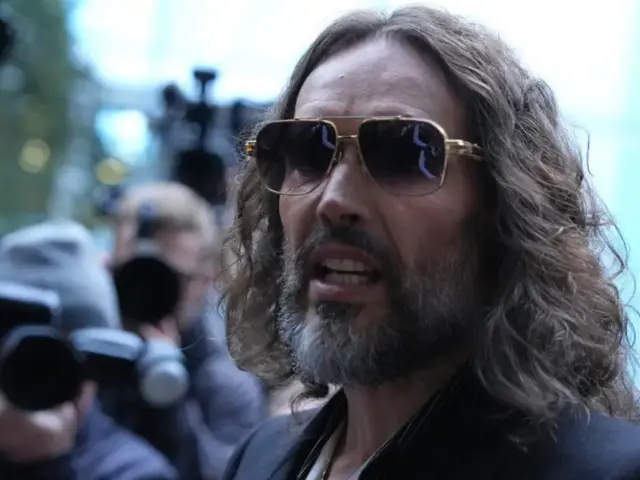
Brand faces a total of seven criminal charges: three counts of rape, three counts of sexual assault, and one charge of indecent assault. Throughout the legal proceedings, the defendant has maintained his innocence, entering pleas of not guilty to all charges. Arriving at the courthouse clad in a dark suit, a black-and-white striped shirt, and a long white tie—accompanied by his wife, Laura—Brand offered uniform responses to police inquiries during the investigation, stating that he had no recollection of the complainants and asserting that any sexual activity that did occur was entirely consensual.
Read Also
The trial, which is presided over by a senior judiciary member, is expected to span approximately six weeks, with potential extensions stretching the proceedings into December. Given Brand’s massive international profile, his transformation from a left-wing anti-establishment icon to a conservative online wellness and faith-based guru, and the gravity of the allegations, the case has ignited intense public discourse regarding power dynamics in the entertainment industry, accountability, and the long road to justice for survivors of sexual violence.
Detailed Chronology and Allegations
The prosecution’s narrative outlines an alleged pattern of predatory behavior that evolved alongside Brand’s professional trajectory. Spanning the years 1999 to 2009, the charges detail incidents alleged to have occurred in hotel rooms, broadcasting offices, private residences, and recording studios.
The 1999 Labour Party Conference Incident
The chronological timeline of alleged offences begins in 1999, when Brand was a rising star in the British entertainment circuit. According to the prosecution, the first complainant encountered Brand while he was performing at the Labour Party Conference in Bournemouth, southern England.
The woman invited Brand back to her hotel room. Once inside, the situation allegedly escalated rapidly when Brand pushed her onto the bed and proceeded to rape her without using a condom. The prosecution argued that this incident established an early pattern of ignoring explicit or implicit refusals in favor of aggressive pursuit.
Incidents at MTV and London Venues (2001–2004)
As Brand’s career gained momentum through television presenting roles on MTV and Channel 4, the nature of the allegations expanded into his professional workspaces.
- The 2001 MTV Incident: In 2001, a second woman alleged that Brand attempted to forcibly drag her into a toilet cubicle at the offices of MTV. The complainant successfully resisted his advances and managed to break away.
- The 2004 London Bar Incident: In 2004, a third woman met Brand at a London bar. According to her testimony, Brand grabbed her breasts and forcibly pulled her into a toilet cubicle. Dismissing her protests by telling her not to be a "spoilsport," he proceeded to subject her to oral rape.
- The 2004–2005 Radio Station Encounter: Around 2004 or 2005, a fourth woman reported that Brand visited the radio station where she was employed. He allegedly subjected her to an aggressive, unwanted kiss before grabbing her breasts and bottom.
The 2009 Residential and Studio Incidents
The final two charges date to 2009, a period when Brand had achieved household-name status in the United Kingdom and was beginning to make significant inroads into Hollywood cinema.
- The 2009 Residential Assault: A fifth complainant, who was 21 years old at the time of the alleged offence, stated that she met Brand and engaged in consensual oral and vaginal sex at his home. However, the prosecution alleges that the encounter turned violent when Brand forced her into anal sex "with full force," without her consent and without a condom.
- The Channel 4 Studio Incident (2009): The sixth charge involves an employee of Channel 4 television who was working alongside Brand in a record studio in 2009. According to the prosecution, members of Brand’s production team instructed the woman that part of her duties included giving the comedian a massage. During the encounter, Brand allegedly pressed his face into her groin without her consent.
Supporting Context and Metrics
To fully understand the weight and context of the ongoing trial, it is vital to examine Brand’s career arc, the mechanics of how the investigation came to light, and the immense digital footprint he commands today.
Career Trajectory and Public Persona
Born to working-class parents in Essex, eastern England, Russell Brand began his career as a stand-up comedian in his teens before achieving widespread fame as a presenter for MTV, Channel 4, and the BBC. Known for his flamboyant style, sharp wit, and counter-cultural persona, Brand quickly became a ubiquitous presence in British media.
[Early Stand-Up (Essex/London)] ➔ [MTV & Channel 4 Presenter] ➔ [BBC & Hollywood Star] ➔ [Digital Influencer & Guru]His professional portfolio expanded to include newspaper columns, two memoirs, and prominent film roles in Hollywood productions. During this era, his lifestyle was characterized by high-profile relationships, most notably a brief marriage to American pop star Katy Perry, and an open cultivation of a hedonistic public image.
In recent years, Brand underwent a dramatic ideological and personal reinvention. Relocating to Florida with his new wife and young family, he pivoted away from mainstream television to build a massive digital empire. Positioned as a conservative commentator, wellness guide, and faith-based anti-establishment guru, Brand amassed a staggering following across global social media platforms:
- YouTube: Approximately 6 million subscribers
- X (formerly Twitter): 10.1 million followers
- Instagram: 4.9 million followers
The Catalyst for the Investigation
The legal proceedings currently underway at Southwark Crown Court are the result of a multi-year investigative effort. The complainants did not come forward to police at the time the alleged offences occurred. Instead, court documents revealed that the women approached law enforcement following investigative media reporting concerning Brand’s behavior in 2023, which eventually led to formal charges being filed in 2025.
Prosecutor Riel Karmy-Jones presented statements from acquaintances of Brand from his earlier career days, who recalled the comedian openly bragging about his desire to "bed 5,000 women in his lifetime." According to the prosecution, Brand’s philosophy during his peak years of fame was encapsulated by his own reported remark to associates: "You have to tell them what they need to hear." The Crown argues this mindset highlights a calculated approach to grooming and manipulation, contrasting sharply with the defense’s narrative of consensual interactions.

Official Statements and Legal Positions
The courtroom dynamics reflect a stark clash between the Crown’s framing of a calculated predator and the defense’s stance on consent and lack of recollection.
The Prosecution’s Position
The Crown Prosecution Service (CPS) has centered its case on the systemic nature of Brand’s alleged conduct. By bringing forward testimony from six distinct women spanning a ten-year timeline, the prosecution aims to demonstrate a persistent pattern of behavior.
Riel Karmy-Jones emphasized to the jury that Brand possessed a dual personality when pursuing women:
"He used charm and comic talents when he wanted something but would then be demanding and entitled… childlike in his expectation that his every desire should be met. He was ruthless, calculated and manipulative, and the prosecution say—a sexual predator."
The prosecution maintains that Brand repeatedly weaponized his status, fame, and persuasive abilities to override the autonomy of the complainants, exploiting power imbalances inherent in the entertainment and media industries of the 2000s.
The Defense’s Position
Russell Brand maintains his innocence across all seven charges. Through his legal representatives and formal police interviews, Brand has entered a plea of not guilty to three counts of rape, three counts of sexual assault, and one charge of indecent assault.
In response to each specific allegation outlined by the complainants, Brand’s standard defense during police questioning has been that he does not remember the individuals in question. Furthermore, his legal team asserts that any sexual encounters that did take place between Brand and the complainants were entirely consensual.
The defense is expected to challenge the credibility, motivations, and recollections of the complainants during cross-examination, questioning the delayed reporting of the allegations and suggesting that the accounts have been influenced by subsequent media coverage and public scrutiny.
Future Outlook and Broader Implications
As the trial moves past its opening statements and into the presentation of evidence and witness testimonies, several key storylines and broader implications will dominate public and legal discourse.
Trial Logistics and Timeline
The proceedings at Southwark Crown Court are scheduled to last for approximately six weeks. However, given the complexity of the charges, the volume of evidence, and the potential for extensive cross-examination of both expert witnesses and the complainants, legal experts note that the trial could easily extend into December.
The intense global media interest has transformed the courthouse exterior into a media hub, with major US television networks broadcasting live updates and British media outlets dedicating daily podcasts to analyzing courtroom developments. The identities of all six complainants remain legally protected and will not be disclosed throughout the duration of the trial.
Cultural and Industry Aftershocks
Beyond the immediate legal fate of Russell Brand, the trial serves as a major touchstone for the ongoing cultural reckoning regarding power, accountability, and the treatment of women in the media and entertainment sectors.
The allegations—pertaining to an era of British broadcasting characterized by intense party culture and lax institutional oversight—raise critical questions about how media organizations managed talent, handled complaints, and protected subordinates during the late 1990s and 2000s.
For Brand’s millions of digital followers, the trial represents a profound moment of testing. His transformation into an alternative media commentator who frequently rails against institutional corruption and mainstream media narratives has created a deeply polarized audience base. The outcome of the trial—whether resulting in a conviction or an acquittal—will irrevocably alter Brand’s public legacy, his digital platform, and the ongoing discourse surrounding accountability for public figures facing historical allegations of sexual misconduct.


Comments
Facebook App ID not configured. Please add it in the Customizer.