
Executive Overview
In the volatile landscape of contemporary publishing, the trajectory of a successful book series is typically mapped out years in advance. Proposals are heavily structured around multi-book arcs, character development matrices, and contractual obligations that lock authors into sprawling, epic timelines before the first word is even drafted. Yet, every so often, a breakout literary success emerges from an entirely different genesis: pure creative exhaustion, personal tragedy, and a singular, unplanned narrative spark.
This is the remarkable origin story of Wordhunter, the acclaimed crime fiction series penned by former true-crime author Stella Sands. What began as a solitary, stand-alone creative departure from the bleak, harrowing realities of real-life murder investigations unexpectedly blossomed into a multi-book powerhouse acquired by HarperCollins. Spanning four planned installments—with eagerly anticipated releases scheduled through 2028—the series has captivated audiences not merely through its intricate plotting, but through the magnetic friction of its central protagonists: Maggie Moore, a tattooed, foul-mouthed, motorcycle-riding forensic linguist, and Silas Jackson, a laconic, steady detective possessing uncanny instincts.
This comprehensive investigative feature examines Sands’ seismic career shift, exploring the psychological catalysts that forced her out of true crime, the delicate structural mechanics of writing a standalone novel that accidentally spawns a franchise, and the profound role that reader engagement played in transforming an unintended finale into an enduring literary empire.
Read Also
Detailed Chronology: The Evolution of an Accidental Franchise
To truly understand the phenomenon of Wordhunter, one must trace the winding, often harrowing literary timeline that brought Stella Sands to the genre of fiction. For a decade, Sands immersed herself in the darkest recesses of human behavior. As a seasoned true-crime author, she chronicled the horrific exploits of real-life serial killers, detailing despicable crimes for an audience hungry for procedural documentation. Five of her gritty, non-fiction titles were published by St. Martin’s Press, with a sixth released through Kensington.
For ten years, Sands’ daily professional reality was defined by grim police reports, autopsies, and the insurmountable weight of human evil. But the breaking point was not merely professional; it was deeply personal. In a compressed, devastating window of time, Sands experienced an unfathomable succession of personal losses: within a terrifyingly brief period, the four individuals closest to her—her husband, her only sister, her father, and her mother—passed away.
Having reached her absolute emotional threshold for real-life mortality, grief, and trauma, Sands walked away from the true-crime genre. She needed an escape from the suffocating shadows of actual murderers and the heartbreaking reality faced by victims’ families.
It was within this psychological vacuum that an unlikely literary duo materialized in her imagination. Maggie Moore and Silas Jackson entered Sands’ consciousness as constant companions, lingering in her thoughts on and off for over eight years. Maggie, a brilliant yet profoundly impulsive forensic linguist who defied traditional cozy mystery tropes with her tattoos, piercings, motorcycle, and foul mouth, provided a chaotic counterweight to Jackson, a laconic, steady detective endowed with exceptional observational instincts.
When Sands finally sat down to write Wordhunter, she operated under zero commercial illusions. She possessed no grand outline for a franchise, no multi-book contract, and no expectation of sequels. Her singular objective was to construct the finest, most compelling self-contained narrative possible. However, the unexpected commercial and critical reception of Wordhunter challenged her assumptions about how stories resonate with readers. Following glowing reviews, readers began bombarding Sands with questions that focused less on the mechanics of the central crime and more on the psychological and romantic trajectory of Maggie and Jackson.
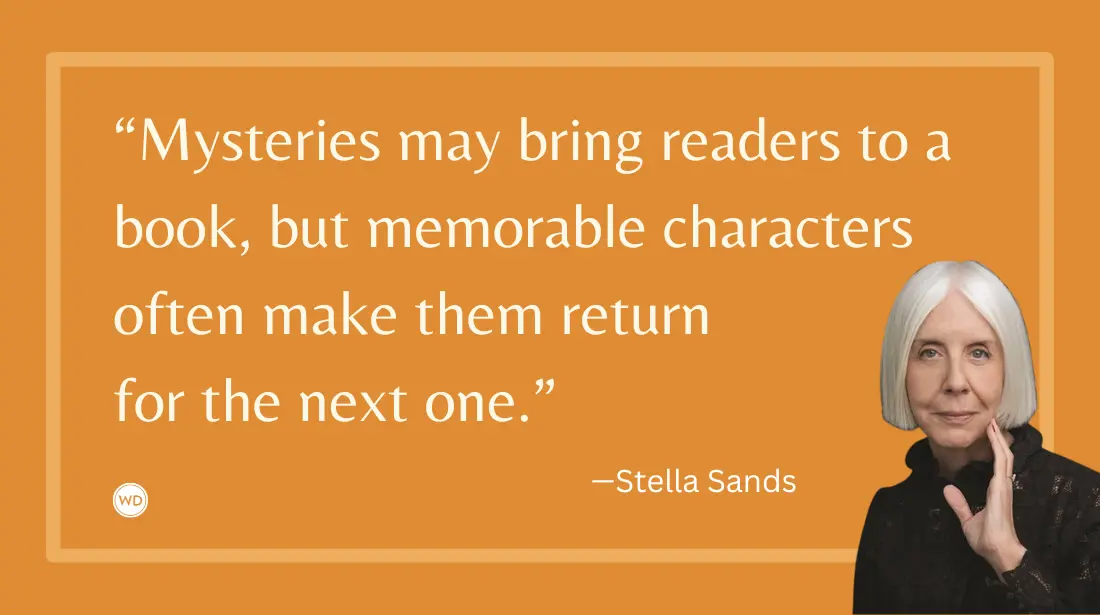
Sands soon realized that while clever plotting brings readers through the door, deeply flawed, memorable characters are what compel them to return. Acting on this vital writerly epiphany, Sands outlined a second book. The momentum quickly escalated, culminating in a competitive acquisition by HarperCollins for three subsequent books. With Books 3 and 4 slated for publication in 2027 and 2028, respectively, what began as a therapeutic creative exercise solidified into a major contemporary mystery series.
Supporting Context & Metrics: The Anatomy of a Standalone-Turned-Series
The structural mechanics of transitioning a standalone novel into a viable series present a fascinating paradox for novelists. Many emerging writers labor under the misconception that a successful series opener must leave major plot lines unresolved—dangling narrative threads designed to trap the reader into purchasing the sequel. Sands, however, argues precisely the opposite.
According to her literary philosophy, readers invest their time and emotional energy into a mystery precisely because they demand resolution. They expect the murder to be solved, the villains to be unmasked, and justice—at least within the boundaries of the page—to be served. If a reader reaches the final chapter of a book marketed as a standalone novel and feels cheated by an abrupt, unresolved cliffhanger, the author has failed. They have not written a complete novel; they have merely drafted the opening chapter of a protracted manuscript.
[ True Crime Era (10 Years) ]
       │
       ▼
[ Personal Tragedy & Burnout ]
       │
       ▼
[ Conceptualization of Maggie & Jackson ]
       │
       ▼
[ Writing *Wordhunter* (Standalone Intent) ]
       │
       ▼
[ Reader Demand & Character Investment ]
       │
       ▼
[ HarperCollins 3-Book Acquisition ]
       │
       ▼
[ Expanding Franchise (Books 2-4, extending to 2028) ]
Yet, Sands identifies a crucial nuance that bridges the gap between self-contained satisfaction and series longevity: completing the mystery does not mean completing the lives of the characters.
While a case can be wrapped up and a killer apprehended, the fictional human beings populating the narrative remain inherently unfinished. They continue to grapple with pre-existing personal baggage, navigate complex interpersonal dynamics, wrestle with stubborn bad habits, and face futures that require immense courage to claim. These internal, unresolved emotional trajectories are what naturally propel a story across multiple volumes.
In Wordhunter, the central crime is definitively solved, satisfying the reader’s immediate narrative craving. However, both Maggie and Jackson remain deeply entangled in personal issues that predated page one and stretch far beyond the final chapter. This deliberate narrative architecture yields powerful metrics in reader retention. Feedback from early audiences revealed a surprising consumer priority: readers were not clamoring for immediate details on upcoming homicides; they were passionately invested in whether Maggie and Jackson would finally "get out of their own way."
Furthermore, the quantitative commitment by HarperCollins to secure three additional installments underscores the commercial viability of character-driven mystery. In an industry increasingly dominated by algorithmic trend-chasing and hyper-niche subgenres, the Wordhunter series proves that raw emotional authenticity and dynamic character friction remain the ultimate market drivers.
Official Statements & Authorial Insight
Reflecting on the accidental empire she constructed, Stella Sands offers candid insights into the psychological underpinnings of her creative pivot. In interviews and essays discussing the transition, Sands frequently frames her characters not merely as literary inventions, but as psychological lifelines during her darkest hours.
"I wrote Wordhunter with absolutely no idea that it would one day become a series," Sands reflects, noting the profound irony of her current literary success. "By the time I’d finished writing the sixth [true-crime book], I’d had enough. Enough of the depressing reality of murderers. Enough of the heartbreaking reality faced by the victims’ families."
The transition from chronicling real-world monsters to inventing fictional investigators acted as a restorative mechanism. Speaking on the genesis of her protagonists, Sands remarks:
"After spending years immersed in real murders and real grief, creating Maggie and Jackson felt like opening a window in a stuffy room. They made me laugh. They surprised me. They argued with each other and occasionally with me. When the first book ended, their story didn’t feel finished—not because the mystery wasn’t solved, but because they still had places to go and things to do."
Addressing the delicate balance of character evolution across a multi-book arc, Sands maintains a playful stance regarding the psychological toll her subsequent cases will take on her beloved investigators. While some long-running series feature static protagonists who remain entirely untouched by their harrowing environments, Sands takes a more visceral approach:
"Some protagonists remain largely unchanged throughout a series. Others evolve while holding on to the core values and flaws that make them recognizable. In Books 2, 3, and 4 of the series… Maggie and Jackson stay true to who they are, but each new case leaves a mark. Spoiler alert… sort of: They become either more empathetic or more cynical. You’ll have to read the series to see where they land."
Future Outlook: What Lies Ahead for the Wordhunter Universe
As the literary world looks toward the horizon, the Wordhunter Mystery series stands positioned as one of the most exciting properties in contemporary crime fiction. With HarperCollins actively steering the rollout of the franchise, the upcoming publication slate guarantees that fans will have sustained access to Maggie Moore and Silas Jackson for years to come.
Following the immediate success of the foundational novel and its subsequent sequel, production is well underway for the third and fourth installments, locked in for release in 2027 and 2028, respectively. Industry analysts predict that the series will continue to expand its footprint, attracting crossover audiences from both traditional procedural enthusiasts and contemporary psychological thriller fans who crave sharp dialogue, linguistic forensic nuance, and deeply flawed, fiercely human protagonists.
For Stella Sands, the journey from documenting the worst of humanity to inventing characters who strive to bring light into dark spaces has been transformative. What began as a personal retreat from grief has evolved into a celebrated career milestone, proving that sometimes the best literary journeys begin with an author who simply refuses to say goodbye to the voices in her head. Whether Maggie and Jackson ultimately lean toward empathy or cynicism by the time the final page of Book 4 is turned, one thing remains certain: legions of devoted readers will be right there following every step of the investigation.





Comments
Facebook App ID not configured. Please add it in the Customizer.