
Executive Overview
As the global entertainment landscape prepares to celebrate a monumental pop-culture milestone, Paramount’s free ad-supported streaming television (FAST) platform, Pluto TV, is making a massive play for the hearts and minds of science fiction enthusiasts. In the lead-up to the diamond anniversary of Gene Roddenberry’s visionary creation—which officially marks 60 years since the original series broadcast its first pilot and premiere episodes in September 1966—Pluto TV has announced a sweeping expansion of its sci-fi programming library.
Beginning August 14, viewers across North America will gain access to an unprecedented slate of dedicated, round-the-clock live streaming channels entirely devoted to the Star Trek universe. In a move that democratizes access to one of television’s most enduring intellectual properties, Pluto TV is introducing seven distinct channels at zero cost to the consumer. This curated lineup includes five individual channels tailored to specific iterations of the franchise, a dedicated movie channel featuring cinematic adventures from the classic and modern timelines, and a specialized Spanish-language channel—Star Trek en Español—designed to serve the franchise’s vast international and domestic bilingual fanbase.
This strategic rollout arrives during a high-water mark for the franchise’s promotional calendar. While corporate parent Paramount has rolled out a series of high-profile initiatives, special events, and museum exhibitions via its premium subscription service, Paramount+, this partnership with Pluto TV ensures that casual viewers and die-hard "Trekkies" alike can engage in a massive retrospective marathon without financial barriers. By merging the nostalgia of linear television programming blocks with the convenience of digital streaming, Pluto TV is bridging generations of fans just as the final frontier turns sixty.
Read Also
Detailed Chronology of the Franchise and the Pluto TV Rollout
To fully appreciate the magnitude of Pluto TV’s new programming block, it is essential to trace both the historical timeline of the Star Trek universe and the rapid sequence of events leading up to this August launch window.
The Road to Sixty: A Brief Timeline of Star Trek
- September 8, 1966: Star Trek: The Original Series (TOS) officially debuts on the NBC television network with the broadcast of "The Man Trap" (though "The Cage" was produced first). Led by William Shatner as Captain James T. Kirk and Leonard Nimoy as Mr. Spock, the series lays the philosophical and aesthetic groundwork for a multi-billion-dollar multimedia empire.
- 1979–1991: Following a successful syndicated afterlife in the 1970s, the original cast transitions to the silver screen, culminating in six feature films before passing the torch.
- September 1987: Star Trek: The Next Generation (TNG) premieres in syndication, introducing Captain Jean-Luc Picard (Patrick Stewart) and a new generation of Starfleet officers, eventually becoming the most-watched series in the franchise’s history.
- January 1993: Star Trek: Deep Space Nine (DS9) premieres, pushing narrative boundaries with serialized storytelling set aboard a space station under the command of Captain Benjamin Sisko (Avery Brooks).
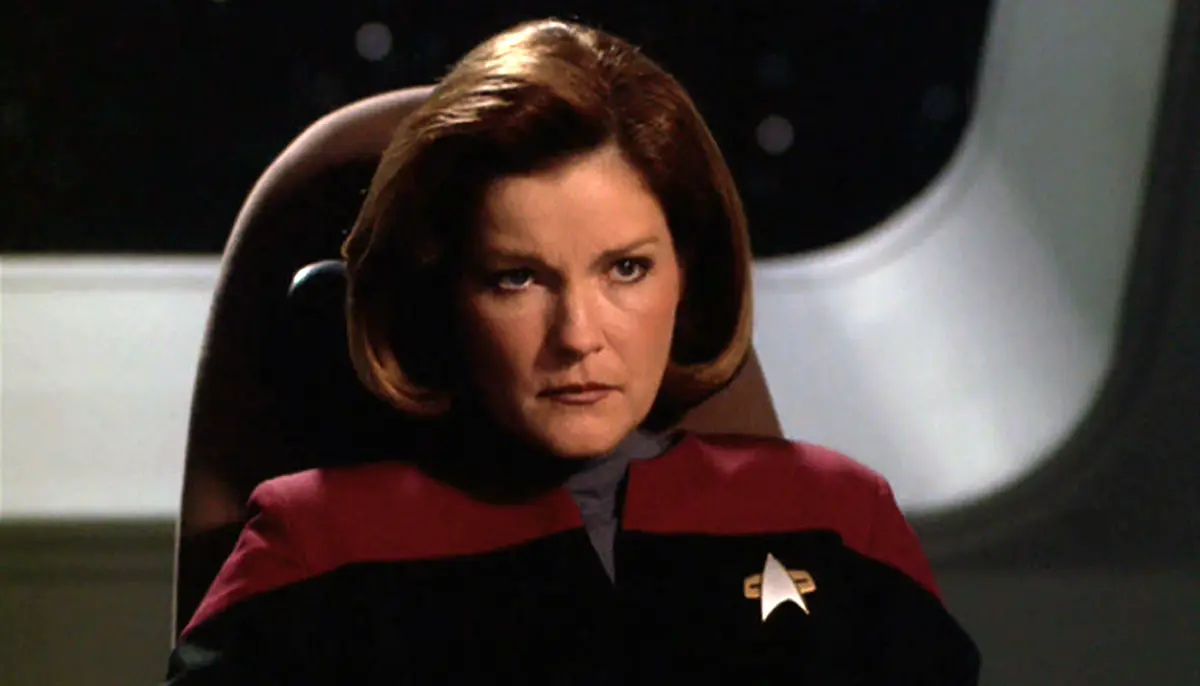
- January 1995: Star Trek: Voyager premieres alongside the launch of the UPN network, following Captain Kathryn Janeway (Kate Mulgrew) and her crew as they navigate a perilous 75-year journey home from the Delta Quadrant.
- September 2001: Enterprise debuts as a prequel series chronicling humanity’s first deep-space voyages under Captain Jonathan Archer (Scott Bakula).
- 2017–Present: The modern streaming era begins with Star Trek: Discovery on CBS All Access (later rebranded as Paramount+), sparking an expansive contemporary slate that includes Picard, Lower Decks, Prodigy, Strange New Worlds, and Section 31.
- September 8, 2026: The official 60th-anniversary milestone of the franchise.
The Pluto TV Launch Timeline
- Early 2026: Paramount announces an extensive calendar of 60th-anniversary celebrations, hinting at cross-platform collaborations to engage both legacy audiences and younger demographics.
- August 13, 2026: Pluto TV formally details its massive content acquisition, revealing the creation of seven distinct Star Trek linear channels.
- August 14, 2026: The channels go live on Pluto TV, opening up continuous, 24/7 access to The Original Series, The Next Generation, Deep Space Nine, Voyager, Enterprise, franchise feature films, and Spanish-language broadcasts.
- September 8, 2026: The culmination of the 60-year promotional cycle, supported by months of uninterrupted marathon viewing on free ad-supported television.
Supporting Context & Industry Metrics: The Rise of FAST and Franchise Longevity
The decision by Paramount to deploy core legacy assets onto a free ad-supported streaming television platform is far from accidental; it reflects profound structural shifts in consumer behavior, ad monetization models, and digital media consumption metrics.
Understanding the FAST Phenomenon
Over the past half-decade, FAST services have experienced meteoric growth. As subscription fatigue sets in among modern households—burdened by the cumulative costs of multiple SVOD (Subscription Video on Demand) platforms like Netflix, Disney+, Max, and Paramount+—consumers are increasingly migrating back toward lean-back, curated linear viewing experiences. Pluto TV, pioneered as an early market leader in this space, offers the comforting nostalgia of traditional cable television without the mandatory monthly subscription fees.

By populating Pluto TV with self-contained channels dedicated entirely to individual shows, the platform mimics the classic "syndication binge" model. Fans of Star Trek: The Next Generation or Voyager no longer need to hunt across disparate subscription libraries or purchase expensive physical media sets to enjoy episodic television; they can simply tune into a dedicated channel at any hour of the day and catch an episode mid-stream or from the top of the hour.
Content Valuation and Franchise Syndication
Few entertainment properties possess the deep episode counts required to sustain dedicated 24/7 linear channels. To program a channel continuously without looping content aggressively within a single week, a series generally requires well over 100 episodes.
- Star Trek: The Original Series spans 79 episodes.
- Star Trek: The Next Generation boasts 178 episodes.
- Star Trek: Deep Space Nine counts 176 episodes.
- Star Trek: Voyager encompasses 172 episodes.
- Star Trek: Enterprise totals 98 episodes.
Combined, this multi-thousand-episode library represents an ideal catalog for FAST integration. Furthermore, by bifurcating its content strategy—keeping high-budget modern series like Strange New Worlds and Discovery exclusively behind the paywall of Paramount+, while utilizing foundational legacy series on Pluto TV as top-of-funnel marketing—Paramount creates a symbiotic ecosystem. Casual viewers discovering Voyager or The Original Series for free on Pluto TV can be smoothly converted into paying subscribers on Paramount+ when they seek out the newest iterations of the franchise.
Official Statements and Industry Insights
While exact viewership metrics for the initial rollouts remain proprietary, industry analysts and entertainment executives have long pointed to the enduring power of Roddenberry’s universe as a bedrock asset for Paramount’s digital strategy.
In statements accompanying the anniversary preview windows, representatives for Paramount’s streaming division emphasized the importance of accessibility in sustaining multi-generational fandoms. "For six decades, Star Trek has inspired audiences around the globe with its optimistic vision of the future, profound philosophical questions, and groundbreaking representation," notes programming strategy material surrounding the anniversary. "As we approach this historic diamond milestone, our goal is to ensure that every fan—whether they watched Captain Kirk beam down to alien planets in the sixties or discovered Captain Pike in the modern era—has a home to celebrate this universe."
Molly Templeton, writing on the rollout for Reactor Mag, captured the fan sentiment surrounding the massive influx of content: "In case the news has somehow missed you, 2026 is a big year for all things Star Trek… But if you’d like to get your Trek on in the leadup to September 8th, Pluto TV would like to help. Starting on August 14th, the streaming service will offer—free!—seven live channels: five channels each dedicated to a series; one for the films; and one for Star Trek en Español."

Industry observers note that this strategic deployment signals a mature phase in media asset management. Rather than hoarding older IP exclusively within expensive walled gardens, legacy studios are realizing that maximizing brand awareness across ad-supported free tiers drives overall engagement, boosts merchandise sales, and strengthens the cultural footprint of foundational franchises.
Future Outlook: The Next Generation of Star Trek Distribution
As the dust settles on the diamond anniversary celebrations in late 2026, the long-term implications of Pluto TV’s Star Trek channel expansion will likely reshape how major studios handle classic television libraries.
The Convergence of Linear and On-Demand
The success of these seven dedicated channels will serve as a bellwether for future catalog exploitation. If viewers continue to demonstrate a voracious appetite for linear, appointment-style viewing of older prestige science fiction, expect other major studios with deep archives—such as Disney (with Star Wars or Doctor Who co-productions) or Warner Bros. Discovery (with DC and classic sci-fi properties)—to adopt similar FAST strategies.
Balancing Free and Premium Tiers
For Paramount, the core challenge moving forward lies in maintaining the delicate balance between free acquisition channels and subscription retention. By deliberately excluding the post-2017 streaming series from the Pluto TV lineup, the company protects the value proposition of Paramount+. Viewers who want to explore contemporary serialization must still cross the paywall, while those content with classic episodic space exploration enjoy an endless parade of classic starships, alien diplomacy, and moral dilemmas at no financial cost.
Ultimately, Pluto TV’s massive injection of classic Star Trek content ensures that the franchise’s timeless mantra—To boldly go where no one has gone before—remains louder, more accessible, and more ubiquitous than ever as the final frontier embarks on its seventh decade of storytelling.





Comments
Facebook App ID not configured. Please add it in the Customizer.