
Executive Overview
The literary landscape for young readers is undergoing a profound evolution, one defined by emotional resonance, raw vulnerability, and an unwavering commitment to destigmatizing mental health. This paradigm shift took center stage from August 2–5, 2026, in Baltimore, Maryland, where the publishing industry gathered for the New Voices New Rooms (NVNR) trade show. As the premier bookselling event of the fall 2026 season, NVNR served as a vibrant nexus for connection, commerce, and critical dialogue, drawing scores of debut and established children’s and adult authors to engage directly with independent booksellers.
Presented jointly by the New Atlantic Booksellers Association (NABA) and the Southern Independent Booksellers Alliance (SIBA), the conference featured a packed schedule of receptions, parties, and panels. Among the most anticipated and intellectually rigorous events were back-to-back panel discussions on August 3 dedicated entirely to children’s and young adult (YA) literature.
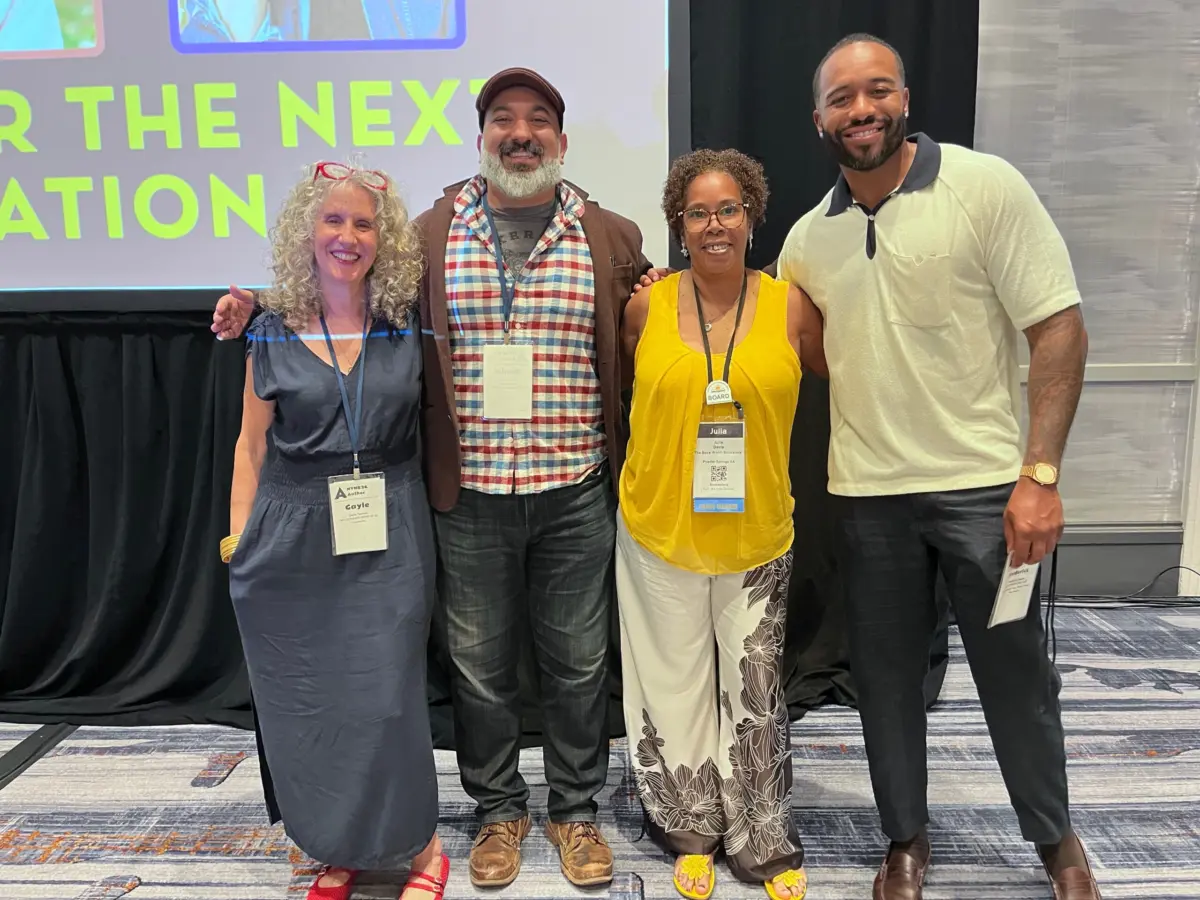
While the morning session, "Stories for all Ages," highlighted upcoming titles across various age groups, it was the afternoon luncheon panel—titled "Writing for the Next Generation"—that commanded the room. Moderated by SIBA board president Julia Davis, the session featured a powerhouse trio of contemporary authors: Gayle Forman, Frederick Joseph, and Daniel Nayeri. Together, they delivered a masterclass on the emotional depth of young readers, unpacking the complex interplay between literature, mental health, grief, love, and human resilience. This report explores the core insights, personal motivations, and broader cultural implications that emerged from this landmark literary gathering.
Read Also
Detailed Chronology of Events: August 2–5, 2026
The 2026 NVNR conference in Baltimore was characterized by intense professional engagement and a forward-looking enthusiasm for the upcoming publishing calendar.
Day One to Two: Opening Festivities and Networking
The conference kicked off on August 2 with a dynamic array of welcome receptions and publisher showcases. Booksellers from across the Mid-Atlantic and Southern regions converged to forge relationships with publishing houses, discover debut voices, and secure early reading copies of major fall and spring titles. The energy throughout the exhibit halls underscored a collective optimism within the independent bookstore community, which continues to act as a vital cultural anchor in local neighborhoods.
Day Three: The Children’s Literature Spotlight
August 3 marked a thematic deep-dive into children’s and young adult publishing, structured around two major panel sessions that highlighted the literary industry’s investment in younger demographics.
-
Morning Session: "Stories for all Ages" (August 3)
The morning kicked off with a panel celebrating works that transcend rigid demographic boundaries, featuring a stellar lineup of creators discussing their upcoming titles:- Beth Ferry, discussing The Sea Glass Girls (illustrated by Ji-Hyuk Kim; Clarion, scheduled for April 2027).
- Lamar Giles, presenting Say Less (Scholastic, scheduled for February 2027).
- Jason Douglas Griffin, sharing insights on Be the Acorn (Roaring Brook, September release).
- Elisabeth Kamakawiwoole, previewing The Seventeenth Quest (illustrated by Louise Hurst; Knopf, scheduled for March 2027).
-
Afternoon Session: "Writing for the Next Generation" (August 3)
Immediately following the morning event, the Children’s Luncheon Panel shifted the tone from celebratory previews to an intense, philosophical exploration of storytelling. Moderated by Julia Davis, owner of the Book Worm Bookstore in Powder Springs, Georgia, and president of the SIBA board, the panel featured three heavyweights of contemporary youth literature: Gayle Forman (Two Thousand Hours of Us), Frederick Joseph (Everything’s Not Lost), and Daniel Nayeri (This Is a Door). The conversation probed the psychological needs of today’s youth, laying bare the profound responsibility authors carry when writing for developing minds.
Days Four and Five: Concluding Engagements
The final days of the conference maintained the momentum with roundtables on bookselling logistics, store sustainability, and community outreach. However, the ripple effects of the children’s literature panels lingered, prompting spirited debates on bookstore sales floors regarding how to hand-sell books that tackle heavy emotional themes to young readers and their parents.
Supporting Context & Metrics: The State of Youth Literature in 2026
To fully appreciate the gravity of the discussions at NVNR 2026, one must examine the broader cultural and literary ecosystem in which these authors operate. Today’s generation of children and teenagers navigates an unprecedented landscape of digital hyper-connectivity, concurrent global crises, and shifting social norms.
Industry metrics and developmental psychology research consistently point to an alarming rise in reported anxiety, depression, and existential dread among adolescents. According to recent youth mental health evaluations, young people are exposed to adult concepts, sociopolitical polarization, and global trauma at an age-unprecedented scale. Consequently, the mandate for children’s and young adult literature has shifted dramatically. Books are no longer viewed merely as instruments for literacy development or escapist entertainment; they are increasingly recognized as vital psychological lifelines.
Independent bookstores have emerged as front-line responders in this cultural shift. By serving as safe spaces where young readers can find themselves reflected on the page, independent booksellers bridge the gap between creators and consumers. The robust turnout at NVNR 2026—with hundreds of booksellers eager to champion books dealing with mental health, grief, and identity—reflects a marketplace that values emotional authenticity over sanitized comfort.
Official Statements and Panel Insights: Decoding the Authorial Mind
The core of the NVNR children’s literature programming crystallized during the "Writing for the Next Generation" luncheon panel. Moderator Julia Davis opened the floor with a direct, challenging question: “When you think about the next generation, what do you think young people most need from books today?”
The responses from Daniel Nayeri, Gayle Forman, and Frederick Joseph offered profound reflections on the nature of childhood, emotional literacy, and the therapeutic power of narrative.
Daniel Nayeri on Emotional Vocabulary and Interior Lives
Daniel Nayeri, author of the forthcoming middle-grade novel This Is a Door (Stonefruit Studio, October), invoked a perspective shared by a former children’s book editor to challenge common misconceptions about young readers.
"Children are no less intelligent than adults, but they’re far less informed," Nayeri stated. "They have just as rich of an interior life as we do. They have the same complex emotions, but they might not know yet the word for it. And so much of great writing is giving them that first experience of naming an emotion, without dumbing it down."
Nayeri expanded on this philosophy when discussing the inspiration behind This Is a Door, which follows a young boy named Ing who leaves home in search of his parents and life’s meaning. Drawing from frequent school visits where he asks children to name something they excel at, Nayeri highlighted a haunting demographic: the child who quietly confesses, “I’m not good at anything.”
"I don’t let them know, but that answer is terrifying," Nayeri confessed. This Is a Door was written specifically for those children who feel they have nothing to offer their communities. "That’s the question at the heart of this book about a young man who thinks he’s dull and uninteresting and he has nothing that he’s good at. How do we find our purpose? That was the question that came out of listening to that aching in the hearts of a lot of children."
Gayle Forman on Community, Empathy, and Shared Humanity
Gayle Forman, whose upcoming YA novel Two Thousand Hours of Us (Quill Tree, March 2027) explores a teenager’s first experience with love and heartbreak, emphasized the evolutionary and social necessity of storytelling.
"There’s a reason that storytelling is part of the social human animal experience," Forman noted. "For all of us, it’s exactly what Daniel has said: through these stories, we can begin to understand the things that are already there in us. For young people, in particular, there’s something about feeling less alone, feeling connected to what you’re feeling in a book."
Forman shared how reading serves as her own anchor during periods of profound personal transition, revealing that recognizing one’s struggles in the experiences of characters dispels isolation. "You realize that what you are experiencing is not unique to you. You feel part of a larger community of people. And that’s one of the amazing things I think we all do with our books: we get to have that conversation and community with people we may never meet."
Reflecting on her own writing process for Two Thousand Hours of Us, Forman joked that it was her first book in which "nobody died." Written during a period of intense personal anxiety, Forman initially struggled with what she judged to be "terrible" drafts, abandoning seven or eight manuscripts before breaking through. Upon revision, she realized that "the patina of [her]" depression had unconsciously saturated the narrative, forcing her to consciously dial back and rewrite the book from page one as a pure, focused love story.
Forman also challenged the patronizing adult notion that emotional intensity fades with age:
"There’s an idea that when you become an adult, you no longer feel emotions as strongly as young people. That’s not true. Adults never learn to regulate emotions: we just stuff them down. Part of the appeal of children’s books for adults [is that] we all feel things very strongly and it allows this sort of release. That’s why these books are so powerful."
Frederick Joseph on Destigmatizing Pain and Embracing Vulnerability
Frederick Joseph approached the panel’s central question through the lens of modern adolescent trauma and resilience. Young people today, Joseph argued, possess unprecedented access to information, but this digital hyper-visibility comes with a steep cost.
"They also have more access to pain, hostility, and confusion," Joseph said. "Most of us in this room have never experienced what they are experiencing right now."
Joseph’s upcoming YA novel, Everything’s Not Lost (Viking, October), follows Ella, a Black teenager from Harlem living with bipolar disorder. The book is deeply personal, written in honor of Joseph’s mother, who died by suicide due to mental illness. He sought to create a narrative centered on healing—specifically crafting a book that his mother never had access to during her youth.
Despite being a male author writing a female protagonist, Joseph noted the rigorous vetting process the manuscript underwent before publication: "Countless teen girls, I think 70, [were] readers before any of you will ever have seen this book." For Joseph, the ultimate metric of the book’s success is simple yet radical: he wants young people "to be okay with just not being okay."
Future Outlook: The Horizon of Youth Publishing
As the New Voices New Rooms 2026 trade show drew to a close, the conversations in Baltimore sent a clear signal to the broader publishing ecosystem. The forthcoming slate of children’s and young adult titles arriving in late 2026 and early 2027—from Ferry’s lyrical explorations to Giles’ gripping narratives, Kamakawiwoole’s quests, and the raw emotional excavations of Forman, Joseph, and Nayeri—demonstrates an industry refusing to shy away from complexity.
For independent booksellers, the challenge moving forward will not be finding quality literature, but rather curating spaces of trust where these vital conversations can continue. By championing books that teach young readers how to name their emotions, navigate grief, and embrace their vulnerabilities, authors and booksellers alike are laying the groundwork for a more empathetic, emotionally literate next generation. The message from Baltimore is unmistakable: the future of youth literature is brave, unapologetic, and profoundly human.


Comments
Facebook App ID not configured. Please add it in the Customizer.