
Executive Overview
The decision to conceive, bear, or forego children is frequently framed in modern Western discourse as an isolated choice belonging strictly to an individual or a couple. However, a growing body of contemporary global fiction actively challenges this hyper-individualistic framing. Literary investigations reveal that reproductive agency is inextricably bound to historical inheritance, cultural lineage, and intergenerational trauma.
When examining reproductive decision-making, authors and cultural analysts increasingly look beyond personal desire to probe how heritage—spanning African-American, Jamaican, Lebanese, Haitian, Latin American, and East Asian traditions—silently dictates or complicates the path toward parenthood. Novelists are dismantling the myth of the autonomous actor by demonstrating how ancestral memory, the loss of a parent, or cultural displacement fundamentally alters how individuals evaluate domesticity, art, and bodily autonomy.
This comprehensive literary analysis explores how contemporary authors utilize multigenerational narratives, gothic tropes, and essayistic fiction to interrogate the hidden pressures governing reproductive choices. Centered around key works—including The Meaning of Daughter, Guadalupe Nettel’s Still Born, Avni Doshi’s Burnt Sugar, Jessica Au’s Cold Enough for Snow, ‘Pemi Aguda’s One Leg on Earth, Mieko Kawakami’s Breasts and Eggs, Jacqueline Woodson’s Red at the Bone, and Jesse Greengrass’s Sight—this report outlines the shifting parameters of maternal narratives in modern fiction.
Read Also
Detailed Chronology: Thematic Trajectories in Maternal Fiction
To understand how literature interrogates reproductive decisions, it is necessary to map the thematic shifts across decades, cultural geographies, and narrative structures. Authors have progressively dismantled traditional maternal archetypes, replacing them with complex investigations into bodily agency, inherited duty, and psychological ambivalence.
+-----------------------------------------------------------------------------------+
|                     EVOLUTION OF MATERNAL NARRATIVES IN FICTION                   |
+-----------------------------------------------------------------------------------+
| 1. HISTORICAL HERITAGE & AMBITION                                                 |
|    - The Meaning of Daughter (7-Decade Timeline, Lebanese-Haitian/Caribbean context) |
|    - Red at the Bone (Jacqueline Woodson: Intergenerational teen pregnancy legacy)    |
+-----------------------------------------------------------------------------------+
| 2. BODILY AUTONOMY & REPRODUCTIVE RECTITUDE                                       |
|    - Breasts and Eggs (Mieko Kawakami: Elective single motherhood vs. cosmetic work)  |
|    - Still Born (Guadalupe Nettel: Voluntary childlessness & community caregiving)   |
+-----------------------------------------------------------------------------------+
| 3. PSYCHOLOGICAL & GOTHIC DISRUPTION                                              |
|    - Burnt Sugar (Avni Doshi: Motherhood as retaliation & dementia care)           |
|    - One Leg on Earth ('Pemi Aguda: Surreal pregnancy & supernatural Lagos landscape)|
+-----------------------------------------------------------------------------------+
| 4. MEMORY, ANATOMY & SELFHOOD                                                     |
|    - Cold Enough for Snow (Jessica Au: Dissolution of self vs. familial linkage)      |
|    - Sight (Jesse Greengrass: Clinical history, grief, and maternal memory)           |
+-----------------------------------------------------------------------------------+
1. Historical Heritage and Personal Ambition
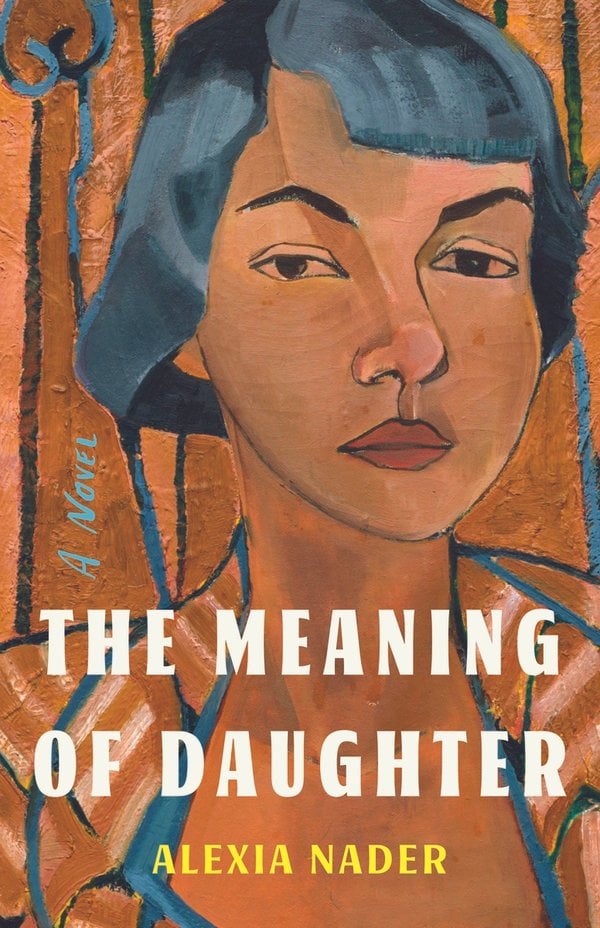
The intersection of artistic desire and cultural expectation serves as an initial anchor in contemporary maternal narratives. In The Meaning of Daughter, the protagonist Merjan—a first-generation Lebanese-Haitian woman—navigates a conflict between her artistic vocation and the expectations of her family and diaspora community, who view womanhood primarily through the lens of marriage and motherhood. Spanning seven decades and three countries, the narrative traces how immigration, cultural preservation, and individual ambition filter down through three generations of women: Merjan, her daughter, and her granddaughter.
Similarly, Jacqueline Woodson’s Red at the Bone employs a non-linear, rotating first-person narrative to examine the ripple effects of an unexpected teenage pregnancy across generations. Moving fluidly backward and forward in time, Woodson illustrates how the teenage couple’s parents experience the pregnancy simultaneously as anxious guardians protective of their children’s futures and as devoted grandparents. The novel highlights how inherited class status, racial history, and generational wealth (or the lack thereof) dictate how families absorb reproductive crises.
2. Bodily Autonomy, Voluntary Childlessness, and Redefined Care
As narratives shift toward contemporary urban environments, writers explore the tension between voluntary childlessness and community caretaking.
- Guadalupe Nettel’s Still Born (translated by Rosalind Harvey): The novel contrasts two distinct trajectories. The narrator chooses to undergo a tubal ligation, asserting her decision to live childfree, while her close friend attempts to navigate a high-risk pregnancy that results in a child born with severe disabilities. Nettel expands the definition of motherhood beyond biological production, detailing how the narrator discovers profound caregiving fulfillment by supporting her friend, assisting a neighbor escaping domestic abuse, and helping raise her neighbor’s young son.
- Mieko Kawakami’s Breasts and Eggs (translated by Sam Bett and David Boyd): Set in contemporary Tokyo, the novel is divided into two distinct investigations of female bodily agency. The first section details Makiko’s obsession with obtaining breast augmentation while visiting her sister Natsuko. The second section reverses the dynamic: Natsuko, a successful writer, navigates her desire to have a child via donor insemination as a single woman. Kawakami highlights the societal resistance faced by women who claim total authority over their reproductive and physical destinies without male partnership.
3. Psychological Gothicism and Maternal Trauma
Recent fiction frequently utilizes gothic elements and psychological tension to depict how intergenerational trauma influences reproductive choices.
- Avni Doshi’s Burnt Sugar: Set in India, the novel presents a dark exploration of mother-daughter codependency. The protagonist, burdened by memories of childhood neglect and abandonment, must care for her aging mother suffering from dementia. When the protagonist decides to conceive late in the novel, the act of becoming a mother is framed not as an expression of maternal instinct, but as a form of psychological retaliation—an attempt to construct a pure maternal relationship uncorrupted by her mother’s legacy.
- ‘Pemi Aguda’s One Leg on Earth: Set in a surreal manifestation of Lagos, Nigeria, the novel depicts an epidemic in which pregnant women are drawn by supernatural forces to drown themselves. Amid this crisis, the protagonist, Yosoye, experiences an unexpected pregnancy. Rather than viewing the pregnancy solely as a hazard, Yosoye clings to it as an opportunity to forge the emotional intimacy she was denied by her own distant mother, illustrating how maternal longing can persist even in perilous conditions.
4. Memory, Science, and the Dissolution of Self
A final track in contemporary maternal fiction uses reflective, essayistic structures to explore how pregnancy forces an accounting of personal identity.
- Jessica Au’s Cold Enough for Snow: Framing a quiet journey through Japan taken by a woman and her mother, the narrative subtly reveals the protagonist’s internal debate over whether to have a child. The text balances the "private self"—devoted to solitary aesthetic observation—against the "communal self" bound to caretaking.
- Jesse Greengrass’s Sight: Pregnant with her second child, the narrator reflects on the death of her mother and her childhood stays at her grandmother’s house. Greengrass intersperses these personal recollections with historical inquiries into the invention of the X-ray, Sigmund Freud’s complex relation with his daughter Anna, and the first anatomical drawings of the pregnant uterus.
Supporting Context & Metrics: Sociological and Cultural Frameworks
The themes explored in these novels mirror measurable shifts in modern demographic trends, cultural patterns, and sociological research regarding family formation.
Cultural Determinants in Reproductive Decision-Making
Across diverse diaspora communities—including African-American, Caribbean, Middle Eastern, and Latin American contexts—reproductive decisions carry significant weight regarding cultural survival and community continuity. Literary evidence highlights several key socio-cultural drivers:
+------------------------------------------------------------------------------------+
|                KEY FACTORS INFLUENCING REPRODUCTIVE DECISION-MAKING                |
+------------------------------------------------------------------------------------+
| Cultural Legacy       | Expectation to preserve lineage, diaspora identities, and  |
|                       | community continuity across generations.                   |
+-----------------------+------------------------------------------------------------+
| Intergenerational     | Unresolved childhood trauma, maternal neglect, or family   |
| Trauma                | displacement driving or deterring pregnancy decisions.     |
+-----------------------+------------------------------------------------------------+
| Autonomy vs. Duty     | Conflict between individual professional/artistic goals   |
|                       | and traditional family expectations.                       |
+-----------------------+------------------------------------------------------------+
| Alternative Networks  | Rise of single motherhood by choice, donor insemination,   |
|                       | and non-biological community caretaking models.            |
+------------------------------------------------------------------------------------+
Comparative Analysis of Featured Texts
| Work & Author | Primary Geographic Setting | Central Reproductive/Maternal Dilemma | Narrative Device / Tone |
|---|---|---|---|
| The Meaning of Daughter | Multigenerational (3 Countries) | Balancing artistic ambition against family heritage and diaspora expectations | Multigenerational epic spanning 70 years |
| Still Born Guadalupe Nettel |
Mexico | Navigating tubal ligation while offering non-biological caregiving | Dual-narrative, realistic social critique |
| Burnt Sugar Avni Doshi |
India | Conceiving as a response to intergenerational trauma and maternal dementia | Psychological gothic, introspective |
| Cold Enough for Snow Jessica Au |
Japan / Diaspora | Evaluating the solitary self versus the communal self in deciding to parent | Minimalist, unreliable narrative memory |
| One Leg on Earth ‘Pemi Aguda |
Nigeria (Lagos) | Pursuing pregnancy amidst a supernatural epidemic targeting expectant mothers | Speculative fiction, psychological realism |
| Breasts and Eggs Mieko Kawakami |
Japan (Tokyo) | Pursuing elective single motherhood via donor insemination | Social realism, feminist critique |
| Red at the Bone Jacqueline Woodson |
United States | Absorbing the social and economic impacts of unplanned teenage parenthood | Multi-perspective, non-linear chronology |
| Sight Jesse Greengrass |
United Kingdom | Processing grief for a late mother while expecting a second child | Essayistic fiction, medical history integration |
Official Statements & Critical Analysis
The critical discourse surrounding these texts stresses that literature must move past simplified, romanticized depictions of motherhood to accurately capture reproductive decision-making.
On the Misconception of Selfishness in Childlessness
In Guadalupe Nettel’s Still Born, the dialogue between the childfree narrator and her mother captures the persistent social judgment surrounding voluntary childlessness. Upon learning of her daughter’s surgical sterilization, the mother remarks:
"It’s important to have someone to love, someone to take care of. It makes us less selfish."
Nettel uses the subsequent narrative to dismantle this assertion. By documenting how the narrator devotes time, financial support, and emotional energy to her disabled godchild and her traumatized neighbors, Still Born argues that caretaking is an expansive, community-wide responsibility rather than one limited to biological offspring.
On Intergenerational Interconnectedness
In Jessica Au’s Cold Enough for Snow, the narrator recalls her mother’s reflections on her own upbringing:
"[She] had never thought of herself in isolation, but rather as inextricably linked to others."
This line serves as a central thesis for the novel’s examination of identity. Au demonstrates that an individual’s hesitation or desire regarding parenthood is rarely an isolated impulse; it is deeply shaped by their perceived connection to those who came before them.
On Maternal Intimacy as Reconstitution
In ‘Pemi Aguda’s One Leg on Earth, the protagonist Yosoye defends her decision to carry an unexpected pregnancy despite widespread environmental and supernatural danger:
"Could someone with a mother like that understand what a child might mean for Yosoye? Yosoye who’d never even had her mother to call her own?"
Aguda highlights how the absence of maternal warmth in one generation can drive an intense desire to create that connection in the next, framing pregnancy as an attempt to heal personal history.
+-----------------------------------------------------------------------------------+
|                         THEMATICS OF MATERNAL DISCOURSE                           |
+-----------------------------------------------------------------------------------+
| "Re-defining Care"     -> Nettel challenges the notion that childlessness equals   |
|                           selfishness by showcasing community caretaking.         |
| "Linked Identities"    -> Au explores how personal identity cannot be separated   |
|                           from maternal lineage and heritage.                     |
| "Healing the Past"     -> Aguda depicts pregnancy as a deliberate effort to create |
|                           the maternal warmth missing in one's own childhood.     |
+-----------------------------------------------------------------------------------+
Future Outlook: The Evolving Landscape of Reproductive Narratives
The landscape of contemporary literature suggests a continuing shift in how reproductive choices and motherhood are depicted. As social structures, demographic realities, and family models evolve, literary representations are likely to advance along several key fronts:
- Expansion of Non-Traditional Family Structures: Following the foundation laid by Mieko Kawakami’s Breasts and Eggs, future literature will likely offer more detailed explorations of assisted reproductive technologies, single parenthood by choice, and non-biological co-parenting models, moving these experiences from the thematic margins to the narrative center.
- Integration of Environmental and Speculative Themes: Works such as ‘Pemi Aguda’s One Leg on Earth demonstrate a growing trend of utilizing speculative and surreal elements to process reproductive anxieties. As global environmental and social challenges increase, authors will increasingly use climate fiction and surrealism to explore the ethics and anxieties of bringing new life into the world.
- Deconstruction of Intergenerational Trauma: Following the paths outlined by Avni Doshi and Jacqueline Woodson, contemporary novels will continue to challenge idealizations of the mother-child bond. Instead, literature will increasingly treat the decision to parent as an arena where historical heritage, personal ambition, and familial reconciliation intersect.
Ultimately, these writers demonstrate that reproductive decisions are rarely made in a vacuum. By analyzing the complex relationships between daughters, mothers, and ancestors across varied cultures, modern fiction offers a nuanced perspective on how history, lineage, and personal choice shape the decision to give life—or to define a life outside of parenthood entirely.





Comments
Facebook App ID not configured. Please add it in the Customizer.