
Executive Overview
For decades, New York City’s experience with Brazilian cuisine has remained largely confined to a few well-trodden paradigms: the theatrical, meat-heavy skewers of rodízio-style churrascarias; neighborhood counters in Queens and Newark serving deep-fried coxinhas and pão de queijo; or traditional comida caseira spots offering comforting plates of rice, black beans, and grilled steaks. While these institutions provide vital cultural anchors, they represent only a fraction of South America’s most ecologically diverse culinary landscape.
Enter Iara, a new dining destination that challenges the American perception of Brazilian gastronomy. Spearheaded by chef-owner Vitor Mendes, former chef de cuisine at Fort Greene’s acclaimed live-fire and dry-aged seafood haven Theodora, Iara pivots sharply away from meat-centric stereotypes. Instead, the restaurant presents a focused, near-hagiographic exploration of the Amazon Basin, highlighting indigenous flora, wild river fish, fermented tonics, and the unmatched versatility of cassava.
Named after the formidable freshwater siren of Tupi and Guarani mythology—a half-woman, half-fish entity whose alluring voice draws travelers into the deep—Iara offers a sensory-rich atmosphere anchored by dry-aged marine species, charcoal flames, and rare Amazonian botanicals. The establishment marks a crucial evolution in New York’s high-end dining scene, bridging technical precision with deep-rooted indigenous foodways.
Read Also
Detailed Chronology: From Fort Greene Live-Fire to Amazonian Folklore
[Vitor Mendes's Early Life]
  │ Immigrates from Brazil to U.S. as a child
  ▼
[Personal Catalyst]
  │ Loss of his father prompts an adult return to Brazil
  │ Rediscovers Amazonian biodiversity & indigenous ingredients
  ▼
[Culinary Tenure at Theodora]
  │ Serves as Chef de Cuisine in Fort Greene
  │ Masters dry-aging seafood and open-flame cooking
  ▼
[Launch of Iara]
  │ Teams with mixologist Calvin Czypinski
  │ Opens Amazonian-focused restaurant featuring custom charcoal grill
The Culinary Evolution of Chef Vitor Mendes
Chef Vitor Mendes’s path to opening Iara is a personal and professional journey across cultures. Immigrating from Brazil to the United States during his childhood, Mendes built his professional reputation within New York’s competitive restaurant landscape. His most recent high-profile role was leading the kitchen at Theodora in Fort Greene, Brooklyn, where he refined techniques in dry-aging fish and managing wood-fired hearths.
However, a pivotal turning point occurred following the death of his father. Returning to Brazil as an adult, Mendes undertook an extensive culinary exploration of the Amazon Basin. The region’s vast ecological richness—its hyper-local fruits, sacred tubers, and ancestral preparation methods—ignited a desire to bring these underrepresented flavors to North America.
Designing the Space: Myth and Materiality
Upon entering Iara, guests are immediately greeted by a glass-fronted aging cabinet displaying silvery tilefish suspended for dry-aging—a direct nod to Mendes’s seafood methodology. Beyond this showcase, the dining room opens into a vibrant space designed to mirror the sensory intensity of the rainforest.
- Visual Aesthetics: Deep rainforest-green accents cut through handcrafted wooden tables, complemented by botanical installations, intricate wood carvings, and richly textured wall treatments.
- Open Kitchen Dynamics: A central chef’s counter wraps around an open kitchen dominated by a custom charcoal-burning grill (a shift from the wood-burning setup at Theodora), filling the space with the aromas of wood smoke, charred oils, and aromatic spices.
- Cultural Symbolism: The restaurant’s namesake, the mythic river spirit Iara, serves as a motif for the dining experience—tempting, immersive, and tied to the water systems of the Amazon.
Supporting Context & Culinary Metrics: Deconstructing the Amazonian Pantry
To understand the culinary framework at Iara, one must examine the contrast between traditional Brazilian-American dining offerings and the indigenous ingredients Mendes brings to the fore:
| Category | Traditional NYC Brazilian Dining | The Iara Model (Amazonian Indigenous) |
|---|---|---|
| Primary Protein | Beef (Picanha, Fraldinha), Pork, Chicken | Dry-aged coastal tilefish, Hiramasa, Amazonian river fish (Tambaqui) |
| Starch Foundation | Standard white rice, black beans, fried plantains | Polymathic Cassava (Tucupi, Tapioca, Farofa, Bolo de Mandioca) |
| Dominant Spices | Garlic, salt, parsley, simple chili marinades | Jambú (electric herb), Jiquitaia pepper, Puxuri (wild nutmeg alternative) |
| Flavor Profile | Savory, salty, smoky, rich | Tart, fermented, electric/tingly, umami-rich, botanical |
               ┌── Tapioca (Starch) ─────► Pão de Queijo / Crispy Puffs
               │
CASSAVA ROOT ──┼── Fermented Juice ──────► Tucupi Broth / Ceviche Vinaigrette / Cocktails
(*Manihot*)    │
               └── Shredded Root ────────► Bolo de Mandioca (Cake) / Tostadas
The Central Role of Cassava (Manihot esculenta)
The foundational pillar of Mendes’s menu is cassava, the indigenous South American tuber. Rather than treating it merely as a side starch, Iara demonstrates its remarkable versatility across multiple textures and applications:
- The Crisp Base: Dehydrated and toasted into a featherlight, tostada-like structure, serving as the vehicle for pearlescent raw scallop topped with a charred-pineapple relish.
- The Starch (Tapioca): Extracted tapioca starch powers the traditional pão de queijo—chewy cheese bread spheres served alongside three distinct dips: tart pink guava, mild white requeijão cheese, and smoky roasted eggplant.
- The Liquid Gold (Tucupi): Extracted from pressed cassava root and boiled to remove natural toxins, this fermented yellow-gold liquid provides an umami-rich, acidic backbone. At Iara, tucupi serves as:
- The base for house-made table hot sauces.
- A bright, savory accent in a signature Martini formulated with soju and preserved-lemon brine.
- The complex acidic element balancing a raw hiramasa ceviche.
- The aromatic foundation for tacacá, a iconic Amazonian street soup natively consumed in cities like Manaus and Belém.
Indigenous Botanicals and Bio-Diversity
Mendes introduces a specialized pantry of wild ingredients, educating diners on flavors rarely encountered outside of northern Brazil:
- Jambú (Acmella oleracea): An herb known for containing spilanthol, a compound that creates an electric, lip-numbing sensation akin to Sichuan peppercorns. At Iara, it is infused into brilliant green oils drizzled over tacacá soup containing silky white beans and sweet roasted plantains.
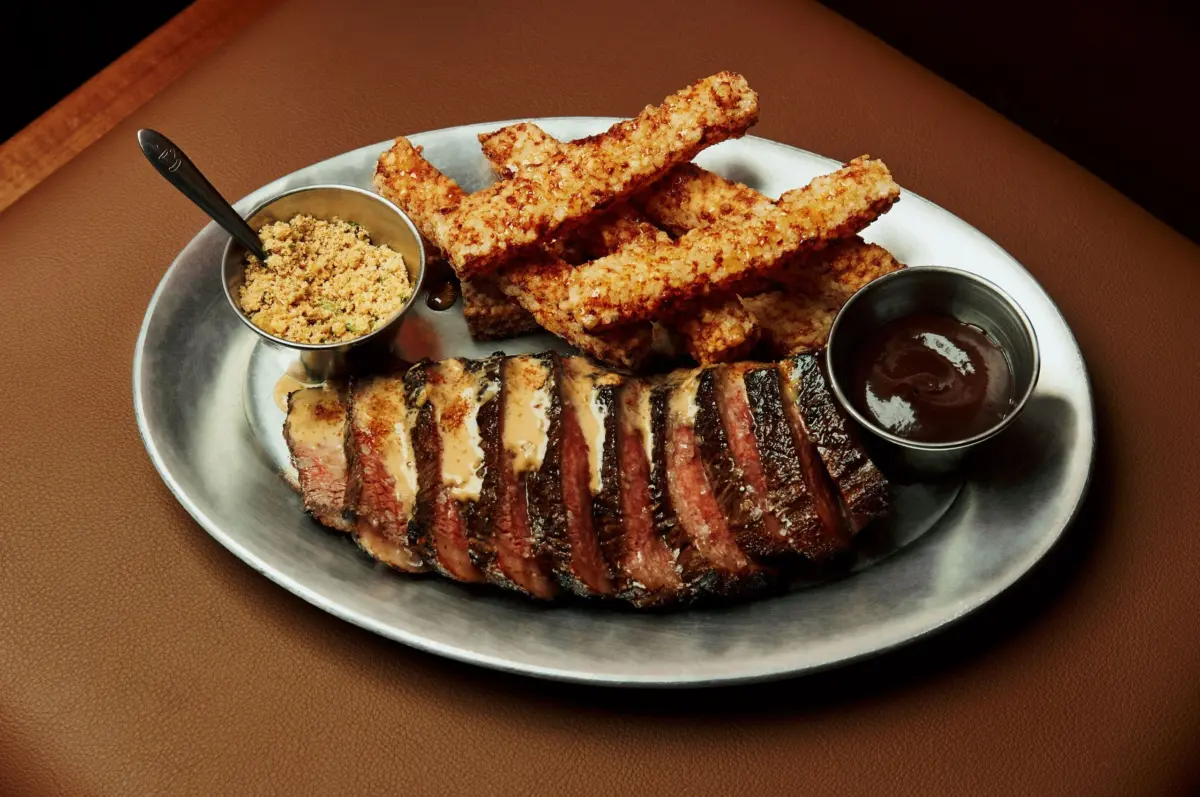
- Jiquitaia Pepper: A traditional spice blend crafted by the indigenous Baniwa people of the upper Rio Negro, combining dried, pulverized hot peppers with sea salt. Mendes integrates this spice into a rich sauce au poivre served beneath grilled picanha steak.
- Puxuri & Coumarou: Native aromatics offering complex warm notes. Puxuri, exhibiting nut-meg and clove-like profiles, is dusted onto cocktail rims, while coumarou (tonka bean) serves as a deep, aromatic alternative to vanilla.
Beverage Innovation: The Mixology Program
Crafted by beverage director Calvin Czypinski (another alumnus of Theodora), the bar program Mirrors the kitchen’s botanical sourcing.
A prime example is the Romeo and Juliet Martini, a liquid reimagining of Brazil’s iconic dessert pairing (goiabada guava paste with queijo minas). The drink utilizes mezcal that has been fat-washed with mild minas cheese, delivering a smoky, savory depth complemented by bright guava accents.
Critical Assessment & Operational Analysis
       IARA DINING EXPERIENCE
                 │
  ┌──────────────┴──────────────┐
  ▼                             ▼
STRENGTHS                   AREAS FOR REFINEMENT
• Authentic Amazonian focus  • Concessions to NYC trends
  (*Tacacá*, *Moqueca*)       (e.g., Tuna over tapioca puffs)
• Technical dry-aging       • Standard greens in
• Immersive counter-seating   *Palmito Carpaccio*
Kitchen Mechanics and High-Heat Execution
The centerpiece of Iara’s dining room is the kitchen counter surrounding the open hearth. The kitchen operates with theatrical energy, where cooks manage live charcoal embers under high volume.
The preparation of Moqueca—the classic coastal Bahian stew adapted here to align with the restaurant’s seafood ethos—highlights this live-fire control. Portions of dry-aged tilefish are seared over charcoal embers before being gently simmered in a rich coconut broth deepened with red palm oil (dendê). The dish arrives at the table in a bubbling clay pot, accompanied by white rice, house-seasoned farofa (toasted cassava flour), and a sharp pepper relish.
Standout Menu Items vs. Trendy Concessions
While Iara excels when leaning fully into its Amazonian roots, it occasionally balances its menu with recognizable New York dining trends:
- Culinary Peaks: An off-menu special of whole Tambaqui—an Amazonian freshwater fish—demonstrates the kitchen’s technical ambition. The fish is grilled until the skin turns golden and crackled, butchered into tender portions of collar, rib, and fillet, and served with crisp tapioca fries and a bright, purple-hued açaí ketchup.
- Mainstream Concessions: Conversely, starters such as raw tuna arranged over fried tapioca puffs feel like a nod to the ubiquitous spicy tuna on crispy rice found across Manhattan. Similarly, a palmito carpaccio—featuring paper-thin slices of fresh heart of palm—arrives over a chicory chiffonade that, while clean and refreshing, lacks the bold narrative identity of the restaurant’s primary offerings.
Dessert Architecture
The pastry program maintains the kitchen’s focus on cassava and native sweetness:
- Bolo de Mandioca: A dense, moist cake made from finely shredded fresh cassava root and sweet coconut. The dessert is served with a sphere of bright coconut-lime sorbet, providing an acidic contrast to the cake’s rich texture.
- Traditional Classics: The menu also features classic Brazilian comfort sweets, including a sesame-dusted condensed milk pudim (flan) and rich chocolate brigadeiros.
Future Outlook: The Expansion of Indigenous Gastronomic Footprints
Iara’s arrival marks a broader movement in global gastronomy: the transition from regional comfort food to refined indigenous cuisine in international capitals.
Educational Dining as a Business Model
Chef Vitor Mendes and his service team approach dining as an educational platform. By training waitstaff to explain the historical and geographical origins of ingredients like jiquitaia pepper or the natural numbing qualities of jambú, Iara fosters a deeper appreciation for Amazonian biodiversity. This storytelling approach builds guest engagement while elevating South American dining beyond standard expectations.
Impact on New York’s Restaurant Landscape
As diners increasingly seek out authentic regional narratives, Iara establishes a benchmark for how South American restaurants can operate in major metropolitan markets. By pairing dry-aging techniques and open-flame cooking with underrepresented Amazonian ingredients, Mendes demonstrates that Brazilian food can be as intricate, diverse, and forward-thinking as any modern culinary tradition.
If Iara maintains its commitment to these indigenous roots, it stands not only as a vibrant addition to New York’s dining scene, but also as a vital bridge connecting urban diners to the edible heritage of the Amazon Basin.





Comments
Facebook App ID not configured. Please add it in the Customizer.