

Executive Overview
In the contemporary literary landscape, few works manage to effortlessly bridge the chasm between psychoanalytic depth, classical mythology, and the startling intimacy of the domestic sphere quite like Diane Fremont’s poetry. Designated as the Poem of the Week for November 16, 2026, Fremont’s evocative piece, "Tiny Anchors"—dedicated to poet Cynthia Cruz—captures the imagination through its precise imagery, rich psychological resonance, and unsettling juxtaposition of the ordinary with the mythic.
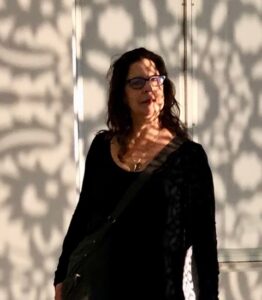
Fremont, a polymath whose background encompasses visual art, psychoanalysis, and extensive international living across Italy, Greece, and Spain, brings a uniquely textured worldview to her writing. As a contributor to Taschen’s renowned Book of Symbols, her engagement with iconography, dreams, and the creative unconscious is both academically grounded and artistically fluid. "Tiny Anchors" operates as a tapestry woven from the threads of these diverse disciplines. It treats the domestic landscape not merely as a physical backdrop, but as a theater of the psyche where coyotes steal pears, dogs breathe hot mist against windowpanes, and bees emerge not simply as insects, but as living hieroglyphs, ancient messengers bridging the mortal and the divine.
This report offers a comprehensive examination of Fremont’s celebrated poem, analyzing its structural mechanics, thematic architecture, the author’s own psychoanalytic and historical commentary, and the broader cultural context of its publication. Through a rigorous journalistic and literary lens, we explore how "Tiny Anchors" achieves its haunting alchemical transformation of the everyday into the eternal.
Read Also
Detailed Chronology: The Genesis and Unfolding of "Tiny Anchors"
To fully appreciate the impact of "Tiny Anchors," one must examine both the internal timeline of the narrative framed within the poem and the broader biographical trajectory that allowed Diane Fremont to craft such a layered piece.
The Poetic Narrative Arc
The poem unfolds across a surreal yet grounded temporal sequence, shifting from the encroaching shadows of evening to the stark revelation of morning light:

- Evening’s Edge: The poem opens in the liminal hours of dusk. Coyotes descend upon a sloping yard to steal pears from beneath a tree, while indoors, a dog paces frantically from window to window, its low growl fogging the glass. This establishes a boundary between the domestic interior and the wild exterior, a permeable membrane typical of Fremont’s dreamscapes.
- The Domestic Heavens: As evening deepens, bees begin to cluster unnoticed near the ceiling in a corner of the room. Fremont elevates this mundane domestic occurrence into a celestial metaphor, comparing them to the "thousands of lost / sisters of the Pleiades," with only a handful visible to the naked eye.
- The Midnight Vigil: The third stanza introduces human presence and psychological endurance. The speaker notes that the world does not disappear when eyes close. Instead, characters play poker late into the night under the dying light of candles, until an accident occurs: a woman’s hair catches fire, creating a sudden stink of singe and a literal "halo of flames" around her head.
- Morning Metamorphosis: The timeline shifts abruptly to the following morning. During breakfast, the central figure drops to the ground in a motion suggesting she can exist in two places simultaneously, drawing the swarm of bees down to her in "a seething corpus of hieroglyphs."
- The Ancient Dialogue and Release: The bees whisper to her in a language far older than contemporary human decipherment. She rises effortlessly, "cloaked in bees," dripping from her in ropes. Stepping outside through a sliding screen door, she shrugs them off with a slight shiver. The bees—"too large and too hot"—ascend in a whirring cloud toward the blazing sun, leaving the woman blinded and covered entirely in pollen.
The Author’s Journey
Diane Fremont’s path to this level of poetic synthesis is deeply international and intellectual. Growing up in the San Francisco Bay Area, she later spent formative years immersed in the cultures of Italy, Greece, and Spain before settling permanently in New York. Her academic and professional life as a psychoanalyst heavily informs her artistic output. Having presented papers internationally on the intersection of art, the human psyche, dreams, imagination, and the creative process, Fremont treats poetry not just as a vehicle for emotional expression, but as an active archaeological dig into the collective unconscious. Her contribution to Taschen’s Book of Symbols further cements her authority as an interpreter of visual and psychological archetypes, a skill visibly at play in the rich semiotics of "Tiny Anchors."
Supporting Context & Metrics: Mythological Roots and Literary Lineage
"Tiny Anchors" does not exist in a vacuum; it is heavily anchored in classical tradition, psychoanalytic theory, and modern poetic lineage.
Epigraph and Poetic Inheritance
The poem bears an epigraph from the late, esteemed American poet Jean Valentine:
"Well, that’s what I’m going for in poetry; I want to take off the diver’s mask."
This statement serves as a manifesto for Fremont’s approach. The "diver’s mask" implies artificial barriers, protective gear that filters and distorts reality. By removing the mask, Fremont—and Valentine before her—seeks an unmediated, breathless confrontation with truth, memory, and the subconscious. The dedication to Cynthia Cruz, another prominent contemporary American poet known for her haunting explorations of trauma, poverty, and landscape, further contextualizes "Tiny Anchors" within a lineage of contemporary lyric poetry that treats interior psychological states with uncompromising gravity.
Classical Resonance: Asclepius and the Pythia
In her Author’s Note, Fremont elaborates on the deep-seated childhood dreams that populated her early life—specifically visions of an enormous, relentless snake or a fierce, cunning dog. Years later, she discovered the clinical and spiritual significance of these motifs in ancient Greece:
- Dream Incubation Sanctuaries: At healing temples such as Epidaurus, ailing pilgrims descended into dark chambers to sleep. There, they sought visitations from the healing god Asclepius or his divine familiars—his sacred snakes and dogs—which would interact physically with the dreamer by licking, attacking, or biting them. In this tradition, the dream was the cure, requiring no rational interpretation, only a modest ritual sacrifice or a hymn of gratitude.
- The Oracle of Delphi: Fremont connects the behavior of bees and prophetic sight to the Pythia, the priestess who sat atop a hive-shaped stone known as the Omphalos (the navel of the world). Carved with a net of crisscrossing beelike forms, the stone channeled vapors rising from the earth’s hollow center, inspiring visions and prophecies.
The Alchemy of the Bee
Bees hold a dual role in Fremont’s poetic ecosystem. Biologically and metaphorically, they are alchemists. As Fremont notes, they transmute raw, perishable nectars gathered in fields through their own bodily fluids into golden honey—a substance prized across millennia for its nutritional, preservative, and regenerative properties. In "Tiny Anchors," the bees are both physical insects invading a human space and living letters of an unreadable, primordial alphabet ("a seething corpus of hieroglyphs").
Official Statements and Authorial Insights
To understand the mechanics of "Tiny Anchors," one must look closely at Diane Fremont’s own reflections on her creative and psychological processes. In her official commentary accompanying the Missouri Review publication, Fremont illuminates the bridges connecting her clinical practice as a psychoanalyst with her artistic output:
"From a very young age, I dreamed of animals, most often an enormous, relentless snake or a fierce and cunning dog. Much later I discovered that, in ancient Greece, such dreams were sought out for healing… The dream itself was the cure, needing no interpretation. The only payment required was a small ritual sacrifice, or a paean to the gods."
This perspective challenges modern therapeutic tendencies to over-intellectualize or decode every dream symbol. Fremont advocates for an experiential surrender to the image—allowing the dream, or the poem, to act upon the psyche directly, much like the mythological bite of Asclepius’s hound or the overwhelming cloak of bees in her poem.
Furthermore, Fremont’s invocation of the Omphalos highlights her fascination with structural symbolism. The beehive shape is not merely architectural; it is a conduit between the terrestrial and the divine, mirroring how her poetry attempts to funnel subterranean emotional currents into structured, golden lines of verse.
Future Outlook: The Ongoing Legacy of Fremont’s Poetic Vision
As "Tiny Anchors" gains widespread acclaim following its feature as the Missouri Review Poem of the Week for November 16, 2026, it signals a broader cultural appreciation for poetry that refuses to shy away from the uncanny. In an era dominated by hyper-digital communication and rapid-fire discourse, Fremont’s work demands a slower, more contemplative engagement—a return to the ancient sanctuaries of the mind.
Implications for Contemporary Poetry
- Integration of Psychoanalysis and Art: Fremont’s success demonstrates the rich literary yield available when psychoanalytic training informs creative writing. Rather than reading like clinical case studies, her poems treat the unconscious as a vibrant, breathing ecosystem.
- Revival of Mythological Frameworks: By seamlessly weaving ancient Greek temple practices, Delphi imagery, and domestic realism, Fremont proves that classical motifs remain potent vehicles for exploring modern alienation, healing, and transformation.
- Collaborative and Interdisciplinary Aesthetics: Given Fremont’s background as a visual artist and her contribution to major art publications like Taschen’s Book of Symbols, her poetry naturally invites multidisciplinary engagement—pairing effectively with visual arts, immersive light installations (such as Anila Quayyam Agha’s All the Flowers Are for Me, referenced in the broader issue), and modern lyric traditions.
Ultimately, "Tiny Anchors" leaves its readers—much like the protagonist of the poem—blinded yet illuminated, covered in the golden pollen of a profound aesthetic encounter. As Diane Fremont continues to publish and present her work at the intersections of art, psyche, and literature, her contributions promise to remain essential reading for those seeking to remove the diver’s mask and gaze directly into the depths of human experience.




Comments
Facebook App ID not configured. Please add it in the Customizer.