
By Michael Kozlowski | Published in Tech & Commerce Insights
Estimated Reading Time: 7 minutes
Executive Overview
In the modern digital retail landscape, finding a genuine bargain has increasingly felt like searching for a needle in a haystack. With millions of products fluctuating in price daily, inflated "list prices," artificially manufactured discounts, and aggressive flash sales, consumers are often left second-guessing whether a purchase is truly a steal.
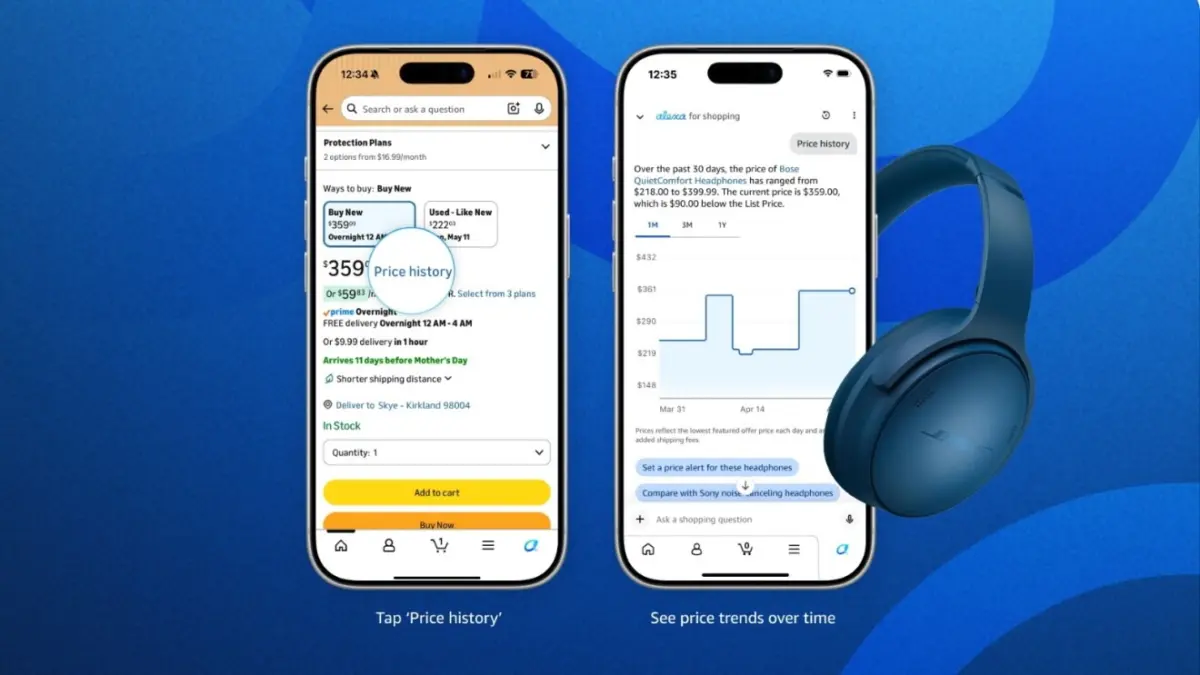
Enter Alexa for Shopping—Amazon’s sophisticated, AI-driven shopping assistant designed to cut through the marketing noise. At the heart of this tool is its robust Price History feature, which provides shoppers with transparent, 30-, 90-, and 365-day tracking data directly on product pages.
Read Also
By the numbers, the impact has been staggering. Throughout 2026, over 100 million consumers worldwide have utilized this feature hundreds of millions of times. Available across key global markets—including the United States, the United Kingdom, Canada, India, Japan, Germany, France, Italy, and Spain—the tool represents a fundamental shift in how e-commerce platforms approach consumer transparency. Whether evaluating everyday electronics, popular books, or niche hardware like e-readers, buyers are no longer navigating blind.
Detailed Chronology: The Evolution of Price Transparency
The implementation of Amazon’s AI-assisted price tracking did not happen overnight; it represents the culmination of years of technological iteration in consumer-facing artificial intelligence.
Phase 1: The Era of Third-Party Extensions (Pre-2023)
For over a decade, consumer distrust regarding online discounts fueled the popularity of third-party browser extensions like CamelCamelCamel and Keepa. These tools allowed savvy shoppers to manually copy product URLs, paste them into external trackers, and view historical pricing trends. While effective, this process added friction to the user experience, forcing buyers to leave the native platform to verify a deal’s legitimacy.
Phase 2: The Integration of Conversational AI (2023–2025)
As generative AI matured, tech giants began embedding conversational assistants directly into retail environments. Amazon steadily upgraded Alexa from a smart-home voice controller into an active, context-aware shopping companion. During this window, the platform began aggregating internal pricing algorithms to help users compare similar items, summarize customer reviews, and answer granular questions about product specifications.
Phase 3: Mainstream Adoption and Global Deployment (2026)
By 2026, Price History moved from an experimental feature to a core pillar of the Amazon shopping ecosystem. Rolled out simultaneously across nearly a dozen major international territories, the tool evolved to display deep analytical data (spanning up to a full year) directly beneath qualifying product listings. Consumers could now interact naturally with Alexa, eliminating the need for external browser extensions entirely.
Supporting Context & Metrics: Why Consumers Need Price Protection Now
The rapid growth of AI price-tracking tools is driven by changing consumer behaviors, especially during high-stakes retail windows like Black Friday, Cyber Monday, and the winter holiday season.
The Psychology of the "Fake Discount"
Retail psychology has long relied on the "Anchor Effect," where a seller displays a high manufacturer’s suggested retail price (MSRP) next to a marked-down price to create an illusion of scarcity and urgency. In the past, shoppers relied on gut feeling or hasty cross-referencing to determine if a "Limited-Time Deal" was genuinely lower than the item’s average baseline cost.
Amazon’s Price History feature directly counteracts this psychological manipulation. By offering a clean, chronological visual chart of pricing trends over 30, 90, and 365 days, the tool empowers shoppers to ask the critical question: “Is this actually the lowest price recently?”
Scale and Global Reach
The adoption metrics speak for themselves:
- User Base: More than 100 million unique customers worldwide relied on the feature in 2026 alone.
- Engagement Frequency: The tool has been accessed hundreds of millions of times, proving that users actively seek out historical validation before checking out.
- Geographic Footprint: The service is fully localized and active across the U.S., UK, Canada, India, Japan, Germany, France, Italy, and Spain, cementing its status as a global retail standard.
Practical Application: How Shoppers Use Alexa for Shopping
Navigating the features of Alexa for Shopping is designed to be frictionless. When browsing qualifying product detail pages—ranging from high-end consumer electronics to digital media accessories—shoppers are met with immediate data transparency.
Conversational Queries in Action
Instead of manually scrolling through complicated graphs, users can engage directly with Alexa via text or voice prompts. Common queries include:
- “Is this the lowest price recently?”
- “What is the 90-day price history for this item?”
- “Should I buy this now, or is it usually cheaper?”
Special Relevance for Tech, E-Books, and E-Readers
While the feature is invaluable during heavy holiday shopping rushes for toys and home appliances, it holds unique utility for niche technology markets. For instance, when purchasing hardware like e-readers, tablets, or specialized audio gear, price fluctuations can be erratic. Knowing whether a device is hitting its true all-time low—or if it routinely drops by 20% during monthly promotional cycles—prevents buyer’s remorse and builds long-term consumer loyalty.
Future Outlook: What Lies Ahead for AI-Driven Retail Transparency?
As we look beyond 2026, the intersection of artificial intelligence and consumer advocacy is bound to deepen. Platforms that embrace radical transparency are likely to set the benchmark for all digital commerce.
1. Predictive Pricing Intelligence
The next logical evolution for tools like Alexa for Shopping is predictive analytics. Rather than merely showing past pricing data, future iterations of AI shopping assistants may offer recommendations such as: "Based on historical data, this item is likely to drop in price by 15% next Tuesday; would you like to set an alert?"
2. Cross-Platform Integration and Standardization
As consumers grow accustomed to native price history charts, the pressure will
mount on competing e-commerce platforms (such as Walmart, Target, and regional global marketplaces) to adopt similar native transparency tools. External extensions may eventually become obsolete as built-in AI assistants become the gold standard for consumer protection.
3. The Shift in Merchant Strategy
For third-party merchants and brand manufacturers, the ubiquity of 365-day price tracking changes the rules of engagement. Inflating prices artificially ahead of a holiday event will no longer yield short-term sales spikes, as savvy consumers—prompted by AI assistants—will instantly recognize manufactured discounts. Consequently, brands will need to compete on genuine value, product quality, and organic customer satisfaction.
Conclusion
Amazon’s integration of deep-dive price history into Alexa for Shopping marks a maturing of e-commerce technology. By bridging the gap between vast data repositories and everyday consumer decision-making, the platform has transformed the way the world shops. Whether you are hunting for holiday gifts, household essentials, or specialized tech gear, the days of shopping in the dark are officially drawing to a close.
We want to hear from you: Do you actively check price histories before making major tech purchases, or do you rely on gut instinct? Let us know your thoughts in the comments below.





Comments
Facebook App ID not configured. Please add it in the Customizer.