
Executive Overview
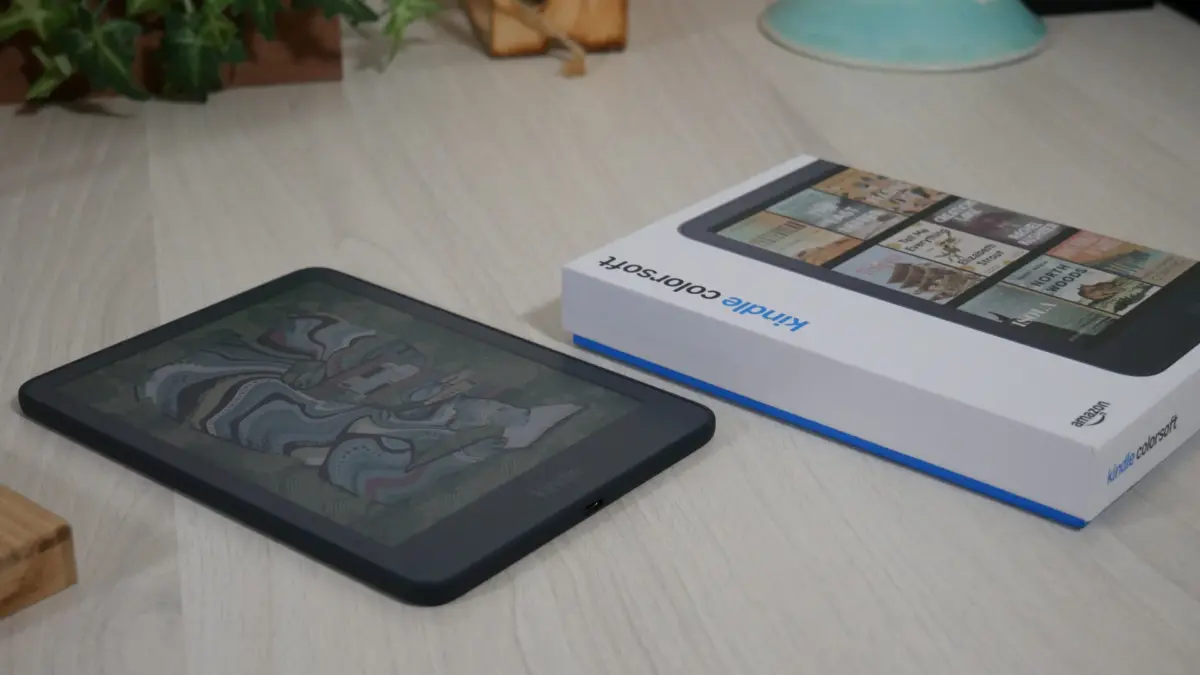
The 2026 Amazon Kindle Colorsoft arrives as a calculated hardware refresh designed to cement Amazon’s dominance in the consumer e-reader ecosystem. Released on October 28, 2026, this latest iteration introduces a sleeker profile, a relocated side power button, and an optional all-aluminum Signature Edition. Crucially, however, it retains the proven 7-inch E INK Kaleido 3 e-paper display technology of its predecessor rather than jumping to next-generation substrates.
For readers navigating the vast expanses of the Kindle Store, the Colorsoft remains the premiere choice for experiencing colorful book covers, multi-color highlighting, and occasional graphic novels. Yet, as the e-reader market evolves, traditional black-and-white panels continue to reign supreme for pure text clarity. This review offers an exhaustive, journalistic examination of the 2026 Kindle Colorsoft’s hardware architecture, software ecosystem, reading enhancements, generative AI capabilities, and broader market positioning.
Detailed Chronology & Evolution of the Refresh
The road to the 2026 Kindle Colorsoft has been defined by iterative engineering and regulatory pressures. Following the initial commercial rollout of color e-paper displays, Amazon recognized the necessity of bridging the gap between traditional monochrome reading and the growing demand for visual media like manga, comics, and illustrated non-fiction.
Read Also

- Early Development & Component Choice: During the planning phases leading up to late 2025 and 2026, Amazon engineers opted to stay with the mature, stable E INK Kaleido 3 platform rather than pivoting immediately to unproven newer substrates. This decision prioritized supply chain stability and manufacturing cost control.
- Regulatory Alignment: To comply with tightening European Union right-to-repair legislation, Amazon engineering teams restructured the internal housing. Gone are the completely glued-shut enclosures of prior generations; the 2026 models now incorporate user-replaceable batteries secured by standard fasteners.
- Official Launch (October 28, 2026): The Kindle Colorsoft made its global debut, highlighting its trimmer physical footprint, redesigned power button positioning, and the premium 32GB Signature Edition variant featuring an all-aluminum chassis.
Hardware Architecture and Display Technology
The Display Stack: Kaleido 3 in Practice
The 2026 Amazon Kindle Colorsoft features a 7-inch E INK Kaleido 3 paper display. For black-and-white content, such as standard novels and traditional text, the screen achieves a crisp resolution of $1264 times 1680$ at 300 PPI. However, when rendering color content—such as book covers, illustrations, or comics—the resolution scales down to $632 times 840$ at 150 PPI, reflecting the physical layout of the underlying color filter array (CFA), which is capable of displaying over 4,096 distinct hues.
Differentiating its hardware strategy from competitors like Kobo and PocketBook, Amazon implements several proprietary enhancements:
- A custom-formulated optical coating sandwiched between display layers to boost color saturation.
- A specialized light guide utilizing micro-deflectors designed to minimize stray light scatter.
- An ultra-thin top coating that elevates overall optical performance.
- An oxide backplane acting as the foundation for sharper contrast ratios and cleaner image rendering.
Lighting and Ergonomics
Completely touchscreen-driven with zero physical page-turn buttons—a design philosophy Amazon insists will dictate all future Kindle generations—the device utilizes a robust front-lit display system. The lighting array consists of 25 LEDs: 12 crisp white LEDs and 13 amber LEDs. Users can fine-tune color temperatures using a smooth slider bar, blending cool and warm hues to taste.

Although the device omits an ambient light sensor for automated brightness adjustments, it boasts what is arguably the most uniform, vibrant lighting system in the current e-reader marketplace, managing high brightness outputs without washing out images.
Internals, Connectivity, and Durability
Under the hood, the device runs on a responsive dual-core 2GHz MediaTek processor backed by 1GB of RAM. Storage configurations span a 16GB base model and a 32GB Signature Edition. True to Amazon’s ecosystem strategy, local expandable storage via SD cards is absent, forcing reliance on cloud integration. Connectivity is anchored by Bluetooth 5.1, enabling wireless headphone or speaker pairing for Audible audiobooks. (Note: Audible availability varies regionally due to licensing constraints; for instance, audiobooks are omitted from Kindles in Canada, though the standalone Audible mobile app functions normally.)
Encased in an IPX8-rated waterproof shell, the Colorsoft can withstand immersion in up to 2 meters of fresh water for up to 60 minutes, or 0.25 meters of seawater for 3 minutes. (Users exposed to saltwater are advised to rinse the device under tap water to prevent internal saline corrosion). Sideloading content is managed via a USB-C port utilizing the MediaTP (MTP) file system, which may require specific desktop drivers or the installation of Kindle for PC/Mac apps. Notably, an official USB-C cable is omitted from the retail packaging.

The Right-to-Repair Innovation
Perhaps the most notable physical upgrade is the user-replaceable 2310 mAh battery system across both the 16GB plastic-chassis model and the 32GB aluminum Signature Edition. Designed to meet EU mandates, the plastic back panel pops off when gently pried from a corner, revealing four standard Phillips-head screws securing the power cell, making battery swaps straightforward.
Software, UI, and Ecosystem Integration
Powered by a streamlined, highly stable Linux operating system, the Kindle software architecture maximizes power efficiency. E-ink technology consumes electrical current solely during state changes (such as turning a page or navigating menus); static reading draws zero power. This design efficiency underpins the device’s longevity between charges.
User Interface and Navigation
The home screen interface displays the three most recently accessed or purchased books, anchored by a prominent search bar and a shopping cart icon providing instant access to the Amazon Bookstore and Audiobook Store.

Key navigation features include:
- Grid and Cover Views: Leveraging the full-color capabilities of the Kaleido 3 screen, book covers pop with rich, magazine-style color palettes.
- The Reading Shortcut: A thumbnail of the last-opened book sits directly between the "Home" and "Library" tabs at the bottom of the screen, allowing users to dive straight back into their current title instantly.
- Collections and Organization: Users can sort titles and build folder-based collections, though deep folder hierarchies (like sub-folders) and native OverDrive library browsing remain absent.
- Controversial Firmware Adjustments: Recent firmware updates have introduced overlaid white title boxes directly onto cover thumbnails alongside centered reading percentages—a design choice that has sparked debate among long-time users ahead of a broader UI overhaul scheduled for 2027.
The Amazon Bookstore Advantage
The unparalleled depth of the Amazon ecosystem remains a primary selling point for the Colorsoft. Offering millions of titles—ranging from mainstream bestsellers to specialized sci-fi/fantasy imprints like TOR, independent works via Kindle Direct Publishing (KDP), and subscription catalogs like Kindle Unlimited and Kids+—the platform boasts a content library that significantly outpaces competitors like Barnes & Noble’s Nook or Kobo.
Reading Experience and Advanced Typography
While the Colorsoft handles standard novels capably, its true forte lies in illustrated content: magazines, manga, graphic novels, and non-fiction texts rich with photography and diagrams. Supported native formats include AZW3, AZW, TXT, PDF, and unprotected MOBI/PRC, alongside expanded compatibility (DOCX, EPUB, JPEG, PNG, etc.) via cloud conversion.

Typographical Customization and Spacing
The typography menu provides deep personalization options. Beyond adjusting font sizes via pinch-and-zoom gestures directly on the page, readers can customize line spacing, margins, and font profiles. A standout feature is the fine-grained "Spacing" system—introduced in mid-2025—which gives users independent control over Paragraph Spacing, Word Spacing, and Character Spacing via slider bars for both purchased and sideloaded books. Furthermore, users can completely hide status bars, page numbers, or time-remaining indicators for an uninterrupted reading view.
Annotations and X-Ray
- Multi-Color Highlighting: Readers can select text to highlight passages in six distinct primary colors (yellow, orange, blue, pink, and green). These annotations sync seamlessly to cloud storage, appearing across Kindle mobile apps and Fire tablets.
- X-Ray and Image View: X-Ray profiles break down characters, historical figures, and locations referenced throughout a book. On the Colorsoft, the dedicated "Images" tab within X-Ray shines, allowing users to browse all embedded artwork, photographs, and autobiographical photo plates in full color.
Generative AI Integration
The 2026 Kindle Colorsoft integrates generative AI features focused entirely on passive reading comprehension and narrative retention:
- Story So Far (Recap): When returning to a complex book after a hiatus, this tool analyzes reading progress to generate spoiler-free plot summaries, helping readers jump back into the narrative effortlessly. Series recaps are similarly available to refresh memory between book installments.
- Ask This Book: By highlighting a passage or triggering an in-book prompt, users can ask natural-language questions regarding character motivations, plot points, or thematic elements. The system scopes its answers strictly to the reader’s current progress to avoid accidental spoilers.
Note: Unlike the larger Kindle Scribe Colorsoft—which employs stylus-driven AI tools for handwriting cleanup and natural-language notebook searches—the 7-inch Colorsoft restricts its AI suite to reading assistance. These cloud-processed features require an active Wi-Fi connection and are subject to regional firmware rollouts.

Future Outlook and Verdict
Industry Context and Display Horizons
While the 2026 Kindle Colorsoft brings welcome hardware refinements—especially the sleek aluminum chassis, improved button placement, and repair-friendly battery design—it launches under the shadow of display technology evolution. Reviewers and industry analysts frequently point out the glaring omission of E Ink Kaleido 4, a next-generation color e-paper platform officially announced in late 2026.
Kaleido 4 effectively doubles the color gamut volume to over 40,000 shades (compared to Kaleido 3’s 4,096), boosts contrast by 50%, diminishes the visible "screen-door" graininess of color filter arrays, and lifts refresh rates to 18 fps. By launching with Kaleido 3, the 2026 Colorsoft inherits the traditional trade-offs of first-generation color e-paper: the unlit background appears noticeably darker grey, forcing users to rely more heavily on front lighting and reducing real-world battery longevity below the theoretical maximums.
Final Recommendations
- Who Should Buy It: Dedicated Kindle ecosystem loyalists who prioritize full-color book covers, multi-color highlight sorting, graphic novel reading, and seamless cloud syncing above all else.
- Who Should Skip It: Readers who primarily consume black-and-white text will find the standard 2026 Kindle Paperwhite (or its Signature Edition) to be a superior value—delivering sharper text contrast, a brighter baseline screen, and longer battery life for a lower price point. Similarly, users unattached to the Amazon ecosystem may prefer alternatives like the Kobo Libra Color, which offers physical page-turn buttons, native OverDrive/Libby library integration, and stylus support at a competitive price.
Pros & Cons
Pros
- Vibrant Ecosystem Integration: Unrivaled access to the massive Amazon bookstore, Kindle Unlimited, and multi-color highlight synchronization.
- Refined Hardware Build: Thinner chassis, relocated side power button, and a premium all-aluminum option on the Signature Edition.
- Right-to-Repair Focus: User-replaceable battery system across models, complying with modern sustainability and repairability standards.
- Advanced Typography & AI: Granular spacing controls paired with useful generative AI tools like "Story So Far" and "Ask This Book."
- Robust Illumination: Industry-leading front-light color-temperature system with 25 LEDs.
Cons
- Aging Display Tech: Retains the Kaleido 3 color filter layer, resulting in a darker monochrome background and a visible screen-door texture compared to pure black-and-white screens.
- Price-to-Performance Ratio: Premium pricing over standard monochrome e-readers without upgrading to newly available Kaleido 4 substrates.
- No Physical Page-Turn Buttons: Entirely touchscreen-dependent interface.
- Accessory Omissions: USB-C charging cable is excluded from the retail packaging.
- Regional Restrictions: Audible audiobook integration remains geographically restricted.




Comments
Facebook App ID not configured. Please add it in the Customizer.