

By The Editors
Published: November 20, 2026
Executive Overview
The contemporary geopolitical, technological, and intellectual landscapes are undergoing a series of profound, interlocking shifts. In this week’s comprehensive briefing, the editorial board examines three critical developments defining the current era: the diplomatic and personal trajectory of Pope Leo during his high-stakes apostolic journey through South America; an alarming wave of systemic, localized "cyber-failures" disrupting critical infrastructure across the Western world; and the complex intellectual legacy of political scientist Francis Fukuyama, brought back into sharp focus by the release of his much-anticipated memoir.
As global institutions face mounting tests of resilience, these seemingly disparate stories share a common thread: the fragility of established systems. Whether examining the ecclesiastical diplomacy of the Vatican in a polarized hemisphere, the hidden vulnerabilities of our hyper-digitized economies, or the ideological post-mortem of the "End of History," our editorial discussion unpacks the underlying forces reshaping our world. Below is an exhaustive breakdown of the themes, contexts, and implications driving our latest podcast episode.
Read Also
Detailed Chronology & Segment Breakdown
1. Papal Diplomacy in the Global South: Pope Leo’s South American Pilgrimage
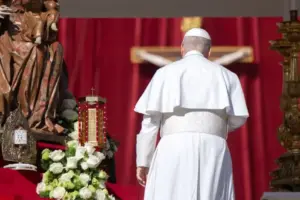
The editorial board opened its discussion by analyzing Pope Leo’s recent pastoral journey across South America—a continent crucial to the demographic and spiritual future of the Catholic Church.
The Itinerary and Geopolitical Context
Pope Leo’s voyage took him through several nations grappling with acute economic instability, political polarization, and deep-seated social fractures. Unlike his predecessors, whose visits often emphasized broad theological themes or interfaith dialogue, Leo’s approach has been distinctly pragmatic, pastoral, and deeply attuned to the populist economic pressures facing the working classes of the Global South.
The editors scrutinized reports surrounding the Pope’s personal voting habits and civic participation—a subject of intense media speculation and debate within both conservative and progressive circles. While Catholic social teaching has historically maintained a strict line regarding the political neutrality of the papacy, Pope Leo’s subtle commentary on civic duty and democratic responsibility has sparked fierce discussions regarding the role of the modern pontiff in secular governance.
The Reception on the Ground
Reactions to the papal tour were markedly divided along ideological lines. Grassroots communities welcomed his emphasis on economic justice, labor rights, and the defense of traditional family structures against aggressive secularizing ideologies. However, technocratic political elites in several visited capitals expressed private unease over the Pope’s pointed critiques of unfettered capitalism and institutional corruption.
The editorial discussion highlights how South America continues to serve as a crucible for the global Church. As Pentecostalism and secularism steadily erode traditional Catholic majorities, Pope Leo’s strategy relies on direct engagement with the marginalized, signaling that the Church’s primary allegiance remains with the impoverished rather than political or economic potentates.
2. The Digital Precipice: A String of Suspicious "Cyber-Failures"
Shifting from the geopolitical to the technological sphere, the editors addressed a troubling series of recent infrastructure disruptions officially categorized as "cyber-failures." These incidents—affecting logistics networks, regional power grids, and financial clearinghouses—have reignited debates over the inherent vulnerabilities of hyper-connected global systems.
Anatomy of the Disruptions
Over the past several weeks, multiple Western nations have experienced sudden, synchronized outages that defy simple explanations. While official corporate and governmental communiqués have frequently attributed these events to software glitches, routine maintenance errors, or localized hardware failures, cybersecurity experts and investigative journalists have noted disturbing patterns.
The timing and precision of these disruptions suggest a level of systemic fragility that goes far beyond accidental failure. Whether the result of sophisticated, deniable state-sponsored cyber-warfare, insider threats, or cascading software bugs in proprietary infrastructure, these events expose the dangerous over-reliance of modern society on brittle digital architectures.
The Illusion of Redundancy
The editorial board emphasized that modern critical infrastructure is designed for efficiency rather than resilience. Just-in-time logistics, centralized cloud computing, and automated financial networks operate on razor-thin margins. When a single node fails, the shockwaves propagate rapidly across borders.
The discussion warns that society is sleepwalking into a digital vulnerability trap. As critical functions—from healthcare to energy distribution—are outsourced to opaque software ecosystems, the potential for catastrophic systemic collapse increases exponentially. The board calls for an urgent reassessment of technological sovereignty, arguing that true national security requires decoupling vital infrastructure from vulnerable, interconnected global networks.
3. The End of an Era: Francis Fukuyama’s Memoir and Intellectual Legacy
The final segment of the editorial briefing turned to intellectual history, examining the release of Francis Fukuyama’s new memoir and the broader implications of his evolving thought.
Revisiting "The End of History"
In 1992, Francis Fukuyama electrified the political science establishment with The End of History and the Last Man, arguing that the collapse of the Soviet Union and the global triumph of Western liberal democracy marked the endpoint of humanity’s ideological evolution and the final form of human government.
Decades later, that triumphalist vision lies in tatters. The rise of authoritarian capitalism in China, the resurgence of nationalist populism across the West, and the erosion of democratic norms globally have forced a painful reckoning with Fukuyama’s thesis. His new memoir offers a reflective, if occasionally defensive, look back at the intellectual climate of the post-Cold War era and how subsequent global events forced him to recalibrate his theories.
The Tragedy of the Modern State
During the podcast, the editors analyzed how Fukuyama’s later work—particularly his focus on state-building, identity politics, and institutional decay—offered a more nuanced, albeit pessimistic, view of political development. The memoir highlights the paradox of modern liberalism: while it successfully delivered unprecedented material prosperity and individual liberty, it systematically neglected humanity’s deep-seated need for thymos (recognition and dignity), thereby generating the very tribalistic backlashes that threaten it today.
The board concluded that Fukuyama’s intellectual journey mirrors the trajectory of the Western elite class over the past thirty years: overly optimistic about technocratic governance, blind to cultural undercurrents, and ultimately surprised by the stubborn persistence of history.
Supporting Context & Metrics
To contextualize the topics discussed by the editors, the following data points and historical metrics illustrate the scale of the challenges currently under review:
- Demographic Shifts in South America: According to recent demographic surveys by the Center for Applied Research in the Apostolate (CARLA), the Catholic population in Latin America has declined from roughly 85% in the late 20th century to approximately 57% in 2026, driven largely by conversions to evangelical Protestantism and secularism—a key backdrop to Pope Leo’s pastoral focus.
- Global Infrastructure Vulnerability: A 2025 international cybersecurity audit revealed that over 68% of Western critical infrastructure operators experienced at least one significant, unexplained system outage capable of disrupting service to over 100,000 citizens.
- Economic Concentration: The top five cloud infrastructure providers control over 75% of global enterprise data storage, creating a severe systemic risk point that mirrors the "cyber-failure" vulnerabilities discussed by the editorial board.
- Intellectual Shift: Citations of Fukuyama’s early works in academic literature have shifted in tone from celebratory validation (1990s–2000s) to cautionary critique (2015–2026), reflecting the broader academic consensus regarding the fragility of contemporary democratic institutions.
Official Statements & Editorial Commentary
Reflecting on the breadth of this week’s topics, the editorial board issued several overarching statements regarding the state of global affairs:
"We are living through an interregnum where old certainties—whether ecclesiastical, digital, or ideological—are rapidly losing their grip on reality. Pope Leo’s journey reminds us that spiritual authority cannot remain insulated from the struggles of the working poor. Simultaneously, our recurring ‘cyber-failures’ serve as a stark warning that our technological gods have feet of clay. Finally, Fukuyama’s memoir closes the book on a thirty-year illusion that history could be managed by technocrats alone. Humanity is marching back into history, whether we are prepared for it or not."
Future Outlook
As we look toward the close of 2026 and into the coming year, the trajectories established by these current events will undoubtedly shape the global agenda:
- The Future of Papal Engagement: Watch for how Pope Leo’s South American initiatives influence Vatican diplomacy in other polarized regions, particularly concerning the Church’s relationship with emerging populist movements and economic nationalists.
- Regulatory Crackdowns on Critical Infrastructure: Anticipate emergency legislative efforts across North America and Europe aimed at mandating offline redundancies and hardening digital networks against systemic failures, moving away from purely market-driven IT models.
- The Post-Liberal Intellectual Landscape: As the generation of 1989 publishes its memoirs and final reflections, a new generation of political philosophers will be forced to construct frameworks that account for multipolarity, digital totalitarianism, and the resurgence of civilizational politics.
For ongoing analysis, commentary, and long-term listening convenience, subscribe to the First Things podcast on SoundCloud, Apple Podcasts, or Spotify.




Comments
Facebook App ID not configured. Please add it in the Customizer.