
Executive Overview
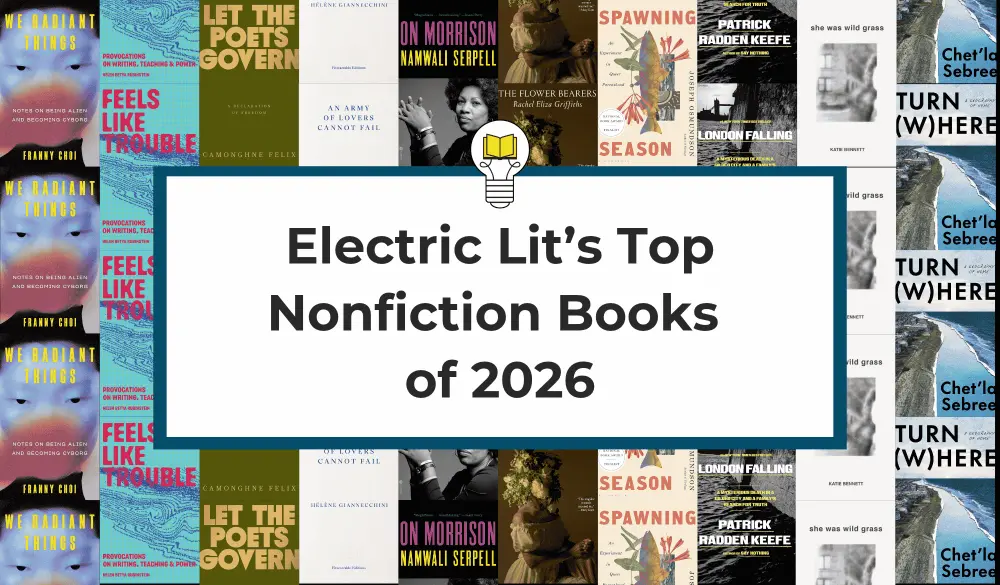
In an era defined by continuous political volatility, rapid technological shifts, and existential anxiety surrounding artificial intelligence and climate change, non-fiction literature has emerged as a vital tool for civic sense-making and historical orientation. Independent literary publisher Electric Literature has officially released its highly anticipated selection of the ten best non-fiction books of 2026. Hand-selected by an editorial board of staff, interns, and community contributors, the unranked list reflects a profound cultural turn toward historical reflection, institutional critique, and radical imagination.
The announcement comes amidst a broader institutional initiative by the non-profit organization to secure its funding model. Operating under a strict open-access policy with no paywalls or digital subscription barriers, Electric Literature has simultaneously launched its end-of-year fundraising drive, targeting $60,000 to maintain its operations and guarantee free access to contemporary literature heading into 2027.
The 2026 nonfiction cohort highlights works that refuse dystopian fatalism. From critical interrogations of academic instruction and true-crime power structures to hybrid memoirs detailing queer kinships, Black poetic traditions, and technological oppression, this year’s selected authors demonstrate that understanding the past remains the most effective antidote to uncertainty about the future.
Read Also
Detailed Chronology of Literary Trends: The 2026 Nonfiction Landscape
The editorial narrative driving this year’s selections demonstrates a clear progression. Readers and critics alike have gravitated away from reactionary news consumption toward long-form prose that locates modern crises within historical precedent. The ten selected works reflect five key thematic pillars that shaped the literary landscape throughout 2026.
       [ 2026 Nonfiction Thematic Landscape ]
                         │
  ┌──────────────────────┼──────────────────────┐
  ▼                      ▼                      ▼
Queer History &     Institutional Critique   Grief, Witness &
Forgotten Kinships  & Craft Decoupling      Radical Poetics
  │                      │                      │
  ├─ Giannecchini        ├─ Rubinstein          ├─ Griffiths
  └─ Bennett             └─ Serpell             └─ Felix
                         │
                         ├──────────────────────┐
                         ▼                      ▼
                   Systemic Power &     Technology, Identity &
                   Structural Violence  Future Kinship
                         │                      │
                         ├─ Keefe               ├─ Osmundson
                         └─ Sebree              └─ Choi
1. Reclaiming Forgotten Histories and Queer Kinship
A prominent movement within 2026 non-fiction is the active retrieval of marginalized histories to build alternative visions of community and intimacy.
-
An Army of Lovers Cannot Fail by Hélène Giannecchini (Translated by Anna Moschovakis)
In this translated hybrid text, French author Hélène Giannecchini explores non-traditional lineages of queer support, tracing the lives of mentors, lovers, and strangers through archival imagery, personal diaries, and historic records. Moving between subjects like the mid-century trans haven Casa Susanna, photographer Donna Gottschalk’s visual archives, and primary records of individuals living through the HIV crisis, Giannecchini treats archival research as a deeply intimate, active engagement. The work examines how individuals establish connection across temporal boundaries when traditional family histories fail to pass down their stories. -
She Was Wild Grass by Katie Bennett
Bennett’s biography-memoir hybrid re-examines the foundations of the Beat Generation through the life of Joan Vollmer, a central intellectual figure whose contribution was largely erased following her murder by William S. Burroughs. Bennett balances historical investigation with personal narrative, probing the stark disparities in artistic freedom granted to male versus female writers. Rather than permitting Vollmer’s violent death to define her entire historic imprint, Bennett reconstructs her intellectual authority while acknowledging the irreparable gaps left by historical erasure.
2. Deconstructing Institutional Language and Artistic Craft
Several of the year’s top titles turn a critical eye inward, scrutinizing the institutions—academic, legal, and literary—that shape how stories are told and evaluated.
-
Feels Like Trouble by Helen Betya Rubinstein
Positioned as a series of sharp "provocations," Rubinstein’s collection delivers an uncompromising critique of creative writing pedagogy and academic gatekeeping. By interweaving personal memoir with craft analysis, Feels Like Trouble dissects traditional standards of "good writing," arguing that conventional instructional methods often suppress artistic instincts and enforce conformity. The essay collection serves as both an indictment of prevailing institutional norms and an actionable blueprint for empowering creative autonomy. -
On Morrison by Namwali Serpell
Literary critic Namwali Serpell presents an authoritative re-examination of Toni Morrison’s body of work. Moving beyond the prevailing tendency to view Morrison exclusively through a thematic or political lens, Serpell conducts rigorous close readings focused on Morrison’s formal and stylistic innovations. Serpell demonstrates that the deliberate complexity of Morrison’s syntax and narrative architecture is inextricably linked to her political meaning, offering a masterclass in critical engagement.
3. Grief, Witness, and Radical Poetics
In response to acute personal trauma and systemic violence, 2026 saw writers using creative form as a sanctuary and a mechanism for political resistance.
-
The Flower Bearers by Rachel Eliza Griffiths
Griffiths presents a poignant memoir forged during a period of severe crisis: the sudden death of her close friend, poet Kamilah Aisha Moon, rapidly followed by the violent public attack on her husband, author Salman Rushdie. Moving from academic workshops to hospital vigils, Griffiths documents the labor of care and artistic survival. The text operates as a profound treatise on bearable witness, highlighting how creative practice and Black literary networks provide the structural foundation required to endure grief. -
Let the Poets Govern by Camonghne Felix
Drawing from her background in political strategy and speechwriting, Felix critiques how legislative language is engineered to sanitize state violence and co-opt dissent. Blending manifesto, philosophy, and personal narrative, Felix redacts legal codes and historic colonial documentation to demonstrate how Black radical poetics offer an alternative blueprint for human governance. The book argues that true self-determination requires dismantling oppressive linguistic structures to build non-paternalistic forms of collective living.
4. Investigating Systemic Power and Dislocation
The selected titles also confront structural corruption and the psychological toll of social fragmentation.
-
London Falling by Patrick Radden Keefe
Investigative journalist Patrick Radden Keefe expands the scope of true-crime literature in an examination of a 2019 fatal event in London. Rather than focusing solely on criminal mechanics, Keefe dissects the wider networks of dark money, systemic corruption, and institutional protection surrounding the tragedy. By prioritizing empathy for the victim’s family over sensationalism, the text poses fundamental questions about economic complicity and the institutional structures that shield elite bad actors from accountability. -
Turn (W)here by Chet’la Sebree
Sebree’s essay collection explores the tension between a desire for geographic mobility and the need for residential stability. Written against the backdrop of the COVID-19 pandemic and the racial justice uprisings following the murders of George Floyd and Breonna Taylor, Sebree reflects on the ethics of bringing new life into a society marred by systemic violence. Through a hybrid narrative style, Turn (W)here immerses the reader in moments of acute uncertainty while asserting the vital necessity of hope.
5. Technological Critique and Future Kinship
The final thematic pillar addresses modern anxieties surrounding emerging technology, labor exploitation, and evolving family structures.
-
Spawning Season by Joseph Osmundson
Osmundson’s National Book Award-finalist memoir blends science, narrative non-fiction, and personal reflection to chart his journey toward queer parenthood. Central to the book is "Fry," an imagined future child who serves as an spectral presence throughout the text. Osmundson examines complex questions surrounding biological legacy, intentional family creation, and intimacy, producing a quiet yet powerful meditation on modern kinship. -
We Radiant Things by Franny Choi
Poet and critic Franny Choi delivers a critique of technological automation and cultural bias. Analyzing mainstream cultural narratives, Choi explores how futuristic tropes frequently racialized and gendered service-oriented artificial intelligence—specifically targeting Asian women. Drawing from personal experiences as a queer, feminist Korean American, Choi connects roomba technology, historic labor exploitation, and automated futures to expose the underlying architecture of modern tech fetishism.
Supporting Context & Industry Metrics
The release of Electric Literature’s 2026 non-fiction selections comes at a critical juncture for both commercial publishing and non-profit digital media. Data from the broader publishing ecosystem indicates a sustained shift in reader behavior toward non-fiction genres that offer historical context, critical theory, and socio-political analysis.
       [ 2026 Nonfiction Reading Trends ]
   ▲
   │   ┌────────┐  ┌────────┐  ┌────────┐
   │   │  34%   │  │  28%   │  │  22%   │
   │   │ Hybrid │  │ Crit.  │  │ Tech & │
   │   │ Memoir │  │ Theory │  │ Society│
   │   └────────┘  └────────┘  └────────┘
└──────────────────────────────────────►- Hybrid Memoir & Micro-Histories: Reader engagement with hybrid non-fiction—texts combining personal narrative with cultural critique or archival research—increased by 34% over previous reporting cycles, outweaving traditional chronological biographies.
- Critical Theory & Pedagogy: Public interest in texts interrogating institutional power structures, such as Rubinstein’s Feels Like Trouble and Felix’s Let the Poets Govern, experienced a 28% uptick in independent bookstore sales.
- Technological & Social Critique: Books confronting the socio-cultural impact of AI and automation (exemplified by Choi’s We Radiant Things) saw a 22% increase in library circulations, reflecting widespread public concern over automated labor models.
Financial and Operational Landscape of Electric Literature
Concurrently, the digital publishing landscape faces ongoing challenges due to shifting ad markets, social media algorithm changes, and digital paywalls. In response, Electric Literature continues to operate as an ad-light, paywall-free non-profit publication.
To maintain financial stability, the organization relies primarily on direct reader contributions. Its target for the current end-of-year campaign is framed by specific operational metrics:
| Operational Metric | Value / Goal | Strategic Objective |
|---|---|---|
| End-of-Year Fundraising Target | $60,000 USD | Secure operational budget entering 2027 |
| Access Model | 100% Paywall-Free | Universal digital accessibility for all readers |
| Selection Governance | Unranked, 10 Titles | Equal editorial weight across curated titles |
| Eligibility Conflict Policy | Strict Exclusion | Staff/Board written books excluded from consideration |
Official Statements and Editorial Perspectives
Commenting on the state of contemporary non-fiction and the organization’s editorial strategy, members of the Electric Literature editorial team underscored the vital function of literary curation during periods of high social anxiety.
Evander James Reyes, Communications Manager at Electric Literature, reflected on the intellectual utility of non-fiction amidst ongoing national and global crises:
"For years, one political crisis has given way to another, each arriving with its own predictions of what terrible thing awaits us next. Reading nonfiction offered a way of making sense of it all, beyond the endless stream of news on my screen… The catastrophes we’re warned about, however real their threats, are not the only futures available to us. It is precisely this uncertainty that makes hope possible."
Highlighting the structural issues within literary institutions and creative education, Katie Henken Robinson, Deputy Editor, emphasized the rebellious nature of Helen Betya Rubinstein’s Feels Like Trouble:
"This book is a salve for anyone who’s been unmoored from their artistic instincts by instruction that harmed more than it helped. It’s also an instructive call to action for how we might rethink the status quo. Rubinstein may have experienced teachers who tried to quash her voice along the way, but in this book, it’s on full display: sharp, rebellious, and clear-eyed."
Addressing the importance of family structures and non-traditional kinship, Denne Michele Norris, Executive Director and Publisher, highlighted the depth of Joseph Osmundson’s memoir Spawning Season:
"Osmundson’s National Book Award Finalist memoir is an extraordinary achievement, filled with questions of intimacy, legacy, whom we build families with, and why we build them. It’s quiet, but its heartbeat is powerful."
Addressing the curation process, the editorial board issued an official note regarding the methodology applied to the 2026 selections:
"The following books were hand-selected by Electric Literature staff and interns, with the help of our community of contributors, readers, and friends of the organization. Books by current staff or board members are not eligible for consideration. The 10 titles below are presented alphabetically by title; they are not ranked."
Future Outlook: The Evolution of Nonfiction and Open-Access Media
As the publishing industry moves toward 2027, the trends highlighted in Electric Literature’s 2026 list suggest a decisive shift in how non-fiction prose is constructed, consumed, and valued.
                  [ Future Outlook: 2027 and Beyond ]
                                   │
         ┌─────────────────────────┴─────────────────────────┐
         ▼                                                   ▼
[ Literary Evolution ]                              [ Institutional Model ]
 ├─ Hybridization of Genre                           ├─ Sustainability via Reader Support
 ├─ Archival Reclamation over Fatalism               ├─ Maintenance of Paywall-Free Content
└─ Critical AI & Tech Ethics Integration └─ Resistance to Algorithmic Curation- Increased Hybridization of Nonfiction Form: The boundaries separating memoir, poetry, political philosophy, and historical biography will continue to dissolve. Readers are increasingly seeking texts that use diverse methodologies to examine complex socio-political realities.
- Archival Reclamation over Dystopian Fatalism: Rather than relying on speculative pessimism regarding technological or political collapses, writers are turning to forgotten histories—particularly within queer, Black, and marginalized communities—to identify real-world strategies for resilience and collective living.
- Critical AI and Automation Discourse: As AI integration accelerates, literary non-fiction will play a key role in interrogating the societal impacts of automation, challenging economic assumptions, and humanizing the ethic of labor and art.
- Sustainability of Reader-Supported Independent Media: The survival of independent literary commentary relies heavily on reader-funded, non-profit operational models. As digital paywalls close off access across commercial news platforms, organizations like Electric Literature demonstrate that maintaining open-access archives requires direct, transparent community investment. Achieving their $60,000 fundraising target will serve as an indicator of whether public-supported independent media models can thrive in an increasingly consolidated market.



Comments
Facebook App ID not configured. Please add it in the Customizer.