
Executive Overview
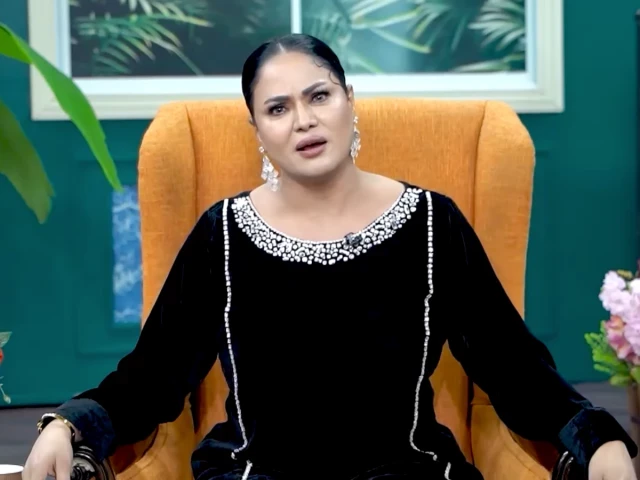
In an era dominated by hyper-curated digital personas, filtered realities, and unrelenting cyber-scrutiny, Pakistani actor and television host Veena Malik delivered a raw, unscripted, and deeply poignant rebuke to the culture of body shaming. Broadcasting live from her morning show set, Malik dismantled the polished illusions of television entertainment to confront online trolls who had weaponized her physical appearance against her. In a bold act of defiance, she stripped away the external markers of conventional beauty—kicking off her high heels and wiping away her makeup on camera—to expose the absurdity of societal expectations placed upon women in the public eye.
What began as a personal defense against malicious internet commentary quickly transcended the boundaries of a routine broadcast segment. It evolved into a national dialogue concerning the objectification of women, the ethics of social media interaction, and the systemic reduction of female identity to mere aesthetic metrics. Malik’s impassioned monologue struck a chord across the entertainment industry, prompting swift solidarity from prominent peers such as Sabeena Farooq and Azfar Rehman.
This watershed moment has reignited critical conversations across Pakistan regarding digital harassment, media accountability, and the urgent need to redefine how society values women—moving the narrative away from arbitrary standards of weight, age, and appearance and toward professional capability, character, and intrinsic human worth.
Read Also
Detailed Chronology: The Unfolding of a Defining Broadcast Moment
The genesis of Malik’s televised stand lay in the relentless tide of vitriol that frequently inundates the comment sections of female public figures. Over the preceding weeks, Malik had become the target of targeted online abuse, with keyboard warriors fixating on perceived fluctuations in her weight and physical presentation. Rather than ignoring the negativity or issuing a conventional, scripted social media statement, Malik chose a medium and a moment that forced her audience to confront the human cost of digital cruelty head-on.
The Confrontation
As the morning show progressed, Malik shifted the focus from her scheduled segment to address the elephant in the room: the anonymous critics who believed her body was public property. With a calm yet intensely resolute demeanor, she directly addressed the perpetrators of online harassment.
"You guys are only seeing my weight, right? Let me also show you my height and my face," Malik stated, before systematically kicking off her high heels on live television. The symbolic gesture discarded the physical tools engineered to elongate and alter a woman’s silhouette for the male gaze.
Escalating the confrontation, Malik reached for makeup wipes and proceeded to cleanse her face entirely of cosmetics. With the camera zooming in on her bare skin, she challenged her detractors to look closer:
"This is my face. Let me show you with my makeup removed so I can give you more reasons to talk about me."
Inviting the inevitable media fallout, she dared the sensationalist press and internet trolls to turn her natural, makeup-free visage into the next viral headline.
"Now you guys can put out the news. What is Veena Malik without makeup? She is dark, she is fat."
Deconstructing the Female Experience
Moving past the initial shock value of her actions, Malik expanded her critique to encompass the broader societal framework that traps women in an endless cycle of judgment. She articulated a profound frustration with the conditional respect afforded to women based on physical attributes.
"Weight has been gained, so now my responsibilities and capabilities are over? Are we just bodies?" she asked, challenging the notion that a biological or physical change diminishes a woman’s intellect, professional drive, or leadership potential.
Malik emphasized that her crusade was not merely an ego-driven defense mechanism, but a universal proxy for the silent suffering of countless women.
"This isn’t just about me and my story but everyone’s story and every woman’s story," she affirmed.
Bringing the critique closer to home, Malik challenged the hypocrisy of her anonymous harassers, questioning whether the men behind the keyboards would dare subject the women in their own domestic spheres to the same vitriol.
"In this whole world, is the only woman Veena Malik? There are women in your homes, from your aunts to relatives. Even your maid. Is this how you treat the women in your life?"
She further dissected the inescapable maze of patriarchal expectations, noting that women are scrutinized regardless of their life stage, marital status, or reproductive history—whether young or old, married or single, mothers or childless. Even behavioral traits, she observed, are weaponized: whether a woman laughs too loudly, talks too much, or remains entirely silent, she inevitably becomes a target for condemnation.
Concluding her address, Malik re-established her autonomy, asserting that the cacophony of social media did not dictate the parameters of her self-worth or daily existence.
"Wow, so many comments? What do you guys think? That my life starts and revolves around these?"
Supporting Context & Metrics: The Anatomy of Digital Body Shaming
To fully appreciate the weight of Veena Malik’s on-air defiance, one must examine the broader socio-cultural ecosystem of South Asia’s digital landscape. The advent of high-speed mobile internet and affordable smartphones has democratized media consumption, but it has concurrently given rise to an unchecked culture of cyberbullying, cyberstalking, and institutionalized misogyny online.
The Psychology of Cyber-Harassment Against Women
Research consistently indicates that women in the public eye—particularly actors, journalists, and politicians—face a disproportionate volume of gendered online abuse compared to their male counterparts. While male public figures are frequently critiqued based on their professional output, policies, or performances, female figures are systematically reduced to their physical metrics: skin tone, body mass index, aging signs, wardrobe choices, and marital status.
Body shaming functions as a mechanism of control. By policing women’s bodies through public humiliation, digital mobs attempt to enforce traditional patriarchal boundaries, signaling that visibility in the public sphere comes at the cost of bodily autonomy. Malik’s unmasking directly subverted this dynamic; by preemptively claiming the insults ("dark," "fat") and stripping away her defenses on her own terms, she stripped the words of their power to inflict shame.
The Intersection of Entertainment Media and Public Scrutiny
Morning shows in Pakistan occupy a unique, albeit often controversial, space in the media landscape. Historically designed to cater to homemakers, these programs have evolved into hybrid platforms blending lifestyle, entertainment, and sensationalism. By utilizing this exact platform to stage a counter-cultural protest, Malik subverted the very medium that often capitalizes on female aesthetics and sensationalist gossip.
Her actions forced the television-viewing public to confront the complicity of media consumers who participate in or quietly tolerate online harassment. The viral nature of the segment underscored a grim reality: the commodification of female distress remains a potent driver of engagement in the digital age, yet it also provides an unprecedented megaphone for resistance.
Official Statements and Industry Reactions
Malik’s courageous display reverberated across the Pakistani entertainment fraternity, drawing immediate and vocal support from fellow artists who recognized the universal relevance of her stand.
Industry Solidarity
Prominent actors Sabeena Farooq and Azfar Rehman took to their respective social media platforms to condemn the culture of body shaming and rally behind Malik.
- Sabeena Farooq, known for her compelling portrayals of complex characters, voiced her unequivocal support via Instagram, highlighting the cruelty of an internet culture that feels entitled to police women’s physical transformations. Farooq urged Malik to shield her mental peace from the toxic noise of anonymous commentators.
- Azfar Rehman similarly shared messages of solidarity, emphasizing that professional achievements and artistic contributions must never be overshadowed by superficial commentary regarding an artist’s physical appearance. Rehman called for greater empathy and digital etiquette among social media users, noting that the psychological toll of cyberbullying is frequently underestimated.
While online audiences remained polarized—with some critics questioning the theatrical nature of a live television protest, and others praising her raw authenticity—the overarching consensus within the artistic community acknowledged that Malik had broken a pervasive silence on an uncomfortable truth.
Future Outlook: Reforming Digital Spaces and Redefining Beauty
As the dust settles on Malik’s viral broadcast, the incident serves as a critical inflection point for media ethics, digital governance, and cultural attitudes toward women in Pakistan and the broader region.
The Path Toward Digital Accountability
The backlash and subsequent support surrounding Malik’s segment highlight an urgent legislative and cultural need:
- Strengthening Cybercrime Legislation: Regulatory bodies such as the Pakistan Telecommunication Authority (PTA) and the Federal Investigation Agency’s Cyber Crime Wing must enforce stricter, more accessible reporting and punitive mechanisms for targeted online harassment and gendered abuse.
- Platform Responsibility: Social media corporations operating within the region must invest heavily in local-language moderation tools to intercept coordinated harassment campaigns and body-shaming mobs before they inflict psychological trauma on targets.
- Media Literacy: Educational institutions and media houses must champion digital literacy initiatives, teaching younger generations to critically evaluate online content and reject toxic patriarchal norms that commodify female bodies.
Redefining Beauty in the Public Eye
Ultimately, Veena Malik’s on-air revelation transcends the immediate controversy of a morning show segment. By physically enacting the shedding of societal expectations—stepping out of high heels and wiping away the mask of artificial perfection—she presented a powerful metaphor for liberation.
The legacy of this moment will be measured by whether it permanently shifts the cultural conversation. If society is to progress, the metrics of a woman’s worth must be permanently divorced from the scale, the mirror, and the malicious whims of anonymous digital mobs. Malik’s stand serves as a formidable reminder that a woman’s identity is defined by her agency, her resilience, and her contributions to her craft and society—not by the superficial judgments of those who view her through a screen.




Comments
Facebook App ID not configured. Please add it in the Customizer.