
Executive Overview
In an era defined by relentless hustle culture, digital saturation, and socio-economic uncertainty, a surprising demographic is reclaiming the toy aisle: adults. Once relegated to the margins of pop culture or dismissed as mere nostalgia, adult consumers—increasingly dubbed "kidults"—have emerged as the primary economic engine of the global toy industry. A market projected to surpass $130 billion worldwide has fundamentally shifted its gaze from toddlers to taxpayers.
Recent retail data reveals a striking paradigm shift: American adults without children now outpace households with children in purchasing games and toys. Store shelves once dominated by plushies and action figures for elementary schoolers are now packed with collector-grade Labubus, intricate Lego architectures, and high-end Funko Pops, purchased primarily by millennials and Gen Z consumers using disposable income to combat chronic burnout.
Far from being a childish rejection of maturity, neuroscientists and play researchers argue that this phenomenon is a biological necessity. The human drive to play is hardwired into our subcortical neurology, persisting across the entire lifespan. When adults engage in tactile play, they tap into neuroplasticity, lower stress responses in the amygdala, and stimulate deep-seated cognitive networks that remain dormant during passive screen time. This article explores the cultural, economic, and neurological underpinnings of the kidult boom, examining why modern adults are turning to toys to heal their over-optimized brains.
Read Also
Detailed Chronology: From Playground Bans to the Retail Renaissance
To understand how toys became a staple of modern adult life, it is necessary to trace the cultural trajectory of play over the past century.
The Mid-20th Century: Play as Exclusive to Childhood
Following the Second World War, the commercialized toy industry exploded in tandem with the suburban baby boom. Toys were definitively categorized as developmental tools for children, designed to prepare them for the modern workforce. Society drew a rigid line between the responsibilities of adulthood and the leisure of childhood. Play for adults was largely restricted to structured sports, gambling, or hobbies deemed "productive," such as woodworking or gardening. Collecting toys as an adult was often viewed through a clinical lens of arrested development rather than a legitimate form of recreation.
The Late 1990s and 2000s: The Geek Culture Awakening
The seeds of the modern kidult market were planted with the rise of comic book conventions, collectible card games like Magic: The Gathering, and niche pop-culture merchandise. As the internet matured, online forums allowed adult fans of sci-fi, anime, and comic books to build global communities. Companies like Funko (founded in 1998) capitalized on this trend by producing affordable bobbleheads for pop-culture obsessives. However, these consumers were still largely viewed as a subculture rather than a mainstream market force.
The 2010s: The Rise of the Maker and Collector
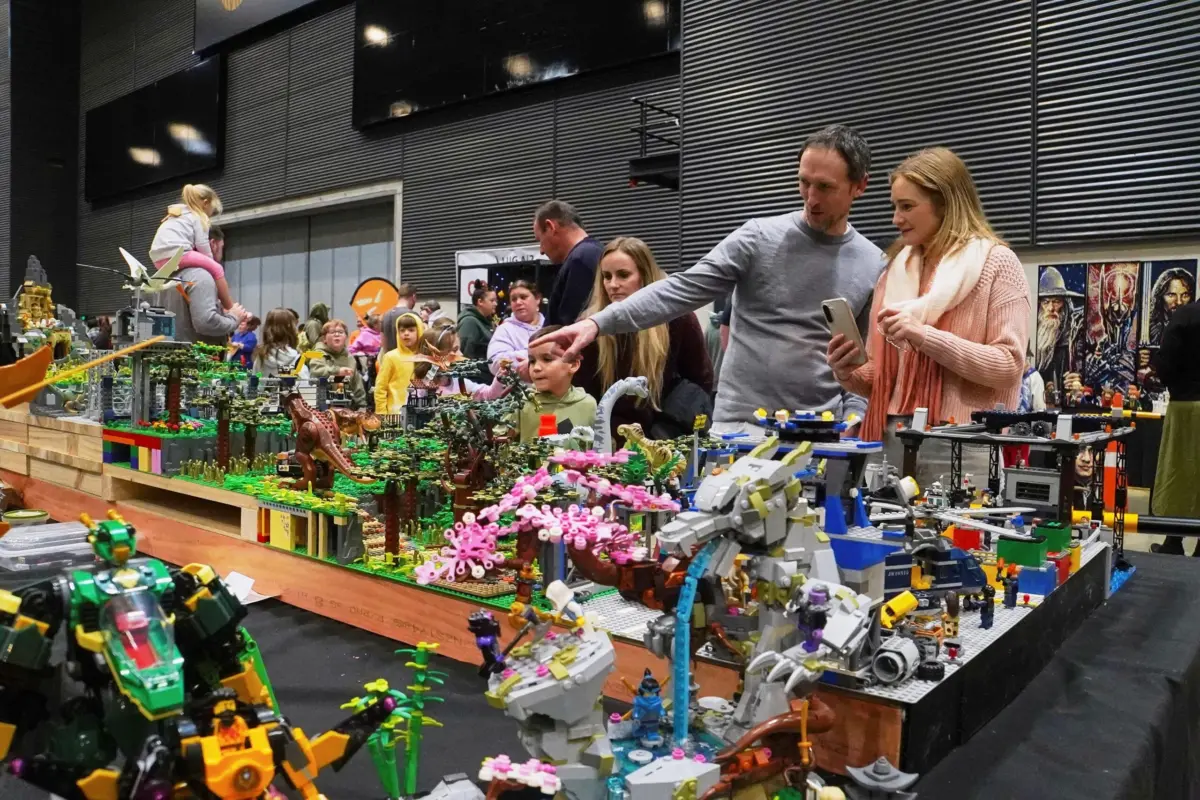
As crowdfunding platforms like Kickstarter gained traction, tabletop gaming experienced a massive renaissance. Adults began funding complex, multi-hour strategy board games with high-production-value miniatures. Simultaneously, the Lego Group launched targeted campaigns for adult builders (AFOLs — Adult Fans of Lego), introducing sophisticated architectural sets and cinematic replicas that commanded price tags well into the hundreds of dollars. The stigma surrounding adult toy consumption began to quietly dissolve.
2020–Present: The Pandemic Pivot and the "Kidult" Explosion
The COVID-19 pandemic served as a massive accelerant for the kidult movement. Confined to their homes, grappling with existential anxiety and digital fatigue, millions of adults sought tactile, screen-free comforts. Sales of puzzles, board games, and collectible plushies surged.
This momentum did not recede when lockdowns ended. Instead, it collided with a grueling post-pandemic economic landscape marked by housing affordability crises and relentless hustle culture. Adults, priced out of traditional milestones like homeownership, turned to accessible luxuries. Today, trendy blind-box collectibles like Labubus and Pop Mart figures sell out within minutes, proving that the modern adult toy market is no longer a fringe hobby, but a dominant force in retail commerce.
Supporting Context & Metrics: The Numbers Behind the Play Movement
The economic data surrounding the adult toy market paints a vivid picture of a demographic seeking solace in play.
- A $130 Billion Global Market: The worldwide toy and hobby industry is projected to exceed $130 billion, fueled heavily by spending power from consumers aged 18 and older.
- The Childfree Consumer Shift: Recent retail tracking indicates that American adults with no children living at home bought more games and toys than households with children during peak shopping seasons.
- The Neurobiology of the Hand-Brain Axis: According to developmental and cognitive studies, fine-motor manipulation of physical objects stimulates cognitive and emotional centers in the brain that passive digital consumption actively starves.
The Trap of Optimization Culture
Why are adults gravitating toward toys now more than ever? Experts point to the hyper-optimization of daily life. Modern work culture demands that every waking hour be monetized, tracked, or optimized for productivity. Even leisure activities—such as fitness tracking or reading for self-improvement—are often subjected to productivity metrics.
When hobbies become chores, the human brain loses its sanctuary for failure. Toys offer a unique psychological loophole: they are entirely useless in the capitalist sense. A Lego set does not write a report, answer an email, or generate quarterly revenue. Its sole purpose is enjoyment, experimentation, and unstructured expression.
Official Statements & Expert Insights
To dissect the neurological and psychological implications of this trend, industry leaders and researchers offer profound insights into why play remains vital across a lifetime.
The Biology of Play Across the Lifespan
Mia Sundstrom, CEO of the National Institute for Play, emphasizes that society fundamentally misunderstands human biology when it discourages adult play.
"The drive to play is actually biologically hardwired into our subcortex," Sundstrom explains. "Because of that subcortical location, the drive to play actually lasts across the entire lifespan, which means that we’re never too old to play. But our society deeply misunderstands that. We’ve slowly started to take play away as we grow up, and yet that drive is still there."
Rewiring the Stressed Brain
When asked what happens inside the adult brain during play, Sundstrom points to neuroplasticity and the autonomic nervous system.
"The primary reason is because of the hand-brain connection, which is essentially a two-way neurological highway," Sundstrom notes. "When we do fine motor movement while we’re playing with toys, it stimulates the brain regions that are responsible for our cognitive function, our emotion, and our focus. It activates these deep neural networks that go completely unused when we’re engaging in, say, passive screen time."
Furthermore, play acts as a direct antidote to chronic stress by dampening the amygdala—the brain’s emotional processing and threat-detection center.
"When we engage in this play state with toys, our amygdala actually calms down… Our stress, our anxiety, our emotional defensiveness are significantly reduced, and we enter that restorative state, which for a lot of us is really hard to access on the day-to-day."
Escaping the Efficiency Trap
Sundstrom traces the erosion of play back to adolescence, when educational and societal structures begin demanding immediate utility from every activity.
"We see playing with toys as extra, as a hobby, as something that doesn’t have an immediate purpose toward helping us achieve whatever our goals are. And yet paradoxically, it’s one of the most productive things we can do. The creative mind flourishes in the space in between, and the space in between is the time that is spent playing with toys."
When asked how adults can successfully reintroduce play into jam-packed schedules without falling into the trap of turning it into another productivity task, Sundstrom offers a simple remedy:
"Here’s the good news: Even 30 seconds to five minutes a day makes a difference. You can put play objects and toys in visible places around your environment so that you reach for that instead of your phone. If you just crack the door open a little bit with those micro moments of play in your routine, your brain will automatically enjoy it and start looking for more opportunities to play."
Future Outlook: A More Joyful, Authentic Society?
As the kidult phenomenon matures, its implications extend far beyond retail sales figures and toy manufacturer profit margins. It signals a broader cultural renegotiation of what it means to be a functional, healthy adult in the 21st century.
1. The Evolution of Workplace Wellness
Forward-thinking corporations are beginning to recognize that sterile, hyper-monitored office environments stifle creativity. Integrating tactile engagement zones, puzzle stations, and creative outlets into workspaces may soon transition from a quirky Silicon Valley gimmick to a standard pillar of corporate wellness aimed at combating burnout.
2. Redefining Adult Milestones
Society is slowly uncoupling adulthood from rigid, traditional markers of maturity. Enjoying collectible figures, building model kits, or engaging in tabletop gaming no longer carries the social stigma it once did. Instead, these habits are increasingly recognized as healthy coping mechanisms for navigating a high-stress, digitally mediated world.
3. Societal Flourishing Through Authenticity
Ultimately, embracing play allows adults to reconnect with their authentic selves. As Sundstrom observes, play is not about escaping reality or ignoring the hardships of life; rather, it provides a healthy, low-stakes medium for processing human emotion and fostering genuine social connection.
In a world dominated by algorithms, screens, and endless productivity loops, the humble toy store has transformed into an unexpected sanctuary. By picking up a paintbrush, a plushie, or a handful of plastic bricks, modern adults are proving that while growing old is mandatory, growing up is entirely optional.





Comments
Facebook App ID not configured. Please add it in the Customizer.