
Executive Overview
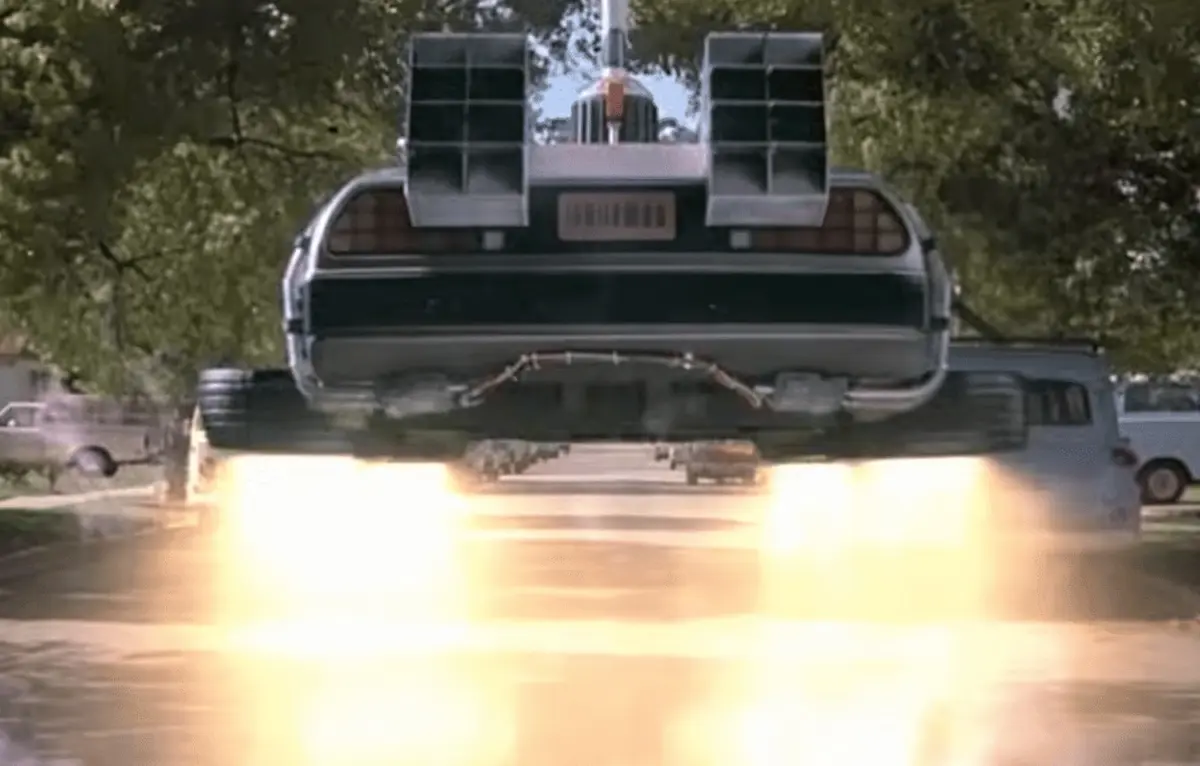
Roughly a month ago, the global tech sphere was once again gripped by a collective wave of euphoria. Social media feeds flooded with the sounds of spontaneous high-fiving and ecstatic whooping following the public unveiling of Tesla’s latest Roadster model—a vehicle that enthusiastic spectators eagerly described as "flying."
In reality, closer inspection revealed that the demonstration vehicle was performing a maneuver closer to "falling with style," aided by inventive propulsion mechanics reminiscent of the vehicular soccer video game Rocket League. Yet, the psychological sticking power of the "flying car" on display bypassed cold skepticism with ease, fueled by forces far more potent than simple corporate branding or consumer utility. Whether this particular model ever enters commercial production, whether it receives clearance for operation outside of strictly controlled, isolated environments, or whether its underlying physics are practically viable remains secondary. The sheer, intoxicating appeal of the premise consistently eclipses logistical reality.
As it turns out, the dream of the flying car is stubbornly, relentlessly alive. Over the past decade, a burgeoning ecosystem of venture-backed startups has materialized, each promising a technological breakthrough that will allow everyday citizens to bypass terrestrial gridlock and take to the skies without requiring extensive aviation training. However, precious few of these enterprises offer coherent answers to a foundational question: How would thousands of independent airborne personal vehicles actually integrate into a crowded, highly regulated societal infrastructure?
Read Also
Practicalities are routinely sacrificed at the altar of the aesthetic. As tech investor Peter Thiel famously quipped in 2011, "We wanted flying cars, instead we got 140 characters." Of course, that remark predated an era where the same visionary would exert direct influence over both social media architecture and advanced aerospace engineering. Even against a backdrop of modern dystopian technological anxieties, humanity clings to the flying car not merely as a staple of science-fiction worldbuilding, but as the litmus test for genuine societal evolution.
We rarely pause to ask the most fundamental question: Why? How did one of the most mechanically impractical and logistically nightmarish concepts in speculative fiction become the universally accepted benchmark for civilizational progress?
Detailed Chronology: From Satirical Satires to Silicon Valley Startups
To understand our obsession with the flying car, we must trace its lineage far deeper into history than Silicon Valley pitch decks suggest. While the concept naturally borrows from humanity’s ancient, mythic desire for unassisted flight, the specific archetype of the personal, roadable aircraft is remarkably antique.
The Nineteenth-Century Genesis
In 1883, French author Albert Robida published Le Vingtième Siècle (The Twentieth Century), a satirical science-fiction work that poked fun at contemporary anxieties surrounding rapid industrialization and technological disruption. Among its remarkably prophetic visions was the seamless integration of personal aircraft into urban society, depicted darting between buildings like horse-drawn carriages. This vision materialized even before the first gasoline-powered automobile had been patented. Concurrently, Jules Verne had already conceived of a similar device in his 1863 manuscript Paris in the Twentieth Century (which languished unpublished until 1994). At a historical juncture when the horseless carriage was still an erratic, sputtering prototype, visionaries were already demanding machines that could also conquer the clouds.
This established a fascinating trajectory for speculative fiction throughout the late nineteenth and early twentieth centuries. Authors like Verne and H.G. Wells championed a future dominated by accessible air travel. While they did not always imagine privatized, individually owned flying sedans, they planted the cultural seed that democratization of the skies was the inevitable destination of advanced civilization.
The Early Industrial Era of "Roadable Aircraft"
Real-world manufacturers quickly caught up to the fiction. In 1917, aviation pioneer Glenn Curtiss unveiled the Curtiss Autoplane. While the colloquial term "flying car" had not yet entered common parlance—engineers preferred the austere designation "roadable aircraft"—the mandate was identical. The Autoplane was designed to navigate asphalt with the docility of a standard automobile and transition into an airplane when the open road ended. While the vehicle managed the road component with modest competence, its aerial capabilities never amounted to much more than a series of brief, nervous hops.
This failure did nothing to decouple industry ambition from science fiction; if anything, the two reinforced one another in a compounding feedback loop:
- 1930: The cinematic release of Just Imagine saturated urban landscapes with personal flying vehicles.
- 1936: Inventor James G. Ray piloted a prototype road-friendly autogyro directly to the steps of the Commerce Building in Washington, D.C., attempting to lobby the federal government for integration.
- 1939: General Motors integrated massive, sprawling dioramas of cities built explicitly to accommodate personal flying cars into its iconic "Futurama" exhibit at the New York World’s Fair.
Figures from Henry Ford to legendary animator Tex Avery operated under the shared conviction that the flying car was an absolute certainty. The automobile was actively reshaping the physical geography of the globe through highway systems, yet society became convinced that the natural evolutionary trajectory of the car was upward. Crucially, missing from every blueprint was a realistic assessment of how municipalities would manage airborne traffic collisions, maintenance, or noise pollution.
The Jetsons Problem: Cultural Optimism Meets Practical Absurdity
This cultural momentum culminated in the most influential piece of flying car media in history, despite its creators treating the concept as background noise rather than a revolutionary thesis.
The Jetsons debuted on ABC in September 1962 in a prime-time slot. Although its initial evening run was brief, the show’s very existence in prime time spoke volumes about the intoxicating optimism of 1950s and 60s American futurism. Society sensed it stood at the precipice of a technological golden age, even if it lacked the vocabulary to define it.
The Jetsons represented the domestic apex of this Atomic Age ideology. It applied the comforting contours of American suburban life to the stratosphere: what if your mailman had rocket boots? What if your spouse had domestic automation that kept her happily within the nuclear household? And, most importantly, what if there was a folding, suitcase-sized flying car in every garage?
Yet, a closer examination of George Jetson’s daily routine reveals a profound satire. The technology of the future had utterly failed to improve the human condition. George still suffered through a soul-crushing commute to a monotonous job; he was still vulnerable to shady used-car salesmen pushing airborne lemons; and, most damningly, he still sat in crushing traffic jams complete with mid-air speeding tickets.
The Jetsons was satirizing mid-century Americana by projecting it into a technically advanced yet fundamentally stagnant future. Yet modern media and headline writers routinely invoke the "Jetsons future" as the ultimate cultural aspiration.
Consider the supreme irony: The Jetsons featured genuinely revolutionary technologies that did come to pass—fully functional automation, instant digital communication, and flat-screen video displays. Yet contemporary culture routinely dismisses these life-altering innovations in favor of the one unrealized, highly inefficient fantasy: the flying car.
Supporting Context & Metrics: The Logistical Nightmare
Why does the flying car fantasy persist despite its obvious structural contradictions? The illusion relies entirely on the premise of individual exception. When an individual imagines commuting via flying car, they visualize themselves soaring effortlessly over terrestrial traffic jams. They fail to calculate the exponential variable: everyone else is doing the exact same thing.
The Air Traffic Management Crisis
If current terrestrial infrastructure buckles under the weight of billions of ground vehicles, introducing a third dimension of movement without a radical overhaul of spatial management is mathematically catastrophic. Modern commercial aviation relies on rigid, highly regulated air traffic control (ATC) protocols overseen by federal agencies. Recent nationwide ground stops and structural software failures within the FAA underscore how brittle our current airspace management truly is.
Multiplying the volume of aircraft by a factor of millions—putting amateur pilots behind the controls of vertical takeoff and landing (VTOL) craft at low altitudes—transforms the sky from an open frontier into a high-altitude demolition derby.
+-------------------------------------------------------------------------+
|                  THE TRANSPORTATION PARADOX MATRIX                      |
+---------------------------+---------------------------------------------+
| Terrestrial Congestion    | Solved by lane expansion, mass transit,     |
|                           | and traffic light algorithms.               |
+---------------------------+---------------------------------------------+
| Aerial Congestion         | Unsolvable at low altitudes without         |
| (Flying Cars at Scale)    | prohibitive, Orwellian centralized ATC.     |
+---------------------------+---------------------------------------------+
| Noise Pollution           | Ground vehicles: Tires on asphalt.          |
|                           | Flying cars: Thousands of screaming rotors. |
+---------------------------+---------------------------------------------+
| Energy Efficiency         | Physics dictate that hovering requires      |
|                           | vastly more energy than rolling on wheels.  |
+---------------------------+---------------------------------------------+
The Physics of Inefficiency
Energy economics present an insurmountable barrier. Rolling resistance on a paved road requires a fraction of the energy needed to continuously counteract gravity through vertical lift. As propulsion experts frequently note, a flying car is inherently a terrible car (due to heavy, fragile wings or inefficient ducted fans) and an exceptionally dangerous, under-regulated airplane.
Official Statements and Industry Perspectives
The dichotomy between technological capability and practical viability has drawn commentary from prominent voices across the industrial and investment landscape.
"We wanted flying cars, instead we got 140 characters."
— Peter Thiel, Co-founder of PayPal and Founders Fund
Expanding upon this famous remark in later retrospectives, Thiel articulated the core psychological grievance driving the flying car market: humanity’s deep-seated frustration with incrementalism. The post-war era promised sweeping, structural revolutions in how civilization operated. Instead, the late twentieth and early twenty-first centuries delivered incremental software upgrades and digital connectivity. The flying car remains a visual shorthand for a broken promise—tangible proof that humanity has transcended terrestrial limits.
Conversely, contemporary urban planners and aerospace regulators take a decidedly more sober approach. Speaking on condition of anonymity regarding federal integration initiatives, an aviation safety consultant noted:
"The engineering hurdles of building a VTOL vehicle that a consumer can safely pilot are immense, but they pale in comparison to the liability and infrastructure nightmare. You cannot simply park a multi-ton multi-rotor craft on a city street without risking pedestrian decapitation, property damage, and catastrophic grid failure when charging infrastructure draws industrial-grade power from residential grids."
Despite these warnings, venture capital continues to flow into electric vertical takeoff and landing (eVTOL) startups. Companies such as Joby Aviation, Archer Aviation, and legacy automotive giants continue to sink billions into prototype development. Their pitch decks cleverly pivot away from "flying cars for everyone" toward "urban air mobility taxi services"—a tacit admission that consumer-owned flying cars are an impossibility, but controlled, point-to-point commercial air transit might bridge the gap.
Future Outlook: Dreaming Beyond the Toy
As we evaluate the technological landscape of the mid-2020s, the enduring allure of the flying car tells us less about the future of transportation and more about the psychological state of modern humanity. It is an artifact of a bygone era of atomic optimism that refuses to die, kept alive by a primal desire for absolute personal autonomy and frictionless escape.
However, clinging to this specific benchmark of progress is actively counterproductive. By positioning the flying car as the ultimate standard of an advanced civilization, we devalue systemic, terrestrial innovations that genuinely improve human life: robust high-speed rail networks, intelligent public transit ecosystems, walkable urban design, and clean-energy grid distribution.
The Path Forward
To break free from the "Jetsons trap," three distinct groups must realign their ambitions:
- Tech Innovators: Must pivot away from resource-intensive, vanity-driven consumer novelties (such as personal flying toys for the ultra-wealthy) and channel capital into scalable, equitable public infrastructure.
- Sci-Fi Creators: Must challenge themselves to imagine futures where societal advancement is measured by social equity, ecological harmony, and architectural ingenuity, rather than the superficial inclusion of airborne traffic jams (as seen in dystopian mainstays like Blade Runner and The Fifth Element).
- Consumers: Must recognize that the romanticized fantasy of the flying car is a self-defeating paradox. True freedom of movement in a densely populated world has never come from giving everyone their own private aircraft; it has always come from building reliable, shared systems that make travel efficient, safe, and accessible to all.
The technology to make a car fly has existed for nearly a century in various experimental iterations. The true failure is not our inability to build it, but our stubborn refusal to ask whether a sky choked with personal automobiles is a future actually worth striving for. It is time to put away the toys of our twentieth-century childhood and start dreaming bigger.





Comments
Facebook App ID not configured. Please add it in the Customizer.