
Executive Overview
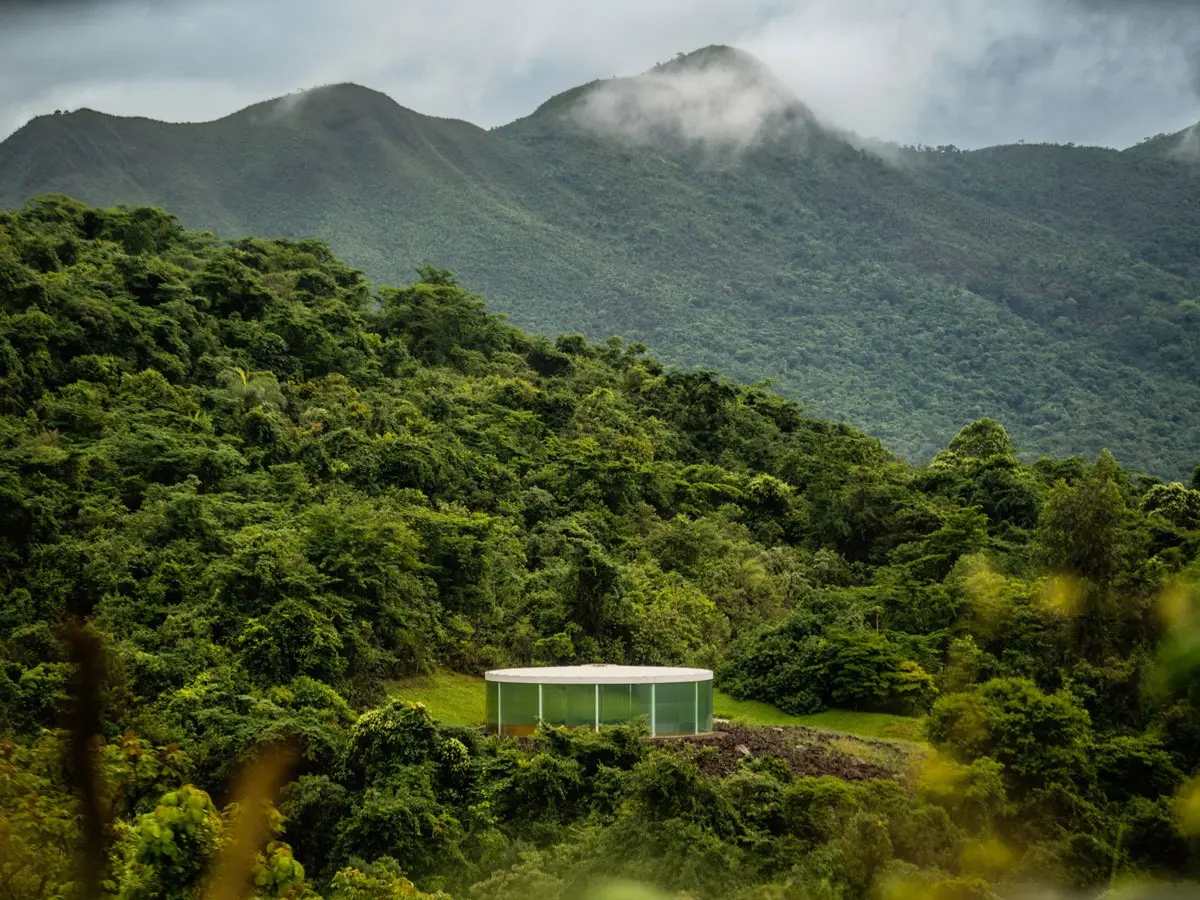
Two decades after opening its sprawling gates to the public, the Instituto Inhotim—Brazil’s radical hybrid of contemporary art museum and botanical garden located in the mining town of Brumadinho—is navigating the most complex and decisive transition in its history. Spanning 346 lush acres in the state of Minas Gerais, Inhotim achieved a historic milestone in 2025 by recording its highest annual attendance to date, welcoming 365,000 visitors from across the globe. Yet, this celebration of longevity and cultural triumph unfolds against a backdrop of sweeping structural and leadership shifts.
Bernardo Paz, the charismatic former mining magnate who originally envisioned the institution on an unprecedented scale with monumental pavilions and site-specific commissions, is no longer involved in its daily operations. Having donated the land, physical galleries, and 326 foundational works to the institution in 2022, Paz has pivoted his immense creative and financial ambitions directly adjacent to Inhotim’s borders. He is currently constructing a brand-new institution, the Museu Bernardo Paz, slated to open next September on land originally earmarked for Inhotim’s future expansion.
Described by key insiders as "two halves of a body," Inhotim and the forthcoming Museu Bernardo Paz share a common DNA, a founder, and a boundary, yet they must now chart separate institutional futures. As Inhotim marks its 20th anniversary with a wave of ambitious exhibitions, infrastructural reassessments, and a refined curatorial vision that broadens its gaze from Brazilian modernism to Latin America and the wider world, the art community is closely watching how this symbiotic yet distinct chapter will reshape the cultural landscape of Minas Gerais.
Read Also
Detailed Chronology: From Private Vision to Public Landmark
The Genesis and Unlikely Beginnings (2006)
When Inhotim officially opened its doors to the public in 2006, its realization felt like an impossible gamble. Located approximately 37 miles southeast of Belo Horizonte, the site required an arduous journey through a region deeply scarred and shaped by industrial mining. Even its founders harbored modest expectations regarding its drawing power.
"We thought maybe if a couple hundred people came a week, we would be successful," recalls Allan Schwartzman, a cofounder of Inhotim and now chief curatorial adviser to the forthcoming Museu Bernardo Paz. Those early projections were quickly shattered. Today, it is not uncommon for Inhotim to draw up to 10,000 visitors on a pleasant weekend day, cementing its status as a global destination for art pilgrims.

The Era of Paz and Institutional Realignment (2012–2022)
For more than a decade, Bernardo Paz single-handedly bankrolled the acquisition of blue-chip artworks, funded massive earthworks, and commissioned bespoke architectural pavilions tailored to individual artists. However, the sheer financial and operational complexity of sustaining such a colossal institution necessitated a structural evolution. In 2012, a formal board of directors was established to oversee governance, major donations, and institutional fundraising.
This administrative distancing was accompanied by turbulent legal hurdles. In 2017, the same year Paz stepped down as chair of Inhotim’s board, he was convicted of money laundering by a lower court—a conviction that was later definitively overturned by an appeals court in 2020.
The maturation of the institution culminated in 2022 when Paz executed a historic legal transfer, donating the entire Inhotim complex—including its galleries, extensive art collection, and 140 hectares of botanical gardens—back to the institution itself, formally establishing it as a secure, independent nonprofit entity.
The 20th-Anniversary Milestone (2025–2026)
Entering its milestone anniversary year, Inhotim operates from a position of profound institutional strength and operational maturity. It now encompasses 19 distinct galleries housing more than 900 works of art. Twelve of these spaces are permanently dedicated to individual visionaries, while seven rotate dynamic temporary exhibitions. Furthermore, Inhotim has evolved into one of the economic backbones of the local municipality: nearly 70 percent of its staff reside directly in Brumadinho, positioning the museum as a vital civic and cultural employer in a region historically dominated by heavy industry.
Supporting Context & Metrics: Architecture, Landscape, and Economics
Scale and Spatial Philosophy
Inhotim defies the traditional white-cube museum model. Its foundational philosophy rests on creating an uncompromised dialogue between ambitious contemporary art, bespoke architecture, and the untamed Brazilian landscape. Visitors traverse winding jungle paths to encounter iconic, large-scale pavilions dedicated to luminaries such as Yayoi Kusama, Adriana Varejão, Hélio Oiticica, Doug Aitken, and Tunga. These immersive installations simply could not be housed or experienced in the same manner within a conventional urban museum.

Funding and Financial Resilience
A common concern following a visionary founder’s departure is financial destabilization. However, Inhotim’s transition away from reliance on Paz’s private fortune has catalyzed a diversified funding model.
"On the contrary, with his departure, we began to raise money through cultural incentive laws to maintain the museum, at the municipal, state, and federal levels," notes adviser Allan Schwartzman.
Today, Inhotim operates as a private nonprofit entity leveraging federal mechanisms like Brazil’s Rouanet Law, the Minas Gerais state cultural incentive laws, and critical philanthropic contributions from private individuals and international foundations.
Key Metrics at a Glance
- Total Acreage: 346 acres (140 hectares) of botanical gardens and exhibition spaces.
- Cumulative Attendance: Nearly 5 million international and domestic visitors since opening.
- 2025 Peak Performance: 365,000 annual visitors, representing an all-time high.
- Gallery Footprint: 19 galleries containing over 900 works of art (12 permanent single-artist pavilions, 7 temporary exhibition spaces).
- Local Economic Impact: Nearly 70% of the museum’s workforce is locally hired from Brumadinho.
Official Statements and Curatorial Vision
The transition has empowered Inhotim’s curatorial team to look both inward at its foundational collection and outward toward international horizons.
"Brazilian artists will always be part of our curatorial program, but we are also turning our attention to Latin America," says Inhotim curator Deri Andrade in an interview with ARTnews. "I would say we are looking at the world as a whole, with a very diverse program."

This global-local hybrid vision is vividly demonstrated in the museum’s 20th-anniversary exhibition cycle. Opened in April, the lineup features high-profile solo presentations that engage deeply with Brazilian socio-political history and ecology:
- Dalton Paula’s Dupla Cura: Curated by Beatriz Lemos, this major retrospective spans the artist’s career from 1999 to the present. Encompassing painting, installation, photography, and video, the exhibition investigates Black memory, Afro-Brazilian spirituality, childhood trauma, and communal healing.
- Laís Myrrha’s Contraplano: Sited outdoors in an area heavily impacted by mining, this monumental concrete structure draws inspiration from an Oscar Niemeyer building in Belo Horizonte, brilliantly juxtaposing Brazilian modernism against the exploited landscapes of Minas Gerais.
- davi de jesus do nascimento’s Tororoma: Taking its title from a Tupi term describing a rushing river, this immersive gallery installation mimics the hydrology of the São Francisco River. It blends paintings, videos, carved riverboat figureheads (carrancas), and sprawling root networks cast from trees native to the artist’s hometown of Pirapora.
Subsequent anniversary programming includes the November 14 launch of À Céu Aberto—an exhibition mining the museum’s institutional archives alongside core collection works—and the much-anticipated reopening of Janet Cardiff’s haunting sonic installation, The Murder of Crows.
Looking ahead, artistic director Júlia Rebouças emphasizes sustainability of purpose: "The challenge from 2026 onward is to build a lasting Inhotim that continues to be innovative and relevant."
Curator Deri Andrade echoes this sentiment, noting that the institution will increasingly leverage its existing holdings: "The next step will be to revisit our own collection. If you compare Inhotim with other museums, you will find that our collection is small. We have fewer than 1,000 works." By balancing fresh site-specific commissions with deep scholarly re-examinations of its permanent assets, Inhotim aims to honor its original experimental ethos.
Future Outlook: The Rise of Museu Bernardo Paz
Even as Inhotim consolidates its institutional independence, the shadow—and spirit—of Bernardo Paz remains intimately tied to its perimeter. Having completed the massive donation of Inhotim, Paz immediately set his sights on a fresh horizon. Leveraging his status as one of the region’s largest landowners, he turned his attention to a plot of land situated directly adjacent to Inhotim’s boundaries.

The forthcoming Museu Bernardo Paz, scheduled to open next September, acts as a spiritual and physical continuation of his life’s work. Notably, two cornerstone projects originally intended for Inhotim—a major site-specific commission by Michael Heizer and a permanent home for a monumental sculpture by Anish Kapoor—will now find their home in this new institution.
"I think it becomes a kind of part two in [his] thinking," reflects Allan Schwartzman, who serves as chief curatorial adviser for the new venture. "Institutionally, how these two entities end up functioning, of course, needs to necessarily remain different."
While formal administrative collaborations between Inhotim and the Museu Bernardo Paz have yet to be established—with Inhotim management declining to comment on potential future partnerships—insiders suggest a cooperative future is entirely plausible. For visitors and art historians alike, the prospect of two monumental sculpture parks operating side-by-side in the hills of Brumadinho promises an even richer pilgrimage.
As Inhotim steps confidently into its third decade, it stands as a testament to the resilience of visionary art patronage, proving that an institution born from the earth can successfully weather profound structural storms, outgrow its creator, and evolve into a permanent, self-sustaining monument to human creativity.


Comments
Facebook App ID not configured. Please add it in the Customizer.