
Executive Overview
The landscape of American conservatism is defined by an ongoing, existential debate over its core identity, institutional efficacy, and fidelity to foundational principles. Long before populist firebrands altered the electoral map, a quiet ideological schism divided the political right. On one side stood the traditional establishment—often critiqued as "Con Inc."—accused of capitulating to progressive cultural hegemony and prioritizing procedural niceties over substantive moral outcomes. On the other side stood a growing faction of insurgents asking a devastating question: What has conservatism conserved?
While modern political narratives often trace this internal civil war to the political emergence of Donald Trump in 2015, the intellectual and legal battle lines were drawn with stark clarity in the Supreme Court chambers. The 2015 Obergefell v. Hodges ruling, which established a constitutional right to same-sex marriage, served as a watershed moment for cultural conservatives who viewed the institution of traditional marriage as a foundational building block of civil society.
Yet, the most incisive critique of that judicial overreach did not come from a populist agitator, but from within the judiciary itself. Justice Samuel Anthony Alito Jr., writing in dissent, offered a prescient warning regarding the societal margins that would soon face civil disabilities for holding traditional views. Over a career spanning decades of profound legal transformation—culminating in his authorship of the majority opinion in Dobbs v. Jackson Women’s Health Organization—Alito has emerged not merely as a textualist technician, but as an institutional anchor of a distinctly American, Burkean conservatism.
Read Also
This review and analysis examines So Ordered: An Originalist’s View of the Constitution, the Court, and Our Country, a new collection of Alito’s speeches published by Basic Liberty (320 pages, $32), using the volume as a lens to evaluate his life, jurisprudence, and the broader trajectory of conservative thought in the United States.
Detailed Chronology: From Trenton to the Supreme Bench
Formative Years and the Ethos of Immigrant Labor
Samuel Anthony Alito Jr. was born on April 1, 1950, in Trenton, New Jersey—an industrial hub whose civic pride was famously stamped on the Warren Street Bridge: "Trenton Makes, the World Takes."
His father, Samuel Sr., was an Italian immigrant whose drive and intellect secured him the role of research director for the New Jersey State Legislature. Renowned for meticulous nonpartisanship and exacting standards, Samuel Sr., alongside his wife Rose, instilled in their children a rigorous academic discipline and a profound reverence for civic duty.
Princeton and the Counterculture Clash
When Alito arrived at Princeton University in 1968, his reserved demeanor easily cast him in the mold of a plodding scholarship student. Yet, under the guidance of politics professor Walter Murphy, Alito’s fierce diligence was matched by a formidable, independent intellect.
While campus politics and anti-Vietnam War demonstrations galvanized his peers, Alito focused on his studies and joined the Reserve Officers’ Training Corps (ROTC). For a young man whose parents had undertaken the arduous, legally transformative labor of naturalization, the casual anti-Americanism of privileged Ivy League students struck a discordant note. His parents had done the "hard work of becoming American," and Alito viewed the countercultural dismissal of civic institutions with deep skepticism.
Yale Law School and the Rule of Experts
Alito’s skepticism of elite progressive consensus deepened during his studies at Yale Law School. There, he encountered the burgeoning countercultural ethos firsthand, studying constitutional law under Charles Reich, author of the New-age tract The Greening of America.
In one infamous class session, a student brought wine, prompting Reich to lead chants of "Who put the acid in the wine?" While Alito may have gleaned little traditional constitutional doctrine from such lectures, he absorbed a vital lesson: rule by an unvetted class of technocratic and academic experts was fundamentally inferior to a constitutional system anchored in popular consent and democratic accountability.
Clerking, Prosecution, and the Reagan Era
Following law school, Alito honed his judicial philosophy as a law clerk for federal judge Leonard Garth—a working-class jurist who shared Alito’s conviction that a judge must never act as a philosopher-king. Garth’s maxim, "My own personal predilections have no place in the decisions that I make," became a cornerstone of Alito’s professional ethics.
After being passed over for an initial Supreme Court clerkship, Alito entered public service, working alongside federal prosecutor Maryanne Trump. His reputation for institutional reticence and strict adherence to the record initially led some within the Reagan administration to question his ideological bona fides when he applied for a position in the Office of Legal Counsel (OLC). Despite these early screening hurdles, Alito’s career advanced through a commitment to neutrality—a reputation later verified by a unified letter from his 51 former law clerks, who affirmed that he never pre-judged a case based on partisan political ideology.
Supporting Context & Metrics: Jurisprudence, Textualism, and Originalism
The "Scalito" Fallacy and Judicial Temperament
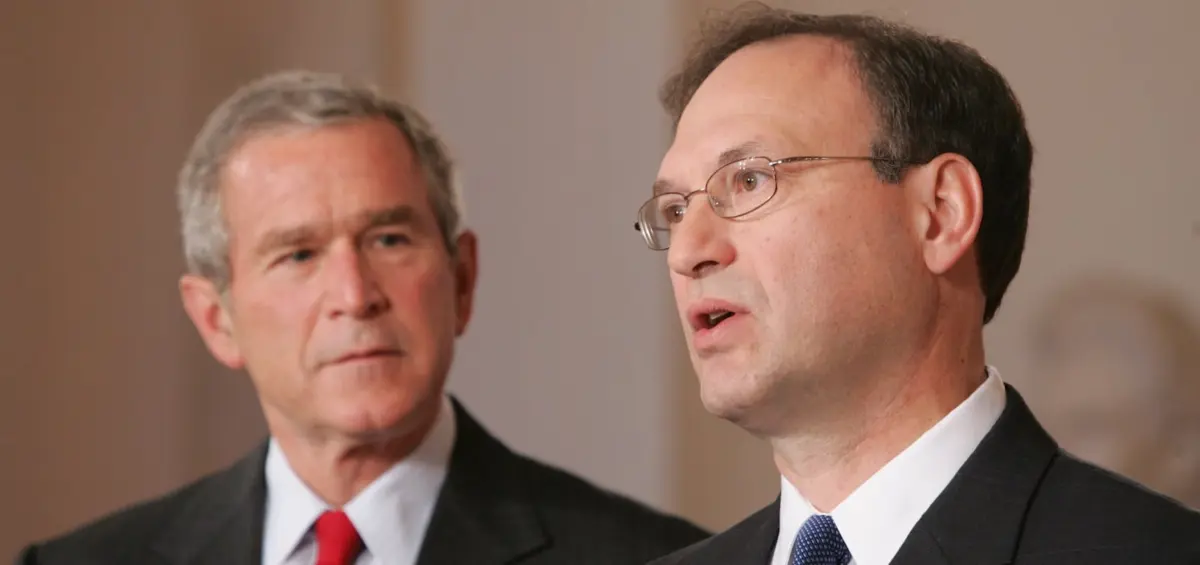
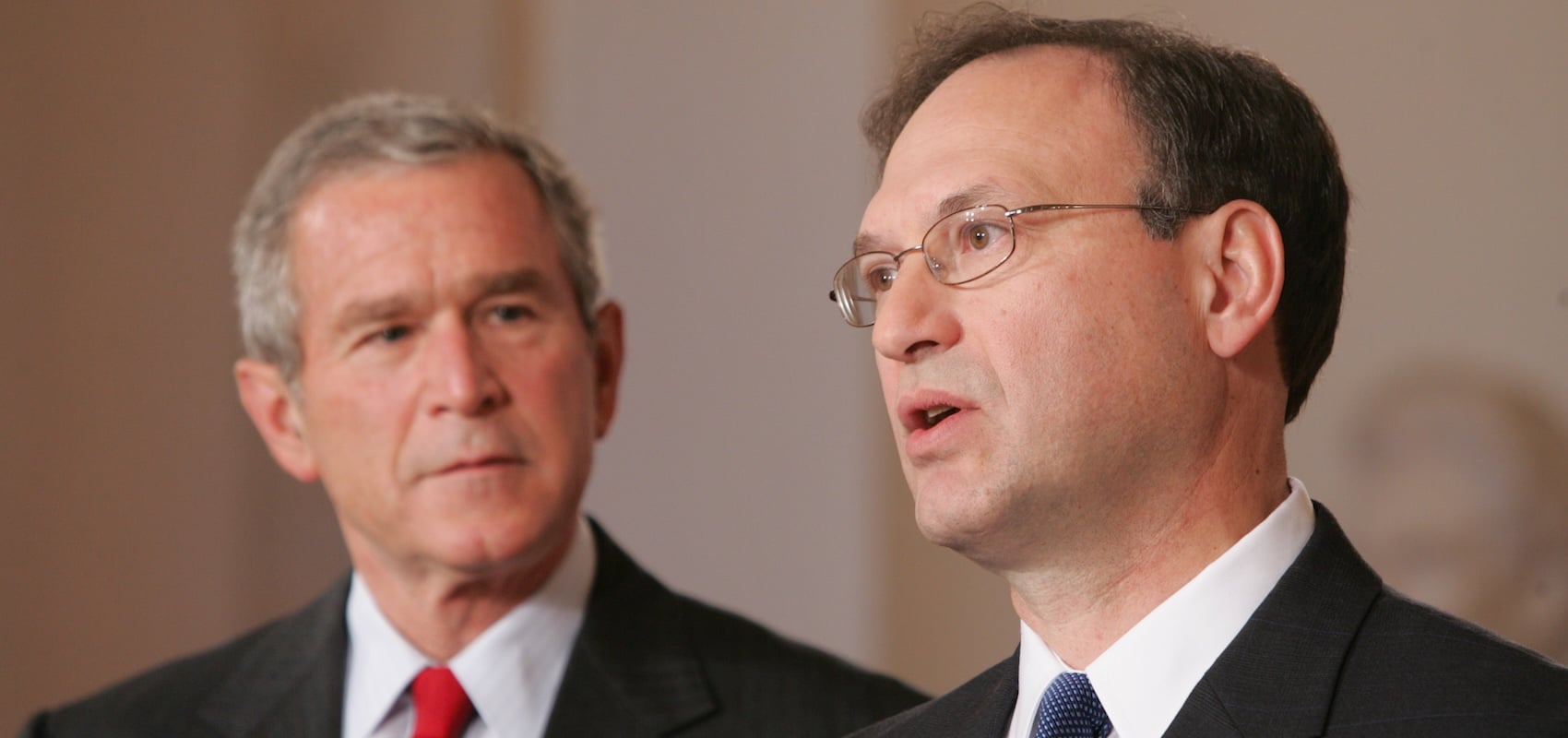
When President George W. Bush nominated Alito to the Supreme Court in 2005—following the withdrawal of Harriet Miers—critics immediately dubbed him "Scalito," attempting to paint him as a clone of the brilliant, gregarious Justice Antonin Scalia.
While both jurists championed original public meaning and textual fidelity, their temperaments and writing styles reveal significant divergences:
- Justice Antonin Scalia: Often cast as a judicial rebel, Scalia utilized sharp, sparkling formulations and bold conclusions to openly challenge liberal pieties.
- Justice Samuel Alito: Alito’s prose is quieter, more modest, and deliberately understated. Eschewing flashy rhetoric, his opinions rely on exhaustive historical context and careful statutory reading, reflecting a deeply ingrained Burkean temperament that views judicial restraint as a mechanism for preserving civil order.
Landmark Rulings and Theoretical Fault Lines
Alito’s judicial philosophy is anchored in the standard articulated in Washington v. Glucksberg (1997), which dictates that substantive due process protects only those liberties that are "deeply rooted in this Nation’s history and tradition."
| Case / Publication | Year | Alito’s Role / Position | Core Legal Principle Established |
|---|---|---|---|
| Obergefell v. Hodges | 2015 | Dissenting Opinion | Warned that treating traditional marriage views as irrational animus would lead to the civil marginalization of religious traditionalists. |
| Bostock v. Clayton County | 2020 | Dissenting Opinion | Critiques judicial overreach; used contemporary unabridged dictionaries to prove that Title VII’s ban on "sex" discrimination never encompassed sexual orientation or gender identity. |
| United States v. Stevens | 2010 | Sole Dissent | Argued that the First Amendment does not protect violent criminal conduct, such as animal "crush videos," deployed for expressive or sexual purposes. |
| Snyder v. Phelps | 2011 | Sole Dissent | Asserted that robust public debate does not require society to tolerate the brutalization and emotional terrorization of grieving families at military funerals. |
| Dobbs v. Jackson Women’s Health Org. | 2022 | Majority Author | Framed abortion not as an implied right to privacy, but as a profound moral issue, successfully returning the regulatory authority to state legislatures. |
Official Statements and Excerpts
In So Ordered: An Originalist’s View of the Constitution, the Court, and Our Country, Alito reflects on the limitations of modern legal theory divorced from historical reality. Commenting on the societal fallout of unmoored judicial mandates, he frequently returns to the perils of abandoning institutional continuity.
Writing in his historic Obergefell dissent, Alito observed:
"At present, no one—including social scientists, philosophers, and historians—can predict with any certainty what the long-term ramifications of widespread acceptance of same-sex marriage will be."
Addressing the necessity of civil boundaries in public discourse within his dissenting opinion in Snyder v. Phelps, Alito wrote:
"In order to have a society in which public issues can be openly and vigorously debated, it is not necessary to allow the brutalization of innocent victims."
In his defense of statutory textualism against expansive judicial interpretation, Alito noted that true originalism requires rigorous historical anchoring rather than judicial policy-making. As his compilation demonstrates, a constitutional republic cannot endure on abstract legal theories alone; it relies fundamentally upon men and women of virtue exercising institutional prudence in the pursuit of objective justice.
Future Outlook: Conservatism Beyond Technocracy
As the American conservative movement navigates a changing ideological landscape—increasingly shaped by figures who merge libertarian social ethics with revolutionary technological ambitions powered by artificial intelligence—Samuel Alito stands as an archetype of enduring conservative principles.
The publication of So Ordered arrives at a critical juncture. The ongoing debates within the conservative coalition—pitting common-good constitutionalists against strict originalists—highlight the tension between achieving immediate policy outcomes and maintaining respect for inherited legal forms. Alito’s career demonstrates that textualism and originalism, when practiced with judicial humility and historical fidelity, are fully capable of delivering profound structural corrections without abandoning the rule of law.
Ultimately, as Alito’s judicial record and writings suggest, the preservation of the American experiment does not depend on the cleverness of its legal theories, but on the moral character of its citizens and jurists. Just as industrial Trenton once built physical goods of lasting quality, the future of the republic requires the deliberate cultivation of public servants marked by directness, unassuming piety, and intellectual integrity.




Comments
Facebook App ID not configured. Please add it in the Customizer.