
Executive Overview
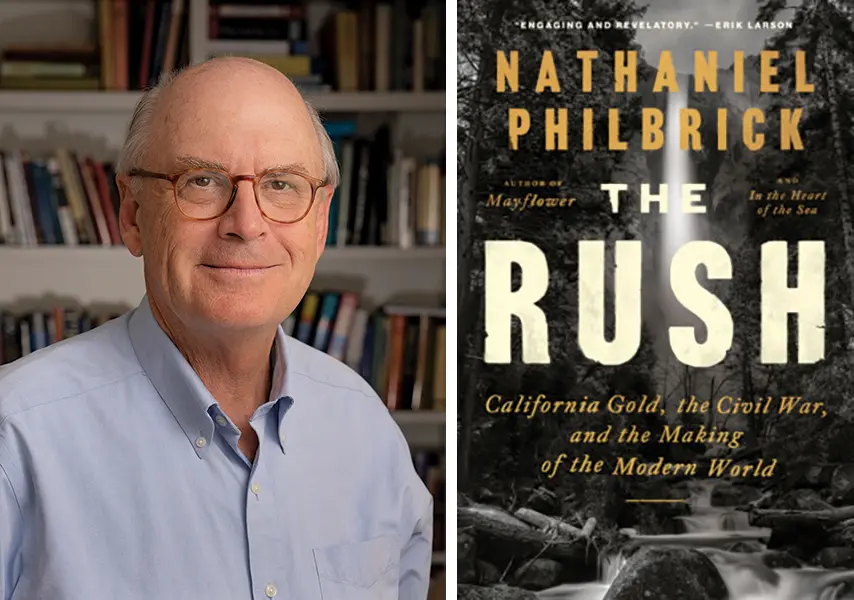
When the first glittering flakes of gold were discovered at Sutter’s Mill in 1848, the event was universally heralded as a regional windfall—a localized frenzy that populated the western frontier and redrew the territorial maps of the United States. Yet, according to a groundbreaking new historical analysis, the true legacy of the gold rush extends far beyond the dust of the Sierra Nevada foothills or the bustling tent cities of early San Francisco. In The Rush, historian Nathaniel Philbrick argues that the mid-19th-century extraction frenzy fundamentally re-engineered the American psyche, seeding an impatient, ruthless, and hyper-capitalistic ethos that continues to dominate the nation’s social and economic landscape from the Gilded Age to modern-day Silicon Valley.
Moving decisively away from the romanticized, cinematic tropes of the traditional western narrative, Philbrick’s work explores the dark, systemic undercurrents of the era. The Rush examines how the pursuit of instant wealth intersected with national crises, intensifying the sectional tensions that culminated in the American Civil War, while simultaneously giving birth to a modern corporate mentality defined by technological acceleration, disruption, and an unyielding worship of velocity.
This in-depth review explores the anatomy of Philbrick’s thesis, tracing the historical through-lines from the slave cabins and indigenous bloodlands of 1850s California to the venture-backed boardrooms of contemporary tech empires. Through meticulous research, personalized character studies, and a sweeping philosophical critique of American greed, The Rush challenges readers to reconsider the foundational forces that built the modern world.
Read Also
Detailed Chronology: From Sutter’s Mill to Silicon Valley
To understand how a localized mineral discovery transformed into a national social juggernaut, one must trace the chronological evolution of the American frontier as outlined in Philbrick’s expansive narrative. The timeline of the gold rush is not merely a sequence of historical markers, but an accelerating trajectory of human ambition and exploitation.
1848–1850: The Genesis of the Frenzy
The spark was struck in January 1848, when James W. Marshall discovered gold at Coloma, California. Within months, the news metastasized globally, launching the iconic migration of the "Forty-Niners." However, Philbrick notes that the logistical and moral parameters of this era required a profound reframing of historical storytelling. Eschewing broad, faceless historical overviews, the author spent two years determining how to structure the narrative by identifying specific, emblematic human figures whose lives encapsulated the chaotic intersection of race, lawlessness, and survival.
Among these figures is an African American fugitive slave who, calculating the freezing realities of the Underground Railroad’s northern routes toward Canada, pivots westward to carve out an existence in the mining camps of California. Another critical perspective is provided through a Native American journalist who documents the harrowing abuse of an Indigenous Mexican miner—a man driven to desperation and robbery by systemic violence—and ultimately uses that tragedy as the foundational plot for a groundbreaking novel. By anchoring the macro-history of the gold rush to these micro-narratives, Philbrick illuminates a society already fracturing along lines of race, class, and raw power long before the first shots of the Civil War were fired.
The 1850s–1860s: Fueling the Civil War Fire
While conventional histories often compartmentalize the California gold rush and the American Civil War as separate chapters in the nation’s unfolding, Philbrick posits that the former acted as accelerant to the latter. The influx of immense mineral wealth into the federal treasury, coupled with fierce legislative battles over whether California would enter the Union as a free or slave state, threw gasoline on the already smoldering sectional fire.
More profoundly, the ethos forged in the mining camps—where communities formed and dissolved overnight, and where interpersonal empathy was routinely sacrificed on the altar of immediate extraction—provided a template for a new kind of American ruthlessness. The realization that fortunes could be amassed not through generational stewardship or patient craftsmanship, but through speculative risk and rapid exploitation, fundamentally altered the national character.
The Gilded Age and the Twentieth Century: The Accelerating Train
As the physical gold fields began to wane in the late 19th century, the cultural momentum generated by the rush did not dissipate; rather, it evolved. The systemic demand for speed, scale, and ruthless optimization transitioned seamlessly into the industrial expansion of the Gilded Age. Monopolies, transcontinental railroads, and corporate trusts inherited the operational DNA of the mining camps. The philosophy remained unchanged: conquer distance, compress time, and maximize profit margins by any means necessary.
The Contemporary Era: Silicon Valley’s Ancestry
In its concluding chapters, The Rush maps this historical trajectory directly onto the modern geography of innovation, terminating the narrative in Silicon Valley. Philbrick observes that the foundational ideology of the modern tech sector—encapsulated by contemporary mantras like "move fast and break things," the embrace of systematic failure as a prerequisite for success, and the relentless disruption of established industries—is not a modern invention of the digital age. It is the direct ideological descendant of the 1850s mining claim. The modern software engineer staring into a glowing monitor is, in structural terms, spiritually indistinguishable from the gold prospector hunched over a panning trough, driven by the identical conviction that time is an evaporating asset and that fortune favors the audacious, the impatient, and the uninhibited.
Supporting Context & Metrics: The Mechanics of Modern Greed
To fully grasp the weight of Philbrick’s arguments, one must examine the socio-economic mechanics that turned California into a "petri dish" for modern capitalism.
The Commodification of Time
Historically, technological advancement has most frequently been attributed to the pressures of warfare, where national survival demands rapid innovation in rocketry, medicine, cryptography, and logistics. However, Philbrick challenges this paradigm by suggesting that peacetime greed served as an equally potent—and perhaps more culturally pervasive—catalyst for technological and infrastructural evolution.
In the mining districts of mid-century California, the overriding ethos was governed by a brutal realization: time is money, magnified to an existential degree. Miners operated under the assumption that the richest surface deposits were finite and that their window of opportunity would slam shut within a matter of years. Consequently, peacetime in California functioned with the intensity of warfare. Prospectors waged literal battles against one another, against the natural environment, and systematically against the Indigenous populations whose ancestral lands were overrun.
This manufactured scarcity and the desperate urgency to extract maximum value in minimum time spurred staggering feats of engineering and commerce, including:
- Rapid development of hydraulic mining technologies that permanently altered the California watershed.
- Accelerated shipping routes, including the Clipper ship trade and the nascent Pony Express, designed to shrink the distance between capital markets on the East Coast and extraction sites in the West.
- Early financial derivatives and credit systems created specifically to fund high-risk, high-reward prospecting ventures.
The Shift from Ideals to Instant Wealth
Philbrick’s historical critique ventures into philosophical territory, questioning the core motivating forces of the American experiment. While the nation was founded on revolutionary ideals—liberty, self-governance, and the pursuit of happiness—the gold rush introduced a corrosive, highly potent parallel aspiration: the demand for instant wealth.
This craving for immediate financial transformation fundamentally altered how Americans viewed labor and success. Before 1848, wealth was predominantly tied to land, inheritance, agriculture, or slow-accumulating mercantile trade. After the gold rush, wealth became a lottery—a sudden, disruptive windfall available to those willing to abandon traditional social structures and moral constraints. This psychological shift laid the groundwork for modern speculative bubbles, lottery culture, venture capitalism, and the pervasive contemporary fantasy of overnight entrepreneurial stardom.
Official Statements & Author Insights
In discussions surrounding the publication of The Rush, Nathaniel Philbrick has elaborated extensively on the motivations behind his historical inquiry and the contemporary relevance of his findings.
Addressing the structural challenges of writing the book, Philbrick emphasized the difficulty of containing a subject that threatened to sprawl indefinitely:
"That challenge took me two years to solve. Yes, there’s the discovery of gold, but then there’s the issue of slavery, of the gold mines—who best to tell this story? Who are the characters to follow? An African American fugitive slave who decides, It’s too cold to go to Canada, I’ll go to California instead? A Native American journalist who learns of an Indigenous Mexican so abused in the gold mines that he turns to robbery, and who uses that story as the basis for a novel? Those are the people I need to follow. Once I identified the people, I knew it would work."
Elaborating on the philosophical "rush" that replaced traditional American virtues with corporate and personal ruthlessness, Philbrick noted the direct line connecting the 19th-century frontier to the modern technological landscape:
"The discovery of gold unleashed a social juggernaut driven by greed. It was strikingly modern, with tentacles that reached into the future. It’s America moving into the Gilded Age and beyond to where we are today, driven by technology, speed, the increasing velocity of life. We’re still on that hurtling train."
When asked whether the conclusion in Silicon Valley was pre-planned, Philbrick clarified that the destination revealed itself organically through historical research:
"Not in the beginning, but once I followed those tentacles, it was a straight line. The ethic of Silicon Valley was created by the gold rush. We break things, we try all sorts of stuff, failure is part of success—this approach began in the 1850s."
Reflecting on why this specific historical examination is urgent in the current cultural moment, Philbrick pointed to the enduring toxic legacy of the desire for instant riches:
"I think it’s important to look at how the gold rush impacted the rest of the country, particularly how it threw gasoline on the fire that became the Civil War. In this book, I’m trying to say, Yes, America has a revolutionary core, we were founded with ideals, and those ideals led to the Civil War, but something else happened along the way: we became a society dedicated to each person getting not just rich, but instantly rich. And maybe it’s that insane need for wealth that most defined what came after."
Future Outlook: Re-Evaluating the American Trajectory
As contemporary society grapples with the fallout of hyper-capitalism—ranging from the environmental degradation tied to resource extraction to the psychological toll of an economy driven by algorithmic speed and constant disruption—The Rush arrives as a timely and sobering diagnostic tool.
By unmasking the California gold rush not as a quaint historical episode involving rugged men with pans, but as the foundational crucible of modern corporate ruthlessness, Nathaniel Philbrick forces a national reckoning. The book challenges historians, economists, and everyday citizens to confront the uncomfortable truth that the traits propelling our most celebrated technological breakthroughs—impatience, systemic disruption, a disregard for traditional boundaries, and an obsessive focus on immediate scale—are deeply intertwined with our nation’s darkest impulses of greed, exploitation, and social fracturing.
Looking forward, understanding the historical mechanics of the 1850s mining camps may well be essential for navigating the ethical dilemmas of the 21st century. As long as American society remains "on that hurtling train" of accelerated velocity and instant wealth creation, The Rush will serve as an indispensable roadmap, reminding us of the tracks we are riding on and the human cost paid to lay them down.





Comments
Facebook App ID not configured. Please add it in the Customizer.