
Executive Overview
To the modern secular mind, admitting a belief in ghosts or extraterrestrials might be dismissed as an eccentric quirk, but confessing a belief in fairies invites outright eye-rolling. While hauntings and UFOs retain a tenuous grasp on fringe plausibility, fairies are culturally quarantined. They are viewed as harmless relics of nursery rhymes and children’s literature—infantilized sprites forever tethered to the image of Walt Disney’s Tinker Bell.
However, a definitive new chronicle by scholar Francis Young, titled Fairies: A History (Polity, 352 pages), seeks to thoroughly dismantle this modern prejudice. Young, an Oxford-educated historian and folklorist, argues that our collective imagination has been hijacked by Victorian and Edwardian sentimentalism. The cultural watershed moment occurred in 1917 with the notorious Cottingley Fairies photographs—a hoax that utterly beguiled Sir Arthur Conan Doyle and permanently welded the concept of "fairy" to the image of a tiny, winged human.
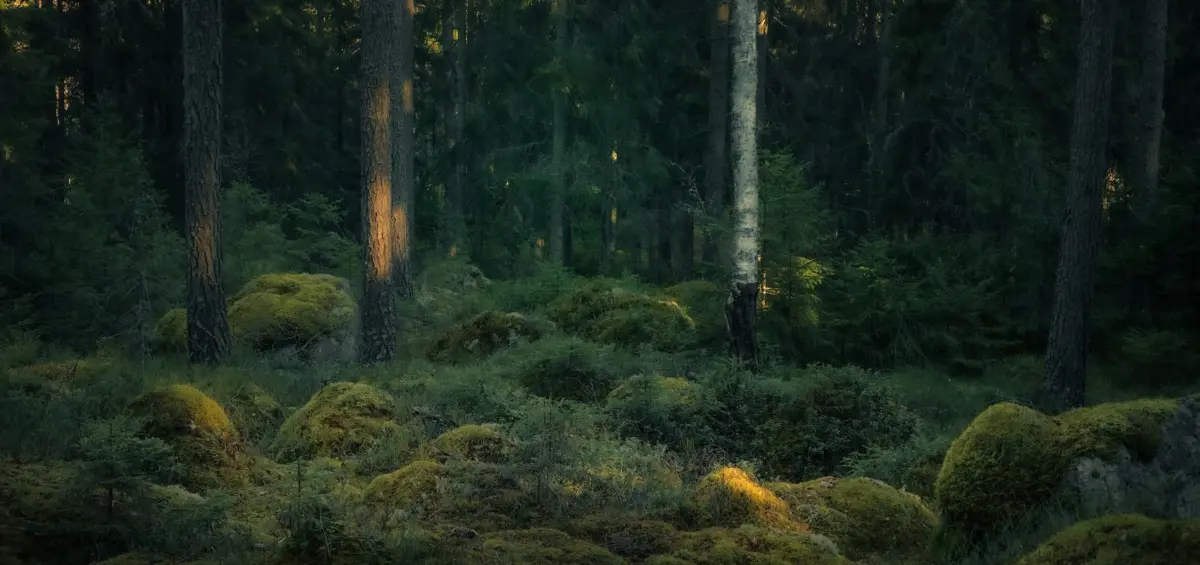
Strip away the Victorian lacquer, Young contends, and European folklore reveals a far more disturbing, complex, and ambiguous reality. Historically, fairies were rarely small, they almost never had wings, and they were frequently taller, more powerful, and far more menacing than modern popular culture cares to admit. Written with anthropological sobriety and academic rigor, Fairies: A History is neither a work of credulous pseudo-science nor an aggressive exercise in debunking. Instead, it offers an authoritative, sweeping investigation into how human societies across time and geography have grappled with the inexplicable, the liminal, and the uncanny.
Read Also
By mapping the metamorphosis of fairy encounters from the Middle Ages to the Soviet era—and examining how Christianity, paganism, and modern psychology intersect with the phenomenon—Young elevates the study of fairylike beings from folklore to an essential mirror of the human condition.
Detailed Chronology: The Evolution of the Fair Folk
To understand how the "Good People" transformed from looming preternatural entities into diminutive cartoon characters, one must trace the historical trajectory of fairy lore across centuries and continents. Young’s historical survey meticulously reconstructs this evolution, separating the authentic archive of human experience from the sanitized fabrications of the 19th and 20th centuries.
The Medieval Cosmos and the "Neutral Angels"
In the medieval worldview, the universe was meticulously categorized and neatly delineated. Yet, within this rigid theological architecture, fairies provided a vital, inexplicable counterweight. As the literary scholar C.S. Lewis observed in The Discarded Image, the sheer neatness of the medieval cosmos could feel claustrophobic; fairies offered a welcome, wild breeze of mystery that slipped through the cracks of scholastic theology.
This presented a profound challenge to medieval Christianity. How were theologians to account for autonomous, powerful entities that fit neither into the category of holy angels nor fallen demons?
Throughout the Middle Ages, several competing orthodoxies emerged. Some theologians classified fairies as fallen angels, albeit lesser ones who had not participated directly in Satan’s rebellion against God. Others viewed them as the ghosts of the pagan dead, or as remnant pagan gods shrunk in stature by the triumph of the Church. A parallel folk tradition whispered that fairies were simply a hidden, publicity-shy race of human beings who had retreated from the noise of civilization into the deep woods, hills, and bogs.
The Mirror Communities of the North
Moving into the early modern period, regional variations deepened the mystery. In Icelandic and Irish folklore, fairies frequently assumed the role of a "mirror community"—a parallel, not-quite-human reflection of human society.
These were not benevolent guardians or nature spirits, but neighbors who lived just out of phase with human perception. They observed human habits, mirrored human social structures, and engaged in trade, marriage, and warfare. In this formulation, the fairy realm was a psychological and spiritual looking glass. To encounter the fair folk was to encounter an unexpected, terrifying revelation of humanity’s own preternatural dimensions.
The Victorian Sanitization and the Cottingley Catastrophe
The true rupture in fairy history occurred during the Victorian and Edwardian eras. Driven by industrialization, urban migration, and a growing romantic nostalgia for a vanishing rural past, British culture systematically sanitized the fairy. The dangerous, morally ambiguous shapeshifters of rural folklore were miniaturized, feminized, and winged.
This aesthetic crystallization was cemented in 1917 by the Cottingley Fairies episode, wherein two young girls in Yorkshire produced photographs purporting to show them interacting with cardboard-cutout paper fairies. The images deceived none other than Arthur Conan Doyle, creator of Sherlock Holmes, who championed them as scientific proof of an ethereal realm.
The cultural fallout was profound: the word "fairy" was permanently severed from its roots in European myth and tethered instead to the whimsical, safe nursery imagery that persists to this day.
Supporting Context & Metrics: Geography, Anthropology, and Ostension
Young’s geographic scope is deliberately confined to the Euro-Atlantic world, explicitly excluding non-Western parallel entities such as the Islamic world’s jinn. Within the Western sphere, however, his reach is expansive. The book explores fairy folklore not only across the British Isles and continental Europe, but also traces its transatlantic migration to the United States, Canada—with a fascinating, heavily accented focus on the isolated traditions of Newfoundland—and Australia.
Baltic Folklore and Soviet-Era Encounters
One of the most arresting contributions of Young’s work is his deep expertise in Baltic folklore. The book opens with a striking, relatively recent case study: a documented fairy encounter set in Soviet-era Estonia.
This inclusion highlights a crucial argument of the book: fairy encounters are not merely medieval superstitions crushed by the Enlightenment. They have persisted into the modern, rationalized epoch, crossing ideological divides and adapting to changing landscapes. Whether encountered by a peasant in medieval Ireland or a collective farm worker in 20th-century Eastern Europe, the witnesses share a common vocabulary of disorientation, time-slippage, and encounter with an absolute other.
The Problem of "Ostension"
For the modern reader or researcher, studying fairies presents a daunting methodological hurdle: the problem of cultural feedback loops. Folklorists use the term ostension to describe the process by which fictional narratives about supernatural beings end up shaping and generating real-world claimed encounters.
As readers journey through Young’s compendium, a sense of skepticism can occasionally arise. The folklore is so culturally diverse and mutable that the underlying, stable reality begins to dissolve. If fairies change so radically from century to century—from pagan demigods to medieval neutral angels, to Victorian winged sprites—are they anything more than projection screens for the human imagination?
Yet Young resists the temptation to offer a reductionist dismissal. He notes that the English word faerie originally referred not to a discrete entity, but to a state of being: a realm of enchantment. To be in faerie was to be under a spell. "Faeries are enchantment," Young writes, "because faerie is a synonym for enchantment, and enchantment will always find a way to take on a life of its own."
Expert Perspectives & Theological Implications
To fully grasp the cultural weight of Fairies: A History, one must engage with the heavyweight literary and theological figures who have wrestled with the phenomenon. Both C.S. Lewis and the visionary poet William Blake viewed the fairy realm not as an embarrassing cognitive error, but as an indispensable category of human experience.
The Animistic Universe of William Blake
William Blake’s radical vision of nature rejected the mechanical universe of Newtonian science in favor of an intensely animistic and shamanistic worldview. In Blake’s cosmos, every particle of the natural world pulses with life and reflects the human form:
Each grain of sand,
Every stone on the land,
Each rock and each hill,
Each fountain and rill,
Each herb and each tree,
Mountain, hill, earth, and sea,
Cloud, meteor, and star,
Are men seen afar.
In this light, fairies are precisely that: men and women "seen afar"—or perhaps brought too uncomfortably near. They represent the personification of the natural order, reminding humanity that the world is not dead matter to be exploited, but a living, responsive tapestry filled with agency and mystery.
The Psychology of Disenchantment
In an era dominated by technological acceleration and narrative fragmentation, humanity’s sense of internal cohesion is fraying. As Young points out, fairies are uniquely vulnerable to this loss of narrative imagination. When children clap to revive Tinker Bell in J.M. Barrie’s Peter Pan, they are performing an act of desperate cultural maintenance, acknowledging that the otherworld requires human belief to sustain its fragile existence.
Yet, paradoxically, folklore dictates that the fairies are always leaving. From the earliest recorded traditions to the modern age, the fair folk are perpetually packing their bags, retreating further into the mists as human civilization encroaches. Modern commentators typically interpret this steady withdrawal as a parable of dawning secular disenchantment.
However, Young demonstrates that this motif is ancient. Fairies have always been on the way out, lingering perpetually on the periphery. And yet, defying all trends of modernization, solitary individuals continue to stumble upon them.
Future Outlook: Why We Still Need the Fair Folk
As we look toward an increasingly hyper-digitized, transparent, and quantifiable future, what is the utility of a history of fairies?
Francis Young’s masterwork suggests that the true value of the fairy realm lies precisely in its unclassifiable resistance to modern certainty. To make the disconcerting acquaintance of the fair folk—whether through the pages of folklore or in the shadowed corners of human experience—is to confront the irreducible crux of our own identity.
Human beings occupy a precarious middle state: suspended halfway between the angelic and the bestial, capable of sublime transcendence and horrifying cruelty. We remain opaque and incomprehensible even to ourselves.
By restoring the disturbing ambience, historical depth, and anthropological gravity of the fair folk, Fairies: A History acts as a much-needed looking glass. The fairies may lurk at the periphery—their natural and rightful home—but they reflect back to us the deepest truths of our own complex, mysterious humanity. In an age desperately seeking authenticity, Francis Young has successfully proven that the old stories are far from child’s play; they are maps to the hidden geography of the soul.


Comments
Facebook App ID not configured. Please add it in the Customizer.