
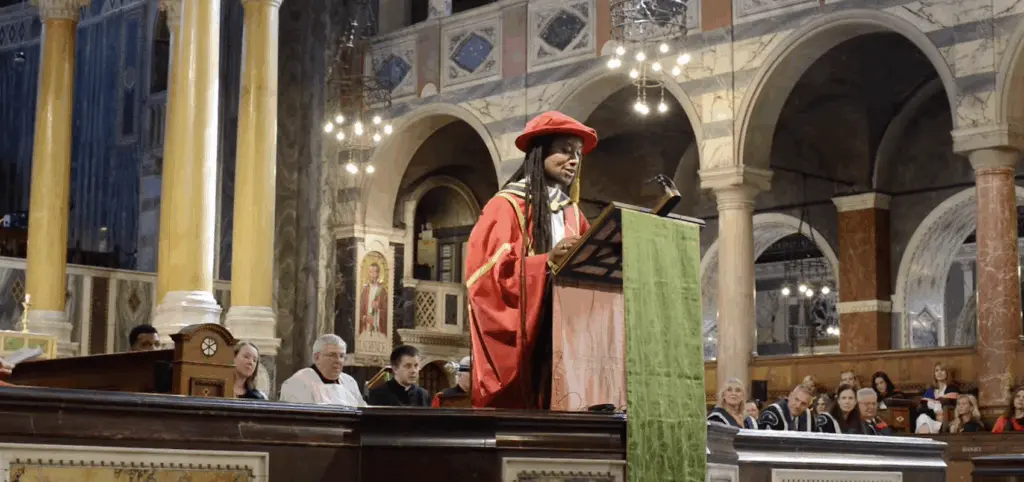
Executive Overview
The rapid, meteoric rise and subsequent devastating fall of Jason Arday captured the collective consciousness of the British press, culminating in a tragedy that sent shockwaves through the global academic community. Arday, once heralded as a wunderkind of Cambridge University, presented a narrative of improbable triumph: a young Black man who allegedly overcame profound early-life adversity, profound learning disabilities, and systemic barriers to scale the absolute heights of global academia.
However, as successive layers of Arday’s meticulously constructed biography were systematically cross-examined, the narrative began to unravel. What initially appeared to be an inspiring testament to human resilience was exposed as a web of embellishments and fictions. Three days after his public unmasking, Arday’s life came to a devastating end in an apparent suicide, leaving behind a polarized public debate and profound questions regarding the pressures of modern academic culture, the mechanics of Diversity, Equity, and Inclusion (DEI) gatekeeping, and the cultural obsession with manufactured exceptionalism.
This investigative retrospective examines the trajectory of Jason Arday’s public life, the systemic vulnerabilities that permitted his ascent, the brutal polarization of public discourse following his death, and the philosophical implications of an era that ties human dignity exclusively to extraordinary achievement.
Read Also
Detailed Chronology
The Genesis of a Myth
The narrative of Jason Arday’s early life, as detailed in his memoir published by Simon & Schuster, was characterized by extreme obstacles designed to amplify the magnitude of his eventual achievements. According to his own accounts, Arday was nonverbally autistic until the age of eleven and functionally illiterate until the age of eighteen. Within the pages of his memoir, he recounted a pivotal, cinematic encounter with a careers officer who allegedly dismissed his intellectual capacity entirely, suggesting he was fit for nothing more demanding than manual labor in a supermarket.
To counterbalance these accounts of institutional rejection, Arday’s narrative relied heavily on prophetic affirmations from those around him. He documented how family, friends, and strangers repeatedly anointed him as a "Chosen One" destined for unfathomable greatness. In one passage, he attributed a dramatic defense to his mother, who allegedly prophesied that one day her son would achieve something revolutionary. In another, he claimed his younger brother remarked that Arday operated on a "higher frequency" than ordinary people.
The Cambridge Ascent
Leveraging these narratives, Arday carved out a space within elite higher education. His purported trajectory from functional illiteracy to a professorship at Cambridge University made him an ideal symbol for institutions eager to demonstrate progress in diversity and inclusion. He was fetted across media platforms, earning status as a DEI wunderkind.
Beyond intellectual milestones, Arday’s public profile incorporated physical and athletic feats designed to underscore his mythos. Most notably, he claimed to have completed a grueling athletic feat: running 600 miles in six days—a physical claim that defied established physiological boundaries.
The Unraveling
The first structural cracks in the Arday narrative began to appear in academic and journalistic circles earlier this year, but it was during the summer that the facade collapsed entirely. Perceptive observers who scrutinized the logistical timelines and factual claims of his background found that his accounts failed basic verification tests. Investigative journalists began systematically dismantling his biographical claims piece by piece.
Childhood peers, neighbors, and schoolmates came forward to correct the record. Contrary to the narrative of nonverbal autism and profound isolation, contemporaries recalled Arday as a shy, well-adjusted schoolboy who was, in the words of one neighbor, "just normal." Schoolmates remembered him not as a miraculous autodidact struggling against total illiteracy, but as a competent student and a talented football goalkeeper. Before his pivot toward elite academia, Arday had worked constructively as a physical education teacher—a respectable, grounded vocation that stood in stark contrast to the mythological odyssey he later authored.
The Collapse and Tragedy
As the systematic verification of his past made his continued tenure at elite institutions untenable, the public pressure intensified. Rather than weathering the verification process through transparency or accountability, Arday faced the total dissolution of the persona he had spent decades constructing. Three days after the full extent of the fabricated narrative was laid bare in the public square, Arday’s story reached its tragic terminus.
Supporting Context & Metrics
The fallout from Arday’s death exposed deep fractures across the political and cultural spectrum, sparking intense debates over accountability, empathy, and the systemic conditions that create and destroy modern public figures.
The Ideological Post-Mortem
The question of "who killed Jason Arday?" rapidly polarized commentators, dividing ideological camps along predictable fault lines while introducing darker, post-liberal currents:
- The Establishment Left: Figures such as Ibram X. Kendi framed the scrutiny and subsequent unmasking of Arday as a form of media hostility, suggesting that the intense cross-examination was driven by systemic animus toward successful Black intellectuals.
- The Establishment Right: Publications like The Spectator argued that the true architects of the tragedy were elite gatekeepers who cynically fast-tracked a fabulist to superstardom to satisfy institutional DEI metrics, effectively using him as a token before abandoning him when scrutiny arrived.
- The Post-Christian Right: A darker, more unsettling reaction emerged among fringe elements of the internet right. Rejecting traditional frameworks of Christian mercy and institutional empathy, figures like Eric S. Raymond and sci-fi author Devon Eriksen embraced a neo-pagan ethic of honor and shame. In viral commentary, some openly celebrated the exit of a compromised figure, expressing regret only that such scandals might not deter others. This worldview posits that weak or fraudulent individuals bring dishonor to society, rendering their preservation secondary to the ideological struggle.
The Literary Analogy: The Tragedy of Donald Crowhurst
Cultural analysts noted striking parallels between Arday’s downward spiral and historical accounts of manufactured success and psychological collapse. Writing for various cultural outlets, commentators like Sarah Ditum compared Arday to Donald Crowhurst, the doomed amateur sailor who entered a perilous round-the-world yacht race in 1968 with a vessel utterly unequipped for the journey.
For seven months, Crowhurst transmitted fabricated milestone reports, pretending to navigate the globe while actually hiding out in the Atlantic. When the deception became mathematically unsustainable, Crowhurst lacked the psychological resilience to face public exposure. His final ship logs devolved into fragmented confessions of a man who realized the fatal cost of his own illusions: "I am what I am and I see the nature of my offense… It is finished. It is finished. IT IS THE MERCY."
Like Crowhurst, Arday was undone not by the initial limitations of his birth or modest talents, but by the unbearable terror of confronting the reality that his grand persona was an illusion.
Official Statements & Institutional Responses
In the wake of Arday’s death, academic institutions, publishing houses, and advocacy organizations issued formal statements addressing the controversy, though many struggled to reconcile the institutional failures that allowed the myth to flourish with the human tragedy of the end.
- University Authorities: Cambridge University released cautious statements expressing profound sorrow over the loss of a colleague while maintaining silence regarding the internal due diligence processes that preceded his appointment.
- Publishing Houses: Simon & Schuster faced immediate calls to evaluate the status of Arday’s memoir. As of publication, the book remains in circulation, though publishers face mounting ethical dilemmas regarding how to market or categorize memoirs later proven to contain substantial fabrications.
- DEI Oversight Bodies: Various equity and inclusion boards issued defensive statements reiterating the necessity of affirmative recruitment strategies while quietly distancing themselves from the individual vetting failures exposed by the Arday investigation.
Future Outlook
The tragedy of Jason Arday leaves behind a complex legacy that will reverberate across multiple sectors of British and international society for years to come.
The Crisis of Credentialism and Verification
Higher education institutions face an urgent reckoning regarding their vetting processes. The ease with which Arday’s improbable claims were accepted suggests a dangerous institutional willingness to suspend critical verification protocols when a candidate fulfills a desired cultural or political narrative. Moving forward, universities are expected to implement more rigorous, evidence-based auditing of biographical claims, particularly those tied to extraordinary personal triumph.
The Cultural Obsession with "Greatness"
At a deeper philosophical level, the Arday tragedy serves as a scathing indictment of modern culture’s fixation on hyper-exceptionalism. By teaching young people that ordinary lives, modest talents, and quiet vocations are inherently inadequate, contemporary society breeds a desperate class of strivers willing to invent alternate realities to secure validation.
Had Jason Arday embraced the dignity of his genuine capabilities—whether as a talented football goalkeeper, a dedicated school teacher, or a quiet participant in ordinary community life—his story might have been one of steady, localized fulfillment. Instead, the relentless demand for superhuman narratives created a trap from which escape seemed impossible.
The ultimate lesson of Jason Arday’s life and death is a sobering reminder of the fragility of human identity when built upon a foundation of falsehoods, and an urgent call for a cultural return to grace, humility, and the recognition that human worth does not require myth-making to be complete.





Comments
Facebook App ID not configured. Please add it in the Customizer.