
EXECUTIVE OVERVIEW
As the United States approaches the milestone of its 250th anniversary, historians continue to unearth hidden vignettes that reshape our understanding of the American Revolution. For generations, the narrative of American espionage in the autumn of 1776 has been dominated by a single, tragic figure: Nathan Hale. The young Yale graduate and Continental Army captain volunteered to slip behind British lines on Long Island to gather intelligence for General George Washington, only to be captured and hanged within days of his mission’s launch. Hale’s legacy is etched into the bedrock of American lore, cemented by his famously apocryphal final words.
Yet, newly uncovered archival documents paint a more complex, nuanced portrait of patriot intelligence-gathering during the darkest days of the war. While Hale’s mission ended in swift catastrophe, a second, younger volunteer from Connecticut—17-year-old David Maltbie—embarked on a remarkably similar mission at virtually the same time, succeeding where his famous contemporary failed before enduring his own harrowing trials behind enemy lines.
Read Also
Brought to light by historian Claire Bellerjeau at the Center for Brooklyn History, a series of long-overlooked 19th-century letters has resurrected Maltbie’s extraordinary life. His story bridges the gap between the chaotic, ad-hoc intelligence operations of 1776 and the sophisticated, institutional networks like the Culper Spy Ring that later sustained Washington’s war effort. Maltbie’s account is a testament to the quiet, uncelebrated civilian volunteers whose courage laid the very foundations of American independence.
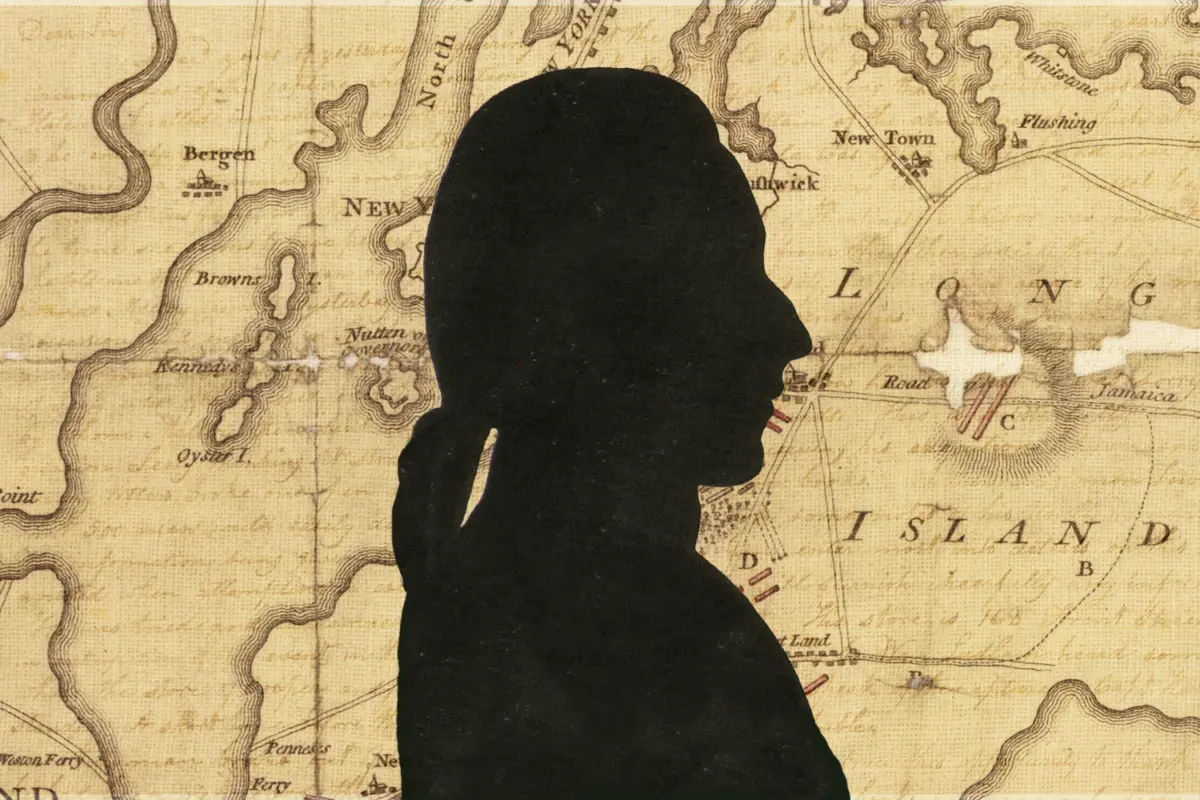
/https://tf-cmsv2-smithsonianmag-media.s3.amazonaws.com/filer_public/9a/30/9a3074ea-bdcc-4d5f-ad2a-a80bc49a6f8a/david-maltbie.png)
DETAILED CHRONOLOGY: FROM SCHOOLTEACHER TO CONDEMNED SPY
Fall 1776: The Shadow War on Long Island
The genesis of Maltbie’s espionage traces back to a grim chapter for the Continental Army. Following a demoralizing defeat at the Battle of Brooklyn in late August 1776, New York City and Long Island fell decisively under British control, where they would remain for the duration of the conflict. For General George Washington, the loss of New York’s Port was a catastrophic strategic blow. Beyond its vital access to inland waterways and Atlantic shipping routes, the agrarian expanse of Long Island offered the British Crown a rich breadbasket capable of sustaining an occupying army indefinitely.
Desperate for intelligence on British troop movements, strengths, and billeting plans, Washington authorized the formation of an elite reconnaissance unit under Colonel Thomas Knowlton. Known as "Knowlton’s Rangers," this precursor to modern American special operations forces relied on civilian volunteers willing to operate undercover in occupied territory.
Among those who stepped forward was 21-year-old Nathan Hale. Venturing into the Huntington area of Long Island, Hale posed as a Dutch schoolteacher seeking employment. Simultaneously, just seven miles to the west in Oyster Bay, 17-year-old David Maltbie crossed the Long Island Sound from Stamford, Connecticut, adopting the exact same cover story: a young man seeking work as a local schoolmaster.
Intelligence Gathering and Betrayal
While Hale’s mission dissolved almost immediately due to poor tradecraft and rising British suspicion, Maltbie blended seamlessly into the fabric of Oyster Bay. Leveraging conversations with local residents and his own keen observations, the teenager compiled precise data on British force deployment and garrison sizes.
/https://tf-cmsv2-smithsonianmag-media.s3.amazonaws.com/filer_public/9a/30/9a3074ea-bdcc-4d5f-ad2a-a80bc49a6f8a/david-maltbie.png)
Operating with increasing confidence, Maltbie reportedly remarked to local contacts that a modest patriot force of just 500 men could successfully dislodge the British garrison in the area, provided Washington could spare the troops. To relay these vital missives back to the mainland, Maltbie utilized an elderly courier named Seely, who regularly rowed across the treacherous waters of the Long Island Sound between Stamford and Oyster Bay.
However, the sheer volume of one-way correspondence eventually aroused Seely’s suspicions. Driven by a lack of insight into the contents, the courier opened one of Maltbie’s dispatches. Recognizing undeniable evidence of patriot espionage, and operating as a staunch Loyalist, Seely delivered the documents directly to British authorities.
Imprisonment and Daring Escape
British forces moved swiftly, ordering Maltbie’s immediate arrest. Though the teenager attempted a desperate escape by boat across the Sound, he was intercepted, captured, and subjected to a swift trial that resulted in a death sentence by hanging.
Maltbie was cast into a makeshift guardhouse in Oyster Bay—a rustic building historically used for baking bread. While awaiting his execution, the young prisoner was visited by Elizabeth Wooden, a 10- or 11-year-old local girl whose father had been friends with Maltbie prior to the war. Because British guards deemed her too young to pose a security threat, Wooden smuggled food to the condemned spy. Decades later, her surviving reminiscences would become a primary historical anchor for uncovering Maltbie’s fate.
/https://tf-cmsv2-smithsonianmag-media.s3.amazonaws.com/filer_public/ae/8d/ae8d136d-9c1a-46b6-99d2-08f6959e7f2e/letter-to-onderdonk.png)
Before the scaffold could claim his life, Maltbie executed a stunning jailbreak. As historical letters later revealed, the teenager managed to break out of his confinement and escape into the shadows, making his way back to safety—unaware that a reprieve had actually been granted just hours prior to his breakout.
Whaleboat Raids and the Provost Prison
Maltbie’s appetite for the patriot cause was far from sated by his brush with the hangman’s noose. On December 18, 1776, he formally enlisted in the Continental Army’s Ninth Connecticut Regiment, though his initial formal infantry service lasted just over a month. By 1781, Maltbie had pivoted to irregular warfare, commanding a whaleboat crew that launched daring amphibious raids against British shipping, capturing enemy vessels and seizing assets from Long Island Loyalists.
By the twilight of the war in January 1783, Maltbie had returned to clandestine intelligence-gathering in New York City. On New Year’s Day, 1783, he was captured in Manhattan alongside an alleged female accomplice, Libbey Stigney, on charges of robbery and suspected espionage.
Unlike his rustic holding pen in Oyster Bay, Maltbie was thrown into the notorious Provost Prison in lower Manhattan. Run by the brutal British Provost Marshal William Cunningham, the facility was synonymous with squalor, overcrowding, rampant disease, and psychological torture. Inmates survived on meager rations of spoiled food and stagnant water while awaiting trial or execution.
/https://tf-cmsv2-smithsonianmag-media.s3.amazonaws.com/filer_public/a8/02/a8025f86-fc49-42fa-9711-1b6256dbd150/nathan_hale.png)
In February 1783, Maltbie faced a general court-martial. While the British prosecution focused heavily on civilian robbery charges—alleging that Maltbie and Stigney had relieved two Long Island men of property under false pretenses—the underlying suspicion of espionage hung heavily over the proceedings. Remarkably, acting in his own defense, the 23-year-old veteran delivered a persuasive defense that secured a complete acquittal. He was released months before the formal conclusion of the war and the signing of the Treaty of Paris in September 1783.
SUPPORTING CONTEXT & METRICS
The resurrection of David Maltbie’s military and intelligence career illuminates the structural evolution of American espionage during the War of Independence.
- The Intelligence Vacuum of 1776: The rapid capture and execution of Nathan Hale, coupled with the near-execution of David Maltbie and the combat death of Colonel Thomas Knowlton at the Battle of Harlem Heights, laid bare the fatal flaws of utilizing untrained, ad-hoc civilian volunteers without proper logistical networks.
- The Culper Evolution: These cumulative failures drove General Washington to authorize a permanent, highly compartmentalized underground network. The resulting Culper Spy Ring, active from 1778 to 1783, successfully operated across Long Island and Manhattan. Crucially, the ring’s key New York agent—code-named "Samuel Culper Jr."—was Robert Townsend, a merchant whose family home in Oyster Bay was situated just around the corner from the makeshift bakery prison where Maltbie had once awaited execution.
- Postwar Civic Life: Following his acquittal in 1783, Maltbie transitioned successfully into civilian life. Records indicate he auctioned an 80-ton schooner in 1784, married Nancy Davenport in 1786 (with whom he raised at least seven children), established a thriving animal skin and fur trade by 1791, and was ultimately elected to represent Stamford in the Connecticut legislature in 1795. He spent his final years serving as a local justice of the peace before passing away in 1807 at the age of 48.
OFFICIAL STATEMENTS & HISTORICAL ANALYSIS
The discovery of Maltbie’s narrative has generated significant commentary among leading Revolutionary War historians and descendants of the operative.
Alexander Rose, author of Washington’s Spies: The Story of America’s First Spy Ring, emphasizes the broader strategic implications of Maltbie’s survival and experiences:
/https://tf-cmsv2-smithsonianmag-media.s3.amazonaws.com/filer_public/49/20/4920d563-3edf-498f-b2c8-b7fa0fd309e9/elizabeth_wooden_gravestone_ob_2.jpeg)
"Maltbie’s story is significant because it helps reveal the extent of Washington’s intelligence efforts in the early stages of the war. Lesser-known spies like Maltbie almost without exception were untrained volunteers lacking any support or logistics structure when they were behind enemy lines. Their collective experiences and repeated failures vividly demonstrated to Washington that he needed to somehow build a long-term, viable network of civilian agents in New York and on Long Island."
Bill Bleyer, author of George Washington’s Long Island Spy Ring, echoes this sentiment regarding the expansion of historical literacy:
"New information about the Revolution and the actions of Nathan Hale and the lesser-known but luckier Long Island spy David Maltbie broadens our understanding of the conflict and its implications."
Margo Williams, a descendant and fifth-great-great-niece of Maltbie who discovered her familial connection while applying to the Daughters of the American Revolution, described the archival resurrection as transformative:
/https://tf-cmsv2-smithsonianmag-media.s3.amazonaws.com/filer_public/e4/8a/e48ab426-f781-4cea-b218-dd03122d93db/map-of-oyster-bay_f811336.jpg)
"The resurfacing of Maltbie’s story is nothing short of electrifying. Even within our own family, knowledge of his espionage during the Revolution had been lost over time and was unknown. His story can teach us all about the values this nation was founded on and self-sacrifice for a cause greater than us. It is important to celebrate stories like his and remember that this nation was founded on the backs of everyday men and women to whom we owe a great debt."
FUTURE OUTLOOK: PRESERVING THE ARCHIVAL RECORD
As the United States looks toward its Semiquincentennial in 2026, the ongoing archival excavations at institutions like the Center for Brooklyn History and the New York Public Library signal a profound shift in how the American Revolution is studied and commemorated.
For generations, historical memory has favored the dramatic martyrdom of figures like Nathan Hale, whose alleged final words provided a clean, poetic narrative for a fledgling republic. Yet, the documentation of David Maltbie—pieced together from 1846 correspondence, forgotten court-martial transcripts, and the oral histories of a 10-year-old girl who smuggled bread to a condemned teenager—remind us that the American experiment was built and preserved by ordinary citizens operating in the grey, perilous margins of history.
As historians continue to digitize and cross-examine these primary sources, Maltbie’s emergence from the historical shadows proves that foundational figures are still waiting to be restored to the annals of the American narrative—offering a richer, more authentic reflection of the courage required to forge a nation.



Comments
Facebook App ID not configured. Please add it in the Customizer.