Beneath the frigid, undisturbed silt of the Baltic Sea lies a time capsule of 19th-century European diplomacy, luxury, and geopolitics. Discovered in the summer of 2024 by Polish technical divers Pawel Truszynski and Marek Cacaj of the renowned exploration group Baltictech, a remarkably well-preserved shipwreck resting 190 feet below the surface has upended maritime history. Initially mistaken for a Caribbean pirate vessel due to a clay bottle stamped with the word “Nassau,” the wreck has since been meticulously traced to the aftermath of the Crimean War.
Subsequent archival investigations, cross-referenced with ceramic markers and rare champagne bottle inscriptions, reveal that the doomed merchant vessel sank between 1856 and 1857. It was travelling from the commercial hub of Hamburg toward St. Petersburg, carrying an extraordinary cargo. Far from ordinary merchant wares, the ship’s hold contained hundreds of bottles of premium Louis Roederer Champagne, highly sought-after Selters mineral water, English fine ceramics from Davenport, advanced scientific measuring instruments, and exceptionally rare meteorites.
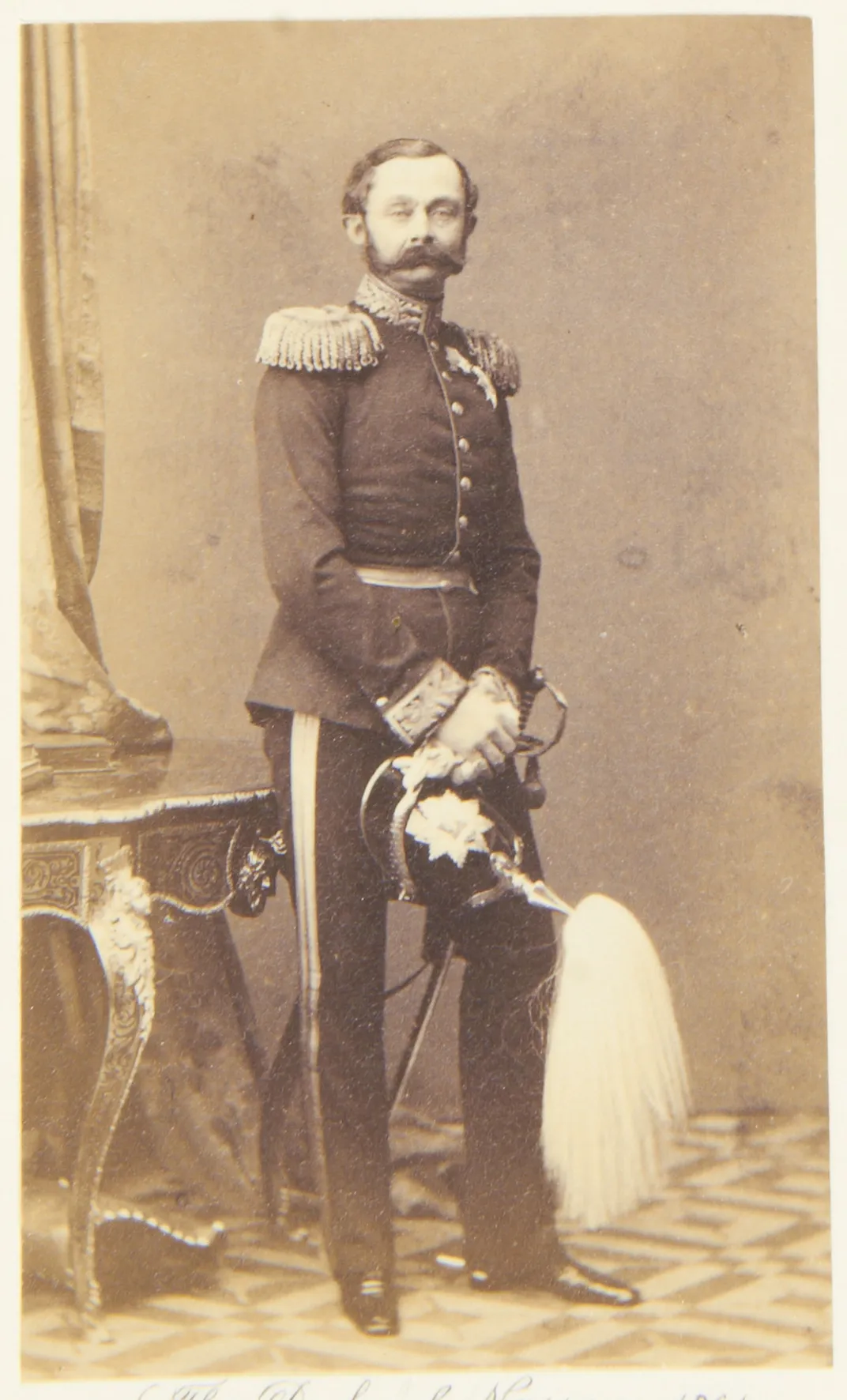
Historical research spearheaded by Truszynski indicates that this glittering cargo was likely commissioned as a grand state gift from Adolf, Duke of Nassau, intended for the Romanov Czar Alexander II. Designed to bridge the geopolitical chasm left by years of devastating European conflict, the voyage sought to re-establish trade lines, celebrate the return of peace, and reinforce strategic alliances between the German Duchy and the Russian Empire. Today, this untouched deep-sea monument stands as an extraordinary physical archive of elite international relations during a volatile era of European history.
Detailed Chronology: From Deep-Sea Anomaly to Imperial Revelation
The 2024 Discovery
The narrative of the Baltic discovery began humbly. Late one evening in 2024, as Truszynski and Cacaj wrapped up an expedition sponsored by Baltictech, a routine sonar scan revealed a minor, unassuming anomaly breaking the flat monotony of the seabed silt. Swimming down to a depth of 190 feet, the divers illuminated a fully exposed cargo hold. Rows of upright and collapsed bottles, stacked wooden crates, and fractured barrels stretched out before them—a subterranean warehouse that had remained undisturbed for nearly 170 years.
Realizing the historical sensitivity of the find, the team exercised strict archaeological discipline. They left the vast majority of the site untouched, retrieving only a single clay water jug, a single champagne bottle, and several broken ceramic dishes to assist with identification.
Breaking the Code: Pottery and Porcelain
The first major breakthrough in identifying the origin of the wreck came from Matylda Gierszewska-Noszczynska, an archaeologist specializing in historic ceramics. Examining the stamps on the recovered clay vessel, she identified the emblem of the German Duchy of Nassau. Specifically, the bottle belonged to Selters, a premier brand of naturally carbonated mineral water sourced from a spring in Niederselters. Historical records confirmed that this specific stamp was utilized between 1836 and 1866, immediately narrowing the vessel’s operational window.
The investigation took another leap forward during a second expedition in 2025. Diver Michał Iwicki methodically excavated the silt resting directly upon the ship’s deck, unearthing a ceramic plate bearing a Davenport factory mark and the number "56." Archival records from the Stoke-on-Trent City Archives in England confirmed that the defunct Davenport company manufactured this tableware in 1856. Because Davenport items were shipped to continental European buyers immediately after kiln firing, experts deduced that the ill-fated vessel embarked on its final journey in late 1856 or early 1857.
The Champagne and the Czar
Weeks after the initial recovery, Tomasz Stachura, leader of the Baltictech team, oversaw the careful opening of the recovered champagne bottle. A faint, embossed inscription stamped into the cork by French artisans revealed the name of the prestigious Reims-based house: Louis Roederer, specifically their signature "Carte Blanche" offering.
Handwritten ledgers preserved within Louis Roederer’s corporate archives indicated that exports to Russia skyrocketed during this period, reaching nearly 600,000 bottles in 1857 alone. Laboratory testing of the recovered champagne confirmed it to be an 1857 vintage containing a high sugar content, tailored specifically to the palate of the Russian imperial court.
Supporting Context & Metrics: Geopolitics and Trade in Post-War Europe
To understand why a merchant vessel was carrying such an eccentric and luxurious manifest, historians must examine the fragile geopolitical landscape of Europe in the mid-1850s.
The Shadow of the Crimean War
The Crimean War (1853–1856) pitted the Russian Empire against an alliance of the Ottoman Empire, France, Great Britain, and Sardinia. Triggered by disputes over the rights of Christian minorities in the Holy Land and Russian expansionist pressures, the conflict exposed deep fractures across the continent. Following the death of Tsar Nicholas I in March 1855, his son, Alexander II, inherited a bruised and economically isolated empire. Russia suffered a humiliating defeat, culminating in the Treaty of Paris in March 1856, which forced Russia to demilitarize the Black Sea and crippled its international commerce.
During the war, the British Royal Navy enforced a rigorous blockade of the Baltic Sea, severing St. Petersburg from Western European goods. When the war concluded and the blockade lifted, the Russian elite faced a severe drought of imported luxuries.
The Nassau-Romanov Nexus
Amid this shifting landscape, the German Duchy of Nassau occupied a delicate diplomatic position. Duke Adolf of Nassau maintained deep personal ties to the Romanov dynasty; his first wife, Grand Duchess Elizabeth Mikhailovna, had been a cousin of Alexander II. Although Elizabeth had passed away in 1845, the familial goodwill endured. According to Truszynski’s archival findings, Nassau maintained a policy of strict neutrality during the Crimean War, quietly favoring St. Petersburg.
Following the ratification of peace, Duke Adolf sought to rapidly restore official diplomatic channels and congratulate Alexander II on his ascension. To accomplish this, the Duke commissioned a commercial sailing vessel departing from Hamburg. The ship’s cargo manifest served a dual purpose:
Commercial Relief: Supplying the starved private markets of St. Petersburg with everyday European commodities, including leather hides, barrel-aged wine, and mass-market ceramics.
State Diplomacy: Delivering an extraordinary, high-value state gift containing elite luxury goods, scientific instruments, and rare natural specimens.
Official Statements & Research Perspectives
The Baltictech team has emphasized the profound historical significance of the discovery, viewing the wreck not merely as a commercial loss, but as a frozen moment in diplomatic history.
"This wreck is an absolute, untouched monument to 19th-century diplomacy and elite international relations in Europe," says Pawel Truszynski, lead historical researcher and diver for the project. "This cargo was intended to be a physical bridge of goodwill celebrating the return of peace to Europe, reopening blocked commercial channels and cementing Nassau’s strategic alliance with the Russian Empire."
Reflecting on the sheer scale of the discovery, Tomasz Stachura noted the rarity of finding a pristine commercial payload:
"I have been diving for 40 years, and it often happens that there is one bottle or two… but to discover a wreck with so much cargo, it’s a first for me."
Historians point out that while the archival records from Amsterdam and Hamburg align exceptionally well with the technical specifications of the wreck, mast count, and recovered artifacts, the team continues to pursue absolute, indisputable physical confirmation before publishing in peer-reviewed academic journals.
Future Outlook: The Road Ahead for the Baltictech Team
As the Baltictech researchers look toward the future, their immediate priority is securing formal authorization from the Swedish government to launch a third phase of underwater excavations.
If approved, the operation will divide into two specialized task forces:
Perimeter Sweeping: Divers will scour the surrounding seabed currents for the ship’s missing bell, which could bear the vessel’s official name and registration port.
Deep-Hold Excavation: Archaeologists will tunnel into the lowest sediment levels of the cargo hold to unearth items recorded on the manifest that have yet to surface.
Chief among the anticipated finds are the rare meteorites commissioned by Duke Adolf. Because these dense, precious geological specimens were packed into specialized, lead-lined, and heavily reinforced wooden crates nestled beneath layers of Selters water and Louis Roederer champagne, experts believe they stand a strong chance of surviving in the deep-sea sediment.
Recovering these items would provide the final 100 percent scientific verification needed to unlock historical insurance registers in London. Such records could illuminate the exact cause of the ship’s sinking, reveal whether maritime insurance claims were ever paid out, and offer definitive closure to a maritime mystery that has slumbered in the depths of the Baltic Sea for nearly two centuries.

/https://tf-cmsv2-smithsonianmag-media.s3.amazonaws.com/filer_public/4f/2b/4f2b2208-f188-4e62-9e79-b57bf12e7c13/baltictech1.png)
/https://tf-cmsv2-smithsonianmag-media.s3.amazonaws.com/accounts/headshot/meilan_headshot2.png)
:focal(750x500:751x501)/https://tf-cmsv2-smithsonianmag-media.s3.amazonaws.com/filer_public/4f/2b/4f2b2208-f188-4e62-9e79-b57bf12e7c13/baltictech1.png)
/https://tf-cmsv2-smithsonianmag-media.s3.amazonaws.com/filer_public/39/2d/392d11b4-cd72-4f33-8589-a4e8d59109e7/image13.jpeg)
/https://tf-cmsv2-smithsonianmag-media.s3.amazonaws.com/filer_public/63/f7/63f7b69a-0de4-48be-8e30-50ad9e00a710/img_6584.jpeg)
/https://tf-cmsv2-smithsonianmag-media.s3.amazonaws.com/filer_public/a2/19/a2190fba-012b-4386-8f97-850ee50739b8/image3.jpeg)
/https://tf-cmsv2-smithsonianmag-media.s3.amazonaws.com/filer_public/2e/0c/2e0c9301-7985-4ec0-a628-101732cc728c/zar_alexander_ii.jpg)





Comments
Facebook App ID not configured. Please add it in the Customizer.