For nearly two millennia, the global consciousness of the catastrophic eruption of Mount Vesuvius in 79 C.E. has been defined by the tragic final moments of antiquity. We envision the entombed citizens of Pompeii and Herculaneum frozen in agonizing postures—charred silhouettes of a civilization violently halted mid-breath. This narrative of instantaneous annihilation, while powerfully dramatic, obscures a more complex and resilient historical reality: the eruption was not a single, instantaneous flash, but a prolonged, agonizingly escalating cataclysm spanning an entire day.
Crucially, this temporal window afforded many residents a lifesaving commodity: time.
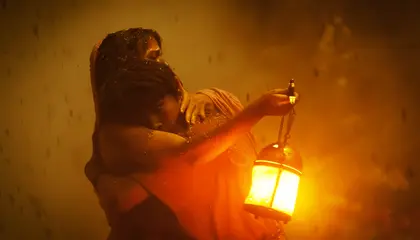
A groundbreaking, semi-fictionalized documentary series from National Geographic, Pompeii: Out of Time With Tom Hiddleston, shifts the lens away from the static macabre of the excavation casts and onto those who successfully fled the descending pyroclastic fury. Hosted by British actor Tom Hiddleston—whose lifelong fascination with the ancient site began during a formative 1998 visit that ultimately inspired his classics major at the University of Cambridge—the series marries rigorous academic research with cinematic storytelling. Teaming up with Loki executive producer Kevin Wright, Hiddleston and a constellation of classical scholars, archaeologists, and disaster psychologists leverage cinematic visual effects to pose a radical question: What happened to the people who made it out alive, and how did they rebuild fractured lives in the ancient Roman diaspora?
By examining the lives of three specific historical figures—the shrewd businesswoman Julia Felix, the teenage apprentice Avianius Felicio, and an elite Praetorian soldier stationed at Herculaneum—the series challenges the traditional boundaries of historical inquiry, bridging the gap between cold archaeological data and human imagination.
Detailed Chronology: Unfolding the Cataclysm of 79 C.E.
To understand how anyone managed to escape the wrath of Mount Vesuvius, historians and scientists must reconstruct the precise sequence of events that unfolded over that fateful 24-hour period in late August of 79 C.E.
Precursory Tremors and the Ignored Warning Signs
Years and months leading up to the disaster were punctuated by seismic unrest, most notably a severe earthquake in 62 or 63 C.E. that heavily damaged public and private infrastructure throughout the region. In the days immediately preceding the major eruption, localized tremors rocked Pompeii and Herculaneum with increasing frequency.
According to disaster psychologist Sarita Robinson, who consults in the documentary, modern human behavior offers a direct parallel to the psychological mechanisms at play among ancient Pompeians. When a fire alarm sounds repeatedly without an immediate, visible threat, humans develop habituation; they learn to ignore the danger. Because minor seismic events were a common occurrence in the seismically active Campanian region, residents treated the precursory tremors with a fatal normalcy. Just as modern populations ignore fire alarms, Pompeii’s citizens went about their daily routines, completely unaware that magma was violently rising beneath their feet.
The Initial Blast and the Multi-Hour Window
When Vesuvius finally breached its caldera, it did not immediately unleash a lethal wall of fire. Instead, the initial phase projected an immense column of ash, pumice, and gas high into the stratosphere, forming a towering umbrella cloud that blocked out the Mediterranean sun.
For residents of Pompeii, located slightly further downwind and sheltered by topography, the initial descent was characterized by a heavy, accumulating rain of lapilli (small volcanic rock fragments) and pumice. This prolonged accumulation caused roofs to collapse under heavy weight, panicking the populace. However, this multi-hour delay provided a critical window of opportunity. Those who recognized the severity of the threat immediately—prioritizing evacuation over the retrieval of property or the checking on distant relatives—stood a viable chance of fleeing south toward Stabiae, Nuceria, or beyond.
The Fatal Pyroclastic Surges
The ultimate doom of the region was sealed during the second day of the eruption, when the column collapsed inward, generating a series of towering, hyper-heated pyroclastic surges and flows. These incandescent avalanches of gas, ash, and rock raced down the slopes of the volcano at hurricane speeds, instantly incinerating and suffocating anyone who remained trapped within the urban zones of Pompeii and the coastal shelters of Herculaneum. It was during these terminal phases that the historical figures tracked by Hiddleston met their divergent—and in some cases, surprisingly survivable—fates.
Supporting Context & Metrics: The Archaeology of Survival
The intellectual backbone of Pompeii: Out of Time relies heavily on the pioneering investigative methodology of classicist Steven L. Tuck. For years, Tuck has tracked the post-eruption trajectories of Campanian residents by cross-referencing pre-79 C.E. epigraphic evidence—inscriptions on stone, pottery, and wax tablets—with post-eruption inscriptions discovered in surrounding Italian communities.
Tracking the Diaspora through Epigraphy
The mechanics of Tuck’s research are deceptively straightforward yet forensically brilliant:
Baseline Identification: Cataloging names of living residents from financial records, tax documents, and civic inscriptions dated prior to August 79 C.E.
Cross-Referencing: Scanning epigraphic databases across neighboring towns such as Nuceria, Puteoli, Cumae, and Naples for identical names appearing in post-eruption contexts.
Verification: Confirming demographic, familial, and social signifiers to ensure identity matches. When a name vanishes from Pompeii and reappears elsewhere post-eruption, researchers have successfully identified a survivor of the disaster.
This methodological breakthrough allows historians to move beyond generic casualty counts and map the socio-economic dispersion of a displaced population. The diaspora of Pompeii’s survivors reshaped regional demographics, placing sudden economic pressures on host towns, forcing orphaned minors into adoptive networks, and scattering elite families down the socio-economic ladder.
Case Study Breakdown: Felix, Felicio, and the Praetorian Soldier
Subject
Social Status
Primary Location
Fate According to Archaeological & Epigraphic Record
Julia Felix
Elite property owner, independent businesswoman
Pompeii
Unconfirmed; possibly perished in her estate’s private shrine, though her commercial enterprise highlights the unprecedented autonomy of elite Roman women.
Avianius Felicio
Teenage apprentice, former elite family in decline
Pompeii / Nuceria
Survived the immediate eruption; migrated to Nuceria where he was later adopted and memorialized by his employers, the Masuri bronzesmith family.
Unnamed Soldier
Elite Praetorian Guard (inferred from gear and pay)
Herculaneum
Perished on the beach during rescue operations; skeleton excavated alongside military belt, sword, and a month’s salary in coins.
Official Statements and Expert Perspectives
The intersection of rigorous academic scholarship and high-end television production has generated significant discussion within the archaeological and historical communities.
Director Kevin Wright, reflecting on the fusion of big-budget cinematic storytelling (Loki) with historical documentary, emphasized the necessity of scale in conveying natural disasters:
"Sometimes you need that big VFX shot, you need the big drone to sell the story, because that’s the only way you can do it justice," Wright noted in interviews detailing the production. "That was where the worlds really merged."
Tom Hiddleston, drawing directly upon his academic background in classics at Cambridge University, defended the documentary’s use of semi-fictionalized dramatization. He pointed to the linguistic roots of the Latin word historia, which translates fluidly to both "history" and "story":
"That means evidence and imagination intermingled," Hiddleston observed in the series. "They’re the same thing." By reviewing the hard archaeological data and then constructing plausible narrative scenarios, the series aims to deliver what Hiddleston terms a "fuller truth" regarding human agency during moments of existential crisis.
Archaeologists featured in the production, however, maintain a strict demarcation between empirical data and narrative speculation. Discussing the fate of Julia Felix—whose lavishly excavated estate featured rental notices and a dedicated bathhouse—archaeologist Caitie Barrett noted the inherent limits of historical inquiry when confronting human psychology:
"Well, here we are bumping up against the limits of the archaeological record. We just don’t know. Archaeology can’t get us inside people’s heads."
Similarly, Professor Steven L. Tuck contextualized the fragile position of minors like Avianius Felicio in the post-eruption world. Addressing Felicio’s eventual gravestone commissioned by the Masuri family in Nuceria, Tuck writes in Escape From Pompeii:
"Felicio might have been a foundling, but that does not mean that he was not cared for or cared about, despite his vulnerable legal position. He may provide the only explicit evidence of the fate of surviving minors without parents in the post-eruption world."
Future Outlook: The Evolving Narrative of Roman Antiquity
As archaeological techniques continue to advance—incorporating digital epigraphy, non-invasive subsurface scanning, and sophisticated bioarchaeological analyses—our understanding of Pompeii is undergoing a profound paradigm shift. The traditional framework of a city frozen in absolute, universal death is steadily giving way to a dynamic narrative of human resilience, flight, and societal reorganization.
The success of projects like Pompeii: Out of Time With Tom Hiddleston signals a growing public and academic appetite for narrative-driven archaeology. By humanizing the statistical data of epigraphic recovery, researchers and communicators are proving that ancient history is not merely a study of inanimate ruins and calcified bones, but a deeply relatable chronicle of individuals navigating sudden, incomprehensible change.
Future excavations at peripheral sites around Mount Vesuvius are expected to yield further epigraphic links, potentially unlocking additional migration patterns of families who traded their ash-choked homeland for a precarious second chance at life in the broader Roman world. As historians continue to decode these ancient stones, the story of Pompeii will increasingly be told not just by those who fell, but by those who walked away.

/https://tf-cmsv2-smithsonianmag-media.s3.amazonaws.com/filer_public/18/2a/182ab01e-864b-429e-a53a-0a1b41ecc75d/pompeii.png)
/https://tf-cmsv2-smithsonianmag-media.s3.amazonaws.com/accounts/headshot/Ellen_Wexler.png)
:focal(750x500:751x501)/https://tf-cmsv2-smithsonianmag-media.s3.amazonaws.com/filer_public/18/2a/182ab01e-864b-429e-a53a-0a1b41ecc75d/pompeii.png)
/https://tf-cmsv2-smithsonianmag-media.s3.amazonaws.com/filer_public/ee/53/ee536521-6613-4f49-acae-284942a3540d/101_tremors_pompeiioutoftimewithtomhiddleston_uhd_065.jpg)

/https://tf-cmsv2-smithsonianmag-media.s3.amazonaws.com/filer_public/f7/66/f7661576-1bd8-4601-9542-5e5d9c1121f9/102_eruption_pompeiioutoftimewithtomhiddleston_032.jpg)
/https://tf-cmsv2-smithsonianmag-media.s3.amazonaws.com/filer_public/ef/0d/ef0def5a-83aa-4c7c-8b55-7d0abf44ca4c/102_eruption_pompeiioutoftimewithtomhiddleston_uhd_075.jpg)
/https://tf-cmsv2-smithsonianmag-media.s3.amazonaws.com/filer_public/0f/73/0f73d513-a40f-4d53-9e5a-e809b1ca7eb5/103_survival_pompeiioutoftimewithtomhiddleston_013.jpg)


Comments
Facebook App ID not configured. Please add it in the Customizer.