
Executive Overview
The landscape of desktop productivity displays is undergoing a quiet yet profound transformation. For years, the e-paper monitor sector has remained a niche corner of the technology market, dominated by specialized brands such as Dasung and Bigme. While these pioneers successfully carved out a loyal following among hardcore programmers, avid readers, and individuals sensitive to the high-frequency pulse-width modulation (PWM) flicker of traditional LCD and OLED panels, mainstream tech giants largely ignored the category. Past attempts by legacy manufacturers—most notably Philips’ short-lived entries—failed to capture broader consumer interest due to prohibitive pricing, limited distribution, and lackluster software optimization.
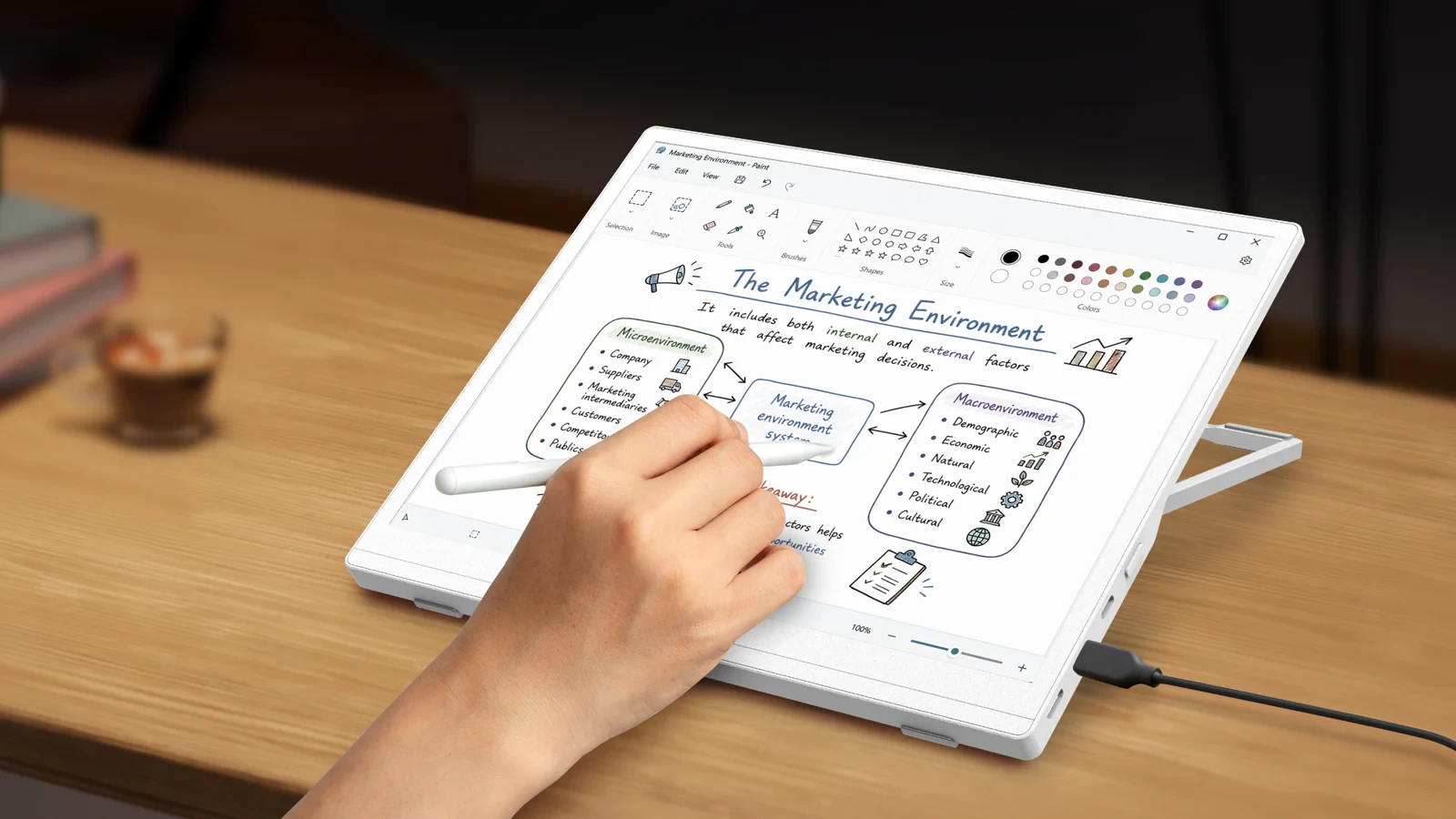
Now, personal computing titan Acer is stepping into the fray with the introduction of the Acer EP130K ePaper monitor. Scheduled for a global rollout in early 2027, the EP130K represents a calculated gamble by a household hardware name to bring e-ink technology into the mainstream conversation. Equipped with an advanced E Ink Kaleido 3 color display, touch and stylus capabilities, an ultra-sharp resolution of up to 3200 x 2400 pixels, and a robust single-cable USB Type-C interface, the EP130K is engineered from the ground up to bridge the gap between traditional paper workflows and modern digital demands.
Priced competitively at $749.99 USD in North America, €749 in the EMEA region, and $1,499 AUD in Australia, the Acer EP130K targets professionals engaged in extended periods of deep work, digital nomads who require outdoor readability, and accessibility-focused users seeking a glare-free viewing experience. This comprehensive report explores the technological underpinnings of the new monitor, the strategic implications of Acer’s market entry, the historical context of e-paper displays, and what the future holds for reflective screen technology in professional environments.
Read Also
Detailed Chronology: The Evolution of E-Paper Monitors and Acer’s Entry
To understand the significance of the Acer EP130K, it is essential to trace the historical trajectory of e-paper monitor development and the barriers that kept mainstream manufacturers at bay for over a decade.
Phase 1: The Niche Pioneer Era (2014–2020)
Electronic paper technology was initially synonymous with dedicated e-readers like the Amazon Kindle or Kobo devices. However, early innovators recognized that the eye-fatigue mitigation properties of reflective electrophoretic displays would make them ideal desktop monitors for text-heavy professionals.
- The Rise of Specialized Vendors: Companies like Dasung pioneered the commercial e-paper monitor space, releasing bulky, monochrome USB-driven screens that cost well over $1,000.
- Technical Hurdles: During this phase, slow refresh rates, ghosting artifacts, and the absolute absence of color limited these monitors to specialized tasks like coding, writing, and terminal monitoring. Frame rates were abysmal, making cursor movement laggy and multimedia consumption impossible.
Phase 2: The Color Transition and Failed Mainstream Forays (2021–2025)
As E Ink corporation introduced advanced color filter technologies—culminating in the Kaleido series—manufacturers began incorporating color capabilities into larger panels.
- Bigme and Onyx Boox: Brands expanded their portfolios to include 10.3-inch and 13.3-inch devices that could function as secondary monitors, though they were primarily marketed as e-note tablets.
- The Philips Misstep: Recognizing the growing demand for ergonomics and wellness in the workplace, Philips attempted to introduce e-paper display solutions to the enterprise market. Unfortunately, these products suffered from low market traction, weak marketing channels, and a general lack of ecosystem integration, causing Philips to quietly pull back from the segment. Demand remained low because consumers viewed e-paper as an expensive novelty rather than a legitimate desktop peripheral.
Phase 3: The Acer Paradigm Shift (2026–2027)
Acer’s entrance in late 2026 marks the turning point where the e-paper monitor transitions from a cottage industry to a validated product category backed by global supply chains and enterprise-grade support.
- Market Validation: By leveraging its massive global distribution network, Acer aims to normalize e-paper displays as standard productivity accessories alongside traditional IPS and VA panels.
- The EP130K Announcement: Unveiled as a direct response to the ergonomic needs of modern knowledge workers, the EP130K combines E Ink Kaleido 3 technology with modern connectivity standards, setting the stage for its commercial release in early 2027 across North America, EMEA, and Asia-Pacific markets.
Supporting Context & Technical Metrics
The technical specifications of the Acer EP130K reveal a device engineered to overcome the historical limitations of e-ink screens while preserving their core biological benefits. Below is a detailed breakdown of the monitor’s architecture, performance metrics, and ergonomic capabilities.
Display Technology: E Ink Kaleido 3
At the heart of the EP130K is an E Ink Kaleido 3 panel. Unlike older monochrome screens, Kaleido 3 utilizes a printed color filter array layered on top of the black-and-white electrophoretic ink film.
- Color vs. Monochrome Modes: The monitor offers dedicated modes for both color and black-and-white viewing. In black-and-white mode, the display utilizes all microcapsules to deliver maximum contrast and crispness, ideal for reading dense academic papers, legal documents, or writing code. In color mode, the panel renders soft, paper-magazine-like hues suitable for web browsing, reviewing presentations, and viewing charts or diagrams.
- Ultra-High Resolution: Pushing boundaries for e-paper density, the EP130K supports resolutions up to a staggering 3200 x 2400 pixels. This ultra-high pixel density ensures that text rendering is virtually indistinguishable from printed paper, eliminating the pixelation and jagged edges that plagued earlier e-paper generations.
Ergonomics, Lighting, and Eye Health
The primary value proposition of an e-paper monitor lies in how it interacts with ambient light.

- Reflective Nature: Traditional monitors project light directly into the user’s eyes via backlighting. In contrast, the EP130K reflects ambient room or sunlight, mirroring the way human eyes process physical paper books. This drastically reduces digital eye strain, headaches, and sleep disruption caused by blue-light emission during late-night work sessions.
- Glare-Free Performance: Because it relies on ambient illumination, the monitor excels in brightly lit office environments and even outdoors under direct sunlight, where traditional glossy or matte LCD screens become washed out and unreadable.
Interaction: Touch and Stylus Support
Acer has ensured that the EP130K is not merely a passive viewing screen, but an active workspace component.
- Direct-Screen Touch: The monitor features integrated touch capabilities directly on the ePaper surface.
- Stylus Precision: Users can pair the display with a compatible stylus to annotate documents, sign digital contracts, sketch out wireframes, or take handwritten notes with the tactile friction and low latency that mimics writing on physical paper.
Connectivity and Power Efficiency
Modern workspace integration requires minimal cable clutter and high energy efficiency.
- Single-Cable USB Type-C: The EP130K streamlines desk setups by utilizing a single USB Type-C cable connection. This single wire handles high-speed video data transfer, touch input, and power delivery from the host laptop or desktop.
- Extremely Low Power Consumption: Due to the bistable nature of electrophoretic displays, power is only consumed when the image on the screen changes.
- Bistable Persistence: A unique characteristic of the EP130K is its bistability—even if all power sources are completely disconnected, the final on-screen image remains frozen on the display indefinitely without draining energy.
Official Statements and Industry Implications
While formal executive commentary accompanying the initial rollout emphasizes Acer’s ongoing commitment to user-centric innovation and workplace wellness, industry analysts have been quick to dissect the broader implications of the launch.
The Wellness Economy and Ergonomic Computing
As corporate wellness programs increasingly focus on repetitive strain injuries, mental fatigue, and visual health, peripheral manufacturers are under pressure to offer specialized hardware. Industry observers note that Acer’s entry validates the "digital detox" and "deep work" movements. By providing a monitor that physically prevents the user from comfortably streaming high-frame-rate videos or gaming, the EP130K acts as a productivity anchor—keeping knowledge workers focused strictly on text, data, and creative ideation.
Competitive Pressure on Boutique Brands
For years, boutique manufacturers like Dasung and Bigme enjoyed a monopoly on large-format e-paper monitors, allowing them to maintain exceptionally high price points ($1,500 to $2,500+). Acer’s aggressive regional pricing structure ($749.99 USD / €749 / $1,499 AUD) shatters this pricing model. Analysts predict that the arrival of a global consumer electronics brand will force smaller competitors to lower their prices, improve their quality control, and accelerate their adoption of next-generation E Ink technologies to remain competitive.
Future Outlook: Where Goes E-Paper in the Modern Workspace?
As we look toward the launch of the Acer EP130K in early 2027 and beyond, several critical questions remain regarding the future trajectory of e-paper desktop technology.
1. Mainstream Adoption Thresholds
Will mainstream office workers embrace e-paper as a primary or secondary display? While writers, software engineers, accountants, and legal professionals are prime candidates, the average corporate worker accustomed to vibrant 120Hz OLED laptop screens may find the sluggish refresh rates and muted color palette of Kaleido 3 difficult to accept for general multimedia workflows. Acer’s marketing success will depend heavily on its ability to educate buyers on the purpose of the device: it is a wellness and focus tool, not an entertainment display.
2. Technological Horizons: Refresh Rates and Color Fidelity
The technical bottlenecks of e-paper—namely ghosting and refresh latency—are gradually being engineered away through advanced controller algorithms and waveform optimization. While the EP130K operates at a respectable 60 Hz refresh rate for e-paper standards, future iterations will likely push closer to the fluid responsiveness required for seamless mouse tracking and fluid scrolling. Furthermore, as E Ink develops successors to Kaleido (such as Advanced Color ePaper or ACeP technologies), future generations of Acer monitors may boast richer, more saturated color gamuts suitable for graphic design and photo editing.
3. Enterprise Integration and Software Ecosystems
For devices like the EP130K to achieve widespread adoption in enterprise environments, software support must evolve. Operating systems like Windows and macOS are inherently optimized for emissive, high-refresh-rate color displays. Companies that succeed in the e-paper space will need to provide robust companion software—offering custom UI scaling, optimized dark/light mode rendering engines, and effortless window management tailored specifically for reflective screens.
Conclusion
The Acer EP130K ePaper monitor is more than just a new product announcement; it is a bellwether for the maturation of the e-paper industry. By bringing manufacturing muscle, aggressive global pricing, and mainstream credibility to a category previously reserved for enthusiasts, Acer has positioned itself at the vanguard of workplace ergonomics. As early 2027 approaches, professionals and tech purists alike will be watching closely to see if the EP130K successfully ushers e-paper out of the shadows and onto the mainstream corporate desktop.




Comments
Facebook App ID not configured. Please add it in the Customizer.