
Executive Overview
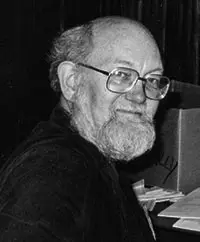
The global speculative fiction community is mourning the loss of Robin Johnson, a monumental figure in international science fiction fandom and the principal architect of Australia’s integration into the global science fiction community. Johnson passed away on July 6, 2026, in Ballarat, Victoria, Australia, at the age of 89, following complications from a fall.
Johnson’s legacy is inextricably linked with the globalization of speculative fiction fandom. Most notably, he served as the chairman of Aussiecon I in 1975—the 33rd World Science Fiction Convention (Worldcon)—which marked the historic first time the prestigious global gathering was held in the Southern Hemisphere. Over a career spanning more than six decades, Johnson acted as a tireless organizer, publisher, bid-manager, and cultural diplomat, bridging the vast geographic gap between Australian science fiction enthusiasts and the established fan bases of North America and Europe.
His contributions earned him the highest honors the community can bestow, including two Ditmar Special Awards (1974 and 1983) and the coveted Big Heart Award at the 65th Worldcon in Yokohama, Japan, in 2007. Johnson’s passing marks the end of an era for the "Golden Age" of international fan organization, leaving behind an institutional blueprint that continues to shape how speculative fiction conventions are bid for, organized, and executed worldwide.
Read Also
Detailed Chronology of a Visionary Life
Early Years and Geographic Travels (1937–1969)
Robin Johnson was born on March 9, 1937, during an era when science fiction was transitioning from the pulp magazines of the 1920s into a more sophisticated literary movement. Throughout his youth and early adulthood, Johnson’s restless intellect and career pursuits led him to live in various cultural hubs across Australia, including Melbourne, Sydney, and Hobart, as well as spending significant formative time in England.
These geographic movements were critical in shaping his perspective on fandom. In the mid-20th century, science fiction fandom was highly localized, fragmented by immense physical distances and the slow speed of postal communication. By living in different states and traveling internationally, Johnson developed a unique network of contacts. He recognized that Australian fandom, despite its vibrant talent and enthusiastic readers, was operating in isolation from the global conversation dominated by the United States and the United Kingdom.
The Road to Aussiecon I (1970–1975)
By the early 1970s, Johnson had committed himself to a seemingly impossible goal: bringing Worldcon to Australia. At the time, the logistics of hosting an international convention in the Southern Hemisphere were daunting. International air travel was prohibitively expensive, and the World Science Fiction Society (WSFS) was highly Americentric.
[Early 1970s: Bidding Initiated]
       │
       ▼
[1973: Torcon II - Bid Won]
       │
       ▼
[1974: Ditmar Special Award for Bidding Success]
       │
       ▼
[August 1975: Aussiecon I (Melbourne) successfully hosted]
Johnson, alongside a dedicated committee of Melbourne and Sydney fans, launched the "Australia in ’75" bid. He traveled to international conventions, lobbying American and British fans, distributing newsletters, and demonstrating that Australia possessed the infrastructure and passion to host the event.
The hard work culminated at Torcon II (the 31st Worldcon in Toronto, Canada) in 1973, where the Australian bid won the hosting rights for 1975. In recognition of this monumental diplomatic achievement, Johnson was awarded his first Ditmar Special Award in 1974.
In August 1975, Aussiecon I opened its doors at the Southern Cross Hotel in Melbourne. Under Johnson’s chairmanship, the convention was a triumph. It featured legendary author Ursula K. Le Guin as the Guest of Honor, alongside Australian bibliographer Donald Tuck and Canadian fan writer Susan Wood. The convention brought international visibility to Australian writers, publishers, and fans, permanently altering the trajectory of speculative fiction in the region.
The Tasmanian Epoch and Thylacons (1976–1989)
Following the success of Aussiecon I, Johnson relocated to Hobart, Tasmania. Rather than retiring from organizational work, he sought to revitalize the local Tasmanian fan community, which had historically been isolated from the mainland.
Johnson founded and chaired Thylacon I, II, and III—the Tasmanian State Science Fiction Conventions. Named after the thylacine (the Tasmanian tiger), these conventions became legendary for their intimate, intellectual atmosphere, fostering a generation of Tasmanian writers and artists. For his continued service to regional fandom and his work on the Thylacons, Johnson was awarded his second Ditmar Special Award in 1983.
Later Years and Global Statesmanship (1990–2026)
In his later years, Johnson settled in Ballarat, Victoria, but remained an active and revered elder statesman of global fandom. He frequently corresponded with younger fans, offering advice on convention bidding and structural organization.

His lifetime of generosity, kindness, and international bridge-building was recognized on the global stage in 2007, when he received the Big Heart Award at Nippon 2007 in Yokohama, Japan—the first Worldcon held in Asia. He continued to participate in local fan circles until his health began to decline, culminating in his peaceful passing in Ballarat on July 6, 2026.
Supporting Context & Metrics
The Geopolitics of Worldcon Bidding
To understand the magnitude of Robin Johnson’s achievements, one must examine the historical distribution of World Science Fiction Conventions. Prior to 1975, Worldcon had only left North America and Europe once (visiting the United Kingdom in 1957 and 1965). Johnson’s successful bid broke the geographic monopoly, paving the way for future conventions in Asia, South America, and Eastern Europe.
| Convention | Year | Location | Chair/Key Organizer | Historical Significance |
|---|---|---|---|---|
| Aussiecon I | 1975 | Melbourne, Australia | Robin Johnson | First Worldcon in the Southern Hemisphere. |
| Aussiecon Two | 1985 | Melbourne, Australia | David Grigg | Consolidated Australia’s status as a major global fan hub. |
| Aussiecon Three | 1999 | Melbourne, Australia | Karen Punsly | Hosted Hugo Awards celebrating late-90s digital revolution. |
| Nippon 2007 | 2007 | Yokohama, Japan | Hiroaki Inoue / Yasuhiro Takeda | First Worldcon in Asia; Johnson receives the Big Heart Award here. |
| Aussiecon Four | 2010 | Melbourne, Australia | Perry Middlemiss | Marked 35 years since Johnson’s inaugural convention. |
The Mechanics of Fan Recognition
Throughout his life, Johnson was honored by two distinct systems of awards, representing both local and international appreciation:
- The Ditmar Awards (Australian Science Fiction Awards): Established in 1969, the Ditmars recognize outstanding achievements in Australian speculative fiction and fandom. Johnson’s two Special Awards (1974, 1983) are rare honors, typically reserved for individuals whose structural contributions transcend standard category definitions.
- The Big Heart Award: Founded by legendary collector Forrest J Ackerman and administered by the World Science Fiction Society, this award is presented annually to a fan who has demonstrated outstanding service, kindness, and international goodwill. It is widely considered the highest honor for fan diplomacy in the speculative fiction community.
Official Statements and Tributes
Following the announcement of Johnson’s passing, tributes poured in from prominent science fiction institutions, authors, and historians worldwide.
The Australian Science Fiction Foundation (ASFF)
"Robin Johnson was not merely an organizer; he was the bridge that connected our isolated island nation to the vast, glittering cosmos of global fandom. Without his stubborn refusal to accept that Australia was ‘too far away,’ generations of Australian writers, editors, and fans would have remained on the periphery. He taught us how to stand on the world stage."
Statement from the World Science Fiction Society (WSFS) Archives
"Robin’s chairmanship of Aussiecon I in 1975 remains a masterclass in convention logistics. In an era before email, PDF files, and budget airlines, he coordinated the travel of hundreds of international guests and thousands of pieces of mail across oceans. His selection for the Big Heart Award in 2007 was a overdue recognition of a man whose heart was as vast as the distances he bridged."
Personal Tribute from Fan Historian and Close Associate
"Robin had a quiet, methodical brilliance. He didn’t seek the spotlight, yet he was the engine room of every committee he joined. Whether he was organizing a national convention or setting up a local club in Hobart, he treated everyone with the same dignity and dry, Australian wit. Fandom has lost one of its truest gentlemen."
Future Outlook: The Enduring Legacy of Robin Johnson
The passing of Robin Johnson comes at a time of profound transition for science fiction fandom. As the community continues to grapple with the digital age, hybrid conventions, and the challenges of global accessibility, Johnson’s organizational principles remain highly relevant.
Preserving Fan History
In the wake of Johnson’s death, there is a renewed push within the Australian speculative fiction community to archive and digitize materials from Aussiecon I and the Thylacons. Archivists are working to preserve his extensive correspondence, meeting minutes, and fan writing, which provide an invaluable look into the sociology of mid-century fandom.
The Robin Johnson Memorial Initiatives
Discussions are already underway among members of the Australian Science Fiction Foundation to establish a permanent memorial in Johnson’s honor. Proposals include:
- The Robin Johnson Travel Grant: A fund designed to assist young or marginalized fans from the Southern Hemisphere in attending international conventions, continuing his lifelong mission of overcoming geographic barriers.
- An Archival Exhibition: A dedicated historical display at future Australian National Conventions (Natcons), showcasing artifacts, photographs, and documents from the 1975 Aussiecon bid.
Ultimately, Robin Johnson’s legacy is not just recorded in plaques, awards, or convention programs. It is felt every time a speculative fiction reader in Melbourne, Hobart, or Sydney connects with a community of like-minded souls across the globe. He proved that distance is no barrier to imagination, and that a small, dedicated group of passionate individuals can move the center of the literary world to the other side of the earth.





Comments
Facebook App ID not configured. Please add it in the Customizer.