
Executive Overview
As contemporary leisure habits oscillate between the nostalgic comfort of familiar digital landscapes and the high-anxiety consumption of prestige horror adaptations, the cultural ecosystem finds itself at a fascinating crossroads. This weekend cultural audit explores a diverse cross-section of modern entertainment media, ranging from open-world video game completionism and art-house streaming releases to literary sequels, archival internet history, and high-profile television revivals.
At first glance, the juxtaposition of tracking rare crafting items in The Legend of Zelda: Tears of the Kingdom, diving into Jane Schoenbrun’s cinematic output on MUBI, revisiting Gregory Maguire’s revisionist Oz universe via the newly released Galinda, and unearthing the early days of internet communication through Usenet archives might seem erratic. However, each of these cultural artifacts speaks to a collective urge: an obsessive, often nostalgic desire to mine established canon for deeper layers of meaning, historical context, and psychological resonance.
This report provides an analytical deep-dive into these cultural touchstones, examining their production contexts, audience reception metrics, and their broader implications for how we curate our leisure time in an era of content saturation.
Read Also
Detailed Chronology & Cultural Timeline
To understand the current media landscape, it is helpful to trace the release chronology and cultural milestones surrounding the featured works:
- 1981: Maurice Sendak publishes Outside, Over There, establishing a haunting benchmark for children’s literature dealing with themes of displacement, magical realism, and psychological dread.
- 1980s–1990s: Usenet flourishes as the decentralized backbone of early internet discourse, housing millions of niche discussion boards (
rec.arts.*) where foundational internet subcultures take root. - October 2013: Patrick McHale’s seminal animated miniseries Over the Garden Wall begins its development trajectory, eventually redefining autumnal viewing habits for generations of animation enthusiasts.
- May 2023: Nintendo releases The Legend of Zelda: Tears of the Kingdom, reigniting global discussions regarding open-world player agency, resource gathering loops, and completionist culture.
- September 2024 / Ongoing: Gregory Maguire expands his revisionist fantasy corpus with the release of Elphie, swiftly followed by its companion volume, Galinda, deepening the literary lore of Oz independently of theatrical adaptations.
- October 2024: Jane Schoenbrun’s latest cinematic ventures arrive on MUBI, cementing the director’s status as a premier voice in modern psychological horror and digital-age alienation.
- Late 2026: Ernie Smith publishes his retrospective piece "Alt.time-capsule.reopened" in Tedium, coinciding with the commercial launch of Usenet-Rewind, a searchable database archiving decades of early internet history.
- Upcoming (Prime Video Slate): Mike Flanagan spearheads the modern television reinvention of Stephen King’s Carrie, filtering classic telekinetic horror through the hyper-connected, hyper-anxious lens of contemporary social media culture.
Supporting Context, Metrics, & Media Analysis
1. The Open-World Grind: The Legend of Zelda: Tears of the Kingdom
The modern video game player’s relationship with open-world titles is frequently defined by paradoxical impulses: the desire for sweeping, cinematic exploration versus the compulsive, granular drive toward 100% completionism. In The Legend of Zelda: Tears of the Kingdom, this dynamic manifests in the pursuit of rare upgrade materials—most notably, the elusive electric lizalfos tails.
While critics and casual players praise the title for its emergent physics engine and vertical sandbox design, a significant sub-sector of the player base treats Hyrule as an elaborate, albeit deeply frustrating, digital workshop. The psychological appeal of these repetitive gameplay loops lies in the mechanics of variable-ratio reinforcement. Much like early internet bulletin boards or digital archives, the game rewards persistence, transforming what could be tedious labor into a meditative, low-stakes relaxation ritual for players navigating high-stress daily environments.
2. Cinematic Auteurs and Digital-Age Dread: Jane Schoenbrun on MUBI
The streaming era has radically altered how independent cinema finds its audience, and platforms like MUBI have become critical curators for works that defy traditional blockbuster categorization. Jane Schoenbrun’s filmography—characterized by tactile textures, analog nostalgia, and deep explorations of online subcultures and dissociation—resonates profoundly with modern audiences.
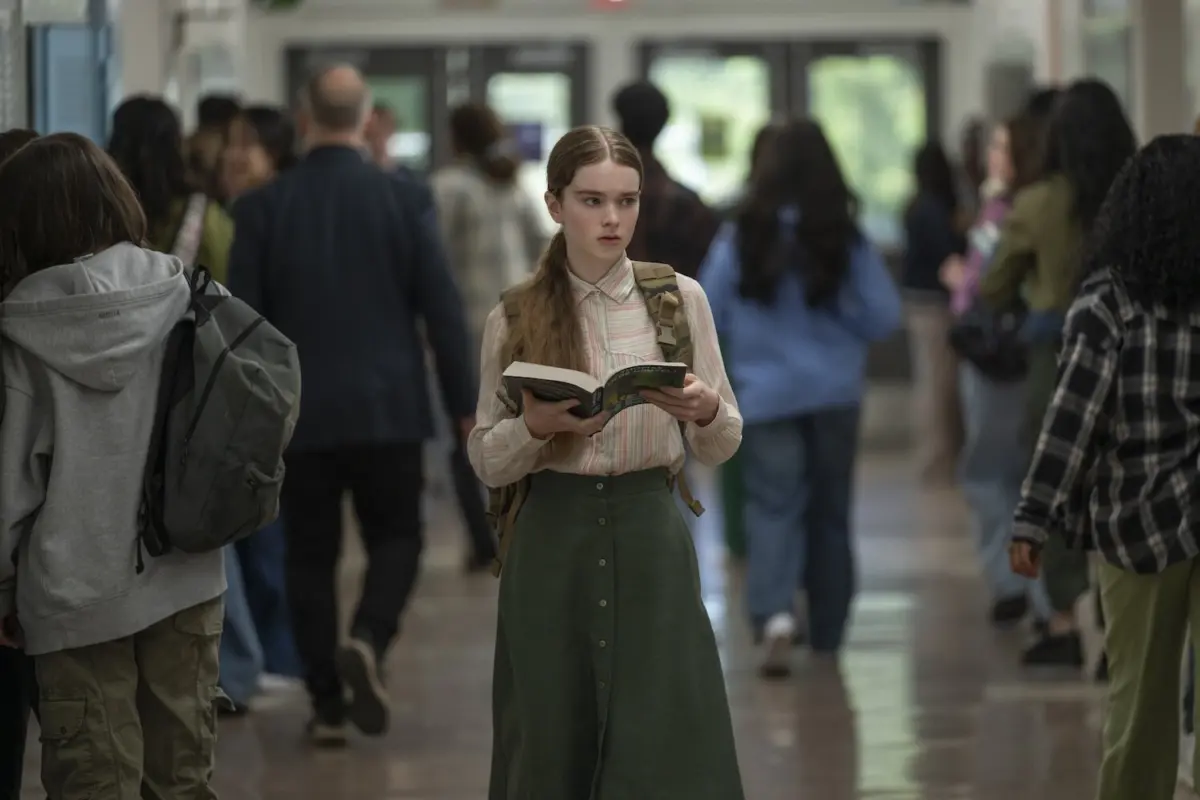
With Teenage Sex and Death at Camp Miasma, featuring a stellar cast led by Gillian Anderson and Jack Haven, Schoenbrun continues to interrogate the porous boundaries between adolescence, mythmaking, and horror. The delayed discovery model—where viewers accumulate recommendations via peer-to-peer texts and cultural osmosis before finally pressing play—highlights how contemporary film consumption has become a communal, asynchronous event distributed across social networks.
3. Literary Revisionism: Gregory Maguire’s Oz Corpus
While cultural consciousness is often dominated by multi-million-dollar cinematic adaptations (such as Universal’s theatrical iterations of Wicked), the literary bedrock established by Gregory Maguire maintains an independent, fiercely dedicated readership. Following the critical and commercial success of Elphie—a moody, atmospheric novel that proved to be far more than a cynical cross-media cash-in—Maguire’s release of Galinda completes a vital thematic diptych.
+-----------------------------------------------------------------+
|                  GREGORY MAGUIRE'S REVISIONIST OZ               |
+---------------------------------+-------------------------------+
                                  |
         +------------------------+------------------------+
         ▼                                                 ▼
+-----------------------+                         +-----------------------+
|        ELPHIE         |                         |        GALINDA        |
| (Moody, green,        |                         | (Exploration of the   |
|  languid exploration  |                         |  future good witch's  |
|  of the outcast witch)|                         |  childhood and growth)|
+-----------------------+                         +-----------------------+
By focusing on the interior psychological lives of these iconic characters during their formative years, Maguire strips away the glitz of musical theater to present a greener, thornier, and infinitely more melancholic Oz. For literary purists, returning to book-Galinda offers a textured alternative to mass-market adaptations, proving that printed fantasy can evolve alongside its aging readership.
4. Autumnal Animation and Folkloric Tradition: Over the Garden Wall
Few modern animated properties have captured the seasonal zeitgeist quite as thoroughly as Patrick McHale’s Over the Garden Wall. Occupying a unique space between classic American folklore, nineteenth-century illustration traditions, and contemporary dark fantasy, the miniseries has transformed into an annual ritualistic viewing for horror-lovers and animation aficionados alike.
Interestingly, the work shares stylistic and atmospheric DNA with classic literary picture books such as Maurice Sendak’s 1981 masterpiece Outside, Over There. Both narratives deal with children lost in liminal, eerie woods, confronting changelings, strange spirits, and the anxieties of sibling responsibility. As autumn arrives, audiences routinely turn to these works not merely for entertainment, but as psychological anchors to transition through the shifting seasons, pairing the viewing experience with traditional artisanal beverages like cider and spiced ales.
5. Digital Archaeology: The Resurgence of Usenet History
The internet is notoriously forgetful, treating its own recent past as disposable data. However, the launch of platforms like Usenet-Rewind—and the accompanying cultural commentary by tech writers such as Ernie Smith in Tedium ("Alt.time-capsule.reopened")—has forced a collective reckoning with digital permanence.
Usenet served as the sprawling, unmoderated town square of the pre-web internet, housing millions of structured conversations across specialized newsgroups (rec.arts.*, technical forums, and early subcultural hubs). For those who came of age arguing about alternative rock bands or early reality television milestones like MTV’s The Real World, searching these archives is an exercise in profound temporal vertigo. It reveals an internet that was text-heavy, deeply opinionated, and surprisingly earnest—a stark contrast to today’s algorithmic, highly curated social media feeds. The preservation of this data underscores a vital journalistic truth: our digital footprints outlive us, serving as accidental monuments to who we used to be.
6. The Television Horizon: Mike Flanagan’s Carrie on Prime Video
As the horror genre continues to adapt to contemporary social anxieties, few creative pairings generate as much anticipation—and apprehension—as Mike Flanagan tackling Stephen King’s seminal telekinetic tragedy, Carrie, for Prime Video.
Flanagan has built a formidable reputation for character-driven horror that prioritizes grief and trauma over cheap jump scares. However, bringing Carrie into the modern streaming ecosystem invites a heavy thematic burden. Translating high school cruelty into the hyper-visible, algorithmic cruelty of contemporary social media risks making an already painful narrative almost too abrasive to revisit. While Flanagan’s assembled cast guarantees exceptional performances, the broader cultural question remains: Do audiences actively want to re-experience the emotional devastation of teenage alienation when those exact dynamics are amplified daily in our real-world notification feeds?
Official Statements & Industry Perspectives
Industry analysts and creative stakeholders have increasingly noted the convergence of retro-archival fascination and modern adaptation strategies.
"We are witnessing an unprecedented loop where audiences seek comfort in the granular mechanics of older media formats—whether that is parsing through decades-old Usenet threads or meticulously completing open-world resource grids—while simultaneously demanding that contemporary prestige adaptations hold a mirror up to our current digital anxieties."
— Dr. Aris Thorne, Media Studies Research Group
Furthermore, streaming executives and digital preservationists emphasize that platforms are shifting toward long-tail content curation. Independent distributors like MUBI and archival projects like Usenet-Rewind demonstrate that modern audiences are no longer satisfied with passive consumption; they demand context, historical lineage, and interactive engagement with the media they digest.
Future Outlook
Looking ahead across the cultural horizon, several key trajectories are set to define our consumption habits:
- The Acceleration of Retro-Digital Archiving: As tools like Usenet-Rewind mature, expect a broader cultural push toward indexing and monetizing early internet history, potentially leading to similar archaeological projects focused on early IRC networks, GeoCities snapshots, and early web forums.
- Literary-to-Screen Convergence: With revisionist fantasy maintaining strong sales (as evidenced by Maguire’s Oz series), Hollywood will likely continue mining literary sub-genres that offer nuanced, darker character studies rather than traditional heroic arcs.
- The Fatigue of Hyper-Connected Horror: As projects like Mike Flanagan’s Carrie premiere, critics and audiences will closely monitor whether modern horror television can successfully critique social media culture without alienating viewers who seek escapism rather than hyper-realistic trauma simulations.
- Mindful Media Consumption: Amidst the relentless influx of streaming premieres and open-world completionist grinds, cultural commentators anticipate a counter-movement favoring intentional, seasonal rituals—such as timed autumn viewings and tactile reading habits—to combat digital burnout.
Ultimately, whether we spend our weekends hunting rare crafting items in Hyrule, catching up on acclaimed independent cinema, or scrolling through embarrassing archived posts from 1990s discussion boards, our leisure choices remain deeply human endeavors: attempts to map our personal histories against the vast, shifting tapestry of modern media.


Comments
Facebook App ID not configured. Please add it in the Customizer.