
Executive Overview
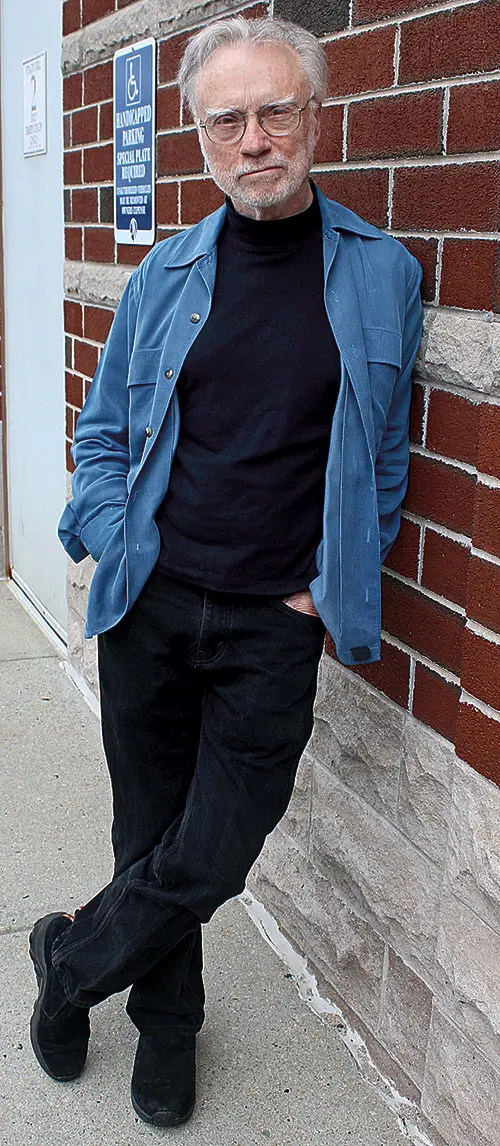
The literary world is mourning the loss of John Crowley, one of the most singular, stylistically exquisite American novelists of the late twentieth and early twenty-first centuries, who passed away on August 8, 2026, at the age of 83. Born on December 1, 1942, Crowley occupied a rare and luminous position in contemporary letters: a writer whose work effortlessly dissolved the artificial boundaries between speculative genre fiction and high literary art. Over a career spanning five decades, he crafted a body of work defined by its deep historical erudition, hermetic philosophy, and a prose style of unparalleled grace and precision.
Crowley is perhaps best known for his 1981 masterpiece, Little, Big, a sprawling, multi-generational family chronicle that redefined modern fantasy and was famously championed by the influential critic Harold Bloom as a "neglected masterpiece" worthy of inclusion in the Western canon. Yet, his literary ambitions extended far beyond a single volume. From his early, poetic science fiction novels to his monumental four-volume historical-philosophical epic, the Ægypt cycle, Crowley interrogated the mechanics of memory, the fluid nature of time, and the profound human desire to find pattern and meaning in a chaotic universe.
Beyond his achievements as a novelist, short story writer, and essayist, Crowley was a dedicated educator, spending a quarter-century shaping the minds of aspiring writers at Yale University. His passing marks the end of an era for speculative literature, leaving behind a legacy that continues to inspire writers, scholars, and readers who seek in fiction a deeper communion with the mysteries of existence.
Read Also
Detailed Chronology
Early Life and Foundations (1942–1964)
John William Crowley was born on December 1, 1942, in Presque Isle, Maine. His early years were shaped by the transient lifestyle of a military family; his father served as a doctor and a captain in the U.S. Army Air Corps, stationed in Maine during the height of the Second World War. The family relocated several times across the United States before finally settling in Indiana in 1953.
The midwestern landscape, with its sweeping fields and quiet towns, would later leave an indelible mark on Crowley’s imaginative geography. He attended Indiana University, where he immersed himself in English literature, narrative structure, and classical history. Graduating with a Bachelor of Arts in English in 1964, Crowley developed a profound reverence for the English language—its rhythms, etymologies, and historical layers—which would become the cornerstone of his future writing.
The New York Years and Cinematic Apprenticeship (1964–1975)
Following his graduation, Crowley moved to New York City, a vibrant hub of artistic experimentation in the mid-1960s. Rather than immediately pursuing fiction, he found employment in the visual and narrative arts, working in commercial photography and as a writer for documentary films. This period of cinematic apprenticeship was crucial; writing scripts for historical and educational documentaries taught Crowley how to construct vivid visual imagery and synthesize complex historical data into compelling narratives—skills that would later define the rich, sensory details of his historical fiction.
In 1966, Crowley transitioned to a full-time freelance writing career. For nearly a decade, he balanced commercial scriptwriting with his private literary ambitions, quietly developing the unique voice that would soon burst onto the speculative fiction scene.
[1942] Born in Maine -> [1953] Relocated to Indiana -> [1964] Graduated from Indiana University
                                                                   |
[1981] Published "Little, Big" <- [1975] Debut Novel "The Deep" <- [1964-75] Moved to NYC; Documentarian
      |
[1987-2007] The "Ægypt" Cycle -> [1993-2018] Faculty at Yale University -> [2026] Passed Away (Age 83)
The Debut and the Rise of a Speculative Master (1975–1981)
Crowley’s entry into published fiction occurred during a transformative era for science fiction and fantasy, as the "New Wave" movement sought to elevate the genre’s literary standards. His debut novel, The Deep (1975), was a surreal, atmospheric science fiction work that immediately signaled the arrival of a major talent. He quickly followed this with Beasts (1976), a poignant exploration of a biologically engineered post-human future, and Engine Summer (1979), a lyrical, post-apocalyptic pastoral novel that remains one of the most beautifully realized visions of a far-future Earth ever written.
In 1981, Crowley published Little, Big, his first explicit foray into fantasy. The novel, which follows the eccentric Drinkwater family and their strange, expandable house, Edgewood, on the border of the "other world," was an instant critical sensation. It secured Crowley’s reputation not merely as a genre writer, but as an artist of the highest order.
Maturity, Academia, and the Ægypt Cycle (1982–2007)
The 1980s and 1990s brought significant changes to Crowley’s personal and professional life. In 1984, he married Laurie Block, a fellow documentary filmmaker and writer. The couple settled in New England and welcomed twin daughters, establishing a stable family life that mirrored the warm, domestic focus of much of Crowley’s fiction.
In 1993, Crowley accepted a position at Yale University, where he began teaching creative writing and fiction. He would remain a beloved fixture of the Yale English Department for twenty-five years, mentoring generations of young writers with his characteristic gentleness, erudition, and deep respect for the craft.
During this period, Crowley embarked on his most ambitious literary undertaking: the Ægypt cycle. Spanning four novels—Ægypt (1987), Love & Sleep (1994), Dæmonomania (2000), and Endless Things (2007)—the series is a monumental exploration of history, hermetic philosophy, Renaissance magic, and the idea that "there is more than one history of the world." The cycle stands as a towering achievement in modern literature, blending the intellectual depth of Umberto Eco with the magical realism of Gabriel García Márquez.

Later Works and Final Years (2008–2026)
Even in his later years, Crowley’s creative output remained formidable. He wrote historical novels such as Lord Byron’s Novel: The Evening Land (2005), which imagined a lost masterpiece by the Romantic poet, and Four Freedoms (2009), a moving exploration of the American home front during World War II.
In 2017, he returned to high fantasy with Ka: Dar Oakley in the Ruin of Ymr, a breathtaking novel told from the perspective of an immortal crow witnessing the rise and fall of human civilizations. His final novel, Flint and Mirror (2022), set in Elizabethan Ireland, demonstrated that his ability to weave history, myth, and human emotion remained undiminished. Crowley continued to write, lecture, and engage with his devoted readership until his peaceful passing in August 2026.
Supporting Context & Metrics
Thematic Analysis: Memory, Time, and Hermeticism
Crowley’s work is characterized by several recurring thematic preoccupations:
- The Fluidity of History: Crowley was fascinated by the moments when one worldview gives way to another—such as the transition from the magical, astrological universe of the Renaissance to the rational, scientific world of the Enlightenment.
- The Architecture of Memory: His stories often feature physical structures that mirror the human mind, from the labyrinthine, expandable house of Edgewood in Little, Big to the literal "memory theater" concepts explored in the Ægypt cycle.
- The Pastoral and the Melancholic: Crowley’s prose is suffused with a gentle, elegiac longing for lost pasts and fading worlds, balanced by a deep appreciation for the beauty of the natural world.
                      ┌────────────────────────────────────────┐
                      │        CORE THEMATIC TRIAD             │
                      └───────────────────┬────────────────────┘
                                          │
                  ┌───────────────────────┼───────────────────────┐
                  ▼                       ▼                       ▼
      ┌───────────────────────┐ ┌───────────────────┐ ┌───────────────────────┐
      │   FLUIDITY OF TIME    │ │ MEMORY PALACES    │ │  HERMETIC PHILOSOPHY  │
      │ History is not fixed; │ │ Physical spaces   │ │ Magic, astrology, and │
      │  multiple realities   │ │ mirror internal   │ │ forgotten worldviews  │
      │   coexist in myth.    │ │ cognitive states. │ │ shape human destiny.  │
      └───────────────────────┘ └───────────────────┘ └───────────────────────┘
Critical Reception and Legacy
While Crowley did not always achieve the massive commercial success of some of his contemporaries, his critical standing was elevated. His championing by Harold Bloom, one of the twentieth century’s most formidable literary critics, helped ensure his work was studied in academic circles. Bloom wrote of Little, Big: "A book that I read at least once a year… It is a masterpiece, a neglected masterpiece, and it deserves to be permanent."
Fellow writers held Crowley in equally high regard. Ursula K. Le Guin praised his "subtle, exquisite, and daring" prose, while Neil Gaiman frequently cited Crowley as a primary influence on his own approach to modern myth-making.
Major Awards, Nominations, and Career Honors
| Year | Work / Achievement | Award | Category | Result |
|---|---|---|---|---|
| 1982 | Little, Big | World Fantasy Award | Best Novel | Winner |
| 1982 | Little, Big | Mythopoeic Fantasy Award | Adult Literature | Winner |
| 1982 | Little, Big | Hugo Award | Best Novel | Finalist |
| 1982 | Little, Big | Nebula Award | Best Novel | Finalist |
| 1990 | Novelty | World Fantasy Award | Best Collection | Winner |
| 1990 | "Great Work of Time" | World Fantasy Award | Best Novella | Winner |
| 1992 | Lifetime Body of Work | American Academy & Institute of Arts and Letters | Award in Literature | Winner |
| 1997 | "Gone" | Locus Award | Best Short Story | Winner |
| 2006 | Lifetime Achievement | World Fantasy Convention | Life Achievement Award | Winner |
| 2018 | Ka: Dar Oakley in the Ruin of Ymr | Mythopoeic Fantasy Award | Adult Literature | Winner |
| 2018 | Ka: Dar Oakley in the Ruin of Ymr | Grand Prix de l’Imaginaire | Roman Étranger | Winner |
Official Statements and Tributes
Following the announcement of Crowley’s passing, tributes poured in from the academic, literary, and publishing communities, reflecting the profound impact of his life and work.
Statement from the Yale University Department of English
"The Department of English at Yale University mourns the loss of our esteemed colleague and friend, John Crowley. For twenty-five years, John brought a quiet brilliance, a deep historical curiosity, and an unwavering kindness to our classrooms. He did not merely teach the mechanics of writing; he taught his students how to see the world with a poet’s eye and a historian’s precision. His legacy lives on in the thousands of students he mentored and the timeless books he left behind."
Statement from the World Fantasy Convention Board
"John Crowley was a titan of speculative literature. He elevated the fantasy genre to heights of literary sophistication that few had ever dreamed possible. His landmark novel Little, Big remains a lodestar for writers of the fantastic. We were honored to present him with our Life Achievement Award in 2006, but his true reward is the enduring love of readers who found solace, magic, and truth in his pages. We extend our deepest condolences to his wife Laurie and his family."
Tribute from Author Neil Gaiman
"John Crowley wrote sentences that felt as though they had been carved out of ancient stone, yet they breathed like living creatures. He was a magician who understood that the truest magic is not found in spells or wands, but in the quiet corners of our own history and the fragile architecture of our memories. Little, Big changed the way I thought about fantasy, and his friendship changed the way I thought about the writing life. We have lost one of our greatest alchemists."
Future Outlook
As the literary community reflects on John Crowley’s departure, attention is turning toward the preservation and future study of his extensive archives. Scholars have already begun advocating for a centralized repository of his papers, scripts, and correspondence—most likely to be housed at Yale’s Beinecke Rare Book & Manuscript Library, which already holds the archives of several major American literary figures.
                      ┌────────────────────────────────────────┐
                      │       JOHN CROWLEY ARCHIVAL PROJECT    │
                      └───────────────────┬────────────────────┘
                                          │
                  ┌───────────────────────┼───────────────────────┐
                  ▼                       ▼                       ▼
      ┌───────────────────────┐ ┌───────────────────┐ ┌───────────────────────┐
      │   YALE UNIVERSITY     │ │   POSTHUMOUS      │ │ LITERARY REAPPRAISAL  │
      │  Beinecke Library to  │ │  COLLECTIONS      │ │ Academic symposia and │
      │ catalog manuscripts,  │ │ Uncollected non-  │ │ new editions of the   │
      │ letters, and drafts.  │ │ fiction & essays. │ │  "Ægypt" cycle.       │
      └───────────────────────┘ └───────────────────┘ └───────────────────────┘
Plans are also underway for several posthumous publications and initiatives designed to keep Crowley’s work in the public eye:
- The Collected Essays and Lectures: Publishers are discussing a definitive volume of Crowley’s non-fiction, combining his essays from In Other Words (2007) and Reading Backwards (2019) with previously uncollected lectures delivered during his tenure at Yale.
- Critical Reappraisals: A series of academic symposia dedicated to the Ægypt cycle is being planned for 2027, aimed at introducing a new generation of literary scholars to the complex historical and philosophical frameworks of his work.
- New Deluxe Editions: Independent presses have expressed interest in producing illustrated, definitive editions of Little, Big and Engine Summer, ensuring that these masterpieces remain available in formats that match their aesthetic beauty.
Though John Crowley has stepped beyond the boundaries of our world—perhaps into that quiet, expandable realm of Edgewood he wrote about so beautifully—his voice remains. In an age often dominated by the loud, the fast, and the ephemeral, Crowley’s patient, gorgeous, and deeply humane literature stands as an enduring monument to the power of the written word. He reminded us that while the world may change, and the histories we tell ourselves may shift, the magic of story remains eternal.


Comments
Facebook App ID not configured. Please add it in the Customizer.