

As television screens across the globe light up with the high-octane thrills of Shark Week, a familiar cultural phenomenon takes hold. Millions of viewers tune in to watch apex predators slice through crystal-clear waters, accompanied by dramatic orchestral scores and breathless narration. While this programming successfully captures the public’s imagination, it frequently leaves a collateral casualty in its wake: widespread, disproportionate selachophobia (the fear of sharks).
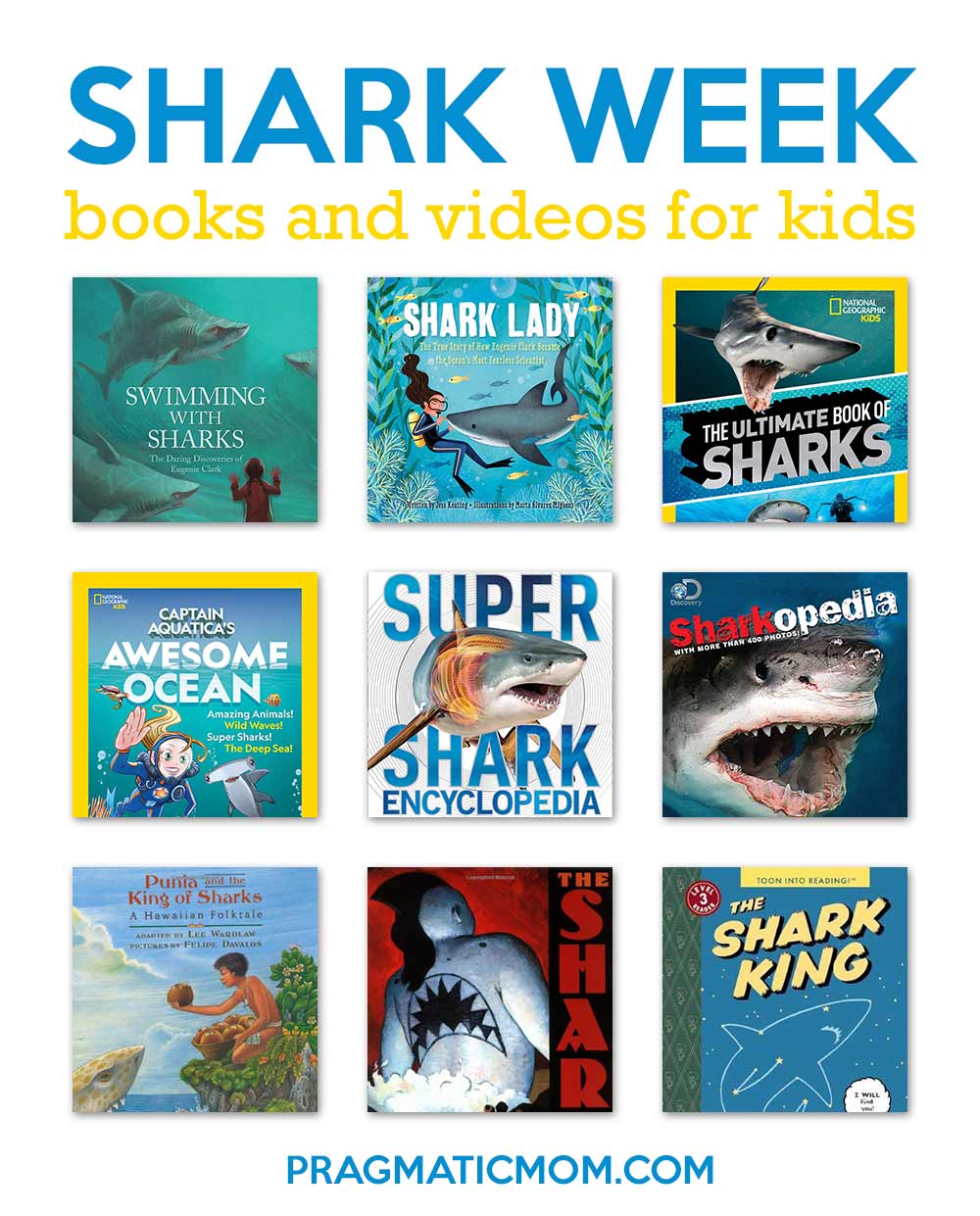
For many young viewers, the line between cinematic dramatization and biological reality becomes fatally blurred. When the author’s middle daughter, PickyKidPix, fell victim to this exact brand of media-induced terror after binge-watching marine thriller programs, it served as a vital catalyst. Rather than feeding the cycle of fear, the solution lay in education—specifically, turning to the rich, illuminating world of children’s literature to reframe how young minds perceive these misunderstood creatures.
Ahead of Shark Week’s peak broadcast dates, educators, parents, and marine conservationists alike face a golden opportunity: to dismantle sensationalized myths and replace them with peer-reviewed science, historical biographies of trailblazing researchers, cultural folklore, and gripping middle-grade fiction. As pioneering shark scientist Dr. Eugenie Clark famously noted, humanity poses a far greater threat to sharks than they do to us, with over 100 million sharks killed annually. By diving into children’s books that explore marine biology, conservation, and myth, we can foster a generation of ocean advocates who treat sharks with healthy respect rather than paralyzing dread.
Read Also

Detailed Chronology: The Evolution of Shark Science and Literature
To understand how modern children’s books bridge the gap between fear and fascination, we must first trace the historical trajectory of human interaction with sharks and the literary milestones that changed the narrative.
The Mid-20th Century: Breaking the Surface
For centuries, sharks were viewed almost exclusively through the lens of maritime folklore—either as demonic man-eaters or inscrutable monsters of the deep. This paradigm began to shift dramatically in the mid-20th century, spearheaded by a trailblazing female scientist who refused to be barred from the depths by the institutional sexism of her era.

Dr. Eugenie Clark, affectionately known as the "Shark Lady," became the first scientist to study sharks in their natural habitats. Navigating a male-dominated field, Clark’s meticulous behavioral studies shattered the long-held assumption that sharks were mindless, voracious killers. Instead, she proved they possessed remarkable intelligence, complex social behaviors, and distinct personalities. Her groundbreaking research opened the floodgates for a new era of marine conservation and inspired a wave of biographical literature designed to plant the seeds of curiosity in young readers.
The Late 20th Century to Present: The Literary Explosion
Publishers soon recognized an appetite for ocean-centric non-fiction and narrative storytelling. In a fascinating quirk of children’s book publishing, a drought of biographies regarding Dr. Eugenie Clark was suddenly broken when two distinct picture book biographies hit shelves in the same year, each offering a unique lens into her legendary career:
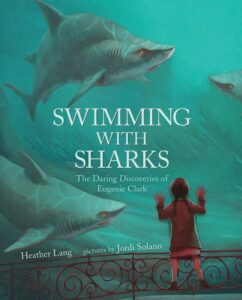
- Swimming With Sharks: The Daring Discoveries of Eugenie Clark by Heather Lang (illustrated by Jordi Solano) focuses heavily on her resilience against professional discrimination and her revolutionary behavioral discoveries.
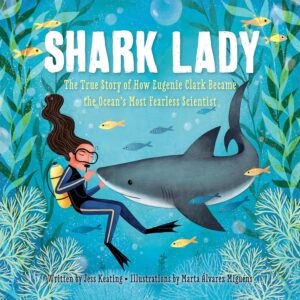
- Shark Lady: The True Story of How Eugenie Clark Became the Ocean’s Most Fearless Scientist by Jess Keating (illustrated by Marta Alvarez Miguens) highlights her childhood fascination, transforming her home aquarium into a laboratory sanctuary, and her discovery of three new species in the Red Sea.
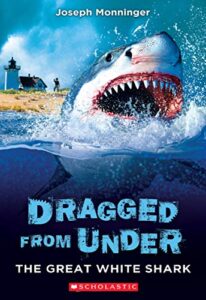
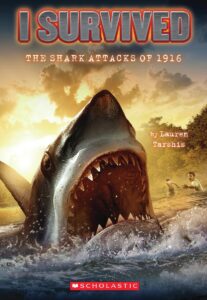
Following these foundational releases, the literary landscape expanded rapidly to include modern marine rangers like Cristina Zenato (Sharks Unhooked), gripping middle-grade eco-mysteries (The Bull Shark and The Great White Shark by Joseph Monninger), graphic novel adaptations of historical events (I Survived the Shark Attacks of 1916), and deeply researched non-fiction compendiums.
Supporting Context & Metrics: Fact Versus Fiction in Marine Biology
To effectively de-escalate shark anxiety, readers must grapple with hard data and ecological realities. The cultural panic surrounding sharks—largely amplified by sensationalized media—stands in stark contrast to empirical metrics regarding human-wildlife interaction.
The Human-Shark Imbalance
According to conservation data highlighted across leading marine literature:
- 100+ Million: The estimated number of sharks killed by human activity annually, driven by overfishing, bycatch, and the illegal shark fin trade.
- Fractions of a Percent: The statistical likelihood of a human experiencing an unprovoked shark encounter compared to everyday risks like driving an automobile or walking down stairs.
- The Mistaken Identity Factor: Decades of marine research, paired with visual analyses by outlets like Daily Mail, demonstrate that unprovoked attacks often stem from cases of mistaken identity. Surfers and swimmers paddling on boards create silhouettes that mimic the exact profile of a shark’s primary natural prey: seals and sea lions.
The Ecological Guardrails of the Ocean
Sharks are not rogue elements; they are keystone species. As "guardians of the sea," apex predators maintain the health and balance of marine ecosystems by culling sick or injured marine life, thereby preventing overgrazing of vital habitats like coral reefs and seagrass meadows. Without sharks, entire oceanic trophic cascades collapse.
Curated Reading Guide: Children’s Books to Transform the Narrative
A comprehensive exploration of shark literature reveals a rich tapestry spanning picture book biographies, graphic novels, mythological retellings, middle-grade fiction, and authoritative reference guides.
1. Inspiring Picture Book Biographies
- Swimming With Sharks: The Daring Discoveries of Eugenie Clark
- Author/Illustrator: Heather Lang / Jordi Solano
- Target Age: 5 and up
- Overview: A stunning testament to perseverance, this book chronicles Clark’s journey as the first scientist to study sharks underwater, proving their high intelligence while navigating mid-century gender barriers.
- Shark Lady: The True Story of How Eugenie Clark Became the Ocean’s Most Fearless Scientist
- Author/Illustrator: Jess Keating / Marta Alvarez Miguens
- Target Age: 4 and up
- Overview: Traces Clark’s childhood obsession with marine life, her home aquarium laboratory, and her historic expeditions in the Red Sea.
- Sharks Unhooked: The Adventures of Cristina Zenato, Underwater Ranger
- Author/Illustrator: Patricia Newman / Becca Hall
- Target Age: 6 and up
- Overview: Follows an Italian-born diver who moved to the Bahamas to become a world-renowned shark expert. Zenato developed an extraordinary, individual bond with wild sharks, removing hooks from their fins and championing their role as ocean guardians.
2. Informative Non-Fiction Compendiums
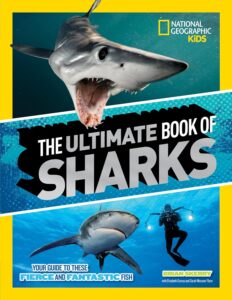
- The Ultimate Book of Sharks
- Publisher: National Geographic Kids
- Target Age: 9 and up
- Overview: A gold standard for young researchers. Packed with gorgeous photography, distribution maps, and anatomical breakdowns, it introduces readers to obscure species like catsharks and tasseled wobbegongs while shattering the myth that all sharks live exclusively in warm tropical waters.
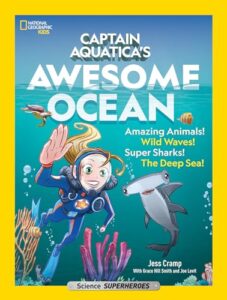
- Captain Aquatica’s Awesome Ocean
- Authors: Jess Cramp with Grace Hill and Joe Leavit
- Target Age: 8 and up
- Overview: Merging graphic novel comic book adventures with rigorous scientific deep dives, this text explores waves, marine engineering, underwater technology, and ocean conservation strategies.
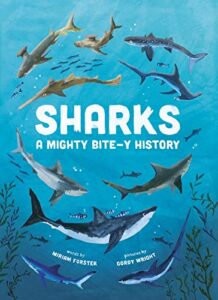
- Sharks: A Mighty Bite-Y History
- Author: Miriam Forster
- Target Age: 8 and up
- Overview: Takes readers on a prehistoric timeline beginning with the Cladoselache shark of the Devonian period (385–359 million years ago), complete with fact-packed "ToolBoxes" detailing shark skin, nurseries, and sensory organs.
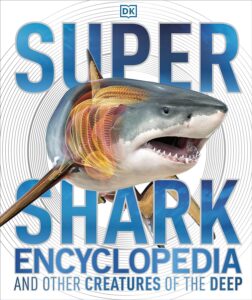
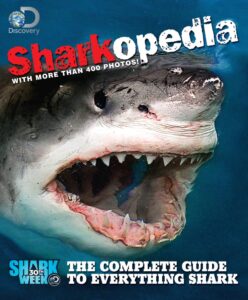
- Super Shark Encyclopedia and Other Creatures of the Deep & Sharkopedia
- Publisher/Producer: DK / Discovery Channel
- Target Age: 8–12
- Overview: Comprehensive visual encyclopedias offering high-definition imagery and cutting-edge marine science facts for dedicated shark enthusiasts.
3. Cultural Folklore and Mythology
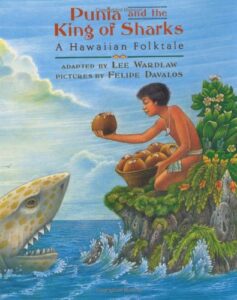
- Punia and the King of Sharks: A Hawaiian Folktale
- Adapted by/Illustrator: Lee Wardlaw / Felipe Davalos
- Target Age: 4 and up
- Overview: A clever tale where young Punia outsmarts the King of Sharks—who guards the island’s lobster population—to secure food for his family.
- The Shark God
- Author/Illustrator: Rafe Martin / David Shannon
- Target Age: 4 and up
- Overview: Portrays the Hawaiian Shark God in a benevolent light, rescuing innocent children from an unjust royal decree.
- The Shark King
- Author: R. Kikuo Johnson
- Target Age: 4 and up
- Overview: A poignant graphic novel exploring the bittersweet myth of a maiden who marries a shape-shifting shark god, blending cultural heritage with artistic storytelling.
4. Engaging Middle-Grade Novels and Graphic Novels
- The Bull Shark (Dragged From Under #1) & The Great White Shark (Dragged From Under #2)
- Author: Joseph Monninger
- Target Age: 8 and up
- Overview: In book one, grieving protagonist Barn Whimbril moves to Florida and uses his extensive shark knowledge to investigate canal attacks, fighting to protect local wildlife from illegal extermination tactics. Book two continues his compelling scientific adventures.
- I Survived the Shark Attacks of 1916
- Author/Studio: Lauren Tarshis and Haus Studio (Adapted by Georgia Ball)
- Target Age: 7 and up
- Overview: A gripping graphic novel adaptation of the historic Jersey Shore attacks that inspired Jaws, integrating extensive historical notes and real-world context.
- Fins: A Sharks Incorporated Novel
- Author: Randy Wayne White
- Target Age: 8 and up
- Overview: Marine biologist Doc Ford enlists three misfit kids (recent arrivals from the Midwest and Cuba) to form "Sharks, Inc.," tagging blacktip sharks while evading dangerous poachers who target the animals for shark fin soup.
- Soul Surfer: A True Story of Faith, Family, and Fighting to Get Back on the Board
- Authors: Bethany Hamilton, Rick Bundschuh, and Sheryl Berk
- Target Age: 8 and up
- Overview: The inspiring autobiography of a shark attack survivor who channeled her resilience, faith, and love for the ocean back into professional surfing.
5. Playful and Interactive Titles
- Shark vs. Train
- Author/Illustrator: Chris Barton / Tom Lichtenheld
- Target Age: 4 and up
- Overview: A laugh-out-loud picture book pitting an aquatic predator against a locomotive in absurd contests like roasting marshmallows or tightrope sword fighting, encouraging kids to view sharks with levity and humor.
- Encyclopedia Prehistorica: Sharks and Other Sea Monsters
- Authors: Robert Sabuda and Matthew Reinhart
- Target Age: 5 and up
- Overview: A masterclass in paper engineering, this pop-up book brings prehistoric marine predators to life with breathtaking physical artistry and factual depth.
Official Statements & Expert Perspectives
Marine conservationists and literary critics consistently emphasize the importance of accurate media representation when shaping young minds. As noted by reviewers at Ms. Yingling Reads and The Nonfiction Detectives, integrating high-stakes ecological mysteries with rigorous scientific frameworks helps children transition from passive consumers of sensationalism to active participants in environmental stewardship.
Furthermore, scientists like Jess Cramp (creator of Captain Aquatica’s Awesome Ocean) advocate for early, transparent education regarding ocean technology and conservation. By showing children how researchers tag sharks, map migration corridors, and protect habitats, young readers realize that humans and sharks can—and must—coexist.
Future Outlook
As environmental pressures mount across the globe, the future of our oceans depends heavily on how the next generation perceives marine life. Programs like Shark Week will undoubtedly continue to captivate audiences, but the antidote to fear is not avoidance; it is education.
By replacing late-night panic with the pages of a well-researched non-fiction book, an inspiring historical biography, or an engaging eco-mystery, parents and educators can inoculate children against media-driven terror. Ultimately, transforming fear into fascination ensures that future generations grow up ready to protect—rather than persecute—the magnificent guardians of our deep blue seas.

Comments
Facebook App ID not configured. Please add it in the Customizer.