
Executive Overview
In the modern digital landscape, parents face an exhausting and relentless uphill battle: reclaiming evening routines from the gravitational pull of screens. Whether it is interactive applications that promise cognitive growth but deliver fragmented distractions, physical activity kits whose novelty evaporates by midweek, or board games that lose their appeal after two sessions, families are saturated with fleeting solutions. The default setting of the evening hours has increasingly become passive digital consumption, leaving both parents and children depleted.
Enter a surprising disruption in the parenting and educational technology space—a movement rooted not in cutting-edge silicon chips or complex algorithms, but in an ancient human tradition: oral storytelling.
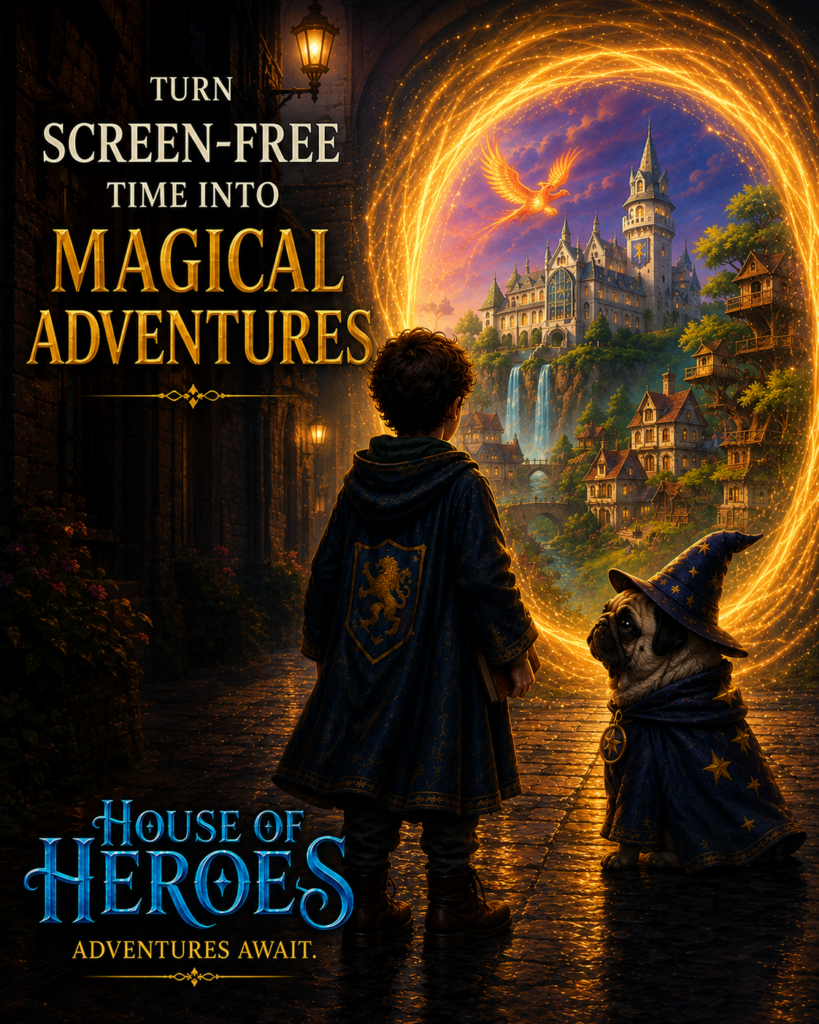
Platforms such as House of Heroes, a guided family storytelling platform tailored for children aged 4 to 11, are shifting the paradigm. By combining word-for-word scripts read aloud by parents with real-time decision-making controlled entirely by the child, these programs bridge the gap between shared family literature and immersive roleplay. This investigative report examines the mechanics of interactive family storytelling, the psychology behind screen-free engagement, the cognitive benefits of choice-driven narratives, and the broader implications for parent-child bonding in an increasingly digitized society.
Read Also
Detailed Chronology: The Evolution of Evening Engagement
To understand the current reliance on screen-based entertainment, one must examine how evening routines have evolved over the past few decades.

Phase 1: The Traditional Bedtime Routine (Pre-Digital Era)
Historically, the transition from late afternoon to bedtime relied on predictable, low-tech rituals: dinner, bath time, and storybooks. Traditional picture books and chapter books offered children a predictable linear narrative. While these routines provided comfort and language development, they were fundamentally passive. The child listened to the words spoken by the adult, visualizing the world without direct agency over the plot’s trajectory.
Phase 2: The Digital Disruption (Late 2000s–2010s)
As tablets, smartphones, and streaming services became ubiquitous in domestic spaces, parents began outsourcing bedtime friction to screens. Educational apps, interactive e-books, and animated videos promised personalized learning experiences. However, psychologists and educational researchers soon identified the "distraction trap"—the phenomenon where bright interfaces, pop-up rewards, and gamified loops overstimulate the developing brain, making the transition to sleep more difficult rather than less.

Phase 3: The Search for Tactile and Analog Alternatives (2015–Present)
Frustrated by the behavioral friction of screens, parents initiated a counter-movement toward tactile engagement. Subscription boxes, STEM kits, and cooperative board games flooded the market. Yet, many of these solutions suffered from high friction costs: complex rulebooks for parents, missing pieces, and preparation time that strained already exhausted weeknight schedules.
Phase 4: The Emergence of Interactive Oral Storytelling (Present Day)
The most recent evolution bypasses physical clutter and digital friction altogether by merging the intimacy of read-aloud time with the agency of roleplaying games. Platforms like House of Heroes represent this phase, eliminating prep work, rules, and screens. Parents act as the narrator while children steer the plot, turning a routine evening story into a collaborative narrative adventure.

Supporting Context & Metrics: The Screen-Free Imperative
The psychological and developmental case for screen-free evening activities is supported by mounting data regarding children’s cognitive loads, sleep hygiene, and emotional regulation.
The Overstimulation Dilemma
According to pediatric guidelines, blue-light exposure and high-dopamine screen interactions within an hour of bedtime significantly disrupt melatonin production and sleep architecture. Interactive apps, even those labeled "educational," often rely on intermittent reinforcement schedules that keep the brain in an active, stressed state.

In contrast, structured, analog family time engages the parasympathetic nervous system. When a parent reads aloud in a calm environment, a child’s heart rate synchronizes with the steady cadence of the adult’s voice, fostering an optimal state for emotional decompression.
The Mechanics of Agency in Childhood Development
Child development theories—particularly those rooted in Lev Vygotsky’s sociocultural framework—emphasize the importance of guided participation and agency. When children are given genuine choices within a structured environment, they practice:

- Executive Functioning: Weighing options and predicting potential consequences.
- Empathy and Moral Reasoning: Choosing paths that align with character traits like courage, kindness, and persistence.
- Intrinsic Motivation: Engaging in activities because they are inherently interesting rather than chasing digital reward badges.
Data from family engagement specialists indicate that activities requiring zero setup time and lasting between 20 to 25 minutes hit the "sweet spot" for weeknight retention. This duration matches the average child’s sustained attention span while ensuring the activity can be completed entirely, avoiding the frustration of unfinished tasks.
Inside the Platform: Anatomy of a Guided Narrative
Examining platforms like House of Heroes reveals how modern design principles can be applied to analog storytelling. The architecture of these adventures is engineered to remove administrative burdens from the parent while maximizing imaginative immersion for the child.

Zero-Friction Design for Parents
One of the primary reasons parents abandon complex board games or creative projects on weeknights is cognitive fatigue. After a full workday, parsing rulebooks or inventing improvisational stories is a heavy lift. Guided storytelling platforms solve this by providing:
- Word-for-Word Scripts: Parents do not need to improvise or invent dialogue; they simply read the narrative text aloud.
- Zero Rule-Learning: There are no dice to roll, character sheets to manage, or mechanics to memorize.
- Predictable Timeframes: Each adventure runs precisely 20 to 25 minutes, fitting neatly into standard pre-bedtime windows.
World-Building and Narrative Agency
The setting of these modern interactive stories is carefully calibrated to appeal to children aged 4 to 11. Taking place in magical realms—such as the fictional world of Eternia and its central institution, the House of Heroes—children are introduced to recurring, memorable characters:

- The Pug Wizard Headmaster: Introduces whimsical elements that disarm tension and invite humor.
- The Owl Roommate: Fosters a sense of peer companionship within the narrative.
- The Guardian Teacher and Seamster: Reinforce themes of mentorship and individual identity (such as crafting a unique magical cloak for every student).
Crucially, the child is never an observer; they are the undisputed Hero. Every consequential decision—whether to confront a danger, help a stranger, or investigate a mysterious path—is left entirely in the child’s hands. This design ensures that the narrative reacts directly to the child’s moral and creative impulses.
Official Statements and Expert Perspectives
Child psychologists, educators, and parenting advocates have increasingly voiced support for low-tech, high-connection engagement models.

"The most potent developmental tool a child can possess is not a tablet with a stylus, but an adult who is fully present, listening, and validating their choices. When storytelling transforms from a passive monologue into an interactive dialogue, the child’s brain lights up in areas associated with social cognition, empathy, and creative problem-solving."
— Dr. Elena Vance, Child Psychologist and Developmental Researcher
Educators note that the subtle integration of social-emotional learning (SEL) elements is far more effective when delivered through narrative context rather than didactic instruction.
"Children reject being lectured about ‘grit’ or ‘kindness.’ However, when their character in a story must choose whether to show persistence after a setback, and they experience the positive narrative fallout of that choice, the lesson internalizes naturally. It stops being a rule they have to follow and starts being who they choose to be."
— Marcus Sterling, Elementary Curriculum Specialist
Parents who have transitioned away from screen-based evening routines report immediate shifts in domestic harmony. Anecdotal and platform feedback highlights a significant decrease in "bedtime resistance" when children have an unprompted stake in the evening’s narrative adventure. Rather than negotiating for "five more minutes of tablet time," children begin asking if they can return to Eternia to see what challenges await their hero.

Future Outlook: The Next Frontier of Family Connection
As artificial intelligence, algorithmic personalization, and immersive digital media continue to saturate the consumer market, a counter-cultural wave valuing authenticity, analog connection, and tactile presence is gaining momentum.
The future of family entertainment is unlikely to be found in heavier, more complex screens, but rather in the hybridization of classic human rituals with clever, lightweight facilitation frameworks. By removing the administrative burdens traditionally associated with roleplay and interactive games, platforms in this space are democratizing imaginative play.
Key trends shaping the future of family engagement include:
- The Rise of "Micro-Connection" Rituals: Designing shared activities that fit precisely into compressed modern schedules (15 to 30 minutes) without sacrificing depth.
- Decoupling Learning from Gamification: Moving away from points, leaderboards, and digital badges toward intrinsic narrative satisfaction and moral agency.
- Empowering Non-Creative Parents: Providing tools that allow parents who do not consider themselves "imaginative" or "artistic" to deliver rich, theatrical storytelling experiences to their children.
Ultimately, the battle against excessive screen time cannot be won simply by taking devices away; it requires replacing them with something more compelling, more intimate, and more responsive. By putting the steering wheel of the story directly into a child’s hands—while keeping the parent firmly in the role of supportive narrator—guided storytelling offers a powerful blueprint for the future of family routines.

Where to Begin
For families looking to test the waters of screen-free interactive storytelling without financial commitment, entry points are readily accessible. Introductory adventures—such as helping a small pug wizard escape from three disgruntled cats to arrive at the gates of the House of Heroes—allow parents and children to experience the format firsthand in roughly 15 minutes.
As subscription platforms continue to roll out weekly episodic adventures, the evening routine transforms from a nightly negotiation into a shared literary journey—proving that sometimes, the most revolutionary educational technology is simply a parent’s voice, an open ear, and a child’s imagination.





Comments
Facebook App ID not configured. Please add it in the Customizer.