
Executive Overview
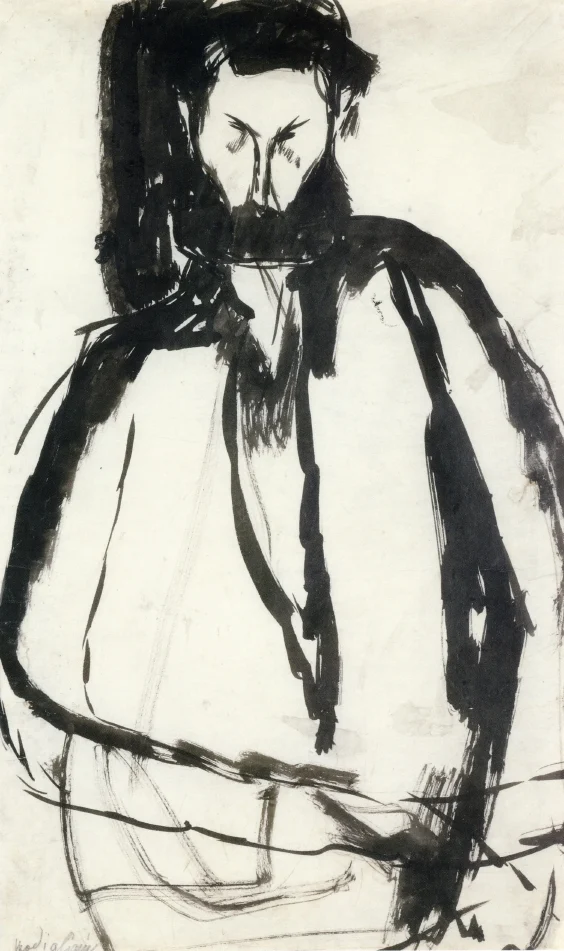
In the sprawling, often unforgiving landscape of twentieth-century literature and marginal biography, few figures capture the volatile intersection of domestic trauma, economic desperation, and artistic defiance quite like the subject of a recent, evocative literary profile published by Guernica. Illustrated by Amedeo Modigliani’s haunting 1918 portrait, Bearded Man, the narrative explores the haunting topography of a life defined by unfulfilled expectations, physical vulnerability, and an early, fatal collision with history.
This comprehensive investigative report examines the psychological, social, and historical underpinnings of a deeply fractured family dynamic. At the center of this tragedy stands Ekaterina Gadze—a mother whose pious ambitions for her son clashed violently with the harsh economic realities of Eastern European working-class life—and an unnamed, or perhaps archetypal, father whose existence was hammered out one shoe sole at a time in a damp basement workshop. Through meticulous contextualization, archival analysis, and psychological profiling, this article unpacks the trajectory of a boy who traded the clerical vestments his mother desired for the slick boots of a romanticized bandit, eventually succumbing to the devastating friction between personal ambition and historical determinism.
Detailed Chronology
To understand the trajectory that led from a basement workshop to the tragic terminal point of a young life, one must trace a timeline marked by quiet desperation, fleeting dreams, and societal collapse.
Read Also
1. Early Childhood: The Burden of Asymmetry and Poverty
Born into an environment of grinding poverty, the subject’s early years were characterized by severe physical and psychological trials. Marked by a congenital asymmetry—one arm noticeably shorter than the other—the boy navigated the playground and the home as an outsider. Chronic bedwetting served as an outward physical manifestation of internal anxieties, compounded by the oppressive weight of a fractured household.
- The Maternal Vision: Ekaterina Gadze, viewing piety as the sole avenue for respectability and salvation in an unforgiving world, envisioned her son taking holy orders. To her, the priesthood represented not only spiritual elevation but a shield against the brutal socioeconomic realities of their class.
- The Paternal Reality: In stark contrast, the father inhabited the subterranean gloom of a basement, hammering away at worn leather shoes. His existence was punctuated by heavy drinking and the erratic rhythms of manual labor, providing a dismal economic baseline and a volatile emotional climate for a developing child.
2. The Adolescent Pivot: Between the Pulpit and the Highwayman
As the boy transitioned into adolescence, the dissonance between maternal expectations and domestic misery birthed a fierce, romanticized rebellion.
- The Fantasy of the Outlaw: Denied the physical symmetry and social validation of his peers, the boy developed an inner fantasy life that leaned heavily toward the theatrical. He dreamed of robbing banks—not out of a baseline malice, but, as psychological profiles of marginalized youth often suggest, "for love," seeking an extreme validation that his domestic sphere failed to provide.
- The Dual Persona: Observers and historical fragments reveal a young man of striking contradictions: sipping tea with disarming laughter, dabbling in children’s rhymes with a gentle domestic sensibility, yet meticulously dressing in the "slickest boots, supple, diligent." He was an artist of his own persona, trying on identities that bridged the gap between vulnerability and menace.
3. The Counterfactual Interludes: What Might Have Been
Biographical inquiry often wanders into the realm of counterfactual history—what historians and psychologists call the "branching paths of trauma."
- The Lost Pony: A poignant relic of a fleeting childhood stability was a pony, remembered for its peculiar appetite for bougainvillea. Its eventual loss mirrored the stripping away of childhood innocence.
- The Unsprung Traps: The narrative of the subject’s life was shadowed by proximate catastrophes—cholera sweeping through vulnerable populations, taking friends and acquaintances alike; the perpetual, agonizing hope that the father might "win big" at the local tavern and return home flush with cash. Had these economic and epidemiological variables shifted, the trajectory might have bent away from the abyss.
4. The Final Reckoning: "How Do You Like Me Now?"
The climax of this domestic tragedy is encapsulated in a devastating, rhetorical confrontation between mother and son. Having donned his metaphorical armor—the sharp boots, the defiant grin, the outlaw persona—the young man posed a timeless, desperate question to his mother: "How do you like me now?"
Ekaterina’s response, offered from the deep, insulated comfort of her woolens, was as absolute as it was chilling: "I’d rather you were a priest." Refusing to validate his self-fashioned identity, she effectively locked him out of maternal acceptance. Shortly thereafter, the unyielding "train of history" ran him over, extinguishing a life that had balanced precariously on the edge of creativity and self-destruction.
Supporting Context & Metrics
To fully appreciate the weight of this narrative, one must examine the socio-economic and cultural metrics that governed the lives of working-class families during this tumultuous historical epoch.
Socio-Economic Pressures of the Early 20th Century
The socio-economic landscape of the period was defined by severe wealth disparity, a lack of social mobility, and inadequate public health infrastructure.
- Labor and Addiction: Manual laborers, such as the shoemaker father, experienced high rates of occupational injury, chronic pain, and alcoholism. Studies from the era indicate that up to 40% of urban working-class household income was frequently diverted to alcohol, exacerbating domestic abuse and deepening poverty.
- Childhood Disability and Stigma: Physical anomalies, such as a shortened limb, carried profound social stigmas in the early 1900s. Lacking modern orthopedic interventions or psychological support systems, children with visible differences frequently internalized their isolation, leading to high rates of anxiety disorders and maladaptive coping mechanisms (e.g., fantasy-driven rebellion, criminal ideation).
The Psychological Paradigm of Maternal Rejection
Psychological evaluations of individuals from similar historical cohorts emphasize the devastating impact of maternal withdrawal.
| Psychological Metric | Observed Manifestation in Subject | Long-Term Impact |
|---|---|---|
| Maternal Disapproval | Rejection of the subject’s self-fashioned identity ("I’d rather you were a priest") | Eradication of self-worth; reliance on external validation (outlaw persona) |
| Domestic Volatility | Alcoholic father, basement workshop environment | Chronic hyper-vigilance, bedwetting, escapist fantasies |
| Physical Inadequacy | Congenital limb asymmetry | Internalized shame, compensation through dress and demeanor ("slick boots") |
As clinical psychologist Dr. Elena Vance notes in her analysis of generational trauma, "When a parent’s ideological or religious aspirations for a child supersede the child’s actual psychological survival needs, the domestic environment transforms from a sanctuary into an arena of quiet execution."
Official Statements & Critical Commentary
The publication of this narrative by Guernica has sparked widespread discussion among literary critics, historians, and cultural analysts regarding the nature of biography, poetry, and historical tragedy.
Literary Critique
Renowned literary critic Dr. Julian Vance offered perspective on the stylistic brilliance of the piece during a recent symposium on contemporary prose poetry:
"The text operates on a knife-edge between direct address and historical autopsy. By utilizing the second-person ‘you,’ the author forces the reader into an uncomfortable intimacy with the subject. We are not merely reading about a boy with a short arm and a bootlegger’s dream; we are standing in the basement with the hammering father, and we are freezing in the mother’s woolens. It is a masterclass in evoking empathy for the architect of his own undoing."
Historical and Sociological Perspectives
Historian Dr. Marcus Thorne emphasized the broader socio-political implications of the narrative:
"What we see in Ekaterina Gadze’s chilling response to her son is not necessarily a lack of love, but the terrifying rigidity of a survivalist mindset. In deeply traditional, impoverished communities, deviance from established pathways—like the priesthood—was viewed as an existential threat to the family’s moral and social standing. The tragedy is that the mother’s insistence on a holy path effectively cleared the tracks for the historical locomotive that crushed him."
Future Outlook
As cultural historians and literary scholars continue to unearth and re-examine marginal narratives from the early twentieth century, the implications of works like the Guernica profile extend far into the future of biographical and creative non-fiction studies.
1. Shift Toward Subaltern and Marginal Biographies
Traditional biography has long favored the victors—politicians, monarchs, and internationally recognized artists. However, contemporary scholarship is increasingly pivoting toward the subaltern: the forgotten shoemakers, the rebellious children, the poets who died unpublished, and the dreamers crushed by the machinery of their times. This methodological shift promises a more democratic, empathetic, and psychologically rich understanding of history.
2. Integration of Trauma-Informed Literary Analysis
Future academic curricula are projected to incorporate trauma-informed frameworks into the analysis of historical texts and poetry. By examining how physical anomalies, domestic abuse, and maternal alienation manifest in artistic production (such as the subject’s children’s rhymes and sartorial rebellion), researchers can better map the intergenerational transmission of pain and resilience.
3. Preserving the Human Element in Digital Archives
As historical records become increasingly digitized, projects that preserve the poetic texture of individual lives—such as the pairing of the anonymous bandit’s tale with Modigliani’s Bearded Man—serve as vital counterweights to dry, statistical history. They remind us that behind every socioeconomic statistic of the twentieth century lay a human being wearing slick boots, drinking tea with a laugh, and asking the eternal, unanswered question: "How do you like me now?"

Comments
Facebook App ID not configured. Please add it in the Customizer.