
Executive Overview
In an era dominated by hyper-connectivity, blue-light screens, and algorithmic feeds, a surprisingly tactile counter-movement is sweeping households across the globe. Stressed, overstimulated, and cell phone-fatigued children—and a remarkably large demographic of adults—are trading digital devices for crayons, markers, stickers, and coloring books.
What began as a quiet coping mechanism during times of collective anxiety has blossomed into a full-scale publishing phenomenon. According to comprehensive data from Circana BookScan, print sales for children’s coloring and activity books reached an impressive 16.7 million units in 2025, marking an astounding 18% surge from the prior year. This growth drastically outpaces the broader children’s book market, which grew at a modest 3% over the same period.
Crucially, this is not a short-lived pandemic novelty or a fleeting trend. Sales trajectories through May 23, 2026, indicate that unit sales continue to track an additional 18% above the previous year’s historic highs.
Read Also
Publishing houses are scrambling to capitalize on this tactile gold rush, diversifying their portfolios with everything from "cozy," kawaii-inspired art styles and glow-in-the-dark novelties to high-profile pop-culture licenses like Netflix’s KPop Demon Hunters. At the same time, educational publishers are doubling down on early-learning resources, proving that modern parents are not just looking to pacify their children with mindless entertainment, but are actively seeking purposeful, screen-free engagement that fosters creativity, foundational learning, and emotional well-being.
Detailed Chronology of the Trend
To understand the current dominance of activity and coloring books, it is necessary to examine how the market evolved from a sleepy, backlist-driven category into an agile, trend-responsive powerhouse.
2020–2023: The Seeds of the Cozy Revolution
The modern aesthetic of the coloring book category underwent a quiet revolution during the early 2020s. While traditional coloring books relied heavily on complex mandala patterns or licensed cartoon characters with rigid brand guidelines, independent artists began leveraging digital platforms to pioneer a new visual language.
Chief among these pioneers was Coco Wyo, an artist collective based in Vietnam. Starting out as a self-published venture in 2020, the collective tapped into the global hunger for "cozy" aesthetics. Characterized by simple, uncluttered line work, thick outlines, and a heavily kawaii-influenced visual style, these books were specifically engineered to reduce cognitive load. They offered a low-stakes, highly satisfying creative outlet for audiences overwhelmed by the chaotic news cycles and digital saturation of the early decade.
2024: Corporate Integration and Mainstream Validation
Recognizing the explosive organic reach of independent cozy brands, traditional publishing powerhouses moved to secure institutional partnerships. In 2024, Coco Wyo officially joined forces with Random House, transitioning from a self-publishing phenomenon into a major commercial program overseen by Michelle Nagler, Senior Vice President and Publisher at Random House Children’s Books.
Concurrently, publishers began rethinking the structural design of activity books. Recognizing that the modern consumer suffers from choice paralysis and digital fatigue, companies started prioritizing tactile variety—incorporating heavy paper stocks suitable for markers, perforated pages for easy sharing or display, and unique physical gimmicks like glow-in-the-dark elements to sustain consumer interest in a crowded market.
2025: The Breakout Year
By 2025, the market dynamic had fundamentally shifted. Circana BookScan data highlighted coloring and activity books as the undisputed growth driver within the broader children’s publishing ecosystem. Units flew off shelves, hitting 16.7 million copies.
The appeal also broadened demographically. While initially marketed toward children, cozy coloring books captured a massive cross-generational audience. Gen Z and millennial adults—seeking their own forms of low-cost, screen-free mindfulness—embraced the titles equally, fueling a cultural normalization of coloring as a legitimate form of adult self-care and mental health management.
2026: Expansion, Innovation, and Multimedia Crossovers
As the market moves deeper into 2026, publishers are no longer just reacting to demand; they are aggressively innovating. Through May 2026, sales have maintained an 18% year-over-year growth rate.
The current landscape is characterized by high-profile multimedia integration. Publishers are pairing coloring and activity formats with streaming hits like Netflix’s KPop Demon Hunters, while independent innovations—such as Thunder Bay Press’s "creepy cute" glow-in-the-dark line—demonstrate that the appetite for niche, highly stylized physical media remains insatiable.
Supporting Context & Metrics
The numbers behind the tactile publishing boom paint a vivid picture of a market undergoing structural transformation.
Key Market Statistics (Circana BookScan Data)
- 2025 Total Unit Sales: 16.7 million print units sold in the children’s coloring and activity category.
- Year-over-Year Growth (2025): Up 18% compared to the prior year.
- Market Outperformance: Outpaced the overall children’s publishing market growth rate of 3% by a factor of six.
- 2026 Trajectory: Unit sales tracking an additional 18% above prior-year levels through May 23, 2026.
- Market Share Dominance: Independent-turned-mainstream powerhouse Coco Wyo accounts for a staggering 25% of all coloring books sold in the U.S. during the 2026 tracking period.
The Power of "Un-Licensed" Success
One of the most remarkable anomalies in the current market is the triumph of un-licensed properties. Historically, children’s publishing has relied heavily on massive media franchises to move inventory. Yet, Chris Angelilli, Senior Vice President and Editor-in-Chief of Licensed Publishing at Random House, points out that the extraordinary market share captured by Coco Wyo was achieved entirely without "white-hot licensed properties."
Instead, these books win on emotional resonance. By offering unpretentious, comforting layouts designed explicitly to lower cortisol levels and provide mental respite, these titles prove that emotional utility is just as powerful a sales driver as brand recognition.
Diversification of Formats and Niches
Publishers are also expanding the functional boundaries of the category:
- The "Creepy Cute" Phenomenon: Thunder Bay Press’s Cozy Nightmare Glow-in-the-Dark Coloring bridges the gap between whimsical comfort and spooky aesthetics, capturing younger demographics who enjoy alternative art styles.
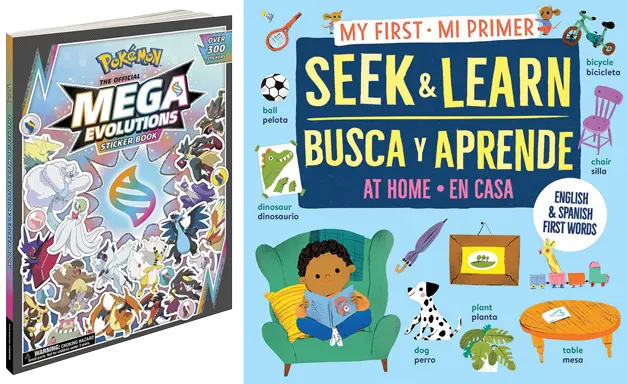
- Early Childhood Literacy and Multilingualism: Educational imprints are adapting to increasingly diverse modern households. Workman Kids’ recent launch of the bilingual My First Seek and Learn at Home / Mi primer busca y aprende: en casa reflects a calculated effort to merge tactile play with inclusive, multi-language cognitive development.
- Sticker and Interactive Formats: The Pokémon Company International’s Pikachu Press continues to dominate with complex, narrative-driven sticker collections like Pokémon Epic Sticker Collection: From Kanto to Paldea, proving that interactive assembly remains a premier format for sustained engagement.
Official Statements and Industry Insights
Industry leaders attribute this ongoing renaissance to a profound cultural shift in how families view media consumption, downtime, and child development.
The Balance Between Digital and Tactile
Karen Edwards, Editorial Director of Educational Resources at Workman Kids, emphasizes that modern parenting is defined by intentional curation rather than outright technology bans.
"Families are diligent about balancing digital learning with tactile activities that encourage focus, creativity, and independence," Edwards explains. "Activity books are portable, accessible, and can be used at home or in the back of a car while traveling. They’re just such a versatile, valuable resource."
Edwards also stresses that today’s parents expect educational resources to do heavy lifting:
"Parents and caregivers are looking for resources to do more than simply occupy their children’s time. They want books that encourage curiosity, build foundational skills, and create meaningful moments of engagement."
Comfort in an Anxious World
At Random House, executives have a front-row seat to the massive demographic crossover between child and adult buyers. Chris Angelilli notes that the overarching driver for the category is twofold: systemic anxiety and persistent screen-fatigue.
"I suspect part of it has to do with the continued concern about screen time for children," says Angelilli. "And, let’s face it, coloring and activity books are a great distraction. Another big part is the amazing popularity of the licenses themselves."
Commenting on the runaway success of the Coco Wyo partnership, Angelilli adds:
"This is amazing, considering that these books don’t feature white-hot licensed properties. They’re designed to offer comfort and relaxation, which is something we all need right now."
Expanding Brand Ecosystems
The marriage of pop culture IP and tactile publishing has yielded exceptional results for major entertainment properties. Heather Dalgleish Parker, Senior Director of Original Merchandise at The Pokémon Company International, highlights how vital these formats are to maintaining long-term audience loyalty:
"Activity books, sticker books, and pop-up books continue to be standout categories, serving as key drivers of our publishing business. There is an incredible amount of creative inspiration for children and families to engage with."
Raising the Creative Bar
Innovation remains the baseline requirement for staying competitive in a consumable category where audiences cycle through material quickly. Peter Norton, Vice President and Publisher at Thunder Bay Press, captures the relentless energy required to maintain momentum in the sector:
"Coloring and activity books are consumable, and you have to understand that this audience is insatiable. We try to raise the bar and give them something they didn’t expect."
Whether through glow-in-the-dark inks, unexpected tactile surfaces, or cross-genre stylistic fusions, publishers know they must continually surprise a sophisticated consumer base.
Future Outlook: Where Goes the Tactile Market?
As the publishing industry looks toward the remainder of 2026 and beyond, all indicators suggest that the tactile renaissance is here to stay. Far from being a temporary rebellion against digital devices, the boom in coloring and activity books reflects a permanent re-evaluation of leisure, mental health, and cognitive engagement.
Several key trends will likely define the future of the category:
- Mainstream Acceptance of All-Ages Design: The artificial barrier separating "children’s" coloring books from "adult" mindfulness titles will continue to dissolve. Publishers will increasingly design titles with dual-market appeal—books sophisticated enough for stressed millennials and Gen Z consumers, yet accessible enough for older children.
- Deepening Cross-Media Synergies: As streaming platforms and gaming conglomerates look for tangible ways to deepen fan loyalty, traditional publishers will secure licensing rights faster and integrate them into agile activity book formats (such as the multi-format rollouts seen with Netflix’s KPop Demon Hunters and evergreen properties like Minecraft and Super Mario Bros.).
- Inclusive and Early-Learning Innovation: Educational publishers will continue to innovate in response to multicultural demographics. Expect to see a greater volume of bilingual titles, sensory-inclusive activity books, and resources designed to build foundational cognitive skills without leaning on digital screens.
- Material and Physical Innovation: Because activity books are inherently consumable, publishers will rely on material innovations—such as glow-in-the-dark elements, scratch-and-sniff components, premium mixed-media papers, and reusable sticker technology—to justify price points and maintain consumer excitement.
Ultimately, the enduring success of coloring and activity books serves as a powerful reminder of human psychology: no matter how advanced our digital tools become, the simple, grounding pleasure of putting pen to paper remains fundamentally irreplaceable.





Comments
Facebook App ID not configured. Please add it in the Customizer.