
Executive Overview
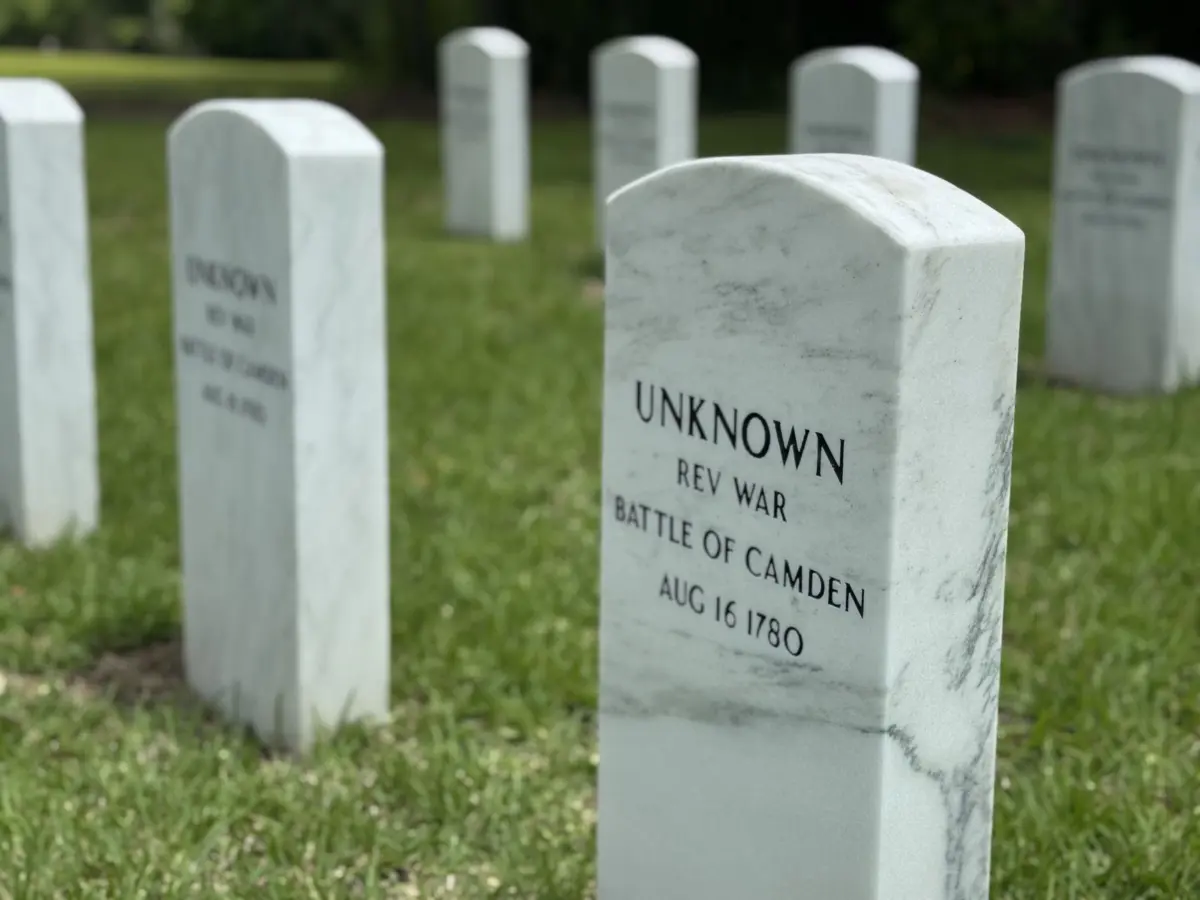
Nearly 250 years after falling on a blood-soaked South Carolina field, a forgotten soldier of the American Revolution has finally reclaimed his name. Private John Pumphrey, who enlisted in the Continental Army as an illiterate 14-year-old boy and perished during the disastrous Battle of Camden in 1780, is the subject of a historic forensic breakthrough.
Using state-of-the-art ancient DNA extraction and investigative genetic genealogy, a multidisciplinary team of archaeologists, geneticists, and genealogists successfully identified Pumphrey’s skeletal remains—previously designated as "Camden 9B." This landmark identification marks the first time a soldier who died in the 1700s has been identified using modern genetic genealogy profiling.
The investigation, which connected Pumphrey’s 18th-century genetic signature to approximately 20,000 living relatives, bridges an immense chasm between modern Americans and the mythical narrative of their nation’s founding. By transforming an anonymous "John Doe" into a flesh-and-blood teenager with a tragic personal history, the discovery offers a poignant reminder of the human cost of the Revolutionary War as the United States approaches its semiquincentennial anniversary.
Read Also
Detailed Chronology: From Battlefield to Breakthrough
The arduous path to identifying Private John Pumphrey spans two and a half centuries, winding from the muddy battlegrounds of the American South to modern high-tech forensic laboratories.
1777–1780: A Boy’s Journey to War
John Pumphrey’s life changed irrevocably in his youth. Born into a seemingly prosperous family with roots in New Jersey and Maryland, Pumphrey was orphaned around the age of ten after both of his parents died. Following his father’s passing, a cousin reportedly seized control of the family estate, stripping Pumphrey and his siblings of their inheritance and leaving the young teen with virtually no financial prospects or stability.
/https://tf-cmsv2-smithsonianmag-media.s3.amazonaws.com/filer_public/f2/1f/f21fd14f-3eff-49e4-abcf-8bf3ccdc8115/img_3924_1.jpeg)
Driven by desperation or a lack of alternatives, Pumphrey enlisted in the Seventh Maryland Regiment of the Continental Army in 1777 at roughly 14 years of age. Because he had never learned to write, he signed his enlistment papers with an "X." Over the course of three and a half grueling years, Pumphrey marched more than 1,000 miles, eventually accepting a $100 re-enlistment bonus in 1779.
His military career ended abruptly on August 16, 1780, at the Battle of Camden in South Carolina. Outnumbered, exhausted, and many suffering from dysentery, the American forces were routed by British troops. Pumphrey was initially listed among the missing, his body left in a shallow, unmarked grave.
2020–2022: Discovery and Excavation
The first modern chapter of Pumphrey’s story began in 2020, when archaeologists conducting systematic surveys of the Camden battlefield using metal detectors noticed unusual anomalies. Beneath the surface, alongside musket balls and uniform buttons, they uncovered two human crania protruding from the earth.
Subsequent archaeological excavations revealed the remains of 14 Revolutionary War soldiers buried in shallow trenches. The bones were carefully exhumed and transferred to the Richland County Coroner’s Office for anthropological examination. Recognizing the historical significance of the bones, local officials reached out to FHD Forensics, a Texas-based firm specializing in investigative genetic genealogy that had previously partnered with the coroner on modern unidentified decedent cases.
2023–2026: Sequencing Ancient DNA and Identification
Extracting viable genetic material from bone samples degraded by more than two centuries in acidic Southern soil was a formidable challenge. Astrea Forensics, a California-based laboratory specializing in ancient DNA, successfully extracted and sequenced genetic material from two of the Camden soldiers, including Camden 9B (Pumphrey).
/https://tf-cmsv2-smithsonianmag-media.s3.amazonaws.com/accounts/headshot/Ellen_Wexler.png)
The resulting profiles were the oldest ever successfully processed by the lab. FHD Forensics uploaded the data to forensic-opt-in databases like FamilyTreeDNA and GEDmatch. To the team’s astonishment, the profile linked directly to prominent historical families in Maryland’s Anne Arundel County.
Through a combination of autosomal, X-chromosome, and Y-chromosome DNA analysis, alongside exhaustive archival research into military rolls, land grants, and probate records, researchers narrowed down the identity to John Pumphrey. In July 2026, the formal announcement of his identity was made public, concluding nearly 250 years of anonymity.
Supporting Context & Metrics
The identification of Private John Pumphrey relies on a convergence of historical documentation, anthropological analysis, and cutting-edge genetic science.
Osteological and Archaeological Metrics
- Age at Death: Skeletal analysis revealed that the growth plates around Pumphrey’s knees had not fully closed, indicating he was approximately 14 to 16 years old when he died.
- Cause of Death: Anthropologists noted an absence of visible skeletal trauma, leading researchers to conclude he likely succumbed to a soft-tissue injury—such as a fatal bayonet thrust or internal trauma—that left no lasting mark on his bones.
- The Battle of Camden: Fought on August 16, 1780, the engagement pitted roughly 4,000 American troops (many of whom were ill with dysentery) against 2,000 disciplined British regulars under Lord Charles Cornwallis, resulting in a catastrophic defeat for the Continental Army.
Genealogical and Genetic Metrics
- Genetic Matches: Investigative genetic genealogy uncovered approximately 20,000 DNA matches for living relatives, primarily tracing down lines from Pumphrey’s siblings and first cousins (since he died too young to have children of his own).
- Financial Cost: Modern forensic genetic genealogy and ancient DNA extraction for historical cold cases remain prohibitively expensive, with individual identifications frequently costing tens of thousands of dollars in specialized laboratory fees and archival man-hours.
Official Statements and Perspectives
The historic breakthrough has elicited profound reactions from the scientific, archaeological, and descendant communities.
-
Allison Peacock, President of FHD Forensics:
:focal(2016x1517:2017x1518)/https://tf-cmsv2-smithsonianmag-media.s3.amazonaws.com/filer_public/f2/1f/f21fd14f-3eff-49e4-abcf-8bf3ccdc8115/img_3924_1.jpeg)
"As far as we knew, this was the first time somebody that died in the 1700s had been identified with their genetic genealogy profile… The earth shifted dramatically under John Pumphrey’s feet. A young teen from an apparently prosperous family, and once with a bright, predictable future, now had little prospects."
-
Rick Wise, Executive Director of the South Carolina Battleground Preservation Trust:
"He has waited almost 246 years for his name to be said out loud again. The blood that ran through his veins is going through yours."
-
James Legg, Archaeologist and Excavation Leader:
"It’s almost like a mythology, the Revolution; like a story we all agree happened, but may not feel that it was real. These gravesites make it real."
/https://tf-cmsv2-smithsonianmag-media.s3.amazonaws.com/filer_public/ea/d0/ead06dd3-b89f-4d26-91d4-8a657acb3dd0/card_grid_john_pumphrey.jpg)
-
Julie Strickland, Living Descendant (Found via the Investigation):
"I was born a Pumphrey. I was put up for adoption when I was 6 weeks old and later found both sides of my family. I started out without a name. He wound up without a name. And now we both know our name."
Future Outlook
The successful identification of Private John Pumphrey has opened an exciting new frontier in historical forensics, proving that investigative genetic genealogy can pierce the veil of centuries-old mysteries. However, significant hurdles remain before other nameless combatants from the American Revolution can be identified.
Expanding the Project
Researchers with the South Carolina Battleground Preservation Trust, FHD Forensics, and Astrea Forensics are actively working on sequencing and analyzing the remaining unidentified soldiers recovered from the Camden battlefield, including the second soldier whose DNA was successfully extracted—a case that holds deeply personal significance for Allison Peacock, who discovered she is a living relative.
Funding and Technical Hurdles
The primary obstacle to identifying additional Revolutionary War soldiers is financial. Because ancient DNA extraction requires specialized, labor-intensive laboratory protocols and commercial DNA database comparisons, each investigation costs tens of thousands of dollars. Project leaders are actively seeking philanthropic contributions, grants, and public donations to sustain the work.
/https://tf-cmsv2-smithsonianmag-media.s3.amazonaws.com/filer_public/4f/7d/4f7d7d3b-4244-47ef-bfb6-de5e63f0d51d/jpumph-re-enlist-s997-16-113.jpg)
As the United States marks its 250th anniversary, projects like Operation Camden 9B serve a vital cultural purpose. They transition the American Revolution from abstract history textbook pages into a visceral, human experience—ensuring that the young boys who marched away to build a nation are never truly forgotten.




Comments
Facebook App ID not configured. Please add it in the Customizer.