
Executive Overview
In an era defined by high-stakes public relations battles, royal house cleanings, and intense media scrutiny, the modern British monarchy spends an exorbitant amount of energy managing its collective image. Yet, the playbook of using cultural mythmaking to manufacture royal legitimacy is hardly a modern invention. Long before crisis communications firms, press secretaries, and digital media advisors became fixtures of palace life, 18th-century royals were already deploying sophisticated public relations campaigns.
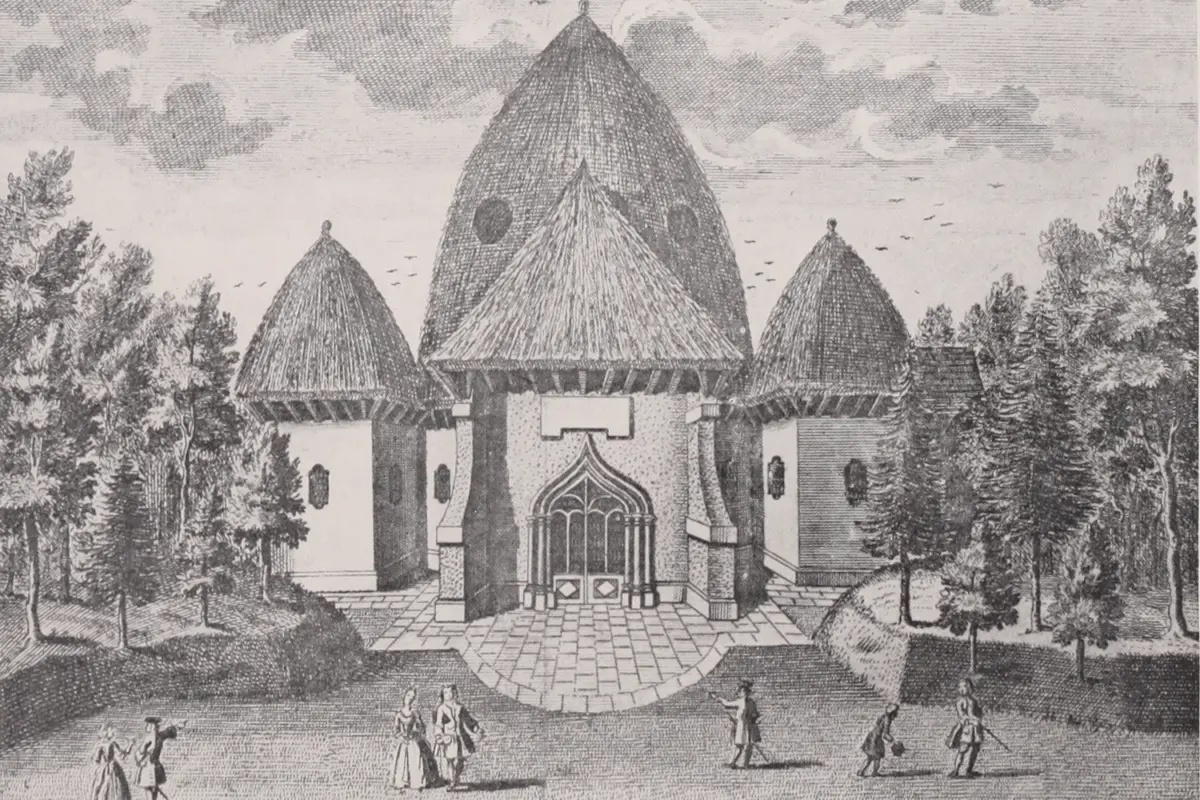
Chief among these early masterminds was Queen Caroline of Brandenburg-Ansbach. In 1735, facing a deep-seated legitimacy crisis, a fractured court, and fierce political opposition, Queen Caroline orchestrated a brilliant, if eccentric, piece of statecraft. She commissioned a whimsical thatched cottage known as "Merlin’s Cave" in the royal gardens at Richmond. Filled with waxwork figures of the legendary wizard Merlin, ancient prophets, and figures from Britain’s mythical past, this garden folly was designed to do far more than entertain visitors. It was a calculated, multi-layered ideological statement.
Read Also
By weaving the House of Hanover—a German dynasty that had inherited the British throne just two decades prior—into the rich tapestry of Arthurian legend, Caroline sought to bridge the gap between foreign ancestry and native British heritage. This deep dive explores how a fairytale grotto became a battleground of political strategy, exposing the eternal truth that a crown’s survival relies not merely on legal succession, but on the compelling stories told about who belongs to the nation.
Detailed Chronology: The Rise of Merlin’s Cave
To understand the audacity of Queen Caroline’s 1735 project, one must examine the precarious political landscape of Great Britain during the early Georgian era.
/https://tf-cmsv2-smithsonianmag-media.s3.amazonaws.com/filer_public/13/70/1370f852-7dce-4a95-839d-a51ca90c6d55/merlins-garden.png)
1714: The Hanoverian Succession and the Foreign King
When Queen Anne died without an heir in 1714, the British crown passed to her distant cousin, Elector George Louis of Hanover, in accordance with the Act of Settlement 1701. Ascending the throne as George I, the new monarch arrived in a country whose language he barely spoke, bringing with him a distinctly German court.
George I’s preference for his homeland, coupled with his heavy reliance on foreign advisors, immediately alienated segments of the British populace. The Protestant succession was secure on paper, but fragile in practice.
1715 & 1719: The Jacobite Threat
The vulnerability of the Hanoverian line was violently underscored by the Jacobite uprisings of 1715 and 1719. Supporters of the exiled Stuart dynasty—displaced when the Catholic James II was overthrown during the Glorious Revolution of 1688—rallied behind James Francis Edward Stuart (the "Old Pretender"). Though these rebellions were ultimately suppressed, they proved that a significant faction of the population viewed the Hanoverians as illegitimate usurpers.
1727: George II Ascends and Familial Frictions Erupt
Upon the death of George I in 1727, his son ascended the throne as George II. Married to the intellectually formidable Caroline of Brandenburg-Ansbach, the new king inherited a realm still bitterly divided along political and dynastic lines. Compounding these national tensions was a vicious, highly public family feud.
George II and Queen Caroline shared a notoriously strained relationship with their eldest son and heir, Frederick, Prince of Wales. As the royal family fractured internally, the image of stability that Britain desperately needed—having only recently emerged from civil wars and religious schisms—began to crumble.
/https://tf-cmsv2-smithsonianmag-media.s3.amazonaws.com/filer_public/13/70/1370f852-7dce-4a95-839d-a51ca90c6d55/merlins-garden.png)
1735: The Birth of Merlin’s Cave
Recognizing the urgent need to shore up the dynasty’s public image, Queen Caroline took matters into her own hands. Eschewing traditional political maneuvers, she turned to the arts and cultural myth. In 1735, she commissioned architect William Kent to build Merlin’s Cave in the royal gardens at Richmond.
The structure was intentionally rustic—a Gothic, thatched-roof building that stood in stark contrast to the classical palladian architecture favored at the time. Inside, visitors encountered a tableau of life-sized wax figures. Merlin, the legendary prophet and adviser to King Arthur, sat surrounded by ancient British worthies, queens, and visionaries.
Rather than fading quietly into the background as an odd garden ornament, the Cave immediately sparked widespread public discourse, inspiring satirical essays, political cartoons, and panegyric poetry.
Supporting Context & Metrics: Myth as Political Messaging
Queen Caroline’s strategic deployment of Arthurian legend was a masterclass in cultural appropriation. While earlier English monarchs—such as Henry II and Edward I—had explicitly claimed direct lineage from King Arthur to justify their imperial ambitions, Caroline pivoted toward the wizard Merlin.
Why Merlin?
In Arthurian tradition, Merlin is not merely a sorcerer; he is an arch-strategist, a genealogist, and an interpreter of the future. He guides Arthur while prophesying the destiny of the realm. By placing Merlin at the center of her grotto, Caroline co-opted a figure belonging to no single royal house. Arthurian myth belonged to the collective British imagination, transcending the bloody dynastic feuds between the Stuarts and the Hanoverians.
/https://tf-cmsv2-smithsonianmag-media.s3.amazonaws.com/filer_public/f8/0d/f80d2f09-9af7-4c9c-9361-314934fcdd31/caroline-and-george-ii.png)
Furthermore, Caroline’s personal background uniquely equipped her for this intellectual gambit. Unlike her husband, who notoriously "hated all boets and painters," Caroline was an avid bibliophile. Raised in the intellectually vibrant courts of Berlin and Hanover, she possessed a deep knowledge of European history, including medieval traditions that linked the House of Guelph (the Hanoverian dynasty) to ancient English royalty.
The Propaganda War: Poetry vs. Satire
The symbolism embedded within Merlin’s Cave was immediately recognized by contemporary observers, sparking a proxy war of letters and verse:
- Calls for Dynastic Harmony: In a 1735 poem, Anglo-Welsh writer Jane Brereton interpreted the figure of Merlin as a direct plea to the estranged Prince Frederick. The poem urged the prince to fulfill his filial duty and "perpetuate Brunswick’s race," signaling that contemporaries understood the grotto as a call for internal royal reconciliation.
- Tory and Jacobite Backlash: Opposition writers were far less charitable. Nicholas Amhurst, writing under the pseudonym Caleb D’Anvers in the satirical journal The Craftsman, relentlessly mocked the attraction. Political opponents weaponized the exhibit, linking the figure of Merlin to Robert Walpole, Britain’s first de facto prime minister. As scholar Amanda S. Meixell noted, the wizard was reframed by critics as a "devilish ‘wizard’ who could not be trusted."
Despite the fierce mockery, the hostility of the response proved that Caroline’s messaging hit its mark. Her critics were not confused by the display; they understood its intent entirely and sought to subvert it.
Official Statements and Contemporary Perspectives
Though formal press releases did not exist in the 18th century, the cultural echoes of Caroline’s project were recorded through official correspondence, contemporary journals, and scholarly analysis.
Reflecting on the psychological weight placed upon the Hanoverian dynasty, historical archives reveal a court hyper-conscious of its "foreign" label. As contemporary observer Lord Hervey noted in his memoirs, the royal household constantly navigated a delicate balance between asserting authority and appeasing a skeptical British public.
Modern historians view Merlin’s Cave as a watershed moment in early modern public relations. Dr. Amy Louise Blaney, a knowledge exchange coordinator at the University of Wolverhampton whose research focuses on national mythologies, emphasizes the enduring legacy of Caroline’s strategy:
"In turning to Arthurian legend to promote the image of a stable, legitimate and distinctly British monarchy, Caroline understood a lesson that monarchies continue to grapple with today: Legitimacy depends not on inheritance but on statues, stories, and the narratives people tell about who belongs to the nation and who should shape its future."
Future Outlook: The Evolution of Royal PR
Queen Caroline’s 1735 experiment at Richmond provides a fascinating lens through which to examine the evolution of institutional survival. While the mediums have evolved drastically—shifting from thatched Gothic grottoes and waxwork figures to televised documentaries, social media campaigns, and high-profile charity patronages—the core objective remains identical.
As modern monarchies around the globe continue to face questions of relevance, financing, and cultural connection, the lessons of Merlin’s Cave endure. A crown cannot sustain itself on legal precedent and hereditary right alone. It must continually root itself in the cultural mythology and shared identity of the people it serves.
Nearly three centuries after Queen Caroline placed a waxen wizard in a Richmond garden, her underlying thesis stands vindicated: the most powerful tool in statecraft is not the sword or the statute, but the story a nation tells about its own reflection.




Comments
Facebook App ID not configured. Please add it in the Customizer.