When the Thirteen Colonies formally declared their independence from Great Britain on July 4, 1776, the fledgling nation’s survival was by no means guaranteed. Facing the world’s most formidable imperial military and naval machine, the American patriots required immense reserves of manpower, strategic resilience, and ideological fervor. Hidden deep within the foundational narratives of the American Revolution is a profound, transformative truth: people of Irish heritage—ranging from newly arrived Ulster Presbyterian immigrants fleeing economic stagnation to persecuted Irish Catholics escaping centuries of brutal British colonial rule—served as the vital backbone of the Continental Army and Navy.
Accounting for an astonishing 25 to 50 percent of the Continental Army’s active ranks despite making up a fraction of the colonial population, individuals of Irish descent did far more than fill out infantry rosters. They commanded naval squadrons, designed foundational national symbols, engaged in high-stakes espionage, printed the first broadsides of the Declaration of Independence, and helped draft the U.S. Constitution. Motivated by a shared, generational grievance against English oppression on both sides of the Atlantic, the Irish immigrant experience proved to be an indispensable catalyst for the birth of the United States.
Detailed Chronology: From the Shores of the Old World to the Battlefields of the New
The Crucible of English Rule and the Genesis of Discontent
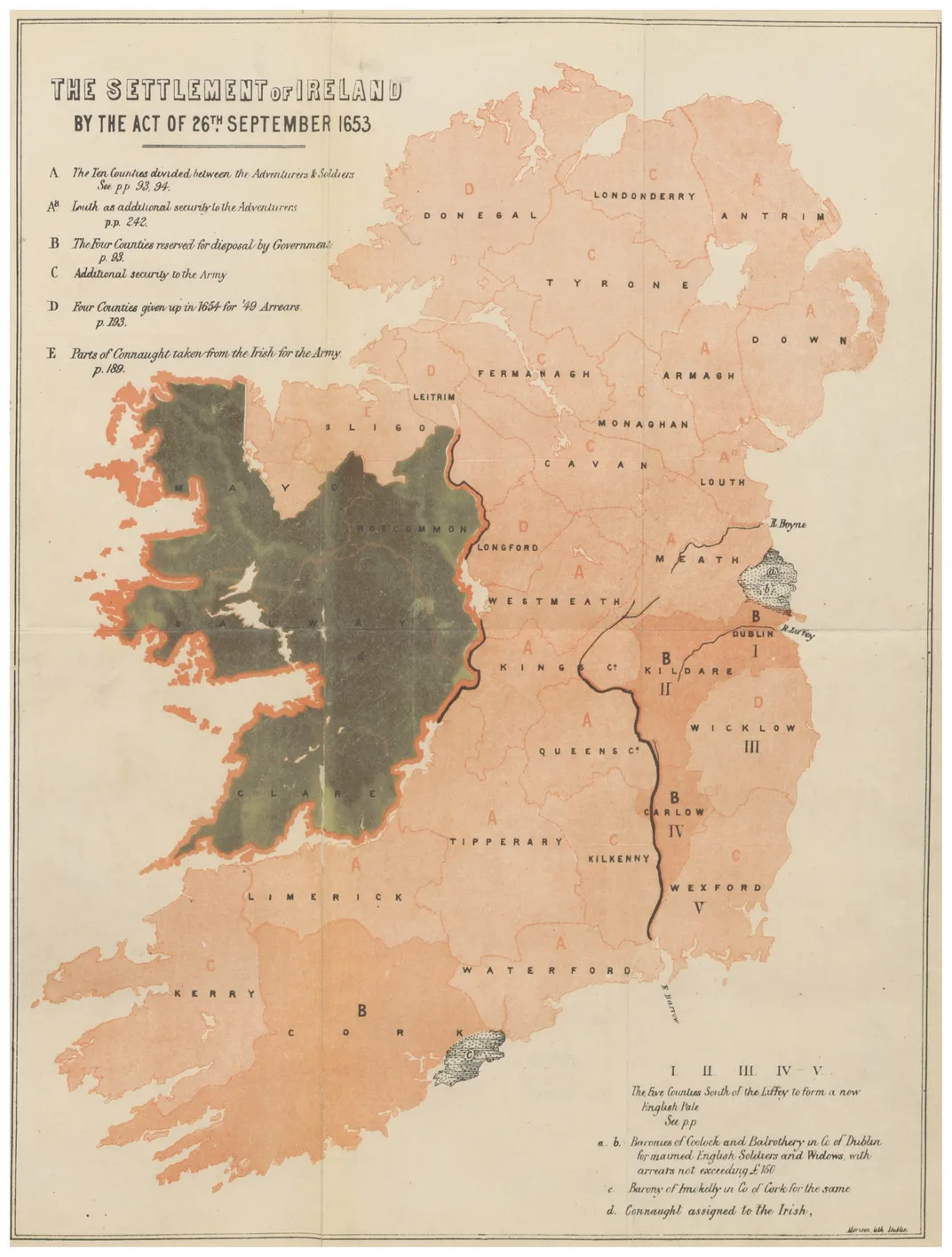
Long before the first shots echoed across the green at Lexington and Concord, the island of Ireland had endured centuries of systemic subjugation under the English crown. Following the initial Norman invasions of the 12th century, successive Tudor and Stuart monarchs systematically dismantled Irish political autonomy, social structures, and economic stability.
By the dawn of the 17th century, large-scale plantations engineered by James I saw the forcible confiscation of native lands in Ulster and beyond, displacing local populations and instigating centuries of religious and ethnic strife. The imposition of the draconian Penal Laws in the late 17th and early 18th centuries reduced Irish Catholics and dissenting Protestants—such as the Scottish-descended Presbyterians of Ulster—to second- and third-class status. Catholics were barred from voting, holding public office, bearing arms, or inheriting land intact, while Presbyterians faced severe civil and religious discrimination, including the non-recognition of their marriages and heavy tithe requirements.
Faced with generational poverty, economic strangulation, and targeted religious persecution, hundreds of thousands of Irish citizens chose exile. The "Great Migration" of the Scots-Irish began in earnest in 1718, swelling to an estimated 250,000 arrivals in the American colonies by the eve of the Revolution. While Catholics largely viewed emigration as a form of forced banishment and initially remained behind in smaller numbers, those who did make the harrowing trans-Atlantic crossing carried an unshakeable animosity toward British imperial authority.
The Spark of Rebellion and the Continental Vanguard
When colonial grievances over "taxation without representation" boiled over into open rebellion in 1775, Irish immigrants and their descendants immediately rallied to the patriot banner. Their opposition to the Crown was deeply personal, rooted in the lived experience of British tyranny.
Among the earliest and most notable figures was John Barry, born in Wexford, Ireland, in 1745. Having experienced firsthand the ruthless eviction policies of English landlords, Barry immigrated to Philadelphia around 1760. When the war broke out, he volunteered his maritime expertise to the nascent patriot cause. Commissioned as a captain in the Continental Navy in 1775, Barry captured numerous British vessels while commanding the brigantine Lexington. Later entrusted with protecting critical state assets—including a cargo shipment of Cuban gold intended to serve as seed money for the national bank—Barry’s unwavering loyalty earned him the designation of the "Father of the U.S. Navy" by President George Washington.
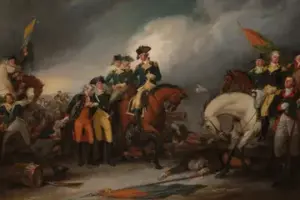
The involvement of the Irish was systemic across all military tiers. Continental regiments rang with the sound of the Irish language, which observers noted was spoken as commonly as English within the ranks. Major military figures such as Major General Edward Hand, surgeon James McHenry, and cavalry commander Stephen Moylan—all Irish-born—occupied crucial leadership roles directly under George Washington. Furthermore, nine of Washington’s generals hailed directly from Ireland.
Espionage, Publishing, and Statecraft
Beyond traditional combat infantry and naval warfare, Irish-born and Irish-descent patriots deployed specialized skills that profoundly shaped the operational success and institutional framework of the United States.
The Printing of Independence: Immediately following the Continental Congress’s vote for independence, the vital text was rushed to John Dunlap, an Irish-born printer in Philadelphia. Working into the early hours of July 5, 1776, Dunlap produced the historic broadsides that first distributed the news of the nation’s birth to the public and the army.
High-Stakes Espionage: Hercules Mulligan, an Irish immigrant tailor living in New York City, leveraged his high-society clientele—including British military officers—to gather critical intelligence for the Continental Army. Operating under the encouragement of Alexander Hamilton, Mulligan’s clandestine intelligence operations twice saved George Washington from catastrophic ruin, including the thwarting of a direct assassination plot. Concurrently, Lydia Barrington Darragh, a Quaker woman who had emigrated from Dublin, famously eavesdropped on British officers planning a surprise attack against Washington’s encampment in Philadelphia during the winter of 1777, successfully carrying the life-saving warning across enemy lines.
Constitutional Architecture: In 1782, Charles Thomson, a native of Londonderry, finalized the design for the Great Seal of the United States, cementing the American bald eagle as the enduring symbol of the republic. Five years later, four Irish-born delegates played instrumental roles at the Constitutional Convention, drafting the framework of the U.S. Constitution that was ratified in 1788.
Supporting Context & Metrics
The quantitative footprint of Irish contributions to the American Revolution demonstrates a disproportionate level of sacrifice and participation:
10 Percent: The estimated proportion of the total American population of European descent represented by individuals of Irish heritage during the Revolutionary War era.
25 to 50 Percent: The estimated proportion of the Continental Army’s active-duty ranks accounted for by soldiers and sailors of Irish birth or direct descent.
1 in 6: The estimated fraction of regular British soldiers who were actually recruited from Ireland, highlighting the complex divided loyalties of the island, though a significant number—such as Sergeant Thomas Sullivan—ultimately chose to desert and join the American patriot ranks.
8 of 56: The number of signers of the Declaration of Independence of direct Irish descent, three of whom (including James Smith) were born on the Irish mainland.
Nathan Mannion, head of exhibitions and programs at Dublin’s Epic The Irish Emigration Museum, notes that the structural oppression of the Penal Laws—such as the mandatory subdivision of Catholic land among all male heirs—deliberately diluted family wealth and forced generational fragmentation, creating a population primed to resist imperial overreach.
Similarly, Ian Crozier, CEO of the Ulster-Scots Agency, points to the cultural trait of "thranness"—a traditional Ulster-Scots term roughly translating to stubbornness—as a fundamental psychological driver that rejected authoritarian government dictates, neatly aligning the Scots-Irish ethos with the anti-colonial resistance.
Official Statements & Historical Perspectives
Historians and cultural preservationists emphasize that the alliance between Irish identity and the American cause was forged through a shared ideological framework rooted in Enlightenment republicanism and an inherent instinct to support the underdog.
"I have devoted myself to the cause of my adopted country, and not the value or command of the whole British fleet could seduce me from it."
— Commodore John Barry, rejecting a direct bribery and recruitment attempt by a British admiral during the war.
"If you were a member of the Roman Catholic faith, land had to be subdivided equally between all male children upon the landowner’s death… It dilutes the wealth and the position of the families, but it also means it becomes more and more difficult to sustain a family on ever-diminishing plots of land."
— Nathan Mannion, Head of Exhibitions and Programs, Epic The Irish Emigration Museum.
"So intense, universal and aggressive were the Presbyterians in their zeal for liberty that the war was spoken of in England as ‘the Presbyterian Rebellion.’"
— Loraine Boettner, American theologian and historian.
Future Outlook: The Global Ripple Effects of the American Experiment
The success of the American Revolution did not merely establish a new sovereign republic across the Atlantic; it served as a radical blueprint for self-determination that reverberated powerfully back into the British Isles.
Inspired by the military and political triumph of the American colonies over Great Britain, Irish radicals analyzed the tactics of the Continental Army as a viable framework for their own liberation. In 1791, progressive reformers and nationalists established the Society of United Irishmen, explicitly aiming to unite Catholics, Protestants, and Dissenters under a single banner of republican democracy. This ideological momentum culminated directly in the bloody but foundational Irish Rebellion of 1798.
Although the British Crown ultimately crushed the 1798 revolt, the ideological seeds of Irish republicanism had been permanently planted. The shared ethos of resistance established by John Barry, Hercules Mulligan, Lydia Darragh, and tens of thousands of anonymous Irish foot soldiers permanently fused the narratives of Irish liberty and American independence. Today, as historians continue to re-examine the complex ethnic and cultural tapestry of the Revolutionary era, the legacy of the Irish vanguard remains clear: without the unwavering grit, tactical brilliance, and deep-seated defiance of Ireland’s sons and daughters, the victory of the American patriots might never have been realized.

/https://tf-cmsv2-smithsonianmag-media.s3.amazonaws.com/filer_public/5a/a2/5aa2280c-a29c-4ff3-9ff9-2599e3910337/ireland.png)
/https://tf-cmsv2-smithsonianmag-media.s3.amazonaws.com/accounts/headshot/Sonja_headshot.png)
:focal(750x500:751x501)/https://tf-cmsv2-smithsonianmag-media.s3.amazonaws.com/filer_public/5a/a2/5aa2280c-a29c-4ff3-9ff9-2599e3910337/ireland.png)
/https://tf-cmsv2-smithsonianmag-media.s3.amazonaws.com/filer_public/8b/fa/8bfa7b2d-9a25-41bf-aa1a-02c2dbaaeab3/commodore_john_barry.jpg)
/https://tf-cmsv2-smithsonianmag-media.s3.amazonaws.com/filer_public/ad/64/ad64fa9a-5b24-40c9-9a93-e0371bde295c/ireland-map.jpg)
/https://tf-cmsv2-smithsonianmag-media.s3.amazonaws.com/filer_public/4c/99/4c998226-1e28-47b0-8ac2-972913bdb995/carlow_cathedral_st_patrick_preaching_to_the_kings_2009_09_03.jpg)
/https://tf-cmsv2-smithsonianmag-media.s3.amazonaws.com/filer_public/1b/2a/1b2a63d3-64f2-4b97-908d-85dbc2622f17/prendergast1870_p_415_map_of_the_settlement_of_ireland_by_the_act_of_26th_september_1653.jpg)

/https://tf-cmsv2-smithsonianmag-media.s3.amazonaws.com/filer_public/bd/4f/bd4f307f-abc5-4890-a0af-45a61aab3b54/1920px-dunlap_broadside_copy_of_the_united_states_declaration_of_independence_loc.jpg)


Comments
Facebook App ID not configured. Please add it in the Customizer.