
Executive Overview
The American electoral landscape stands at a fascinating and contentious crossroads, driven by a convergence of constitutional law, partisan strategy, and demographic divides. On Tuesday, a pivotal ruling from the United States Court of Appeals for the Fourth Circuit in Grant v. Belangia struck down a South Carolina statute that permits all voters aged 65 and older to cast mail-in ballots unconditionally, while restricting younger voters from doing so unless they satisfy a stringent set of statutory criteria.
The Fourth Circuit’s decision found that this preferential treatment directly violates the Twenty-Sixth Amendment of the United States Constitution, which guarantees that the right of citizens 18 years of age or older to vote shall not be denied or abridged on account of age.
This ruling has immediately intensified a growing, three-way ideological and judicial split among federal appeals courts regarding how the Twenty-Sixth Amendment should be interpreted. With the Fourth, Fifth, and Seventh Circuits holding deeply divergent views on whether age-based mail-in voting disparities are unconstitutional, the stage is set for the United States Supreme Court to intervene.
Read Also
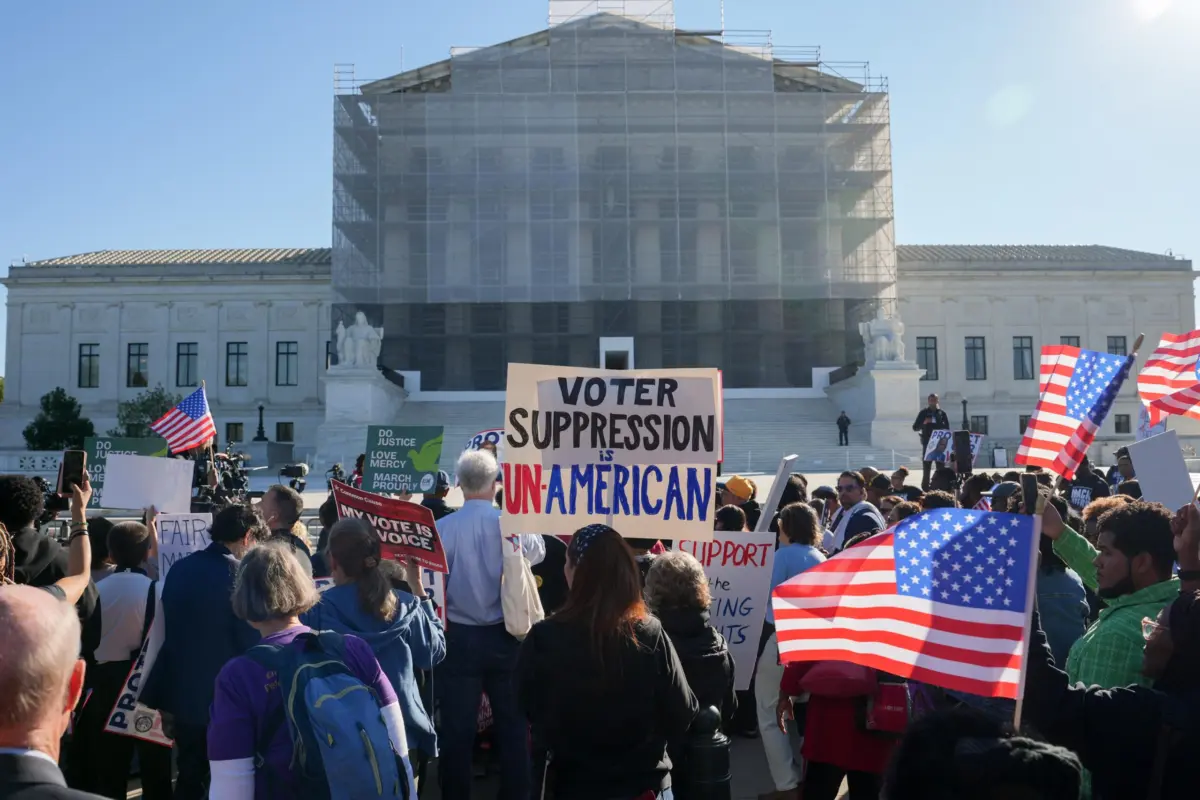
Such a showdown would carry monumental implications for American democracy. In an era where voting by mail has become heavily polarized—with Democratic voters increasingly favoring postal ballots and Republican operatives waging aggressive legal campaigns to limit them—the justices’ eventual interpretation of a relatively obscure constitutional amendment could permanently reshape access to the ballot box.
Detailed Chronology: From Pandemic Emergency to Federal Appeals Split
The modern legal battlefield over age-based absentee voting is rooted in the unprecedented health emergency of the COVID-19 pandemic. In the spring of 2020, as the virus swept across the United States, millions of citizens faced a harrowing choice: risk their health by standing in crowded indoor lines on Election Day or forgo voting entirely.
The 2020 Pandemic Catalyst
This crisis triggered a wave of litigation across the nation. In states like Texas, where statutory law allowed voters aged 65 and older to vote by mail without excuse while requiring younger voters to demonstrate a specific physical disability or absence from the county, civil rights groups and the Texas Democratic Party filed emergency lawsuits. Plaintiffs argued that maintaining a system where only older demographics enjoyed safe, convenient access to absentee ballots effectively denied younger citizens equal protection and violated their rights under the Twenty-Sixth Amendment.
However, these initial challenges met stiff resistance in the federal judiciary. The U.S. Court of Appeals for the Fifth Circuit, which oversees federal litigation in Texas, Mississippi, and Louisiana, ultimately rejected the plaintiffs’ claims. The Fifth Circuit held that permitting older voters to cast mail-in ballots did not infringe upon the constitutional rights of younger voters, concluding that the restriction did not amount to an absolute denial of the franchise.
The Divergent Judicial Paths
As subsequent legal challenges emerged across other jurisdictions, federal appeals courts split into three distinct camps regarding the text and intent of the Twenty-Sixth Amendment:
- The Fourth Circuit (Grant v. Belangia, 2026): South Carolina’s statutory framework permitted universal mail-in voting for seniors while encumbering younger cohorts. The Fourth Circuit struck this down, establishing that the Twenty-Sixth Amendment prohibits any unequal allocation of voting access based on age. If a 70-year-old can vote by mail effortlessly, a 19-year-old must be granted the same convenience.
- The Fifth Circuit (Texas Democratic Party v. Abbott, 2020): This court adopted a restrictive framework, ruling that a law "denies" the right to vote only when it absolutely prohibits participation, and "abridges" that right only when it makes voting more difficult than the pre-existing status quo baseline.
- The Seventh Circuit (Tully v. Okeson, 2023): Reviewing Indiana’s absentee voting laws, the Seventh Circuit ruled that mere policy discrimination against younger voters is insufficient to trigger a Twenty-Sixth Amendment violation. Instead, a state must impose a sufficiently "onerous" or "material" burden on the franchise, which they determined did not occur simply because in-person voting avenues remained available.
Supporting Context & Metrics: The History and Partisan Stakes of the Twenty-Sixth Amendment
Origins of the Amendment
Ratified in July 1971 in the crucible of the Vietnam War, the Twenty-Sixth Amendment is the most rapidly ratified constitutional amendment in American history. Driven by the resonant moral and political slogan, "Old enough to fight, old enough to vote," Congress and the states moved swiftly to enfranchise 18-to-20-year-olds who were being drafted into military service abroad yet lacked a voice in domestic governance.
Because the amendment commanded overwhelming bipartisan support upon its inception, it has historically generated remarkably little litigation. Most legal scholars and lawmakers agreed that its primary purpose was simply to set the minimum voting age at 18. Consequently, the deeper textual meaning of its operative phrase—stating that the right to vote "shall not be denied or abridged" on account of age—has remained largely unexplored in deep judicial jurisprudence.
The Partisan Architecture of Mail-In Voting
Today, however, this textual ambiguity is colliding with a fierce, highly partisan fight over mail-in ballots. The dynamics of postal voting shifted dramatically during the 2020 election cycle. While former President Donald Trump and national Republican organizations waged a relentless campaign against mail-in voting, claiming it invited widespread fraud, millions of Democratic voters embraced the practice as a secure and reliable alternative to polling places.
This behavioral shift created a distinct partisan asymmetry. Data from recent election cycles demonstrates that Democratic voters are significantly more likely to cast their ballots by mail than Republicans. Consequently, any legal mechanism that expands, protects, or simplifies mail-in voting tends to disproportionately benefit Democratic candidates around the margins, while restrictions or outright bans on mail-in flexibility serve Republican strategic interests.
This dynamic was vividly illustrated in the recent Supreme Court case Watson v. Republican National Committee (2026). The litigation centered on whether federal law requires states to discard absentee ballots that are properly mailed prior to Election Day but arrive at election offices shortly thereafter.
The Republican National Committee’s legal arguments in Watson relied on statutory interpretations dating back to an 1845 federal election timing law—a theory critics panned as legally implausible. Yet, despite the weakness of the argument, the Supreme Court split 5–4, with four conservative justices signaling their willingness to invalidate thousands of lawfully cast absentee ballots to restrict postal voting.
Official Statements and Legal Arguments
The divergence in judicial thought highlights a profound constitutional debate over how to interpret the Reconstruction-era and civil-rights-era phrasing found across multiple constitutional provisions.
The Broad Anti-Discrimination View
Advocates for the Fourth Circuit’s expansive reading—exemplified by Grant v. Belangia—draw direct textual parallels between the Twenty-Sixth Amendment and the Fifteenth and Nineteenth Amendments. Both of those historic amendments utilize identical "denied or abridged" terminology regarding race and sex, respectively.
Legal scholars note that courts have never permitted a state to implement discriminatory voting procedures based on race or gender—such as allowing white citizens or male citizens to vote by mail while barring Black citizens or female citizens from doing so. Under this analytical framework, the Twenty-Sixth Amendment must function as an equally robust, categorical ban on age discrimination in election administration.
Furthermore, proponents point to landmark precedents like the Supreme Court’s ruling in South Carolina v. Katzenbach (1966), which affirmed that constitutional voting protections invalidate state procedures that are discriminatory either "on their face or in practice."
The Narrow Procedural View
Conversely, defenders of restrictive state laws rely on precedents such as Harman v. Forssenius (1965) and Reno v. Bossier Parish School Board (2000). The Seventh and Fifth Circuits argue that a state’s decision to limit absentee voting options does not automatically cross the constitutional threshold of "abridgement" unless it imposes an unacceptably heavy, burdensome obstacle on the physical act of voting, particularly when robust in-person voting options remain open to all citizens.
In Tully v. Okeson, the Seventh Circuit emphasized that differential rules for absentee ballots are a common feature of state administrative management and do not constitute a direct disenfranchisement of younger voters, provided those voters retain reasonable avenues to cast a ballot in person on Election Day.
Future Outlook: The Supreme Court Horizon
As legal teams from across the political spectrum prepare for the next phase of this battle, all roads lead to the United States Supreme Court. The current bench—possessing a 6–3 conservative majority—has already demonstrated a willingness to restrict ballot access and uphold state-level regulatory authority over election administration.
During the peak of the pandemic, when Democrats petitioned the high court for emergency relief against Texas’s age-based absentee voting rules, the justices declined to intervene. While a refusal to grant emergency stays does not formally establish binding merits precedent, it offered a clear signal that the conservative majority was not alarmed by age disparities in mail-in voting procedures.
Furthermore, the narrow 5–4 vote in Watson v. Republican National Committee demonstrates that at least four conservative justices are reliably inclined to limit mail-in voting whenever legally viable. If those four justices can secure just one additional vote from their colleagues to embrace the narrow interpretations articulated by the Fifth and Seventh Circuits, the Fourth Circuit’s ruling in Grant could be overturned, cementing a nationwide legal standard that permits states to favor older voters in postal voting access.
Conversely, if the Court chooses to view age discrimination through the same strict lens applied to race and sex under the Fifteenth and Nineteenth Amendments, the ruling in Grant v. Belangia could trigger a massive wave of election law reforms, forcing states from South Carolina to Texas to modernize and equalize their absentee voting systems for every eligible citizen, regardless of age.
With the federal appeals courts deadlocked in a three-way split, the Supreme Court will soon be forced to step into the uncharted territory of Twenty-Sixth Amendment jurisprudence—making this one of the most consequential legal battles for the future of American elections.





Comments
Facebook App ID not configured. Please add it in the Customizer.