
Executive Overview
In the upper echelons of American higher education, a quiet and corrosive transformation has taken place over the past few decades. Once sanctuaries for meticulous scholarship, rigorous textual analysis, and the humbling pursuit of objective truth, elite universities have increasingly morphed into training grounds for a very different kind of enterprise: the art of confident ignorance.
This systemic shift is no longer confined to ivy-draped quadrangles, seminar rooms, or faculty lounges. Today, the habits, pathologies, and pedagogical failures cultivated within these hallowed halls are being exported directly onto the national political stage, with profound and potentially dangerous consequences for American governance.
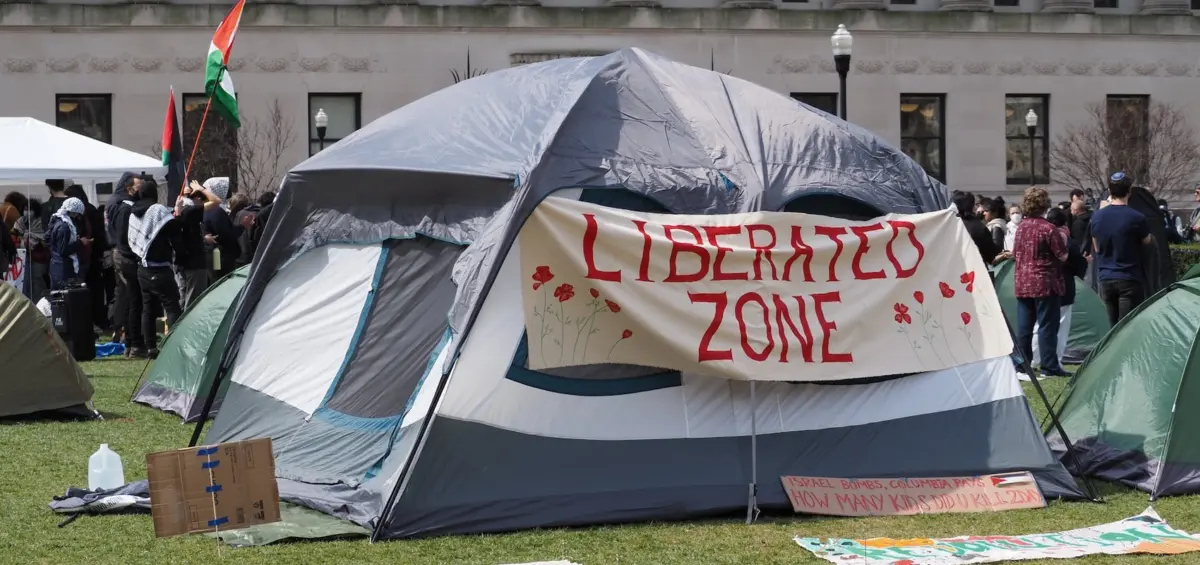
The trajectory from undergraduate seminar to the halls of Congress is vividly illustrated by the rise of Darializa Avila Chevalier, upper Manhattan’s newly emerged congressional candidate. Backed by the Democratic Socialists of America (DSA) and endorsed by prominent left-wing figures, Chevalier—a 2016 graduate of Columbia University who later returned as a prominent leader of the campus Gaza encampments—is virtually guaranteed a seat in the United States Congress following her primary victory. With her impending arrival in Washington, a set of radical policy proposals—ranging from the total cessation of military and economic aid to Israel to the wholesale abolition of national borders and the prison system—threatens to move from fringe campus rhetoric to the center of federal legislative debates.
Read Also
Yet, Chevalier’s ascension is not an isolated anomaly. It is the logical product of an educational ecosystem that rewards the performance of comprehension over actual understanding. When universities prioritize unearned self-esteem, superficial critical thinking, and boundless self-assurance in the total absence of foundational knowledge, they produce graduates who are dangerously unequipped to manage the complexities of reality. This investigation examines how Columbia University’s pedagogical culture—and similar environments across the American higher education landscape—has primed a generation of young elites for a dangerous brand of performative politics.
Detailed Chronology: From the Columbia Seminar to Capitol Hill
To understand the mechanics of this phenomenon, one must look closely at the micro-environment of the elite college seminar, where students are socialized into the rituals of intellectual posturing.
The Seminar Room Ritual
At institutions like Columbia, foundational courses such as Literature Humanities 1001 are intentionally designed around intimate seminars of roughly twenty students. In these settings, class participation often commands a significant weight in the final grade. For the undergraduate student, this creates an immediate, high-stakes game of risk management.
Every session becomes an exercise in a singular objective: to convince the professor and one’s peers that the assigned texts have been thoroughly read, comprehended, and deeply digested, even when they have not. Students learn to navigate a minefield of limited information. Is it safe to critique John Stuart Mill’s free speech absolutism when one has not read past the opening pages of the chapter? Can one authoritatively discuss the psychological dynamics between Hamlet and Ophelia when memory fails to recall whether they are siblings, spouses, or cousins?
In these rooms, students quickly learn that making comments too specific invites catastrophic exposure of their ignorance, while making them too vague strips them of academic credit. The winning strategy—honed over four years of undergraduate study—is to occupy the fertile middle ground: speaking with absolute poise, unyielding conviction, and profound inflection about matters one fundamentally does not understand.
The Return to Campus: The Gaza Encampments
This habit of mind does not vanish upon graduation; rather, it scales up. For Chevalier, the transition from undergraduate classrooms to campus activism demonstrated how easily performative certainty translates into real-world mobilization.
Returning to Columbia as a key leader during the tumultuous Gaza encampments of recent years, Chevalier and her peers brought the exact same dynamic to the university’s public spaces. Complex geopolitical histories, decades of Middle Eastern diplomacy, and volatile sectarian conflicts were reduced to rigid, black-and-white moral binaries. The underlying premise remained identical to the seminar room game: the absolute conviction that deep study, historical context, and empirical research are entirely unnecessary prerequisites for aggressive, confident political pronouncements.
The Congressional Launchpad
Following her victory in the June primary elections, Chevalier’s transition from campus organizer to federal legislator is all but assured. In a functioning democracy, the journey to the United States Congress typically demands a meticulous understanding of legislative mechanics, domestic economics, constitutional law, and foreign policy. Yet, Chevalier’s platform bypasses these traditional prerequisites, relying instead on the unyielding rhetorical posture perfected in elite academic enclaves. Her policy positions—advocating for the dismantling of carceral systems, the erasure of sovereign borders, and the total severance of ties with key democratic allies—reflect a worldview untethered from the realities of governance, sustained entirely by the momentum of performative certainty.
Supporting Context & Metrics: The Crisis of the "Best and Brightest"
The phenomenon driving Chevalier’s political rise is not an individual quirk; it is a shared cultural ethos among graduates of America’s most selective universities.
The Echo of the Tentifada
The normalization of extreme, under-informed policy positions was laid bare during recent graduation ceremonies across the Ivy League. At Columbia, entire classes stood in open applause for the student leadership of the campus encampments. These are individuals drawn from the most selective admissions pools in the world—supposedly the country’s best and brightest young minds. Yet, they have demonstrated a collective susceptibility to ideological dogmatism and simplistic slogans.
This raises an uncomfortable and urgent question: What is it about the modern elite educational apparatus that systematically primes these intelligent young minds for such damaging, unreflective patterns of thought?
Pedagogical Malpractice: "Critical Thinking" Without Content
The root cause extends far beyond student laziness or apathy. While it is tempting to blame undergraduates for failing to read their assignments, the deeper institutional failure lies within the university administration and faculty’s infatuation with "critical thinking" as the sole, exclusionary goal of higher education.
Modern pedagogy frequently treats foundational knowledge—historical facts, linguistic mastery, textual literacy, and empirical data—as obsolete relics of a bygone era. Consider two common occurrences across elite humanities and arts departments:
- Art History Seminars: When professors present complex masterpieces, such as Jacques-Louis David’s Oath of the Horatii, without providing historical context about ancient Rome or the political tumult of the French Revolution, students are forced to improvise. Lacking any knowledge of who the Horatii were, seminars devolve into superficial observations regarding color palettes or emotional brushstrokes.
- Music Composition and Theory Classes: Undergraduates are regularly tasked with writing deep analytical essays on musical masterpieces before they have ever been taught basic music theory or harmony.
The implicit, damaging message delivered to students across these disciplines is clear: Critical thinking is king, even in the total absence of serious study.
When universities validate and reward students for opining on subjects about which they are entirely ignorant, they actively uncouple opinion from knowledge. They train young elites to repress self-doubt, gloss over intellectual gaps, and treat surface-level familiarity as profound expertise.
Official Statements & Institutional Perspectives
As the debate over the direction of elite universities and their political output intensifies, stakeholders across the political and academic spectrum have offered starkly contrasting interpretations of these trends.
Academic Administration and Faculty Defenders
Defenders of modern pedagogical trends within institutions like Columbia argue that traditional canons and rote memorization are relics of an exclusionary past. Proponents of progressive critical pedagogy maintain that fostering student voice, encouraging disruptive questioning, and centering social justice frameworks are far more vital to modern higher education than the passive absorption of historical texts.
In official statements regarding campus activism, university leadership has frequently emphasized the delicate balance between protecting free expression and maintaining campus safety. Regarding the rise of politically active alumni, academic defenders view such engagement not as a failure of scholarship, but as evidence of a successful civic awakening among students who refuse to remain passive observers of global injustices.
Critics and Reformers
Conversely, traditionalist scholars, alumni critics, and educational reformers view this trajectory as a profound betrayal of the university’s core mission. Critics argue that true intellectual humility—rooted in the Socratic recognition of one’s own ignorance—has been replaced by an insular culture of unearned self-esteem.
"The foundation of true knowledge is the recognition of self-ignorance," notes one prominent alumni critic of Columbia’s Core Curriculum. "Critical thinking, as essential as it is, can only arise from a deep humility built through repeated, serious encounters with our civilization’s greatest minds and works. When modern educators seek instead to inflate student self-importance and convince them that isolated critical thinking suffices for any topic, the results are destructive."
Independent political analysts observing Chevalier’s congressional campaign have similarly voiced alarm over the growing disconnect between academic rhetoric and legislative reality. Governance, critics emphasize, requires compromise, empirical data, and a sober appreciation of systemic limitations—qualities entirely antithetical to the absolute moral certainty cultivated in radical campus movements.
Future Outlook: The National Implications of Performative Politics
As Darializa Avila Chevalier prepares to take her seat in the United States Congress, her legislative tenure will serve as a critical stress test for the American political system. Her arrival signals a broader generational shift: the infiltration of elite campus political culture into the machinery of federal lawmaking.
1. Polarization and Legislative Paralysis
The importation of performative, absolutist rhetoric into Congress threatens to deepen legislative gridlock. When politicians are trained to view policy debates through the lens of unyielding ideological purity rather than pragmatic compromise, the art of governance breaks down. Complex economic, diplomatic, and security challenges cannot be resolved through the deployment of campus slogans or the suppression of contrary evidence.
2. A Reckoning for Higher Education
The visible disconnect between elite academic training and real-world competence is likely to accelerate public skepticism toward higher education. As taxpayers, employers, and voters witness the tangible outputs of institutions like Columbia—graduates who combine elite credentials with a profound detachment from empirical reality—demands for institutional reform, curricular accountability, and ideological pluralism will only intensify.
3. The Test of Democratic Resilience
Ultimately, the rise of candidates shaped by the culture of the modern university seminar forces a fundamental question about the future of American democracy. Can a political system designed for deliberation, negotiation, and empirical problem-solving survive the influx of leaders whose primary skill is the confident assertion of unexamined beliefs?
If the nation is to navigate the complex crises of the twenty-first century, it must demand a return to intellectual rigor—both in the hallowed halls of our universities and on the floor of the United States Congress. Until the illusion of self-generated omniscience is replaced by genuine intellectual humility, the nation will continue to reap the bitter harvest of performative academia.




Comments
Facebook App ID not configured. Please add it in the Customizer.